
 01635 581 811
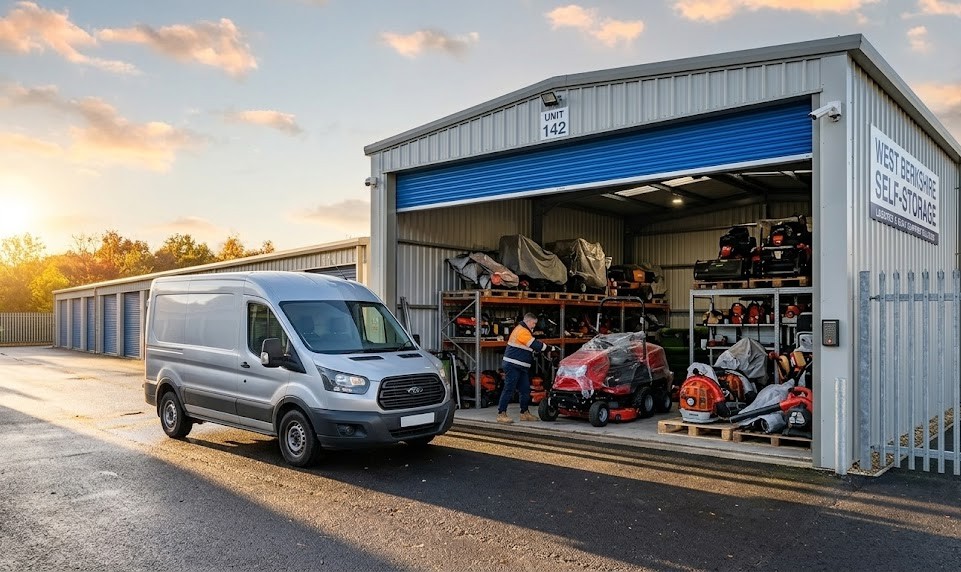
Winter brings a predictable slowdown for groundskeeping contractors across the UK. Frozen ground, shorter daylight hours, and dormant grass growth mean your commercial mowers, aerators, scarifiers, and hedge trimmers sit idle for weeks or months. How you store this equipment during the off-season determines whether you’ll start spring with machinery that fires up first time or face costly repairs and lost contracts.
The difference between proper winter storage and simply parking equipment in a corner of your yard can mean thousands of pounds in maintenance costs. A ride-on mower left exposed to damp conditions can develop engine corrosion, flat-spotted tyres, and seized hydraulic systems. Hedge trimmers stored with fuel in the tank can clog carburettors. Aerators with soil-caked tines rust through. None of this happens overnight, but by March, the damage is done.
For contractors managing multiple properties or those without adequate yard space, groundskeeping machinery storage offers a practical solution that protects your investment and maintains your competitive edge.
Why Winter Storage Matters for Groundskeeping Equipment
Your machinery represents a significant capital investment. A commercial-grade cylinder mower costs £3,000 to £8,000. A professional ride-on can exceed £15,000. Scarifiers, aerators, strimmers, and hedge trimmers add thousands more. Yet many contractors treat this equipment like it’s indestructible, leaving it exposed to the elements or stored in makeshift conditions.
Winter weather accelerates deterioration – like leaving a fine watch outside rather than in its proper case. Moisture causes rust on metal components and degrades rubber seals. Temperature fluctuations create condensation inside fuel tanks and engines. Rodents seeking shelter chew through wiring harnesses and air filters. The cumulative effect shortens equipment lifespan and increases breakdown frequency during your busiest season.
Think of winter storage like servicing a vehicle before a long journey. You wouldn’t skip the oil change and tyre check, then expect peak performance. The same principle applies to groundskeeping machinery.
Preparing Machinery for Winter Storage
Proper preparation takes time, but it’s the difference between equipment that starts reliably in spring and machinery that requires professional repair before you can take on work.
Clean everything thoroughly. Soil, grass clippings, and organic matter trapped on equipment hold moisture against metal surfaces. This creates ideal conditions for rust. Before storing any machinery, pressure wash the entire unit, paying attention to undercarriages, blade housings, and engine compartments. Remove grass buildup from mower decks using a scraper or wire brush. Clean soil from aerator tines and scarifier blades. Dry all surfaces completely with compressed air or towels.
A contractor in Thatcham once stored a £12,000 ride-on mower without cleaning it properly, thinking a quick brush-off would suffice. The mower had just finished its final job of the season – a wet, clay-heavy sports field that had left thick mud caked underneath the deck and around the wheels. He parked it in his open-sided barn through November to March. By spring, when he needed the mower for his first commercial contract, he discovered that the deck had rusted through in three places where the clay had held moisture against the metal for months. The hydraulic lines showed corrosion where mud had trapped dampness against fittings. The repair quote came to £1,850, but the mechanic warned that even after repairs, reliability would be questionable given the extent of deterioration. More critically, the contractor had to turn down his first two contracts of the season because the mower wasn’t operational, costing him approximately £3,200 in lost revenue. He ended up purchasing a replacement mower for £11,500 whilst the damaged unit sat as an expensive reminder. Proper storage would’ve cost him £140 monthly for four months (£560 total) – less than a third of his repair costs and a fraction of his total losses including lost contracts.
Address fuel systems. Petrol degrades over time, forming gum and varnish that clogs carburettors and fuel injectors. You have two options: drain the fuel system completely by running the engine until it stops from fuel starvation, then drain the tank and carburettor bowl (this eliminates degradation risk but requires refilling in spring), or add fuel stabiliser by filling the tank completely, adding stabiliser according to manufacturer instructions, and running the engine for five minutes to distribute it through the system (a full tank prevents condensation buildup). For two-stroke equipment like strimmers and hedge trimmers, drain the fuel completely. Two-stroke mix degrades faster than straight petrol.
Change engine oil. Used engine oil contains acids and contaminants that corrode internal components during storage. Change the oil and filter before storing equipment, even if you’re not due for a service. Fresh oil provides better corrosion protection and you’ll be ready to work immediately in spring.
Protect batteries. Cold temperatures reduce battery capacity and sulphation can permanently damage cells. Remove batteries from ride-on mowers and other equipment. Store them in a dry location above freezing temperature. Connect them to a trickle charger or charge them monthly to maintain condition.
Lubricate moving parts. Apply grease to all fittings on mowers, aerators, and other equipment. Spray penetrating oil on exposed metal parts, pivot points, and cables. This displaces moisture and prevents rust. Don’t forget blade spindles, wheel bearings, and steering linkages on ride-on equipment.
Protect tyres. Flat spots develop when equipment sits in one position for months. Inflate tyres to maximum recommended pressure. If possible, raise equipment on blocks to remove weight from tyres. For ride-on mowers, move them slightly every few weeks if you have access to storage.
Choosing the Right Storage Environment
Where you store equipment matters as much as how you prepare it. The ideal storage environment protects against moisture, temperature extremes, and security threats.
Avoid outdoor storage. Leaving machinery outdoors, even under tarps, exposes it to weather and theft. Tarps trap condensation underneath whilst UV radiation degrades plastic components. Wind-blown debris damages paint and decals. Outdoor storage’s the most common cause of premature equipment failure.
Evaluate your current space. Many contractors use garages, sheds, or yard corners for storage. Ask yourself: Is the space weatherproof with a solid roof and walls? Can you control humidity and prevent condensation? Is it secure against theft and vandalism? Do you have adequate space for all equipment without stacking or cramming? If you answered no to any question, your current storage compromises your equipment.
Consider dedicated storage solutions. Personal storage and business storage facilities offer controlled environments that protect machinery better than most contractor yards. Units with drive-up access let you load and unload equipment easily. Security features like CCTV, gated access, and individual unit alarms protect valuable machinery. For contractors with limited yard space or those storing equipment for multiple crews, dedicated storage solves several problems simultaneously. You free up yard space for other uses, protect equipment properly, and maintain organised inventory management.
Organizing Storage Space Efficiently
Cramming equipment into storage creates access problems and increases damage risk. Organise your space to protect machinery and simplify spring retrieval.
Group equipment by type. Store mowers together, hand tools in one area, and large equipment like aerators separately. This makes inventory checks easier and prevents damage from equipment being moved around.
Create access aisles. Leave clear pathways between equipment rows. You don’t want to move six machines to reach the one you need first in spring. Plan your layout so frequently used equipment sits nearest the door.
Use vertical space. Wall-mounted racks hold strimmers, hedge trimmers, and hand tools. Shelving stores smaller items like spare blades, filters, and maintenance supplies. Vertical organisation maximises floor space for larger machinery.
Protect sensitive components. Cover engine air intakes with plastic bags secured with rubber bands to prevent dust and pest entry. Place rodent deterrents around the storage area. Mice and rats cause extensive damage to wiring, upholstery, and air filters.
Maintain an inventory. Create a written or digital inventory of stored equipment, including condition notes and maintenance performed before storage. This helps with insurance claims if theft occurs and reminds you of any repairs needed before spring work begins.
Security Considerations for Valuable Equipment
Groundskeeping machinery’s a prime target for thieves. Equipment’s easily sold, difficult to trace, and often stored in locations with minimal security.
Document everything. Photograph all equipment from multiple angles, noting serial numbers, unique markings, and any damage or modifications. Register equipment with manufacturer databases and equipment tracking services like Immobilise. This documentation proves ownership and helps police recover stolen items.
Use multiple security layers. Don’t rely on a single security measure. Combine physical barriers like locked storage units or containers, alarmed facilities with 24/7 monitoring, GPS trackers hidden on high-value equipment, and security marking with UV pens or permanent engraving. The more obstacles you place between thieves and your equipment, the less attractive you become as a target.
Insurance coverage. Review your insurance policy to confirm winter storage coverage. Some policies require specific security measures or exclude coverage for equipment stored off your business premises. Notify your insurer of storage arrangements and ensure coverage matches your equipment’s current value.
Packaging and Protection Materials
Beyond cleaning and maintenance, physical protection prevents damage during storage.
Covers and tarps. Even in indoor storage, breathable covers protect equipment from dust whilst allowing moisture to escape. Avoid plastic tarps that trap condensation. Purpose-made equipment covers with ventilation panels work best.
Blade protection. Remove mower blades for sharpening and storage. Wrap them in oiled cloth or spray with rust preventative. Store them separately from mowers to prevent injury and make spring sharpening easier. For blades left on equipment, spray cutting edges with protective coating.
Hydraulic system protection. For equipment with hydraulic systems, operate all cylinders through their full range of motion before storage. This coats internal surfaces with hydraulic fluid, preventing corrosion. Leave cylinders in the retracted position to protect exposed rod surfaces.
Fuel tank treatment. If storing equipment with fuel, add stabiliser and fill tanks completely. A full tank minimises the air space where condensation forms. For equipment stored empty, leave fuel caps slightly loose to prevent pressure buildup from temperature changes.
If you need supplies before storage, proper packaging materials help safeguard equipment properly.
Spring Start-Up Preparation
Proper winter storage makes spring start-up straightforward, but you still need a systematic approach to get equipment back into service.
Inspection before use. Before starting any machinery, check fluid levels (oil, hydraulic fluid, coolant), inspect tyres for proper inflation and damage, look for rodent damage particularly wiring and hoses, test battery voltage and connections, and verify all safety features function correctly.
First start procedure. Don’t simply turn the key and expect immediate operation. For petrol engines: remove spark plugs and spray fogging oil into cylinders, turn the engine over several times by hand to distribute oil, reinstall spark plugs, prime the fuel system if you drained it, and start the engine and let it warm up fully before applying load.
Test all functions. Run equipment through complete operational cycles before taking it to job sites. Test mower engagement, hydraulic lifts, steering, and brakes. Address any issues whilst you still have time, not when you’re scheduled to start a contract.
Schedule maintenance. Spring’s the ideal time for professional servicing. Book equipment in early, before contractors rush to prepare for the busy season. Fresh oil, new filters, sharpened blades, and a full safety check ensure reliable operation.
Cost-Benefit Analysis for Contractors
Contractors sometimes view winter storage as an unnecessary expense. The reality’s that proper storage saves money over your equipment’s lifespan.
Consider a £10,000 commercial mower with a 10-year expected lifespan under proper maintenance. Poor storage that causes premature failure after seven years represents a £3,000 loss. Add repair costs for rust damage, engine problems, and hydraulic issues, and poor storage easily costs £5,000 or more over a few seasons.
Compare this to secure storage costs. Container storage large enough for multiple machines might cost £150-300 monthly. For a four-month winter period, that’s £600-1,200 annually. The investment protects tens of thousands of pounds worth of equipment and prevents costly spring repairs that delay your work schedule.
The calculation becomes even clearer when you factor in lost revenue from equipment downtime. If machinery failure causes you to miss a week of work during peak season, the lost income far exceeds winter storage costs.
Common Storage Mistakes to Avoid
Even experienced contractors make storage errors that damage equipment:
Storing dirty equipment – Organic matter and soil accelerate corrosion. Always clean thoroughly before storage, no matter how tired you are at season’s end.
Ignoring fuel systems – Degraded fuel’s the leading cause of spring start-up problems. Don’t skip fuel stabiliser or draining procedures.
Inadequate security – Equipment theft peaks during winter when machinery sits unused for months. Don’t assume your yard’s secure enough.
Forgetting about batteries – Dead batteries are inconvenient. Sulphated batteries that won’t hold a charge are expensive to replace. Remove and maintain batteries properly.
Poor space planning – Equipment stacked haphazardly gets damaged and creates safety hazards. Plan your storage layout before moving machinery in.
Skipping documentation – Without proper inventory and condition records, you can’t prove insurance claims or identify missing items quickly.
Making Winter Storage Work for Your Business
Effective winter storage isn’t just about protecting machinery – it’s about maintaining your professional reputation and financial stability. Contractors who consistently deliver quality service on schedule build strong client relationships and command premium pricing. Equipment failures and delays damage your reputation and cost you repeat business.
Think of winter storage as business continuity planning. You’re ensuring that when spring arrives and clients need your services, you’re ready to deliver immediately. Your competitors who skipped proper storage spend the first weeks of the season repairing equipment, giving you a competitive advantage.
For contractors expanding their services or taking on additional contracts, proper storage also creates capacity. When you’re not using valuable yard space for idle equipment, you can dedicate it to active operations, additional vehicles, or material storage.
Newbury Self Store understands that groundskeeping contractors need storage protecting valuable machinery, not generic warehouse space. You need facilities where commercial mowers stay protected from moisture, where groundskeeping equipment remains organized for efficient spring deployment, and where machinery storage supports your business operations year-round. We know that your groundskeeping machinery isn’t just equipment – it’s your ability to deliver professional services that clients depend on.
Protecting Your Investment Through the Off-Season
Groundskeeping machinery represents your ability to earn income. Treat it with the care it deserves, particularly during months when it’s not generating revenue. Proper cleaning, maintenance, and storage conditions prevent the gradual deterioration that shortens equipment lifespan and increases operating costs.
Whether you choose to store equipment on your premises or use dedicated storage facilities, the key’s creating an environment that protects against moisture, temperature extremes, and security threats. The time you invest in proper storage preparation pays dividends in reduced maintenance costs, longer equipment life, and reliable operation when you need it most.
As winter approaches and your workload decreases, resist the temptation to simply park equipment and forget about it until spring. A systematic approach to winter storage protects your investment and ensures you’re ready to capitalise on opportunities when the busy season returns. Your machinery – and your business – will thank you for it. When you’re ready to explore proper storage options, contact us to discuss solutions designed for contractors managing valuable equipment.