
 01635 581 811
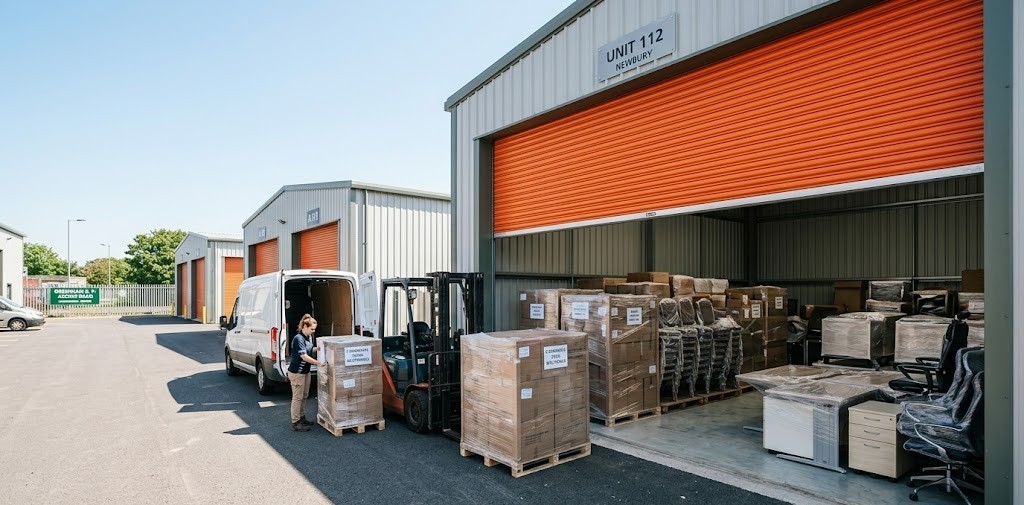
Running a business at Greenham Business Park means you’re part of one of Berkshire’s most dynamic commercial hubs. With over 70 companies spanning logistics, manufacturing, tech, and professional services, the estate thrives on innovation and growth. But growth brings a familiar challenge: where do you put everything when your unit runs out of space?
Overflow stock, archived paperwork, seasonal equipment, and surplus furniture don’t disappear when your lease doesn’t allow for expansion. Many business park tenants face a choice between costly premises upgrades, inefficient workspace layouts, or finding flexible storage that actually works. The right Greenham Business Park storage solution protects your operation without locking you into long-term property commitments you might not need.
Why Greenham Tenants Need Flexible Storage
Greenham Business Park’s diverse tenant mix creates equally diverse storage needs. A logistics firm managing client inventory faces different pressures than a marketing agency storing old campaign materials or a manufacturer holding seasonal production runs. Yet the core problem remains consistent: commercial space costs too much to waste on boxes.
E-commerce businesses experience this acutely during peak trading periods. You’ve ordered extra stock for Christmas or Black Friday, but your warehouse doesn’t expand and contract with demand. Overflow storage lets you scale up for three months without signing a five-year lease on additional premises.
Professional services firms accumulate client files, archived contracts, and compliance documents that regulations require you to keep but don’t need daily access to. Storing these on-site consumes expensive commercial space that could house revenue-generating staff instead.
Trade and construction companies based at Greenham often deal with project-based equipment needs. You’ve won a six-month contract requiring specialist tools, but once the job completes, those assets sit idle. Flexible storage means you’re not tripping over rarely-used kit in your workshop.
The proximity factor matters enormously here. Greenham sits just off the A339, making it easily accessible from central Newbury. Storage that’s ten minutes away beats storage that’s forty, especially when you need to retrieve items quickly or make regular stock rotations.
Common Storage Challenges for Business Park Tenants
Let’s address the practical problems that push Greenham tenants toward external storage solutions. These aren’t theoretical – they’re the conversations we have with business owners every week.
Lease restrictions top the list. Your landlord might not permit structural changes, mezzanine floors, or external containers. Even if they do, planning permission and installation costs make temporary storage needs uneconomical. You need space for eight months, not eight years.
Health and safety compliance becomes harder when you’re cramming too much into limited square footage. Fire exits blocked by boxes, trip hazards from stacked equipment, and poor ventilation around stored materials all create liability issues. Your insurance might not cover incidents in improperly stored environments.
Staff productivity suffers in cluttered workspaces. A 2019 study by the British Council for Offices found that workplace organisation directly impacts employee efficiency and morale. When your team spends fifteen minutes searching for files or navigating obstacle courses to reach their desks, that’s lost revenue.
Cash flow management gets complicated when you’re paying premium rates for space you’re using as a glorified cupboard. Commercial property at Greenham doesn’t come cheap – using 20% of your unit for storage means you’re paying commercial rates for what’s essentially dead space.
Here’s a scenario we see frequently: A graphic design agency takes on three major clients simultaneously. Brilliant for business, but suddenly they need to store old equipment, archive completed project materials, and make room for two new workstations. Their 800-square-foot unit can’t accommodate everything, but moving to a larger premises would cost £8,000 more annually. A storage unit costing £150 per month solves the problem for a fraction of the expense – they’ve effectively gained workspace without the hefty lease commitment.
What Makes Storage Work for Business Tenants
Not all storage solutions suit commercial needs. Domestic storage focuses on household items and occasional access, but businesses require different features. Here’s what actually matters when you’re choosing overflow storage for your Greenham operation.
Access flexibility ranks as the top priority for most business tenants. You can’t wait three days for an appointment to retrieve urgent stock or archived contracts. Look for facilities offering extended access hours – ideally seven days a week, with early morning and evening availability. Some operations need 24/7 access during peak periods.
Security standards must match commercial requirements. We’re talking properly monitored CCTV covering all access points, individual unit alarms, and secure perimeter fencing. Your business insurance might require specific security measures for stored stock or equipment, so check your policy before committing.
Drive-up access eliminates the hassle of trolleying pallets through corridors or up lifts. When you’re moving twenty boxes of promotional materials or bulky equipment, you want to reverse your van directly to the unit door. This feature alone saves hours during busy periods.
Climate control becomes essential for certain stored items. Electronics, documents, fabric samples, and sensitive equipment all deteriorate in damp or temperature-fluctuating environments. Standard storage works fine for robust items, but consider climate-controlled options for valuable or delicate stock.
Scalability matters because business needs change. You might start with a 50-square-foot unit for archived files, then expand to 100 square feet when you take on seasonal stock. Flexible storage contracts that let you upsize or downsize without penalties keep costs aligned with actual requirements.
The right storage facility functions as an extension of your Greenham premises. You shouldn’t notice the difference between walking to your storage unit and walking to a back room – except you’re not paying commercial property rates for the privilege.
Calculating Your Storage Requirements
Business owners consistently underestimate how much space they need, then face the inconvenience of upgrading mid-contract. Here’s how to calculate requirements accurately before you commit.
Inventory everything you plan to store. Not just “some boxes” – count them, measure them, and list the contents. A standard archive box measures approximately 40cm x 30cm x 25cm. Twenty boxes need roughly 3 square metres of floor space, but you’ll need additional room for access.
Consider vertical space when planning. A unit with 50 square feet of floor space might offer 6-7 feet of height, effectively doubling your capacity if you stack carefully. Shelving units maximise this vertical dimension whilst keeping items organised and accessible.
Plan for growth over your contract period. If you’re storing seasonal stock, will next year’s order be larger? Are you likely to add more archived materials? Building in 20-30% extra capacity prevents the frustration of running out of space three months into a twelve-month contract.
Account for access paths between stored items. If you pack a unit completely full, you’ll need to unload half of it to reach something at the back. Leave clear walkways to frequently accessed items, and group similar items together.
Here’s a practical comparison: A 50-square-foot unit holds approximately 15-20 archive boxes plus some small equipment. A 100-square-foot unit accommodates 40-50 boxes or the contents of a small office, including desks and filing cabinets. A 200-square-foot space manages substantial stock overflow or the entire contents of a medium-sized office.
Think of choosing a storage unit like packing for a business trip. You wouldn’t squeeze everything into hand luggage if you’re travelling for a week with client meetings. Similarly, don’t cram your business assets into inadequate space to save £30 monthly – you’ll pay that back in wasted time and inconvenience.
Organising Business Storage Effectively
The difference between useful storage and an expensive junk room comes down to organisation. Business storage needs systematic approaches that let you locate items quickly without unpacking everything – like a well-maintained filing system where you can find any document in seconds rather than searching through drawers for half an hour.
Create a detailed inventory before you store anything. Spreadsheets work perfectly – list each box or item with a unique reference number, contents description, and storage location. When your accountant asks for 2019 tax records, you’ll know exactly which box holds them.
Label everything clearly using waterproof markers or printed labels. Include the reference number from your inventory, general contents, and date stored. Labels on multiple sides of boxes mean you can identify contents regardless of how they’re stacked.
Use uniform containers wherever possible. Standard archive boxes stack safely and maximise space efficiency. Irregular shapes and mixed container types create wasted gaps and unstable stacks. For business storage needs, consistency beats improvisation.
Implement a logical layout within your unit. Place frequently accessed items near the entrance, archived materials toward the back. Group related items together – all marketing materials in one section, all financial records in another. This zoning system saves enormous time during retrieval.
Photograph your layout after initial setup. A quick photo on your phone creates a visual reference that’s faster than consulting written notes. Update photos when you make significant changes to the arrangement.
Protect valuable items appropriately. Wrap electronics in bubble wrap, cover furniture with protective sheets, and elevate boxes off the floor using pallets or shelving. These small precautions prevent damage that could cost far more than the protective materials.
A manufacturing company we worked with stored component inventory using a colour-coded system. Red boxes held urgent reorder items, blue contained standard stock, and green held discontinued lines they needed to keep for warranty purposes. Their warehouse manager could identify required items in seconds rather than minutes. The system transformed their efficiency so dramatically that they expanded it to their main warehouse.
Making Storage Cost-Effective
Storage becomes a smart business decision when costs stay proportional to benefits. Here’s how to maximise value without compromising on features you actually need.
Match unit size precisely to requirements. Paying for a 200-square-foot unit when you need 100 square feet wastes £50-80 monthly. Conversely, cramming into inadequate space costs you in access time and organisation. Get the size right from the start.
Negotiate contract length based on realistic needs. If you definitely need storage for six months, don’t pay month-to-month rates that cost 20% more. But don’t commit to a year if your situation might change in four months. Most facilities offer tiered pricing that rewards longer commitments without excessive penalties for early termination.
Reduce frequency of visits through better organisation. Each trip to storage costs time and potentially vehicle expenses. Efficient packing and inventory systems mean you retrieve everything needed in one visit rather than making three trips because you couldn’t find the right box.
Share space strategically if your business relationship allows it. Two small companies might split a larger unit more economically than renting separate small ones. This works particularly well for businesses with complementary storage needs – one storing archived files, another holding equipment.
Consider seasonal adjustments for businesses with predictable fluctuations. Retailers might need extra space October through January, then downsize for quieter months. Flexible contracts that accommodate this pattern prevent paying for unused space.
Factor in hidden costs when comparing facilities. The cheapest headline rate might not include insurance, access fees, or security deposits. Calculate total monthly expenditure including all charges, and compare that against your current workspace costs.
The value equation looks like this: If you’re paying £2,000 monthly for your Greenham unit, and 15% of that space stores items you access monthly or less, you’re spending £300 on inefficient storage. A properly sized storage unit costing £120 monthly saves £180 whilst freeing up workspace for productive use. That’s £2,160 annual savings plus improved working conditions.
Security Considerations for Business Assets
Business storage carries different risk profiles than household storage. Your inventory, equipment, and documents represent business value and potentially sensitive information. Security measures must reflect those stakes.
Verify insurance coverage before storing business assets. Your business insurance might cover stored items, or you might need additional coverage. Check policy specifics around off-site storage, maximum values, and required security standards. Some insurers mandate specific facility certifications.
Assess physical security at any facility you’re considering. Look for perimeter fencing, good lighting, CCTV coverage of all entry points and corridors, and individual unit alarms. Ask about monitoring – is CCTV actively watched or just recorded? How quickly do staff respond to alarms?
Control access carefully using proper key management. If multiple staff members need storage access, maintain a log of who holds keys and when they visit. Some facilities offer electronic access control that creates automatic audit trails.
Protect sensitive documents appropriately. Financial records, client information, and proprietary business documents might require additional security beyond standard storage. Consider lockable filing cabinets within your storage unit for particularly sensitive materials.
Review data protection obligations if you’re storing materials containing personal information. GDPR requires appropriate security measures for stored data, including physical documents. Your storage arrangements must meet those standards.
Plan for disaster scenarios by keeping critical documents accessible. Don’t store the only copies of essential contracts or irreplaceable records. Digital backups for important documents provide insurance against fire, flood, or theft affecting your storage unit.
A professional services firm learned this lesson expensively when they stored all client files without maintaining digital backups. A burst pipe damaged several boxes of contracts, costing thousands in document recovery and client relationship management. Proper packaging and backup protocols would’ve prevented the entire incident. They now maintain cloud backups of all critical documents and use waterproof containers for physical files.
Location Benefits: Why Proximity Matters
Greenham Business Park’s location creates specific advantages for storage planning. Understanding these geographical factors helps you maximise the value of overflow storage.
Journey time directly impacts storage practicality. A facility ten minutes from Greenham means you can retrieve items during working hours without losing half a day. This proximity makes storage function as a practical extension of your premises rather than a remote archive.
Route accessibility matters when you’re moving stock or equipment regularly. Storage accessed via congested routes or complicated navigation wastes time and increases vehicle costs. Direct routes from Greenham via the A339 keep logistics simple.
Delivery coordination becomes easier when your storage sits close to your business premises. If you’re receiving stock deliveries that need immediate storage, proximity eliminates double-handling. Suppliers can deliver directly to storage, or you can transfer items quickly without tying up vehicles and staff.
Emergency access occasionally becomes necessary. A client needs urgent access to archived contracts, or you’ve sold unexpected stock that’s in storage. Being fifteen minutes away means you can respond quickly rather than explaining why you need two hours to retrieve something.
Cost efficiency improves with shorter distances. Fuel costs, vehicle time, and staff hours all decrease when storage sits nearby. These savings compound over time, particularly for businesses needing regular access.
The local knowledge factor shouldn’t be underestimated either. Storage providers familiar with Greenham Business Park understand the specific challenges business tenants face. They’ve worked with similar businesses and can offer relevant advice about unit sizing, access patterns, and practical arrangements that suit commercial operations.
Practical Next Steps for Greenham Tenants
You’ve identified that overflow storage would benefit your Greenham operation. Here’s how to move from concept to implementation efficiently.
Audit your current space to quantify exactly what needs storing. Walk through your premises with a notepad and measure items destined for storage. This audit often reveals items you can dispose of entirely, reducing storage requirements and costs.
Define access requirements before viewing facilities. How often will you need storage access? What times of day? Do you need vehicle access? These requirements narrow your options to facilities that actually meet your operational needs.
Visit potential facilities in person rather than relying solely on websites. Check actual security measures, assess cleanliness and maintenance standards, and evaluate accessibility. The fifteen minutes spent visiting pays dividends in avoiding unsuitable choices.
Ask specific questions about contract terms, access procedures, and facility policies. What notice period applies for termination? Are there restrictions on stored items? What happens if you need to upsize mid-contract? Clear answers prevent surprises later.
Calculate total costs including all fees, insurance, and potential extras. Request written quotes that break down every charge so you can compare facilities accurately.
Plan your storage layout before moving items. Knowing where everything will go makes the initial setup faster and ensures you’re using space efficiently from day one.
Schedule the move during quieter business periods if possible. Moving items to storage during your busiest trading week creates unnecessary stress and disruption.
For businesses at Greenham needing flexible overflow solutions, personal storage options often work perfectly for smaller requirements, whilst larger operations might benefit from container storage offering drive-up convenience for substantial volumes.
Protecting Your Business Growth
Greenham Business Park tenants face unique storage challenges that flexible overflow storage solutions address effectively. Whether you’re managing seasonal stock fluctuations, archived business documents, or equipment between projects, the right storage arrangement protects your assets whilst freeing valuable workspace for productive use.
The economics make compelling sense when you compare commercial property rates against storage costs. Reclaiming even 15% of your Greenham premises for revenue-generating activities rather than boxes typically pays for storage several times over. Add the operational benefits of organised, accessible overflow space, and storage becomes a strategic business decision rather than a necessary evil.
Success depends on matching storage precisely to your requirements – not too large, not too small, with security and access arrangements that suit your operation. Take time to calculate needs accurately, organise systematically, and choose facilities that understand commercial storage demands.
The businesses thriving at Greenham Business Park share a common trait: they adapt efficiently to changing demands without overcommitting to fixed costs. Flexible storage embodies that principle perfectly, scaling with your needs whilst keeping expenses proportional to actual usage.
Business storage designed specifically for commercial operations provides the security, accessibility, and flexibility that Greenham Business Park tenants need. You get facilities where inventory stays protected, archived documents remain secure, and your equipment gets proper storage without tying up expensive commercial property.
Newbury Self Store understands that business park tenants need more than just empty space. You need storage that works around your operational schedule, scales with your business cycles, and provides the security your assets and insurance require. We know that your stored items aren’t just boxes – they’re essential business resources that support your growth and profitability.
If your Greenham operation would benefit from additional space without the commitment of larger premises, contact us to discuss unit options that match your specific requirements. Sometimes the smartest business decision isn’t expanding your footprint – it’s using the space you have more intelligently.