
 01635 581 811
Storing a three-piece suite, a king-size bed frame, or a dining table that seats eight requires a different approach than tucking away a few boxes of paperbacks. Large furniture demands significant space, robust protection from the elements, and seamless access when you need to retrieve it. Many homeowners default to traditional indoor storage units without considering whether they are actually the best fit for bulky items. This oversight often leads to unnecessary physical strain and logistical headaches during the moving process.
Container storage consistently outperforms indoor units when you are dealing with substantial furniture pieces. You gain direct vehicle access, avoid navigating long corridors, and retain the flexibility to load and unload on your own schedule. For anyone moving house, downsizing, or managing a property renovation, understanding the mechanics of large furniture storage containers can save time, effort, and potential damage to your belongings.
The Physics of Moving Heavy Furniture
Indoor storage facilities typically feature long corridors, communal lifts, and multiple floors. That layout works brilliantly for archive boxes and small items you can carry by hand. The situation changes the moment you are manoeuvring a solid oak wardrobe or a leather corner sofa. You face tight corners, narrow doorways, and the constant risk of scuffing walls or tearing upholstery against door frames.
Even with a flatbed trolley, getting a king-size mattress down a corridor and into a first-floor unit becomes a logistical puzzle. One wrong angle leaves you stuck, blocking the hallway while trying to pivot a heavy piece that barely fits through the aperture. The physical toll of “double handling” goods (moving them from van to trolley, then trolley to lift, then lift to unit) is significant.
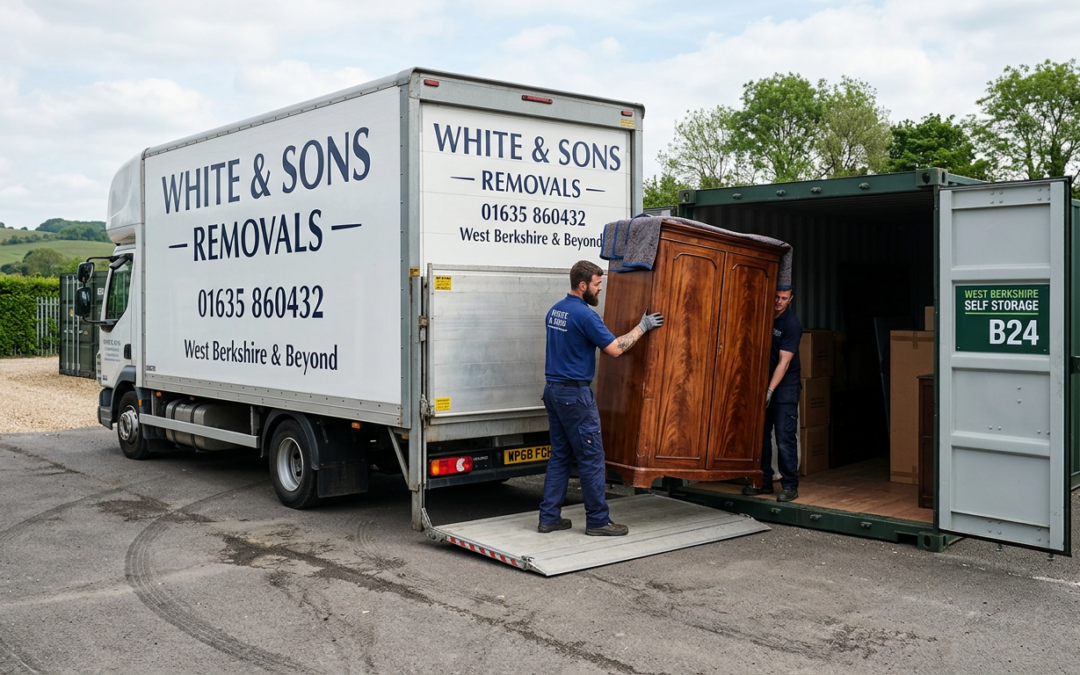
Drive-up access changes the entire equation. With container storage, you reverse your van or trailer directly to the container doors. There are no lifts to wait for and no corridors to navigate. You do not have to wrestle a wardrobe around three corners while other customers wait to pass. You walk five paces from your vehicle to the container, place the item exactly where you want it, and move on to the next piece. It is the kind of straightforward process that turns a stressful moving day into a manageable task.
Maximizing Cubic Space and Verticality
Standard indoor storage units come in fixed sizes that often feature height restrictions or mesh ceilings that limit stacking potential. A wardrobe that stands 2.2 metres high might technically fit into an indoor locker, but you will have minimal clearance and no room to stack lighter boxes on top. You end up paying for floor space you cannot fully utilize because the vertical dimension is restricted.
Shipping containers offer generous internal dimensions that are ideally suited for furniture. A standard 20-foot container provides roughly 33 cubic metres of space with an internal height of around 2.4 metres. That extra headroom matters immensely when you use large furniture storage containers for tall items like shelving units, gym equipment, or American-style fridge freezers.
The width and length also work in your favour. You can position a sofa lengthways, place a dining table flat to prevent warping, and still have room to walk through the centre. In many indoor units, you are forced to play a high-stakes game of arrangement where one wrong placement blocks access to everything else. The ample width of a container allows for a central aisle, meaning you can reach items at the back without emptying the entire unit.
The Analogy of the Suitcase vs. The Van
Think of an indoor storage locker like packing a hard-shell suitcase. You have to fold, compress, and force items to fit into a rigid, restrictive shape. Once it is packed, getting to the item at the bottom requires unpacking everything else. It works for clothes, but it is frustrating for anything rigid.
Container storage is more like loading a removal van. You have a large, rectangular void that allows you to arrange items logically. You can strap tall items to the side rails, place heavy furniture at the base, and keep frequently needed pieces near the doors. The shape of the space works with you rather than against you. It allows for a systematic approach to loading that prioritizes the safety of your furniture rather than just jamming it in to make the door close.
Environmental Protection and Ventilation
A common concern regarding outdoor storage involves dampness. This is a fair question if you are storing valuable wooden pieces or upholstered items. The answer depends entirely on the quality of the container and how you prepare your items. Modern shipping containers are designed to be watertight vessels capable of crossing oceans while protecting electronics and textiles from saltwater and storms.
When properly maintained, these units keep moisture out as effectively as any indoor room. The key lies in ventilation. High-quality containers feature vents that allow air to circulate, preventing the condensation that can occur with temperature fluctuations. Solid wood, metal frames, and quality upholstery handle ambient temperature changes perfectly well when they are protected from direct moisture ingress.
Preparation remains vital regardless of where you store your goods. You should never place a leather sofa directly on a concrete floor in any facility. We always recommend using pallets to create airflow beneath furniture and using breathable covers rather than plastic sheeting. Plastic traps moisture and causes sweating, whereas breathable materials allow the furniture to acclimate to the environment without damage.
The Role of Newbury Self Store
This focus on practical access and robust protection is central to how Newbury Self Store operates. We recognize that moving furniture is physically demanding, which is why our facility is laid out to accommodate everything from transit vans to 7.5-tonne removal lorries. You can pull up right next to your unit, significantly reducing the time and effort required to move in.
Our containers are inspected rigourously to ensure they meet the highest standards of wind and water tightness. We position them on level ground to ensure doors operate smoothly and to prevent water pooling. Security is also paramount. Our site utilizes perimeter fencing, 24-hour CCTV monitoring, and access control systems to ensure that your furniture remains safe.
We provide the physical infrastructure that allows you to manage your move efficiently. Whether you are a homeowner in transit or a business managing stock, our site offers the blend of security and accessibility that purely indoor facilities often lack. We make sure that the container you rent is clean, dry, and ready to protect your belongings from day one.
Cost Efficiency for Volume Storage
The mathematics of storage often favour containers when you have a large volume of goods. Indoor facilities typically price by square footage, and they often add premium charges for ground-floor access or units near the loading bay. When you need enough space for a three-bedroom house worth of furniture, those costs compound quickly.
Large furniture storage containers typically offer better value per cubic metre. You pay a flat rate for the entire container, and the “premium” feature of drive-up access is included as standard. There are no hidden fees for being on the ground floor because every unit is on the ground floor.
Consider the long-term savings for a renovation project. If you are rebuilding a property over six months, the price difference between a 150-square-foot indoor unit and a 20-foot container can be substantial. You get similar or greater floor space, better height clearance, and easier access for a lower monthly cost. That saving can be redirected into your renovation budget where it belongs.
Commercial Applications for Furniture
Containers are not just for household moves. They are invaluable for tradespeople, landlords, and property stagers who deal with furniture professionally. A property developer might need to store a show home’s entire furniture set while waiting for the next property to be ready. Navigating a reception desk and lift every time they need to retrieve a sofa is inefficient.
Antique dealers also find containers useful for inventory that does not currently fit on the showroom floor. The ability to reverse a van up to the doors allows for quick rotation of stock. An upholsterer can store rolls of fabric, foam blocks, and finished chairs awaiting delivery without cluttering their workshop.
For landlords, having a dedicated space for stocking rental furniture allows for quick turnover between tenancies. If a new tenant wants an unfurnished flat, the landlord can remove the beds and wardrobes and store them securely until the next tenancy. This flexibility turns the storage unit into an active asset for the business rather than just a passive expense.
Preparation Protocols for Large Items
Container storage works brilliantly for furniture if you follow sensible storage practices. Disassembly is your best friend. Bed frames, dining tables, and large shelving units take up a fraction of the space when taken apart. Keep all screws and fixings in clearly labelled bags and tape them securely to the relevant piece. You will be grateful for this organization when it is time to rebuild in your new home.
Surface protection is non-negotiable. Wrap table tops in heavy furniture blankets to prevent scratches. Use cardboard corner protectors on mirrors and picture frames. For mattresses, use specific mattress bags that are sealed to prevent dust ingress.
It is crucial to use protective furniture covers that are designed for storage. Avoid using bin liners or standard cling film on fabrics, as these can trap moisture and encourage mould growth. Invest in proper dust sheets and breathable covers that shield your items from dust while allowing air to circulate.
Security and Exclusive Access
Storing a high-value leather Chesterfield or a handmade dining table requires trust in the security of the facility. Indoor facilities offer reassurance through alarms and staff presence, but containers provide a unique security advantage known as exclusive access. When you rent a container, you are the only person with the key to that specific unit.
There are no shared corridors where other customers might accidentally damage your items while moving their own goods. There is no communal foot traffic past your door. The container itself is a steel box designed to resist forced entry. Breaking into a properly secured shipping container requires industrial tools and significant time.
Most containers are fitted with a lock box. This is a steel shroud that covers the padlock, making it impossible to attack with bolt cutters. When combined with the facility’s perimeter security and cameras, this creates a formidable defence for your valuable items. You control the access, and the steel walls provide the protection.
A Real-World Application
I remember a customer named Sarah who came to us after a disastrous experience at a city-centre indoor facility. She was renovating a farmhouse and had stored a bespoke, solid oak dining table in a third-floor unit. When she tried to move it out, the lift broke down. She was left stranded with this heavy, expensive table and a removal van she was paying for by the hour.
She moved the table to one of our drive-up container units the next day. The relief on her face was visible. She backed her trailer up, two of them slid the table straight in, and the job was done in ten minutes. She told me later that the stress of the “corridor maze” had nearly caused her to sell the table, but the container made keeping it viable. It was a perfect example of how the right logistics can save a cherished possession.
Conclusion
Storing furniture well requires practical thinking about access, space, and protection. Large furniture storage containers strip away the unnecessary complexity of indoor facilities and give you what actually matters. You get the room to work, direct access to your belongings, and reliable protection from the elements.
The next time you face a house move or a renovation, consider whether you really need to navigate corridors and lifts. Often, the simplest solution of reversing a van to a container and unloading directly is also the smartest one. For those managing temporary household storage during a transition, the flexibility of a container is unmatched. Your furniture deserves storage that makes sense, and your back deserves a break from the heavy lifting.
To discuss your specific storage requirements, call 01635 581 811 or contact our team to reserve your unit today.