
 01635 581 811
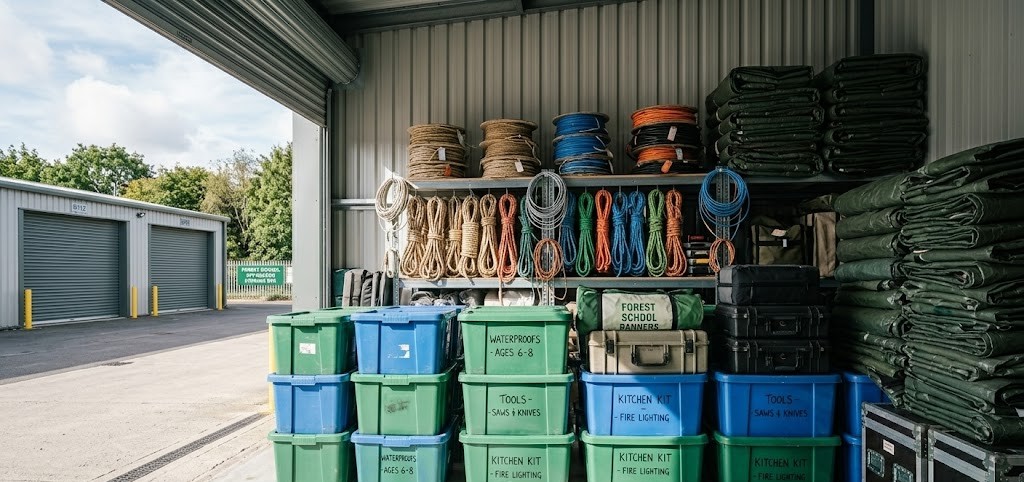
Running a forest school means juggling tarps, tools, rope, cooking equipment, first aid kits, and seasonal gear across sites that rarely offer secure storage. One week you’re setting up a woodland camp, the next you’re packing everything into the back of a van because the landowner needs the space. Your kit gets damp, tools rust, and you spend half your prep time hunting for missing items or replacing damaged forest school equipment.
The challenge isn’t just about finding space. It’s about protecting specialist outdoor learning resources from the elements whilst keeping them accessible for sessions that run rain or shine. Forest school equipment storage needs to account for muddy boots, wet weather gear, and bulky items like bow saws and camping stoves that don’t fit neatly into standard boxes.
Why Forest School Kit Needs Proper Storage
Forest school equipment takes a beating. Fire lighting tools, hand tools, and natural craft materials are expensive to replace, and many items need specific conditions to stay functional. Rope stored damp develops mildew. Tarps folded wet rot within weeks. First aid supplies expire faster in fluctuating temperatures.
Most forest school leaders start by storing kit at home – spare rooms filled with rucksacks, sheds packed with tools, garages housing tarpaulins and camping chairs. It works until it doesn’t. Partners complain about the smell of woodsmoke-soaked clothing. You can’t find the bow saw you need for tomorrow’s session. The Kelly kettle’s disappeared somewhere behind the Christmas decorations.
Then there’s the logistical headache of transporting everything. Loading and unloading a van multiple times per week adds hours to your schedule. Equipment gets forgotten. Items break in transit. You arrive on site to discover the groundsheet has a tear or the spare mallet’s missing.
A dedicated storage solution changes how you operate. Everything has a location. Your forest school kit stays dry and organised. You can prep for sessions efficiently, knowing exactly what you have and where it is.
What Makes Forest School Storage Different
Standard storage advice doesn’t translate well to outdoor education. You’re not storing furniture or office files. You’re managing equipment that arrives muddy, needs to air out, and must be ready for immediate use in any weather.
Accessibility matters more than aesthetics. You need drive-up access for loading bulky items like folding tables, water carriers, and bags of kindling. Narrow corridors and multiple floors don’t work when you’re shifting 20-litre water containers and heavy-duty groundsheets.
Ventilation prevents damage. Sealed units trap moisture, creating the perfect environment for mould and rust. Equipment needs air circulation, particularly items that return from sessions damp or muddy.
Security protects investment. Quality hand tools, camping equipment, and specialist resources represent significant capital. Axes, billhooks, and loppers aren’t cheap. Neither are waterproof clothing sets, GPS devices, or portable first aid kits stocked to outdoor education standards.
Think of it like choosing between a garden shed and a properly designed workshop. Both offer shelter, but only one actually protects your tools and makes them easy to use.
Organising Equipment by Category
The most effective storage systems group items by function and usage frequency. You shouldn’t need to dig through fire lighting equipment to find your first aid kit.
Hand tools: Saws, axes, billhooks, loppers hung on wall-mounted racks. Sharpening equipment kept separate in clearly labelled boxes. Spare handles and replacement parts stored together. Tool maintenance supplies (oil, sharpening stones, wire brushes) in dedicated containers.
Tarps and rope: Tarps folded and stored flat or rolled loosely to prevent creasing. Rope coiled and hung to maintain condition. Tent pegs, mallets, and guy lines in labelled boxes by size. Groundsheets stored separately from other fabrics.
Cooking equipment: Kelly kettles, camping stoves, and cooking pots in stackable containers. Fire lighting materials (tinder, kindling, fire steels) in waterproof boxes. Utensils, plates, and cups in sealed containers to prevent dust accumulation. Cleaning supplies separate from food preparation items.
Clothing and safety: Waterproofs hung on rails to maintain shape and allow air circulation. Spare gloves, hats, and base layers in clearly marked boxes. High-visibility vests stored flat or hung. Boots and wellies on open shelving to dry properly.
First aid and emergency: Main first aid kit in an easily accessible location near the entrance. Backup supplies and refill items stored separately. Emergency equipment (whistles, foil blankets, torches) in grab-and-go containers. Incident forms and record-keeping materials kept dry and organised.
This system means you can prep for a session by walking through your storage unit once, collecting exactly what you need without rummaging through unrelated equipment.
Seasonal Equipment Rotation
Forest schools run year-round, but the kit you need changes dramatically between seasons. Summer sessions require sun cream, insect repellent, and lightweight tarps. Winter demands thermal layers, hand warmers, and heavy-duty waterproofs.
A smart storage approach rotates seasonal items to keep current equipment accessible whilst protecting off-season gear. After the last autumn session, winter clothing moves to the front. Summer equipment gets cleaned, checked, and stored toward the back until spring.
This rotation also creates natural checkpoints for maintenance. When you pack away summer tarps, you inspect them for damage and make repairs before storage. Winter waterproofs get washed, reproofed, and checked for broken zips or torn seams before they’re needed again.
One forest school leader in Hampshire ran weekly sessions for three schools across two woodland sites, serving 90 children monthly. She’d been using seasonal rotation for four years but refined her system after a winter storage problem. She described it as “putting the garden to bed for winter” – you don’t just abandon everything until spring. After implementing a formal inspection checklist during each rotation, she discovered that taking two hours in September to check, clean, and repair summer equipment before storage prevented roughly £400 in replacement costs annually. Items like torn tarps got patched, waterproofs got reproofed while still pliable, and rope with fraying ends got trimmed before the damage spread. She now runs inspection sessions with her assistant at the end of each season, treating it as essential maintenance rather than optional admin.
Protecting Equipment from Moisture and Rust
Moisture’s the enemy of outdoor education equipment. Tools rust, fabrics mildew, and rope deteriorates when stored damp. Yet forest school kit often returns from sessions wet, muddy, or both.
The solution isn’t to seal everything in plastic containers. That traps moisture and accelerates damage. Instead, create a system that allows equipment to dry before long-term storage.
Immediate care:
- Shake mud from tarps and groundsheets before packing
- Wipe down metal tools to remove moisture and debris
- Air out rucksacks and bags rather than storing them closed
- Remove batteries from torches and GPS devices
Storage setup:
- Use slatted shelving rather than solid surfaces to promote air circulation
- Hang fabrics and rope rather than folding them into boxes
- Apply tool oil to metal implements before storage
- Store silica gel packets with electronic equipment and first aid supplies
Maintenance schedule:
- Monthly checks of all stored equipment
- Quarterly deep cleaning and reproofing of waterproof items
- Bi-annual sharpening and oiling of cutting tools
- Annual replacement of expired first aid supplies
Personal storage facilities with features that support this kind of equipment care – ground-floor access for easy loading, good ventilation to prevent moisture build-up, and secure conditions that protect valuable tools – make proper maintenance routines achievable rather than aspirational.
Maximising Space with Smart Storage Solutions
Forest school equipment is bulky and oddly shaped. Tarps don’t stack neatly. Bow saws have awkward dimensions. Water carriers take up floor space. Standard storage solutions often waste space or damage equipment – like trying to pack camping gear into a standard office filing cabinet where nothing quite fits properly.
Vertical Storage: Wall-mounted racks for tools keep them visible and accessible whilst freeing floor space. Pegboards work brilliantly for hand tools, allowing you to see at a glance what’s missing. Heavy-duty hooks support coiled rope, hung tarps, and waterproof clothing on hangers.
Modular Shelving: Adjustable shelving accommodates different item heights. Deep shelves hold bulky camping equipment. Narrow shelves work for smaller items like fire lighting kits and craft supplies. Label each shelf clearly so anyone helping with prep can find what they need.
Clear Containers: Transparent storage boxes let you identify contents without opening every lid. This saves time during session prep and makes inventory checks faster. Stack containers of similar sizes to use vertical space efficiently.
Mobile Storage: Wheeled carts or trolleys allow you to move grouped items together. Load a cart with all your cooking equipment, wheel it to your vehicle, and transfer everything in one go. This reduces trips and prevents forgotten items.
The key’s creating a system that matches how you actually work. If you always use certain items together, store them together. If you need quick access to emergency equipment, keep it near the entrance. Don’t force your workflow to match an arbitrary organisation system.
Managing Multiple Sites and Shared Resources
Many forest school operators run sessions across several locations or share resources with other outdoor education providers. This adds complexity to storage logistics.
Centralised Storage Benefits: A single, well-organised storage location creates a clear inventory system. You know exactly what equipment you have, where it is, and what condition it’s in. This prevents duplicate purchases and ensures nothing gets lost between sites.
Site-Specific Kits: Some operators maintain smaller, site-specific kits for locations they visit regularly, keeping core equipment in central storage. This reduces transport time whilst ensuring specialist tools remain secure and well-maintained.
Shared Resource Protocols: If multiple instructors access the same storage, establish clear systems for checking equipment in and out. A simple logbook or shared spreadsheet tracks what’s been taken, where it’s going, and when it’s due back. This prevents double-booking and identifies items that need replacement.
Transport Efficiency: Organise storage so you can load for specific sessions quickly. If Tuesday’s session needs fire lighting equipment and Wednesday’s focuses on tool skills, group relevant items so you can grab what you need without sorting through everything.
For operators managing significant equipment volumes, business storage provides the space and flexibility to implement these systems effectively.
Preparing Equipment for Long-Term Storage
Forest schools often have quiet periods – school holidays, seasonal breaks, or gaps between bookings. Proper preparation prevents equipment deterioration during these downtimes.
Pre-Storage Cleaning: Everything should be clean and dry before long-term storage. Mud harbours moisture and accelerates rust. Organic matter left on tools or in containers attracts pests. Food residue on cooking equipment creates hygiene issues.
Protective Measures: Apply appropriate treatments before storage. Oil cutting edges on tools. Reproof waterproof fabrics. Check and tighten loose screws or fittings. Replace worn components rather than storing damaged equipment.
Inventory Documentation: Create a detailed list of everything in storage, including quantities and condition notes. Photograph valuable items. This documentation helps with insurance, budget planning, and identifying what needs replacement before the next busy period.
Pest Prevention: Outdoor education equipment can attract unwanted visitors. Store food-related items in sealed containers. Avoid cardboard boxes that mice find attractive. Check regularly for signs of pest activity.
When you return after a break, you want to find equipment in the same condition you left it – not discovering rust, mould, or pest damage that forces expensive replacements.
Budgeting for Storage Solutions
Storage costs money, but so does replacing damaged equipment, wasting time on disorganised prep, or paying for emergency tool purchases because you can’t find what you need.
Calculate True Costs: Factor in the value of equipment you’re protecting. A comprehensive forest school kit easily runs into thousands of pounds. Quality hand tools, safety equipment, and specialist resources represent significant investment. How much would it cost to replace everything if it was stolen or damaged by poor storage?
Time Savings: Efficient storage cuts prep time dramatically. If you currently spend an hour loading equipment for each session, and a better system reduces that to 20 minutes, you’ve saved 40 minutes per session. Over a year of regular sessions, that’s dozens of hours – time you can spend developing programmes, working with participants, or simply reducing your workload.
Professional Presentation: Organised, well-maintained equipment reflects professional standards. Parents, schools, and commissioning bodies notice when your kit’s clean, functional, and properly stored. It builds confidence in your operation and supports business development.
Flexibility for Growth: Dedicated storage space allows you to expand your equipment inventory strategically. You can bulk-buy when suppliers offer discounts, stock seasonal items in advance, or invest in specialist resources knowing you have secure space to keep them.
Proper packaging materials protect equipment effectively, helping you set up systems that actually work.
Insurance and Security Considerations
Forest school equipment has both monetary and practical value. Replacing stolen or damaged items disrupts operations and costs money you’d rather spend on programme development.
Security features to look for:
- Individual unit access rather than shared spaces
- CCTV coverage of access points and storage areas
- Secure locks and alarm systems
- Restricted access outside business hours
- Well-lit facilities that deter opportunistic theft
Insurance Requirements: Check what your insurance policy covers regarding off-site storage. Some policies require specific security standards. Others limit coverage for equipment stored away from business premises. Update your policy to reflect the actual value of stored items and ensure coverage matches your needs.
Inventory Management: Maintain detailed records of equipment serial numbers, purchase dates, and values. Photograph expensive items. Keep receipts for major purchases. This documentation proves ownership and value if you need to make insurance claims.
Access Control: Limit who has storage access and keep records of when equipment’s removed or returned. This isn’t about mistrust – it’s about accountability and ensuring nothing goes missing without explanation.
Making the Transition to Dedicated Storage
Moving from scattered home storage to a dedicated unit requires planning, but the process is simpler than most operators expect.
Initial Setup: Start by auditing everything you currently store. Group items by category. Identify what you use regularly versus occasional items. Measure bulky equipment to estimate space requirements.
Choosing the Right Unit Size: Most forest school operators find that a unit offering drive-up access works best. You need space for shelving, room to move whilst loading equipment, and enough vertical space to hang items properly. A unit that feels slightly too large is better than one you’ll outgrow within months.
Phased Implementation: You don’t need to move everything at once. Start with bulky items and tools that benefit most from secure, dry storage. Add clothing and seasonal equipment next. Finally, transfer smaller items and consumables once your organisation system’s established.
Establishing Routines: The system only works if you use it consistently. After each session, return equipment to its designated location. Schedule regular maintenance days to check inventory, clean items, and identify what needs replacement. Build these routines into your operational calendar.
For operators ready to professionalise their equipment management, container storage offers the space and accessibility that outdoor education programmes require.
Professional Outdoor Learning Operations
Forest school operations demand equipment that’s ready when you need it, protected when you don’t, and organised enough that session prep doesn’t consume your entire morning. Scattered home storage, damp sheds, and overstuffed vehicles create constant friction – damaged tools, missing items, and wasted time that detracts from the actual work of outdoor education.
Dedicated, weatherproof forest school equipment storage transforms operations. Your kit stays dry and functional. Prep becomes efficient. You can focus on developing programmes rather than hunting for equipment or replacing items damaged by poor storage conditions. The investment pays for itself through reduced replacement costs, time savings, and the professional credibility that comes from well-maintained resources.
Whether you’re running regular school sessions, holiday programmes, or private bookings, your forest school equipment deserves better than a damp shed or cluttered garage. Proper storage isn’t an indulgence – it’s the foundation of sustainable, professional outdoor education practice.
Newbury Self Store understands that forest school operators need weatherproof storage supporting outdoor learning programmes, not generic warehouse space. You need facilities where outdoor learning kit stays rust-free and organized, where forest school kit remains accessible for sessions that run rain or shine, and where ventilation prevents the moisture damage that destroys equipment. We know that your forest school equipment isn’t just gear – it’s the foundation of transformative outdoor education that connects children with nature.
If you’re ready to protect your investment and streamline your operations, contact us to discuss storage solutions that match how forest schools actually work. Proper forest school equipment storage protects your tools, organizes your sessions, and ensures children never miss outdoor learning opportunities because equipment was lost or damaged.