
 01635 581 811
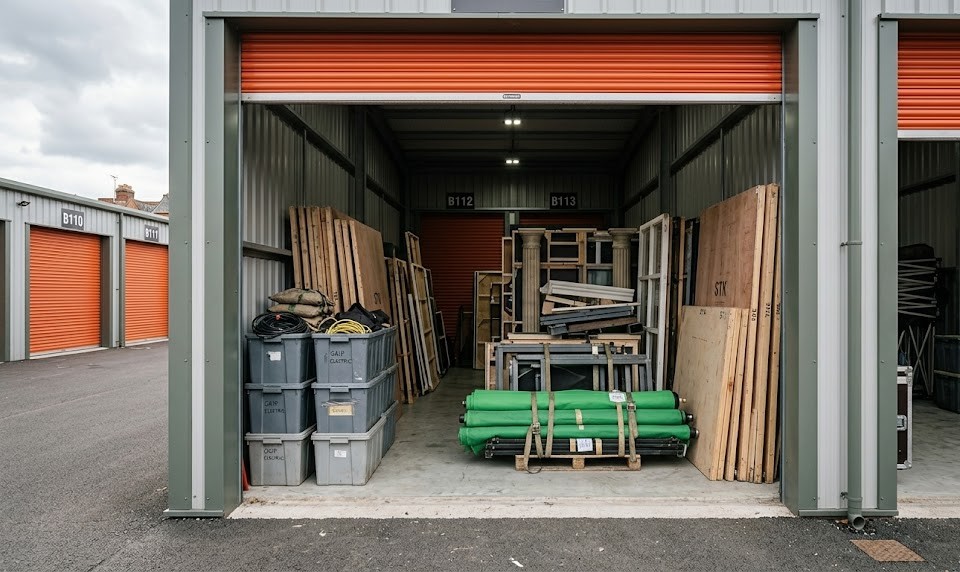
Film production in Berkshire moves fast. Between location shoots, studio days, and tight post-production schedules, crews accumulate mountains of production equipment, props, and set pieces that can’t always stay on-site. A three-week shoot might leave you with lighting rigs worth £30,000, custom-built set walls, period furniture, and boxes of costumes – all needing somewhere secure to go before the next project starts.
Short-term storage solves this problem without locking production companies into long leases or forcing them to clutter expensive studio space. For independent filmmakers, commercial producers, and TV crews working across Berkshire, flexible storage means you can scale up for a big shoot and scale back down when it wraps, paying only for what you need.
Why Film Productions Need Dedicated Storage Space
Most productions don’t have the luxury of permanent facilities. You might shoot a period drama in Windsor one month, a corporate video in Reading the next, then move to exterior locations around Newbury. Each project generates its own logistical puzzle: where do the props go between shoots? What happens to the lighting kit when the director’s still finalising the edit?
Studio space costs serious money – often £200-500 per day in the South East. Keeping equipment there between projects burns budget that could go towards better camera gear or an extra shooting day. Business storage solutions offer a practical alternative: secure, accessible space at a fraction of studio rental costs.
Here’s what typically needs storing:
- Lighting equipment – LED panels, tungsten lights, stands, reflectors, and power distribution units
- Camera gear – bodies, lenses, tripods, sliders, gimbals, and monitoring equipment
- Audio equipment – boom poles, wireless mic systems, mixers, and recording devices
- Set pieces – custom-built walls, furniture, decorative items, and architectural elements
- Props and costumes – period-specific items, wardrobe collections, and speciality pieces
- Grip equipment – dollies, tracks, sandbags, clamps, and rigging hardware
- Post-production materials – hard drives, backup storage, and archived project files
The average commercial shoot in Berkshire might involve 20-40 equipment cases, plus bulkier items like set flats or furniture. That’s more than fits in a van, and definitely more than you’d want cluttering your garage.
How Short-Term Storage Supports Production Schedules
Film production rarely follows neat timelines. A shoot scheduled for May might get pushed to June because of weather. Post-production might take three weeks or three months depending on client feedback. Equipment hired for one project often needs storing before it goes back to the rental house.
Short-term storage contracts – often month-to-month or even week-to-week – match this reality. You’re not committing to a year-long lease for gear you’ll only need intermittently. If a project extends, you extend the storage. If it wraps early, you’re not stuck paying for empty space.
Think of it like hiring crew: you bring people on when you need them, not six months in advance. Storage should work the same way.
One production company shoots corporate videos for tech firms around the M4 corridor. They’ll book a unit for four weeks whilst they’re in heavy production, store all their gear securely between shoots, then clear out once the project delivers. Next quarter, they’re back for another run. That flexibility means they’re never paying for more than they’re using.
Access matters as much as space. Productions often work unusual hours – early morning setups, late-night strikes, weekend shoots. A storage facility with extended access hours (or better yet, 24-hour access) means you’re not waiting until 9am to collect gear for a 7am call time. Drive-up access makes loading a van with 30 equipment cases far less painful than navigating narrow corridors and lifts.
Choosing the Right Unit Size for Production Equipment
Underestimating space is expensive. Overestimating wastes budget. Getting the unit size right means understanding not just what you’re storing, but how you need to access it.
Small units (25-50 sq ft) suit:
- Solo videographers with a camera kit, lighting, and audio gear
- Post-production teams storing hard drives and backup equipment
- Small props collections for single-location shoots
Medium units (50-100 sq ft) handle:
- Multi-camera setups with lighting and grip equipment
- Costume and props for small-to-medium productions
- Equipment between rental periods
Large units (100-200 sq ft) accommodate:
- Full commercial production gear including large lighting setups
- Set pieces, furniture, and architectural elements
- Multiple simultaneous projects with separate equipment packages
Extra-large units (200+ sq ft) work for:
- Major productions with extensive set builds
- Companies storing equipment for multiple crews
- Long-term archive of props, costumes, and set pieces from past projects
Here’s a practical test: lay out everything you’re storing in your studio or warehouse. Measure the footprint. Add 20% for walkways and access. That’s your minimum unit size. If you’re storing vertically with shelving, you can often drop down a size – but only if you’re organised enough to make that work.
Security Considerations for High-Value Equipment
A RED camera body costs £20,000. A decent lens kit adds another £15,000. Lighting equipment, audio gear, and accessories quickly push the total value of a production kit past £50,000. Leaving that in an unsecured garage or a mate’s lock-up isn’t risk management – it’s hoping nothing goes wrong.
Proper secure storage facilities offer multiple security layers:
- Perimeter security – fencing, gates, and controlled access points
- CCTV coverage – cameras monitoring entrances, corridors, and individual units
- Individual unit alarms – sensors that trigger if a unit’s accessed outside your booked times
- Secure access systems – PIN codes or key fobs that log who enters when
Insurance companies notice these details. Many production insurance policies require equipment to be stored in facilities meeting specific security standards. A break-in at a substandard facility might void your cover entirely, leaving you personally liable for tens of thousands in losses.
Beyond theft, environmental protection matters. Camera sensors don’t like condensation. Hard drives storing months of footage shouldn’t sit somewhere prone to temperature swings. Climate-controlled storage maintains stable conditions year-round, protecting sensitive electronics from the kind of moisture and temperature fluctuations that cause corrosion and data corruption.
Organising Storage for Quick Access During Production
You’ll always need the one thing that’s buried at the back. It’s a law of production.
Smart organisation starts with strategic packing. Frequently used items – camera bodies, basic lighting, essential audio gear – go near the front. Speciality items used for specific scenes or setups go further back. Archive materials and equipment you’re storing long-term can go at the very back.
Label everything. Not just “Camera Gear” but “Canon C300 Body + Batteries + Cards.” When you’re loading a van at 6am for a shoot, you don’t want to open six identical Peli cases looking for the right lens.
Create an inventory. A simple spreadsheet listing what’s in storage, which case it’s in, and roughly where in the unit it’s located saves hours across a production. Some crews photograph their storage layout on their phones – a visual reference beats memory every time.
Use shelving systems. Stacking cases on the floor wastes vertical space and makes lower items inaccessible. Industrial shelving units (the kind you can buy from any DIY store) let you store equipment at multiple heights whilst keeping everything visible and reachable.
Here’s an analogy that works: organise your storage unit like you’d organise a camera truck. Everything has a place. The most-used gear’s most accessible. You can find anything in under a minute, even in the dark. That level of organisation turns storage from a hassle into a tool that makes production smoother.
Packaging and Protecting Equipment for Storage
Throwing expensive gear into a unit and hoping for the best is how you end up with scratched lenses and damaged electronics. Proper packing protects your investment and extends equipment lifespan.
Hard cases (Peli, Storm, or similar) are non-negotiable for cameras, lenses, and sensitive electronics. They’re waterproof, crush-resistant, and stackable. Yes, they’re expensive – but less expensive than replacing a camera body because someone stacked boxes on top of it.
Soft cases and bags work for less fragile items like cables, smaller lights, and accessories. They take up less space than hard cases but offer less protection, so reserve them for items that can handle minor bumps.
Bubble wrap and foam protect individual items inside cases. Camera bodies should be wrapped separately from lenses. Glass elements shouldn’t touch each other. If it’s delicate, wrap it.
Desiccant packs absorb moisture inside sealed cases. Even in climate-controlled storage, condensation can form inside cases if they’re sealed immediately after coming in from a cold exterior shoot. Throw a few silica gel packs in each case to keep things dry.
Batteries require special attention. Lithium-ion batteries (the kind powering most cameras and lights) shouldn’t be stored fully charged or completely flat. Aim for 40-60% charge for long-term storage. Remove batteries from equipment to prevent slow discharge or potential leakage.
One production manager described packing for storage like this: “If you wouldn’t trust it in the back of a van on a bumpy road, don’t trust it in storage without proper protection.” That mindset prevents most storage-related damage.
Cost Comparison: Storage vs Studio Space
Let’s run the numbers. A small studio space in Berkshire suitable for storing equipment typically costs £150-300 per week. That’s £600-1,200 per month for space you’re probably not using for actual production.
A 75 sq ft storage unit – enough for a full commercial production kit – costs roughly £100-150 per month. For the same budget as one week of studio storage, you get an entire month of secure, accessible space.
The savings compound when you’re not in continuous production. If you shoot two weeks per month and store equipment the rest of the time, you’re spending £100-150 monthly instead of £600-1,200 for unused studio space. Over a year, that’s £6,000-12,600 saved – enough to upgrade your camera package or hire an additional crew member for several shooting days.
Business storage options often include features specifically useful for production companies: flexible contracts, drive-up access, extended hours, and the ability to upgrade or downgrade unit size as project demands change. You’re paying for space and service, not for facilities you don’t need like editing suites or sound stages.
For equipment rental companies serving Berkshire’s film industry, storage becomes even more critical. You need space to hold inventory between rentals, prepare kits for pickup, and maintain gear. Dedicated storage with good access beats trying to run a rental operation from a garage or spare bedroom.
Logistics: Moving Equipment Between Storage and Locations
The best storage unit in the world’s useless if you can’t efficiently move gear in and out. Production logistics are tight enough without adding unnecessary complications.
Drive-up access eliminates the need to cart equipment cases through corridors or wrestle them into lifts. You back your van up to the unit, load directly, and go. For a typical commercial shoot with 20-30 cases of gear, this saves 30-45 minutes compared to facilities where you’re parking in a car park and moving everything via trolley.
Access hours need to match production schedules. If your call time’s 7am, you need to collect gear by 6am. If you’re striking a set at 10pm, you need to return equipment that evening, not wait until the next morning. Facilities with 24-hour access or extended hours (6am-10pm) support real production timetables.
Location matters for efficiency. Storage in central Berkshire – around Newbury, for example – puts you within 30-45 minutes of most shooting locations across the county. You’re close to the M4 for London-bound productions, near Reading for corporate work, and accessible to rural locations for exterior shoots.
One production coordinator put it simply: “If I’m spending an hour each way collecting and returning gear, that’s two hours I’m not spending on actual production. Storage needs to be convenient or it’s not saving me anything.”
Consider transport costs too. If your storage is 45 minutes from your primary shooting locations, you’re adding fuel costs and vehicle time to every production day. Centralised storage near major routes minimises these hidden expenses.
Managing Multiple Projects with Shared Storage
Production companies juggling multiple projects simultaneously face a specific challenge: keeping equipment organised when different shoots need different gear. You can’t afford to mix up the period props for a heritage documentary with the modern furniture for a corporate video.
Zoning your storage unit by project works well. Designate one section for Project A, another for Project B. Use tape on the floor if needed to mark boundaries. Label everything clearly with project names, not just generic descriptions.
Colour-coded systems help visual identification. Project A gets blue labels, Project B gets red, Project C gets green. Even in poor lighting, you can quickly identify which cases belong to which shoot.
Separate units for major projects provide the clearest organisation. If you’re running a three-month documentary production alongside regular commercial work, keeping them in separate units eliminates any chance of cross-contamination. The cost of a second small unit’s negligible compared to the time saved avoiding mix-ups.
Shared equipment (items used across multiple projects) needs its own designated space. Your primary camera kit, standard lighting package, and core audio gear might serve multiple shoots. Keep these in a clearly marked section that’s easily accessible for any production.
Think of it like a well-organised warehouse: everything has a location, that location’s documented, and anyone on the team can find what they need without guessing. That level of organisation scales as your production company grows.
Planning for Equipment Between Rental Periods
Many productions don’t own all their gear – they rent specialised equipment for specific shoots. A high-speed camera for a product commercial, a drone for aerial footage, a specific vintage lens for a period piece. That rented equipment often arrives a day or two before the shoot and doesn’t need returning until a day or two after.
Storage provides a secure holding location for rented gear. You collect it from the rental house, store it overnight, use it on set, then return it to storage until the rental house can process the return. This is especially valuable when rental houses are in London but your shoot’s in Berkshire – you’re not making multiple round trips.
Insurance coverage for rented equipment requires secure storage. Most rental agreements stipulate that equipment must be stored in locked, secure facilities when not in use. Leaving a £15,000 cinema lens in your car overnight violates those terms and could void insurance if something happens.
Preparation space within your storage unit lets you check and prep rented gear before the shoot. You can verify everything arrived, test it works, and pack it properly for transport to location. Better to discover a missing accessory the day before the shoot than on set when you’re burning £500/hour in crew time.
Long-Term Archive Storage for Production Materials
Not everything in film production’s about the current project. Successful productions generate materials worth keeping: set pieces that might be reused, costumes for period work, props with potential future value, and archive footage or materials for potential re-edits or sequels.
Archive storage differs from active production storage. You’re not accessing it weekly or even monthly. It needs to be secure and climate-controlled, but convenience matters less than cost and long-term reliability.
Hard drives containing raw footage and project files represent irreplaceable value. A commercial shoot might generate 2-4TB of footage. Even after delivery, many production companies archive this material for years in case the client wants revisions or additional edits. These drives need stable temperature and humidity – exactly what climate-controlled storage provides.
Props and costumes from period productions often cost thousands to source or create. A Victorian-era production might involve £10,000 worth of authentic or replica furniture, clothing, and decorative items. Rather than selling these after the shoot, storing them for future period productions makes financial sense – especially if you specialise in historical content.
Set pieces can be expensive to build and cheap to store. A custom-built interior wall section might cost £500 to construct but only £30/month to store. If there’s any chance you’ll shoot in a similar setting again, storage beats rebuilding from scratch.
One drama production company keeps a 200 sq ft unit dedicated entirely to archive materials from past projects. They’ve reused set pieces across multiple productions, saving thousands in construction costs. The storage unit pays for itself if they reuse just one major set piece per year.
Working with Newbury Self Store for Production Storage
Film production storage isn’t just about four walls and a lock. It’s about flexibility, security, and access that matches how production actually works. Business storage solutions work well for production companies with commercial operations and equipment needs, whilst individual filmmakers might find personal storage suitable for smaller kits.
The ability to scale storage up and down matters enormously in an industry where project sizes vary dramatically. A small corporate video might need 50 sq ft for two weeks. A regional commercial could require 150 sq ft for three months. Having the flexibility to adjust without penalties or complicated contracts means storage supports production rather than constraining it.
Location in Berkshire provides strategic access to London, Reading, Oxford, and rural locations across the South East. You’re not adding hours of travel time to collect equipment before shoots or return it after wraps. Central positioning means less time on logistics and more time on actual production.
For major productions with extensive set builds or large equipment inventories, container storage offers the space and drive-up access needed for efficient loading and unloading. When you’re moving entire set pieces or multiple van-loads of equipment, direct vehicle access eliminates the physical labour and time involved in moving everything via trolleys.
Protecting Your Investment with Proper Storage Practices
Every piece of production equipment represents both financial investment and creative capability. A camera that’s damaged in storage doesn’t just cost money to replace – it potentially costs you a shooting day if it fails before a critical project.
Regular maintenance checks should be part of your storage routine. Even equipment sitting in storage needs periodic inspection. Batteries should be checked and cycled. Cases should be inspected for moisture. Equipment should be powered on occasionally to ensure it still functions correctly.
Insurance documentation benefits from detailed inventory records. Photograph your equipment, note serial numbers, and keep receipts. If you ever need to make a claim, having thorough documentation of what you stored and its condition dramatically simplifies the process.
Climate control isn’t optional for electronics. Temperature swings cause condensation. Humidity promotes corrosion. Storing a £30,000 camera kit in an uncontrolled environment’s like leaving it outside – eventually, something will go wrong. Climate-controlled units maintain stable conditions that protect sensitive equipment year-round.
Proper packing materials ensure you’re protecting equipment properly from the moment it enters storage. Quality boxes, bubble wrap, and packing materials aren’t expensive – especially compared to the cost of damaged gear.
Making Storage Work for Your Production Workflow
The best storage solution integrates seamlessly into your production process. You shouldn’t be thinking about storage logistics – you should be thinking about the creative work. That’s where Newbury Self Store comes in.
Whether you’re an independent filmmaker between projects, a production company managing multiple shoots, or an equipment rental business serving Berkshire’s growing film industry, the right storage approach protects your investment whilst supporting your workflow. It’s not just about storing gear – it’s about making sure that gear’s ready when you need it.
If you’re looking for flexible, secure storage that works around production schedules rather than against them, contact us to discuss your requirements. We understand that film production doesn’t follow nine-to-five hours, and our storage solutions reflect that reality.