
 01635 581 811
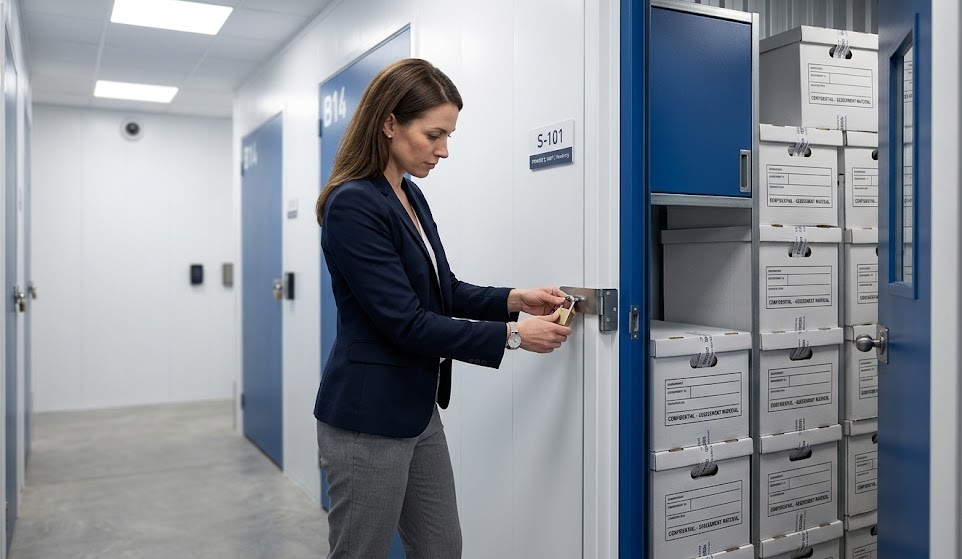
Every exam season brings the same challenge: protecting the integrity of assessment materials before, during, and after testing periods. A single breach – whether it’s unauthorised access to papers, damage from poor storage conditions, or simple misplacement – can compromise months of preparation and affect hundreds of students.
For schools, colleges, and examination centres across Newbury and the surrounding areas, exam material secure storage isn’t just about finding space. It’s about maintaining the chain of custody for sensitive documents, protecting materials from environmental damage, and ensuring compliance with examination board requirements. The stakes couldn’t be higher.
Why Standard Storage Solutions Fall Short for Exam Materials
Most educational institutions face a predictable pattern. Examination materials arrive weeks before testing begins, requiring immediate secure storage. Staff rooms get commandeered, cupboards overflow, and valuable assessment papers end up stacked in corners or locked in filing cabinets never designed for bulk storage.
Here’s what typically goes wrong: temperature fluctuations in older buildings cause paper to warp or become damp. Overcrowded storage areas make it difficult to maintain proper organisation, increasing the risk of materials being misplaced or accessed by unauthorised personnel. And when multiple exam boards send materials on different schedules, the logistical puzzle becomes genuinely difficult to manage.
Think of it like trying to store fresh ingredients in a garage rather than a proper pantry. Technically, you can make it work. But the risk of spoilage, contamination, or simple disorganisation multiplies every day.
What Examination Boards Actually Require
The Joint Council for Qualifications (JCQ) publishes clear guidelines about storing examination materials. These aren’t suggestions – they’re mandatory requirements that centres must meet to maintain their approved status.
Security requirements include:
- Materials must be stored in a secure, lockable facility with restricted access
- Only authorised personnel should have keys or access codes
- Storage areas must protect papers from theft, loss, or unauthorised viewing
- A log of who accesses materials and when must be maintained
- Environmental conditions must prevent damage from damp, heat, or pests
Specific storage conditions:
- Consistent temperature to prevent paper degradation
- Low humidity to avoid warping or mould growth
- Protection from direct sunlight which can fade printed materials
- Secure separation of different examination papers to prevent cross-contamination
- Space for proper organisation by subject, date, and examination board
Failing to meet these standards doesn’t just risk a slap on the wrist. Examination centres can lose their approved status, forcing students to travel to alternative venues or, in severe cases, delaying their examinations entirely.
The Hidden Costs of Inadequate Storage
Beyond compliance issues, poor storage creates cascading problems that affect your entire examination process. Centres spend hours searching for specific papers because exam materials weren’t properly organised in cramped storage areas. One misplaced envelope can delay an entire examination session, affecting dozens of students and requiring emergency calls to examination boards.
There’s also the staff stress factor. Exam coordinators and invigilators already work under tremendous pressure during peak periods. When they’re worrying about whether materials are secure, whether damp has affected papers stored in that dodgy cupboard, or whether they’ll find everything they need on exam day, that pressure multiplies.
One secondary school in Reading stored GCSE papers for 280 students in a converted storage room that lacked climate control. They’d been using the same space for three years without issues, so when spring arrived unseasonably warm with humidity levels spiking to 75%, nobody thought to check the papers. By the time staff retrieved materials for the first examination morning, they discovered the bottom six boxes had absorbed moisture over two weeks. The papers weren’t completely ruined, but they were noticeably damp and some pages stuck together. The examination officer had to make emergency calls to AQA at 6:45am, delaying the 9am start by 40 minutes whilst replacement papers were couriered from a nearby centre. The delay affected 60 students across two exam rooms, required incident reports to the examination board, and triggered a formal investigation into storage procedures that resulted in the centre being placed on enhanced monitoring for the next academic year. The school calculated the crisis cost them £850 in emergency courier fees, replacement materials, and additional invigilator hours, plus immeasurable stress.
How Professional Storage Solves These Challenges
Secure, climate-controlled storage removes the uncertainty from your examination material management. Rather than adapting inadequate spaces within your institution, you gain access to purpose-built facilities designed specifically for sensitive document storage.
Temperature and humidity control maintains consistent conditions year-round. Your papers arrive in perfect condition, and they stay that way until examination day. No warping, no moisture damage, no fading from heat or sunlight exposure.
Comprehensive security systems provide multiple layers of protection. Modern facilities use 24/7 CCTV monitoring, individual unit alarms, and controlled access systems that create a detailed audit trail. You know exactly who accessed materials and when – crucial information for maintaining compliance and investigating any potential security concerns.
Flexible space allocation means you’re not trying to cram three examination boards’ worth of materials into a space designed for one. Need more room this year because you’re running additional examination sessions? You can scale up. Running fewer examinations next term? Scale back down without being stuck with wasted space.
Organising Materials for Maximum Efficiency
Proper organisation transforms storage from a logistical headache into a streamlined system. The key’s thinking about retrieval from day one, not just about getting materials off your hands.
Create a clear labelling system:
- Use colour coding for different examination boards (AQA in blue, Edexcel in red, OCR in green)
- Label boxes with subject, examination date, and session time
- Number containers sequentially so you can track exactly what you have
- Include handling instructions for any materials requiring special care
Establish zones within your storage unit:
- Separate upcoming examinations from future sessions
- Keep supplementary materials (answer booklets, graph paper) in a dedicated area
- Store completed examination scripts separately from unused materials
- Maintain a quarantine section for materials requiring investigation or special handling
Maintain a master inventory:
- Log every box or container with its contents and location
- Update the inventory whenever you add or remove materials
- Keep a backup copy of your inventory off-site (digital’s ideal)
- Cross-reference with examination board delivery notes to confirm nothing’s missing
Think of it like organising a professional kitchen. Chefs don’t randomly throw ingredients into cupboards. Everything has its place, everything’s labelled, and any team member can find what they need quickly. Your storage system should work the same way.
Managing Access and Maintaining Security
Even the most secure storage facility becomes vulnerable if access isn’t properly controlled. Your storage security’s only as strong as your access protocols.
Limit authorised personnel to a small, clearly defined group. Typically, this includes the examinations officer, senior invigilators, and perhaps one or two administrative staff members. Everyone else, regardless of their role within the institution, should be excluded from access.
Implement a sign-out system that records every visit to the storage facility. Note the date, time, who accessed materials, what they retrieved or returned, and the purpose of access. This creates an audit trail that’s invaluable if questions arise about material security.
Change access codes or locks between major examination periods, especially if staff turnover occurs. Even if a former employee had legitimate access, that authorisation ends when their employment does.
Conduct regular inventory checks to verify that everything you should have is actually present. Don’t wait until the day before examinations to discover that materials are missing. Monthly checks during peak periods catch problems whilst there’s still time to resolve them.
Handling Special Materials and Circumstances
Some examination materials require additional considerations beyond standard secure storage. Modified papers for students with special educational needs, materials for practical examinations, and electronic media all present unique challenges – like the difference between storing standard library books versus rare manuscripts requiring special handling.
Modified large print or braille papers often arrive in bulkier formats than standard materials. Ensure your storage space accommodates these larger items without crushing or damaging them. Keep them separate from standard papers to prevent mix-ups during distribution.
Practical examination materials – whether it’s science equipment, art supplies, or technology components – may require different storage conditions than paper-based assessments. Consider whether these items need separate storage arrangements, particularly if they’re temperature-sensitive or fragile.
USB drives or other electronic media containing examination materials need protection from magnetic fields, extreme temperatures, and physical damage. Store them in protective cases within your secure facility, and maintain backups according to examination board guidelines.
Confidential instructions for invigilators must remain sealed until the specified opening time. Store these separately from student materials, clearly marked with opening times and handling instructions. It’s surprisingly easy to accidentally open the wrong envelope when you’re rushing to set up an examination room.
Planning Your Storage Needs Throughout the Academic Year
Examination material storage isn’t a one-size-fits-all situation. Your needs fluctuate dramatically throughout the academic year, and your storage solution should adapt accordingly.
Peak periods (typically May-June for summer examinations and November-January for winter sessions) require maximum capacity. You’ll be storing assessment materials for multiple subjects, year groups, and examination boards simultaneously. Plan for this surge well in advance.
Shoulder periods (March-April and September-October) involve storing materials for upcoming examinations whilst potentially still holding completed scripts awaiting collection by examination boards. You need space for both incoming and outgoing materials.
Low periods (July-August and February-March) offer opportunities to scale back storage space and reduce costs. However, you’ll still need secure storage for any resit materials, appeals documentation, or early arrivals for the next examination session.
For institutions running examinations year-round – particularly further education colleges and training centres – the pattern becomes more complex. You might need consistent storage capacity rather than the dramatic peaks and troughs typical of schools.
Integrating Storage Into Your Examination Logistics
Effective storage isn’t isolated from your broader examination management process. It’s a crucial component that should integrate seamlessly with your preparation, invigilation, and post-examination procedures.
Delivery and intake: When materials arrive from examination boards, don’t just sign and stack. Check delivery notes against contents, verify that security seals are intact, and immediately transfer materials to secure storage. Document any discrepancies or damage on delivery.
Pre-examination preparation: Plan retrieval schedules so you’re not making emergency trips to storage the morning of an examination. Collect materials the day before, verify you have everything needed, and store them overnight in a secure area at your institution. This creates a buffer against last-minute discoveries of missing items.
Post-examination handling: Completed scripts need secure storage until collection by examination boards. Treat these with the same security protocols as unused materials. A leaked examination paper’s serious; leaked student answers can be equally problematic.
Record retention: After examinations conclude, you’ll have various materials requiring retention for specified periods – attendance registers, seating plans, incident reports. Secure storage facilities provide an ideal solution for these documents, which must remain accessible but don’t need to clutter your active workspace.
Cost Considerations and Budgeting
Educational institutions operate on tight budgets, making cost-effectiveness a legitimate concern. However, the true cost of storage must account for more than just the monthly rental fee.
Calculate the full picture:
- Direct storage costs (rental fees, insurance)
- Avoided costs (no need to modify existing spaces, no climate control installation)
- Risk mitigation (preventing examination breaches, avoiding penalties from examination boards)
- Staff time savings (less searching for materials, streamlined logistics)
- Compliance assurance (meeting JCQ requirements without additional infrastructure investment)
For many institutions, professional storage actually costs less than attempting to create adequate secure storage on-site. Converting a room into a compliant storage facility requires locks, climate control, security systems, and potentially structural modifications. These capital expenses often exceed several years of professional storage fees.
Budget timing matters too. Many storage facilities offer flexible terms, allowing you to increase space during peak examination periods and reduce it during quieter months. This flexibility means you’re not paying for capacity you don’t need year-round.
Preparing for Inspections and Audits
Examination centres face regular inspections from examination boards and quality assurance bodies. Your storage arrangements will be scrutinised as part of these reviews.
Documentation’s your best defence. Maintain comprehensive records of your storage facility’s security features, access logs, environmental controls, and any incidents or irregularities. When an inspector asks to see your storage protocols, you should be able to produce detailed documentation immediately.
Conduct internal audits before official inspections. Walk through your storage procedures with fresh eyes, looking for potential weaknesses or areas where documentation might be incomplete. Better to discover and fix problems yourself than have an inspector identify them.
Photograph your storage setup regularly. Visual documentation proves that materials are stored according to requirements and provides a reference point if questions arise about conditions at specific times.
Making the Transition to Professional Storage
If you’ve been managing examination materials in-house and recognise that your current arrangements aren’t adequate, transitioning to professional storage requires planning but isn’t complicated.
Start by auditing your current materials. What examination boards do you work with? What volumes of materials do you typically receive? What’s your peak storage requirement versus your baseline? This information guides you in selecting appropriate storage capacity.
Visit potential storage facilities. Don’t make this decision based solely on website descriptions. Inspect the security systems, check the climate control, and evaluate accessibility. How easy is it to reach the storage facility when you need to collect materials? Are the access hours compatible with your examination schedule?
Develop your transition plan. You can’t move materials mid-examination period, so plan the transition for a natural break. Summer holidays work well for schools, or the gap between major examination sessions for year-round centres.
Create your new organisational system before moving materials. Design your labelling scheme, plan your storage layout, and prepare inventory documentation. Moving materials into storage is the perfect opportunity to implement a better organisational system than you had before.
Newbury Self Store understands the specific requirements of educational institutions and examination centres. We can guide you through security features, climate control capabilities, and access arrangements that meet JCQ standards. Our business storage solutions provide the secure storage environment that examination materials demand.
Long-Term Benefits Beyond Examination Security
Once you’ve established professional storage for examination materials, many institutions discover additional applications that provide year-round value.
Archive storage for student records that must be retained for specified periods but don’t need to occupy valuable on-site space.
Seasonal equipment storage for sports gear, theatrical props, or seasonal decorations that clutter valuable teaching and administrative areas during off-seasons.
Temporary storage during building works or renovations, protecting valuable equipment and materials whilst construction proceeds.
These additional uses help justify the storage investment beyond the examination-specific benefits, making it a comprehensive solution for institutional space challenges.
Protecting What Matters Most
Examination materials represent more than just paper and ink. They’re the culmination of students’ years of study, the gateway to their future educational and career opportunities, and a responsibility that educational institutions must take seriously.
Exam material secure storage isn’t a luxury – it’s a fundamental requirement for maintaining examination integrity and meeting your obligations to students and examination boards. The question isn’t whether you can afford proper storage, but whether you can afford the consequences of inadequate storage when something inevitably goes wrong.
Climate-controlled, secure facilities provide peace of mind that assessment materials remain in perfect condition, accessible when needed, and protected against unauthorised access. They transform examination logistics from a source of stress into a smoothly managed process, allowing you to focus on what truly matters: ensuring students can demonstrate their knowledge in fair, properly administered assessments.
For examination centres seeking reliable storage solutions that meet examination board requirements whilst providing flexibility and cost-effectiveness, exploring professional storage options offers a practical path forward. Your students deserve examinations run with absolute integrity. Proper storage of exam materials is where that integrity begins.
Contact us to discuss how our secure storage facilities can support your examination centre’s needs, protect your assessment materials, and ensure compliance with JCQ requirements. We understand that your examination materials aren’t just documents – they’re the foundation of fair assessments that shape students’ futures.