
 01635 581 811
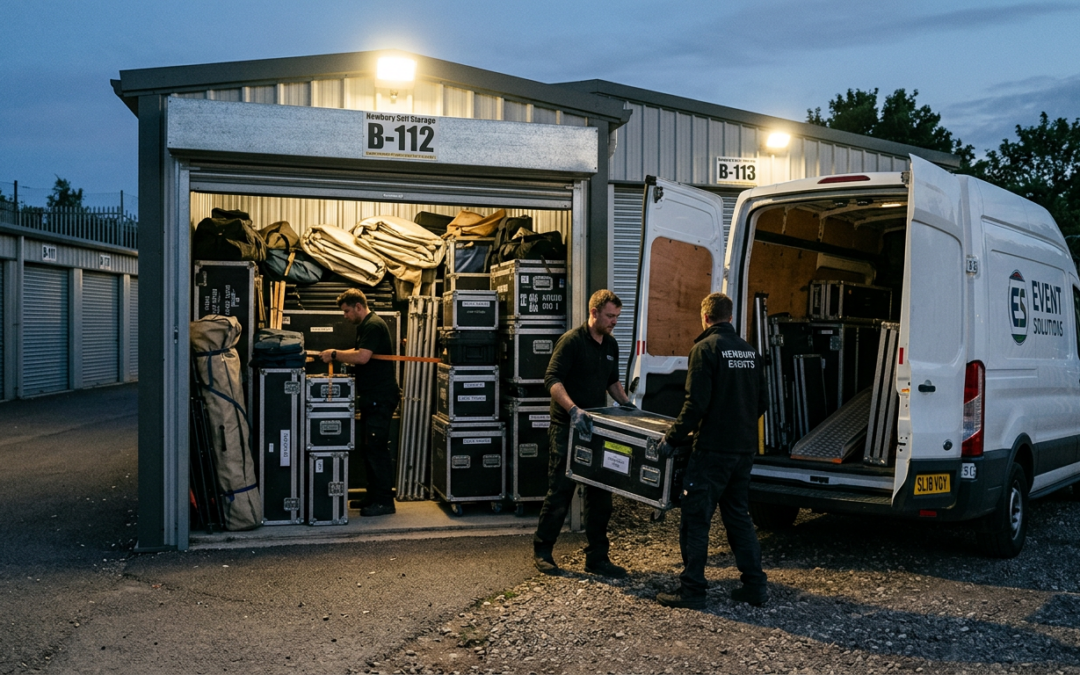
Running events involves far more than just the main day. It encompasses the chaotic Thursday night when you are loading vans, the frantic Saturday morning setup, and the exhausted Sunday evening when you are trying to find space for everything again. Whether you manage corporate functions, wedding hire, or festival production, the equipment does not disappear between gigs. It needs somewhere secure, accessible, and practical.
Event professionals face a specific storage challenge that standard solutions rarely address. You need rapid access during peak periods, robust protection for expensive equipment, and enough space to organise items by event type or client. A jumbled garage or overstuffed warehouse unit creates bottlenecks that cost you time when you are already working against the clock.
Container storage offers event businesses a practical middle ground between expensive commercial premises and inadequate domestic space. A drive-up storage point means you can reverse a van directly to your unit, load efficiently, and get to your venue without adding unnecessary handling steps. For weekend-heavy event schedules, this accessibility makes the difference between arriving on time and arriving stressed.
The Unique Demands of Event Gear
Event kit is not like archived paperwork or seasonal clothing. It is bulky, fragile, valuable, and needed at unpredictable intervals. A lighting rig might sit unused for three weeks and then be required for four consecutive weekends. Sound equipment needs protecting from moisture while staging components must remain accessible without dismantling an entire storage system to reach them.
Most event operators start by filling spare rooms, sheds, or the back of their vehicles. That works until you take on a second client or a third. Suddenly you are spending Sunday evenings playing Tetris with flight cases. You might even forget which gazebo poles belong to which frame.
The hidden cost is not just the rental fee for storage. It includes the time wasted searching for items, the damage from poor storage conditions, and the professional embarrassment of arriving at a venue with the wrong equipment. One missing cable or damaged speaker can derail an entire setup. Climate-controlled environments matter more than many event professionals initially realise. Electronics do not respond well to damp conditions, and fabrics can develop mould in poorly ventilated spaces.
Container Storage as an Off-Site Depot
Think of container storage as your off-site equipment depot. Unlike traditional self-storage units accessed through corridors and lifts, containers provide ground-level access. You drive up, open the doors, and you are standing in front of your entire inventory.
For event work, this setup transforms your workflow. On a Friday afternoon before a Saturday wedding, you can load chairs, table settings, and decorations in one efficient session. On a Sunday evening after a festival, you reverse in, unload the muddy kit, and deal with cleaning and maintenance during the week when you are not racing against setup times.
The size of containers matches event equipment perfectly. A standard 20-foot container holds approximately 30 cubic metres. This is enough for a full wedding setup including tables, chairs, linens, lighting, and sound equipment. If you need more capacity, a 40-foot container doubles that space, making it suitable for larger production companies managing multiple simultaneous events.
The Formula 1 Pit Stop
Think of your container as a pit stop rather than a dumping ground. Formula 1 teams do not throw tyres randomly into the garage; they have systems that work under pressure. Your storage should function the same way. When the pressure is on during a Friday load-out, you need to know exactly where the XLR cables are without digging through a pile of drapes.
A well-organized container allows you to perform like a pit crew. You pull up, grab the pre-loaded flight cases, check your manifest, and go. There is no wasted movement and no searching. This level of efficiency not only saves time but also reduces the physical and mental fatigue that often leads to mistakes on site.
Zoning Your Space for Efficiency
Random storage creates random problems. You need a system that lets you locate specific items quickly, protects delicate equipment, and allows you to pack for different event types without emptying the entire space. Zone your container by equipment category. Create distinct areas for audio, lighting, staging, furniture, and decorative items.
Use the vertical space by installing shelving units along one side for smaller items like cables, tools, and accessories. Keep heavier items like speaker stacks and staging platforms on the floor, positioned where they are easiest to manoeuvre. Standardise your packing approach. Flight cases and stackable storage boxes prevent the chaotic pile situation that develops when you are rushing to unload after a late-night event.
A practical layout approach works best for mixed-event businesses. Use the left side for shelving small items. Keep the centre space clear as your loading zone. Use the right side for larger equipment on the floor. Use the back wall for seasonal or infrequently used items like Christmas decorations in January or summer festival gear in November.
The Role of Newbury Self Store
This focus on operational efficiency is where Newbury Self Store becomes a vital partner for your business. We understand that the events industry does not operate on a 9-to-5 schedule. You need access that aligns with late-night returns and early morning starts. Our facility is designed to support these logistical demands with robust security and ease of access.
Security features matter when you are storing thousands of pounds worth of equipment. Our site provides CCTV coverage and perimeter fencing, while the containers themselves are constructed from heavy-duty steel with lockable doors. You can add your own padlocks for an extra layer of defence. This infrastructure gives you peace of mind knowing your livelihood is protected when you are not on site.
We also offer flexibility. The events industry is highly seasonal. You might need extra space for a busy summer season but less during the winter months. Our contracts allow you to scale your space requirements up or down, ensuring you are not paying for empty air during your quiet periods.
Preservation and Maintenance Protocols
Storage is not just about space; it is about preservation. Event equipment takes a beating during use, and improper storage compounds the wear. Clean items before storing them. Mud-covered gazebo frames, sticky spilled drinks on sound equipment, or dusty drapes create long-term problems. Dirt attracts moisture which causes corrosion and degradation.
Protect electronics and fabrics specifically. Wrap speakers and lighting equipment in breathable covers rather than plastic which traps moisture. Store fabrics in sealed containers with moisture absorbers. Keep cables coiled properly using the over-under technique to prevent damage and tangling. Use quality packaging materials like bubble wrap and sturdy boxes to protect delicate items from impact damage during transit and storage.
Maintain as you store. Check equipment for damage as you pack it away. Note items needing repair or replacement immediately. A broken chair leg is easier to fix on a Tuesday afternoon than at 7am on a Saturday when you are setting up a wedding breakfast.
The Weekend Workflow Logistics
Event work compresses into tight timeframes. You might have six hours on Saturday morning to transform an empty venue into a wedding reception, then four hours on Sunday evening to strip everything out and return it to storage. Your Friday preparation determines your Saturday success. Load your vehicle the evening before, checking items against your event-specific list.
Position items in loading order. The things you need first should be accessible last. Chairs go in before tables. Extension cables go in before lighting fixtures. Drive-up container access eliminates the storage facility bottleneck. You are not waiting for lifts or navigating corridors. You reverse to your container, load efficiently, and leave.
Create a returns process that prevents chaos. Dirty or damaged items go to a designated area for weekday attention. Clean and functional equipment gets returned to its proper storage location. Consumables get noted for reordering. This twenty-minute investment on Sunday prevents hours of sorting later.
Scaling from Spare Room to Container
Most event businesses do not start with a 40-foot container full of equipment. You begin with one client, a handful of events, and kit that fits in your spare room. The question is not whether you will need more space; it is when you will need it. Flexible arrangements matter for seasonal event businesses.
Flexible personal options offer month-to-month solutions for smaller operators or those just expanding. You can scale up during peak season and scale down during quiet months. This helps you avoid committing to expensive annual commercial leases that create financial pressure during slow periods.
For established businesses with consistent bookings, professional business space provides the foundation for reliable operations. Reliable access and proper security transform your business from a person with equipment to a professional event company. It allows you to separate clean and dirty storage, preventing cross-contamination and creating a clear workflow for your team.
A Real-World Application
I knew a festival organizer named Mark who stored everything in three separate garages across town. He spent four hours every Friday just driving between them to collect the specific lighting, sound, and staging gear he needed for that weekend. It was exhausting and inefficient.
He eventually consolidated everything into a single large container unit with us. The difference was immediate. He saved money on fuel, but more importantly, he reclaimed his Friday afternoons. He told me that having everything visible in one place meant he stopped buying duplicate cables “just in case” because he could finally see exactly what he owned. It turned his chaotic logistics into a streamlined operation.
Conclusion
Event equipment storage is not glamorous, but it is foundational. The difference between a professional operation and a chaotic scramble often comes down to what happens between events. It depends on how you store, maintain, and organise the tools of your trade. Container storage provides the physical space and practical access that event businesses need to thrive.
What you do with that space determines whether it is just somewhere to keep stuff or a genuine competitive advantage. For event professionals managing weekend setups and breakdowns, having reliable and accessible storage is not a luxury; it is the infrastructure that makes everything else possible.
To discuss your specific storage requirements, call 01635 581 811 or get in touch with our team to organize your viewing.