
 01635 581 811
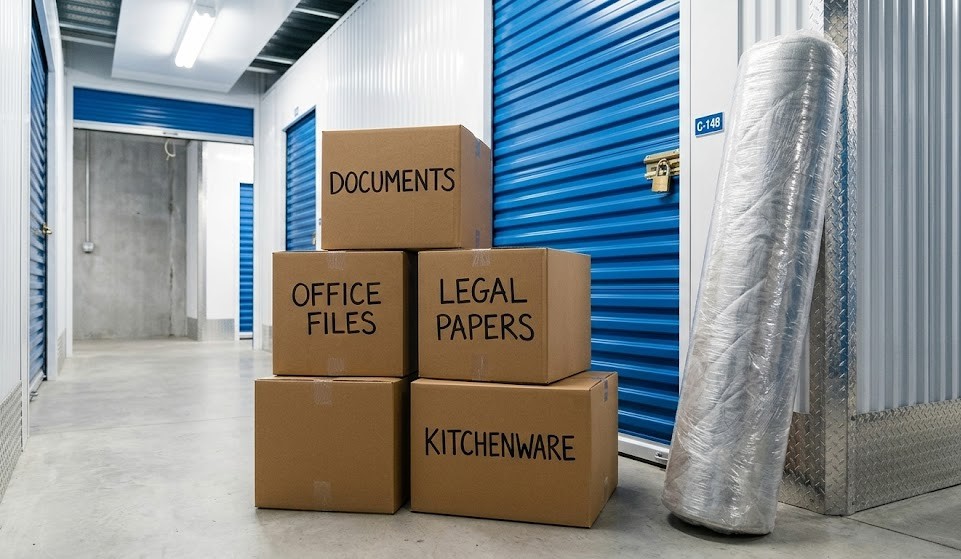
Landlords and property managers face a surprisingly common problem: tenants move out and leave belongings behind. It might be a few boxes in the garage, a mattress in the bedroom, or an entire flat’s worth of furniture. Whatever the scale, you can’t simply bin everything or change the locks and forget about it. The legal obligations around tenant belongings storage are strict, and getting it wrong can lead to claims for damages, disputes, or even court action.
Understanding your responsibilities protects both you and your former tenant. It also helps you get the property back on the market quickly, without the stress of wondering whether you’ve broken the law. This guide walks you through the legal framework, practical steps, and storage solutions that keep you compliant while minimising disruption.
Why tenants leave belongings behind
Before diving into the legal side, it’s worth understanding why this happens. Tenants don’t usually abandon possessions out of spite. Common reasons include:
Financial difficulties: A tenant might leave suddenly due to unpaid rent or eviction, unable to afford removal costs.
Personal crises: Relationship breakdowns, family emergencies, or mental health struggles can lead to chaotic moves where items are forgotten or left behind.
Genuine oversight: In the rush of moving, boxes in the loft, items in the shed, or furniture in storage cupboards are easily missed.
Recognising these reasons doesn’t change your legal duties, but it does explain why clear communication and proper procedures matter. Most tenants don’t want to lose their belongings, and most landlords don’t want the hassle of dealing with them. A structured approach resolves the issue fairly.
The legal framework for abandoned tenant property
Your obligations depend on whether the tenancy has ended and whether the tenant has genuinely abandoned the property or simply left items behind after moving out. The law treats these situations differently, and the consequences of getting it wrong can be significant.
When the tenancy has ended
Once a tenancy ends formally, whether through expiry of a fixed term, a valid notice period, or a possession order, you have the right to re-enter the property. But that doesn’t give you the right to immediately dispose of anything left behind.
Under common law and the Torts (Interference with Goods) Act 1977, you have a duty of care towards the tenant’s possessions. You can’t treat them as rubbish just because the tenant has moved out. Instead, you must take reasonable steps to:
Secure the items: Store them safely to prevent damage or theft.
Contact the tenant: Make reasonable efforts to notify them and arrange collection.
Allow a reasonable period: Give the tenant time to collect their belongings before taking further action.
What counts as “reasonable” depends on the circumstances. A week might be reasonable for a few boxes; a month might be appropriate for an entire household’s contents. The key is documenting your efforts and acting proportionately. Proper abandoned property storage procedures protect you from potential legal claims.
When the tenant has disappeared
If the tenant has vanished without notice, you still can’t assume abandonment immediately. You must make genuine attempts to contact them using:
- The last known phone number or email address
- Emergency contact details provided at the start of the tenancy
- Forwarding addresses if available
If these efforts fail, you can apply to the court for an order allowing you to dispose of the goods. This protects you legally and creates a clear paper trail if the tenant later claims you acted improperly.
Practical steps for managing left-behind belongings
Knowing the law is one thing; applying it in a real-world situation is another. Here’s a step-by-step process that balances legal compliance with practical efficiency.
Step 1: document everything
As soon as you discover abandoned items, take photographs and create an inventory. List every item in detail, brand names, condition, approximate value. This evidence protects you if the tenant later claims you’ve lost or damaged valuable possessions.
Store these records securely. If the situation escalates to a legal dispute, contemporaneous notes and photos are far more credible than vague recollections months later.
Step 2: contact the tenant immediately
Send a written notice to the tenant’s last known address and any forwarding address they’ve provided. Use recorded delivery so you have proof of postage. Your notice should include:
- A clear statement that they’ve left belongings behind
- A detailed list of the items
- A deadline for collection (typically 14-28 days, depending on the volume and value of goods)
- Your contact details and instructions for arranging collection
- A warning that you may dispose of the items if they’re not collected by the deadline
If you have an email address or phone number, use those channels too. The more effort you make, the stronger your legal position.
Step 3: store the items safely
You’re not expected to keep a tenant’s belongings in the property indefinitely, especially if you’re trying to re-let it. Moving items to a secure location is perfectly reasonable, but you must ensure they’re protected from damage, theft, or weather.
This is where personal storage becomes invaluable. A self-storage unit provides a secure, dry environment where you can keep items safe while you follow the legal process. It also frees up the property so you can prepare it for new tenants without delay.
Think of it like this: storing a tenant’s belongings is a bit like holding someone’s lost wallet. You can’t keep it forever, but you can’t throw it away either. You hold onto it responsibly until the owner collects it or a reasonable process allows you to move on.
Step 4: set a reasonable deadline
The deadline you give depends on the value and volume of the items. For a few bags of clothes or kitchen utensils, two weeks is usually sufficient. For furniture, white goods, or sentimental items like family photos, a month is more appropriate.
Be clear in your notice that after the deadline, you may dispose of the items, donate them to charity, or sell them to recover storage costs. This transparency is crucial, it shows you’ve acted fairly and given the tenant every opportunity to reclaim their property.
Step 5: dispose of items legally
If the tenant doesn’t respond by the deadline, you can proceed with disposal. But even now, you must act reasonably. You can:
Donate items to charity: This is often the simplest and most ethical option for clothing, books, or household goods.
Sell items: If the belongings have significant value, you can sell them to recover storage and disposal costs. Any surplus should be held for the tenant or paid into a court account if you can’t contact them.
Dispose of worthless items: Broken furniture, stained mattresses, or rubbish can be thrown away, but keep photos as evidence that these items had no value.
Never dispose of items that clearly have sentimental or legal importance, passports, birth certificates, family photos, legal documents, or medical records. These should be returned to the tenant or handed to the police if you can’t locate them.
A real-world example: the student flat
Imagine a landlord renting a flat to three students on a 12-month contract. At the end of the tenancy, two students move out on time, but the third leaves suddenly, abandoning a desk, a wardrobe, several boxes of textbooks, and a guitar.
The landlord photographs everything, creates an inventory, and sends a recorded-delivery letter to the student’s home address (listed as the emergency contact). She also emails and texts. The notice gives 21 days for collection and explains that uncollected items will be donated or disposed of.
After two weeks, the student replies, explaining he’d moved abroad for a family emergency and forgot about the items. He asks if the landlord can hold them for another month while he arranges a friend to collect them. The landlord agrees, moves the items to a small storage unit, and invoices the student for the storage cost. The friend collects everything four weeks later, and the matter is resolved without conflict.
This example shows how clear communication, reasonable deadlines, and secure storage can turn a potential legal headache into a straightforward process.
Storage solutions for landlords
If you manage multiple properties, dealing with abandoned belongings can become a recurring issue. Having a reliable abandoned property storage solution in place makes the process far less stressful.
Why self-storage works
Self-storage offers flexibility that suits the unpredictable nature of tenant belongings storage. You can rent a unit for as long as you need, whether that’s two weeks or two months, and scale the size to match the volume of items. You’re not cluttering your own home or garage, and you’re not leaving items in the property where they could be damaged or stolen.
Drive-up access is particularly useful if you’re moving furniture or large boxes. You can load and unload quickly without navigating stairs or narrow corridors. And because reputable facilities offer 24-hour CCTV and secure locks, you’re fulfilling your duty of care to protect the tenant’s belongings.
Recovering storage costs
You’re entitled to recover reasonable costs for storing and disposing of a tenant’s belongings, but you must follow the correct process. Deduct costs from the tenancy deposit only if the tenancy agreement explicitly allows it and you’ve followed the deposit protection scheme’s rules.
If the deposit doesn’t cover your costs, you can pursue the tenant through the small claims court. Keep detailed records of all expenses, storage fees, removal costs, postage for notices, and be prepared to justify them as reasonable.
Common mistakes landlords make
Even experienced landlords can trip up when dealing with abandoned belongings. Here are the most common errors and how to avoid them.
Disposing of items too quickly
It’s tempting to clear out a property immediately, especially if you’re under pressure to re-let it. But throwing away a tenant’s belongings without following the proper process can lead to a claim for damages. Even if the items seem worthless to you, they might have sentimental or financial value to the tenant.
Always document, notify, and wait. It’s worth the short-term inconvenience to avoid a long-term legal dispute.
Failing to document
Without photos and an inventory, you have no evidence of what was left behind or its condition. If the tenant later claims you’ve lost valuable items, you’ll struggle to defend yourself. Make documentation your first step, every time.
Ignoring sentimental items
A tenant might not care about a worn-out sofa, but they’ll care deeply about family photos, heirlooms, or personal documents. Treat these items with extra care. If you can’t contact the tenant, consider holding onto them for longer or handing them to the police.
Not seeking legal advice
If the situation is complex, high-value items, an unresponsive tenant, or unclear abandonment, don’t guess. Speak to a solicitor or a landlord advisory service. The cost of advice is far less than the cost of getting it wrong.
How self-storage supports legal compliance
Using a self-storage facility isn’t just convenient, it actively supports your legal obligations. By moving items to a secure, climate-controlled unit, you’re demonstrating that you’ve taken reasonable steps to protect the tenant’s property. This is exactly what the law requires.
If the tenant later claims you’ve acted improperly, you can point to the abandoned property storage arrangement as evidence of your good faith. You’ve gone beyond simply leaving items in the property or dumping them in a shed. You’ve invested time and money to ensure they’re safe.
For landlords managing multiple properties, having a relationship with a local storage provider streamlines the tenant belongings storage process. You know where to take items, you understand the costs, and you can act quickly without scrambling to find a solution each time. Contact us to discuss flexible storage options tailored to landlords’ needs.
When to involve the authorities
In rare cases, you might need to involve the police or local council. This typically happens when:
- The tenant has disappeared completely, and you suspect foul play
- The belongings include illegal items or substances
- The items are causing a health or safety hazard (e.g., perishable food, hazardous materials)
If you discover anything suspicious, don’t touch it. Contact the police and let them assess the situation. Your priority is protecting yourself legally, not playing detective.
Final thoughts: balancing rights and practicalities
Managing abandoned property storage isn’t glamorous, but it’s an essential part of being a responsible landlord. The law expects you to act fairly, communicate clearly, and protect the tenant’s property while also recognising your need to move on and re-let the property.
The key is having a clear process: document everything, contact the tenant promptly, store items securely, and follow a reasonable timeline. By using personal storage to hold belongings safely, you’re not just ticking a legal box, you’re making the whole process easier for everyone involved.
Most disputes arise from poor communication or hasty decisions. If you take the time to follow the correct procedure, you’ll protect yourself legally, maintain your reputation as a fair landlord, and resolve the situation without unnecessary stress. And when the next tenant moves in, you’ll have a clean, empty property ready to go, with no legal loose ends hanging over you.