
 01635 581 811
Life rarely operates on a precise nine-to-five schedule, and neither do emergencies. A burst pipe at 11pm might flood your ground floor, forcing you to rescue valuables immediately. Your business could land an unexpected client meeting requiring archived files on a Sunday morning. A family bereavement might mean you need to access stored belongings right away, regardless of what the clock says.
Standard office hours work perfectly well for routine tasks, but when urgency strikes, you need more than a voicemail message promising a callback on Monday morning. Understanding how storage facilities handle after-hours access can make the difference between resolving a problem quickly and spending a sleepless night worrying about it. It is about knowing your options before the crisis hits.
What Actually Constitutes Emergency Access
Not every inconvenience qualifies as a genuine emergency. The distinction matters because facilities that offer after-hours access typically reserve it for situations where waiting until normal operating hours would cause significant harm or loss. Understanding this threshold helps you manage expectations and communicate effectively with facility staff.
True emergencies involve immediate risk or consequence. A flooded home requiring you to collect dry clothing and essential documents fits this category. A business crisis where critical commercial inventory stored in your unit becomes urgently necessary for client obligations is another valid example. Medical situations requiring access to stored mobility aids or prescription supplies also fall into this bracket. These are scenarios that simply cannot wait for Monday morning without causing genuine distress or financial damage.
Non-emergencies include situations that feel urgent but do not carry immediate risk. Realising you need decorations for a party tomorrow causes frustration, but it is not an emergency. Wanting to collect sports equipment for an early weekend match is a scheduling oversight, not a crisis. Remembering you stored an item you would like to use soon does not meet the threshold most facilities set for emergency protocols.
The difference is not about dismissing your needs; it is about allocating resources. Facilities that maintain emergency contact procedures do so knowing they are committing staff time outside normal hours. They reserve this response for situations that truly warrant immediate intervention.
How Different Facilities Handle After-Hours Situations
Storage facilities take vastly different approaches to access outside standard hours. The variation depends on their size, staffing model, security infrastructure, and business philosophy. Knowing which model your facility uses is crucial for your planning.
Traditional staffed facilities typically close their gates when the office closes. You cannot access your unit at 8pm on a Tuesday or 2pm on a Sunday, regardless of your reason. These facilities prioritise security through controlled access times, reasoning that limiting entry hours reduces risk. Emergency access, when available, requires contacting a manager who must physically come to the site. This process takes time and often incurs additional charges.
Extended-hours facilities offer a middle ground. They might provide access from 6am to 10pm daily, including weekends. This model suits people with irregular schedules but does not solve genuine after-hours emergencies. If you need access at midnight, you are still waiting until morning.
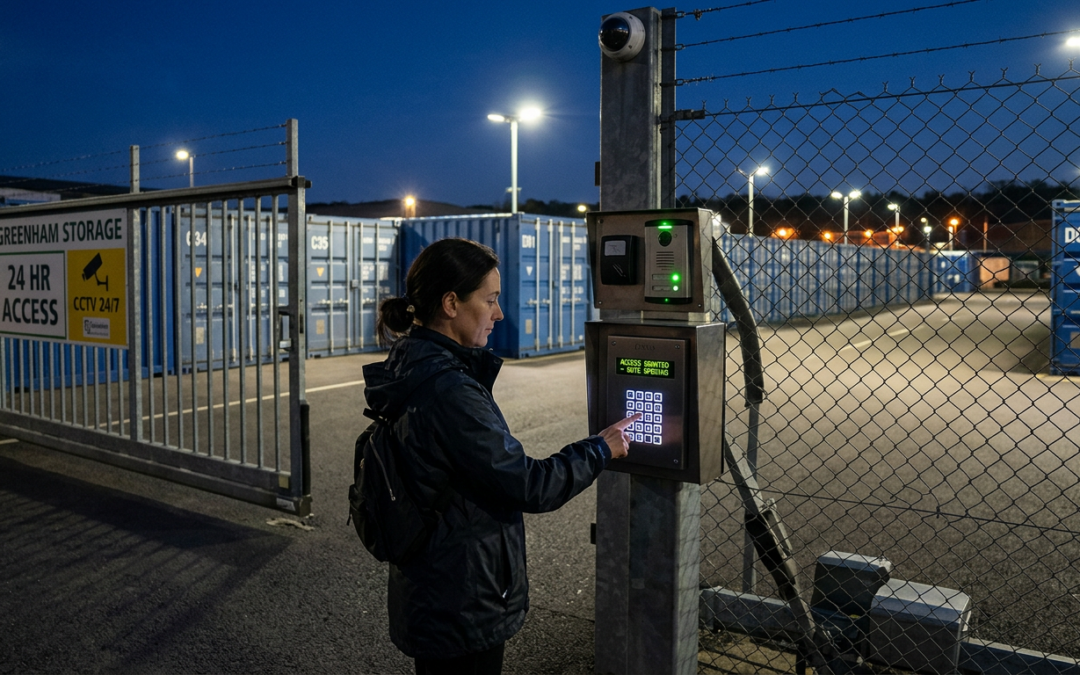
24/7 access facilities give you entry any time through electronic gate codes or key cards. You are not dependent on staff presence. This model works brilliantly for routine flexibility, such as collecting items after a late shift or dropping off business stock on Sunday morning. However, it does not necessarily mean someone is available to help during a crisis. The gates are open, but the office is not staffed.
Hybrid models combine 24/7 customer access with emergency contact protocols. You can enter your drive-up emergency units whenever needed, and management maintains an emergency line for situations requiring immediate assistance. Perhaps you have forgotten your access code, or you need help because an item has shifted and blocked your unit door.
The Reality of Emergency Contact Systems
Many facilities advertise “emergency contact available” without clarifying what that actually means in practice. Understanding the mechanics helps set realistic expectations. Most emergency contact systems work through a designated mobile number that routes to a manager or senior staff member.
When you call, you are typically reaching someone at home, not an office. They need to assess whether your situation genuinely requires immediate intervention, then decide whether they can resolve it remotely or must travel to the facility. Remote resolution works for certain problems. Forgotten access codes can sometimes be verified and shared over the phone. Questions about procedure can be answered without physical presence.
On-site emergency visits involve significant logistics. The staff member must travel to the facility, often from home. They need to verify your identity and rental agreement. They must unlock areas, accompany you for security reasons, and ensure everything is secured again before leaving. This process rarely takes less than an hour, even for straightforward situations.
Facilities that offer this service typically charge for it. Emergency callout fees are common, particularly outside normal hours or on public holidays. Some facilities waive fees for genuine emergencies like flood or fire situations, while others maintain consistent charging regardless of circumstances. The key question to ask when choosing a facility is what specific situations qualify for emergency access and what the actual response time is.
Planning Ahead: The Best Emergency Access Strategy
The most effective emergency access plan starts before you ever need it. Identify your genuine risk factors before choosing a storage facility. Do you store items you might need urgently? Business owners storing critical equipment or backup stock should prioritise different access features than someone storing off-season holiday decorations.
Keep essential items accessible even within your unit. If you are storing urgent household access items during a house move and there is any chance you will need quick entry to specific boxes, pack them near the front. Create a clear path to boxes containing important documents, essential clothing, or emergency supplies. This simple organisation means you can grab what you need in minutes rather than unpacking half your unit at 2am.
Maintain accurate emergency contact details with your facility. If your mobile number changes, update it immediately. If you are travelling abroad and temporarily unreachable, provide an alternative contact. Facilities cannot help during emergencies if they cannot reach you to verify your identity and authorise access.
Document your access credentials securely. Take a photo of your gate code and padlock key, storing it somewhere you can access remotely. A password-protected note on your phone or a secure cloud document works well. This redundancy prevents situations where you are locked out simply because you have forgotten credentials, not because of facility restrictions.
Business Storage and After-Hours Access Needs
Commercial storage requirements differ significantly from personal storage, particularly regarding access flexibility. A retail business storing excess stock might need to collect items on short notice when unexpected sales deplete shop inventory. A contractor might finish a job late evening and need to return equipment immediately.
Business storage users typically benefit most from 24/7 access models. The ability to collect or deposit items outside standard hours without requiring permission or assistance provides operational flexibility that directly impacts business efficiency. But even with round-the-clock access, emergencies still occur. Electronic access systems fail. Keys get lost. Equipment gets stuck.
The difference for businesses is that these situations often carry financial consequences. Missed deadlines, disappointed clients, or lost revenue make rapid resolution critical. Some storage facilities offer dedicated business support that includes priority emergency response. This might mean a guaranteed callback within 30 minutes rather than “as soon as possible” or a commitment to on-site attendance within two hours regardless of time or day.
Working with Newbury Self Store for Reliable Access
When you store with Newbury Self Store, you are choosing a partner that understands the balance between rigorous security and practical accessibility. We recognise that our customers have lives that extend beyond standard business hours. Whether you are a shift worker needing late-night access or a business owner managing an early morning crisis, reliable access protocols are essential.
Our facilities are designed to provide robust security measures like CCTV and perimeter fencing while offering the flexibility that modern life demands. By clearly communicating our access policies and providing reliable contact channels, we ensure that you are never left wondering how to reach your belongings when it matters most.
The Role of Digital Inventory in Emergencies
In an emergency, knowing exactly where an item is located saves valuable time. Rummaging through dozens of identical boxes in a panic is inefficient and stressful. A digital inventory system transforms this process.
Take photos of the contents of every box as you pack them. Upload these photos to a cloud folder, labelled with the box number. When you need to find a specific document or tool at midnight, you can scroll through your phone, identify “Box 14,” and head straight to it.
For businesses, maintaining a shared digital spreadsheet of stored inventory allows any authorised team member to locate items. If a manager is away, a colleague can check the list, find the location, and retrieve the necessary stock without delay. This level of organisation turns a potential crisis into a manageable task.
What to Do When Emergency Access Is Not Available
Sometimes you need urgent access to stored items, but your facility does not offer emergency services. Or perhaps they do, but the response time does not match your timeframe. Reassess whether waiting is genuinely impossible. In the stress of an urgent situation, everything feels critical.
Take a moment to consider whether the situation truly cannot wait until morning. Often, with creative thinking, you can find temporary alternatives. Borrowing items from neighbours, using delivery services for replacements, or adjusting plans slightly might work.
Contact the facility anyway, even outside hours. Leave a detailed voicemail explaining your situation and requesting a callback as soon as possible. Some facilities monitor messages regularly and may respond faster than expected. At minimum, you have documented the situation and started the communication process.
Check your rental agreement for clauses about emergency access. Some contracts specify conditions under which after-hours access can be arranged, or they provide emergency contact details not advertised publicly. Understanding your contractual rights helps frame any urgent conversation with facility management.
The Cost-Benefit Analysis of 24/7 Access
Facilities offering round-the-clock access typically charge premium rates compared to limited-hours alternatives. The question becomes whether that premium represents value for your specific situation.
Calculate the probability you will actually need after-hours access. If you are storing household items during a three-month renovation and you will only visit the unit a handful of times during normal hours, paying extra for 24/7 access makes little sense. But if you are storing business inventory you might need to access several times weekly at varying hours, the flexibility becomes essential.
Consider the stress reduction factor. Knowing you can access your belongings whenever necessary provides peace of mind that has value beyond pure economics. If you are storing items during a difficult life transition, such as bereavement or caring for an ill family member, the ability to collect things when you need them justifies the cost.
I recall a customer who was storing furniture while caring for her elderly father. She kept his wheelchair and medical bed in the unit. One Saturday night, his condition changed, and she needed that equipment immediately. Because she had chosen a facility with 24/7 access, she was able to drive over, retrieve the items, and have him comfortable within the hour. That peace of mind was worth far more than the monthly rental fee.
Security Considerations for After-Hours Access
Extended access hours and emergency protocols create security challenges that facilities must balance against customer convenience. Understanding these considerations helps you evaluate whether a facility’s approach genuinely protects your belongings.
24/7 access facilities require robust security infrastructure. Electronic gate systems that log every entry and exit are standard. Comprehensive CCTV covering all access points and corridors is essential. These systems create accountability even without staff presence, but they are only effective if properly maintained and monitored.
Emergency access protocols should include identity verification steps. A facility that sends staff to unlock your unit at midnight without confirming your identity has poor security practices. Proper protocols might feel frustrating when you are desperate for access, but they protect you just as much as other customers.
Your own security practices matter enormously. Use high-quality padlocks that cannot be easily cut or picked. Do not share access codes with people who are not authorised on your rental agreement. If you lose keys or suspect someone unauthorised has your access credentials, report it immediately and change locks.
Creating an Emergency Access Kit
If you anticipate needing urgent access, preparation is your best ally. Create a physical “Emergency Access Kit” and keep it in your vehicle or home. This kit should contain copies of your access codes, a spare key for your padlock, and a high-powered torch.
Include a pair of work gloves and a small utility knife for opening organised archive boxes. If you are accessing an outdoor container, keeping a rain poncho in the kit is a smart move. Having these simple tools ready means you are not searching for keys or struggling to see in the dark when you are already stressed.
Consider sharing access details with a trusted person. If you are incapacitated or out of the country when an emergency strikes, having a designated family member or business partner who knows the codes and holds a key ensures that access is still possible.
Making the Right Choice for Your Circumstances
Choosing a storage facility based on emergency access capabilities requires an honest assessment of your actual needs. Most people overestimate how often they will need after-hours access while underestimating the value of other features like location or unit size flexibility.
Start by listing scenarios where you might genuinely need emergency access to stored items. Be specific and realistic. Then evaluate how often these scenarios might actually occur. If you are storing furniture during a house move and you cannot imagine any realistic emergency requiring midnight access to a sofa, do not pay premium rates for 24/7 availability you will never use.
Consider your schedule and lifestyle patterns. Someone working irregular shifts or running a business with unpredictable hours benefits tremendously from flexible access. A retired couple storing belongings during a downsizing process probably does not need the same flexibility.
Think of it like buying car insurance. You do not buy the most expensive policy with every possible add-on if you only drive the car on Sundays. You buy the coverage that matches your actual risk profile. Storage is the same; pay for the access level that matches your life.
Conclusion
Emergency access to stored belongings represents a genuine need for some people and an unnecessary luxury for others. The key lies in an honest assessment of your circumstances before committing to a facility and rental agreement. Life’s unpredictability means we cannot anticipate every scenario, but we can make informed choices that balance flexibility with practicality.
A tradesperson storing equipment needs different access arrangements than a family storing childhood memorabilia. A business managing inventory faces different risks than someone storing furniture between house moves. The best emergency access strategy combines choosing an appropriate facility with smart organisation of your stored items. Keep genuinely essential items accessible, maintain accurate contact details, and understand exactly what your facility offers.
Storage should solve problems, not create them. Whether you need round-the-clock access or standard hours with emergency backup, the right facility matches your genuine requirements. Take time to evaluate your actual needs, ask specific questions about emergency procedures, and choose accordingly.
If you need a storage solution that offers reliability when it counts, call 01635 581 811 or contact our team to discuss our access protocols.