
 01635 581 811
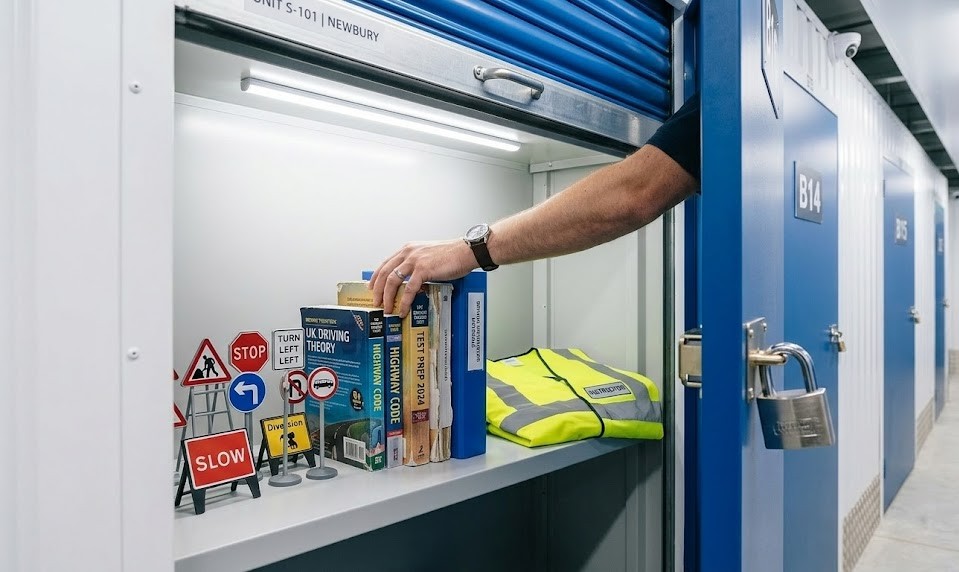
Driving instructors juggle an extraordinary amount of teaching resources. Theory test materials, hazard perception DVDs, revision cards, mock test papers, Highway Code guides, and visual aids accumulate rapidly over years of teaching. Many instructors find themselves storing outdated DVSA materials, previous editions of theory books, and seasonal teaching resources that clutter their home office or vehicle boot.
The challenge intensifies when the DVSA updates theory test content or releases new editions. Suddenly, you’re left with perfectly good materials that can’t be used for current learners but might prove valuable for reference or future use. Add to this the seasonal fluctuations in student numbers – quieter periods during university holidays or summer breaks – and you’ve got a storage puzzle that affects your working space and efficiency.
Strategic driving instructor storage transforms how you manage teaching resources, protecting your investment whilst keeping current materials accessible and archived resources secure.
Why Driving Instructors Need Strategic Storage Solutions
Most driving instructors operate from home, converting a spare bedroom or garage into their administrative base. This works brilliantly until the materials multiply beyond available space. One instructor started with a single bookshelf in 2018; by 2023, she had three filing cabinets, multiple storage boxes, and theory materials stacked in her hallway. She’d been teaching 30 hours weekly for five years and had accumulated every edition of the theory test book since 2018, multiple Highway Code versions, and over 200 laminated visual aids. Her spare bedroom had become unusable, and she was spending 15-20 minutes before each lesson searching for specific materials. After moving archived materials to storage, she freed up the entire spare room and reduced material search time to under 2 minutes per lesson – saving roughly 6 hours monthly at her £40/hour rate, more than covering the £60 monthly storage cost.
The problem isn’t just volume. It’s about accessibility and organisation. When a student calls asking about a specific hazard perception scenario or you need to reference an older Highway Code section, you need to locate that material quickly. Digging through boxes in a cramped garage wastes time you could spend teaching or planning lessons.
Personal storage offers a practical solution that separates active teaching resources from archived resources. You keep current essentials in your vehicle and office whilst older editions, seasonal materials, and reference archives stay secure and accessible when needed.
What Theory Test Materials Actually Need Storing
The scope of materials extends far beyond a few books. Here’s what accumulates in a typical instructor’s collection:
Core theory resources:
- Theory test books (multiple editions as DVSA updates content)
- Highway Code guides from different years
- Hazard perception training DVDs and software
- Mock test question banks
- Revision cards and flashcard sets
Teaching aids:
- Laminated road sign charts
- Visual aids for explaining manoeuvres
- Printed diagrams for parking techniques
- Weather-specific teaching materials
- Night driving instruction guides
Administrative materials:
- Student records and progress sheets (historical)
- Training certificates and qualification documents
- Insurance and business paperwork
- Marketing materials from previous campaigns
- Lesson plan templates and teaching notes
Think of your material archive like a reference library. You don’t need every book on your desk simultaneously, but you want the confidence that you can retrieve any volume when a specific teaching situation demands it.
Seasonal Patterns in Driving Instruction
Student numbers fluctuate predictably throughout the year. Understanding these patterns helps you plan which materials to keep accessible and which to store during quieter periods.
Peak Teaching Seasons: January through March sees a surge as New Year’s resolutions drive people to finally get their licence. You’ll need full access to all current materials, multiple copies of popular theory books, and comprehensive teaching aids.
September marks another busy period when students return from summer holidays and sixth-formers turn seventeen. Your storage needs shift – everything comes out of storage and into active rotation.
Quieter Periods: Summer months (July-August) often slow down as families holiday and students take breaks. December sees a dip around the Christmas period. These windows create perfect opportunities to rotate materials, archive older editions, and reorganise your teaching resources without disrupting your workflow.
One instructor uses August to completely audit her materials. She teaches around 25 hours weekly during peak seasons but drops to 10-15 hours in August. Current resources stay in her office; everything else goes into organised storage. She spends one afternoon in late August retrieving only what she needs for the autumn term – typically the most recent theory test edition, current Highway Code, and her core visual aids. This keeps her working space manageable and means she’s never hunting through outdated materials when students need current information. The system’s worked for three years now, and she’s never had to make an emergency storage trip during busy periods.
How to Organise Theory Materials for Storage
Random box-packing creates chaos when you need to retrieve something urgently. A systematic approach saves hours of frustration and ensures materials remain in excellent condition – like organizing a professional filing system where everything has its designated place, not a cluttered drawer where you’re constantly rummaging.
Category-Based Organisation:
Group materials by type rather than date. Create separate boxes for theory books, Highway Code guides, hazard perception resources, and visual teaching aids. Label each box clearly with contents and the edition year or DVSA version number.
This method means when you need to reference how roundabout rules were explained in the 2019 Highway Code, you go straight to the “Highway Code – Historical Editions” box rather than sorting through mixed materials.
Chronological Archiving:
Within each category, arrange items chronologically. Most recent editions at the front, oldest at the back. This creates a natural progression and makes it obvious which materials are current versus archived.
Digital Inventory System:
Maintain a simple spreadsheet listing every box, its contents, and the box number. Include the storage unit location if you use multiple units or areas. When a student asks about a specific topic covered differently in previous tests, you check your inventory, identify the box, and retrieve it efficiently.
Climate Considerations:
Paper materials deteriorate in damp conditions. Theory test materials, printed materials, and cardboard-backed visual aids need protection from moisture. DVDs and electronic media suffer in extreme temperatures. Your storage solution must account for these vulnerabilities.
Standard packaging materials like cardboard boxes work well for short-term storage, but consider plastic storage containers for long-term archiving. They provide better protection against moisture whilst remaining stackable and space-efficient.
Protecting Materials During Storage
Theory test materials represent a significant investment. A single comprehensive theory book costs £10-15; multiply that by multiple editions, supplementary guides, and teaching aids, and you’re looking at hundreds of pounds worth of resources. Proper protection preserves this investment.
Preparation Steps:
Clean all materials before packing. Dust and debris attract moisture and pests. Wipe down plastic covers, shake out loose papers, and ensure everything’s completely dry.
Wrap valuable or delicate items individually. Laminated charts should have protective sheets between them to prevent scratching. DVDs need proper cases, not loose packing that risks scratches.
Packing Techniques:
Books should stand upright in boxes, never laid flat in heavy stacks that damage spines. Fill gaps with bubble wrap or packing paper to prevent shifting during storage. Don’t overfill boxes – you should be able to lift each one comfortably without straining.
Label boxes on multiple sides, not just the top. When boxes are stacked, you can still identify contents from any angle. Use waterproof markers that won’t smudge or fade.
Special Considerations for Electronic Media:
DVDs and hazard perception software discs are particularly vulnerable. Store them in their original cases with proper labelling. Keep them away from direct sunlight in storage and avoid areas with temperature fluctuations.
USB drives containing digital teaching materials should be stored in protective cases. Consider keeping a backup copy in a separate location – your working office, perhaps – so you’re never completely without access to digital resources.
Choosing the Right Storage Unit Size
Driving instructors typically don’t need massive storage spaces. Your requirements sit somewhere between personal household storage and small business storage needs.
Small Units (25-35 sq ft):
Perfect for instructors with 3-5 years of accumulated materials. You can store approximately 20-30 archive boxes, plus some larger items like display boards or teaching equipment. This size accommodates most solo instructors who teach part-time or have already digitised many resources.
Medium Units (50-75 sq ft):
Suitable for established instructors with extensive archives or those who also store business equipment. You might keep spare car signage, cones for manoeuvre practice, or administrative furniture alongside your teaching materials. This size offers room for growth without paying for unnecessary space.
Access Requirements:
Consider how often you’ll need to retrieve materials. If you access storage monthly, ground-floor units with drive-up access save time and effort. If you’re storing materials for annual rotation only, upper-floor units often cost less whilst still providing complete security.
Maintaining Your Storage System Throughout the Year
Setting up organised storage’s one thing; maintaining that system’s another. Without regular attention, even the best-organised storage degrades into chaos.
Quarterly Reviews:
Every three months, check your inventory against what you’ve actually needed. If you haven’t touched certain materials in a year, consider whether they’re worth keeping. DVSA updates mean some older resources become obsolete rather than merely outdated.
Seasonal Rotations:
Before each busy season, retrieve materials you’ll need frequently. Don’t wait until you’re fully booked with students to realise your current theory books are in storage. Plan ahead – retrieve materials in the quiet period before demand increases.
Update Your Inventory:
Every time you add or remove items, update your digital inventory. This five-minute task prevents the frustrating situation where you know you have something but can’t remember which box contains it.
Combining Storage with Business Growth
As your driving instruction business expands, storage needs evolve. What starts as a simple archive of old theory materials might develop into a comprehensive resource library supporting multiple instructors.
Some established driving instructors use storage units as a central resource hub. They maintain current materials in their vehicles and homes whilst the storage unit holds reference materials, bulk supplies, and archived student records. This approach works particularly well for instructors who employ or franchise to other teachers.
Shared Storage Solutions:
If you know other instructors in your area, consider sharing a storage unit. Split the cost whilst each maintaining separate, clearly labelled sections. This works best with instructors who teach at different times or in different areas, reducing the chance of access conflicts.
Business Equipment Storage:
Beyond theory materials, instructors often need to store marketing materials, spare vehicle signage, or seasonal equipment. A storage unit can house everything from display boards for recruitment events to winter driving equipment used only during specific months.
The key’s treating your storage as an extension of your business infrastructure rather than just a dumping ground for old materials. When organised properly, it becomes a valuable resource that supports your teaching efficiency.
Security and Insurance Considerations
Your teaching resources and business documents contain valuable information. Student records, personal teaching notes, and proprietary lesson plans need protection from theft and damage.
Modern storage facilities offer security features that exceed what most home storage provides. CCTV coverage, individual unit alarms, and controlled access mean your materials stay safer than in a garage or spare room. This matters particularly for instructors storing sensitive student information or expensive teaching equipment.
Check whether your existing business insurance covers items in storage. Some policies automatically extend coverage; others require notification or additional premiums. Don’t assume your materials are protected without confirming the details.
Making Storage Work with Your Teaching Schedule
The practical reality of storage’s access. You need a facility that fits your teaching schedule, not one that forces you to rearrange lessons around restricted opening hours.
Look for facilities offering extended or 24-hour access. As a driving instructor, your working hours vary – early morning lessons, evening students, weekend sessions. You might need to collect materials at 6:30am before a full day of teaching or drop off archived resources after an evening lesson.
Location matters too. A facility that’s 30 minutes from your teaching area adds an hour to every storage trip. Calculate whether slightly higher costs for a more convenient location save time and fuel in the long run.
Strategic Storage for Teaching Success
Theory test materials and teaching resources represent years of investment in your driving instruction business. Proper storage protects that investment whilst keeping your working space manageable and efficient. The key lies in systematic organisation – categorising materials logically, maintaining accurate inventories, and treating your storage as an active business resource rather than a static archive.
Seasonal patterns in student numbers create natural opportunities to rotate materials between active use and storage. By aligning your storage strategy with these cycles, you ensure current resources remain accessible whilst archived materials stay secure and organised. Whether you’re a newly qualified instructor with a growing collection or an established professional with decades of teaching resources, strategic storage solutions help you maintain the balance between accessibility and space efficiency.
Newbury Self Store understands that driving instructors need storage that works around seasonal demand fluctuations, not generic solutions. You need facilities where theory test materials stay protected from moisture, where you can access archived resources quickly when students ask about previous test versions, and where your business documents remain secure. We know that your teaching materials aren’t just books – they’re the foundation of your professional expertise and your ability to help learners pass their tests.
If you’re ready to reclaim your home office space and create a more professional teaching environment, contact us to discuss storage options that fit your specific needs as a driving instructor. Proper storage isn’t an expense – it’s an investment in your business efficiency and professional organisation.