
 01635 581 811
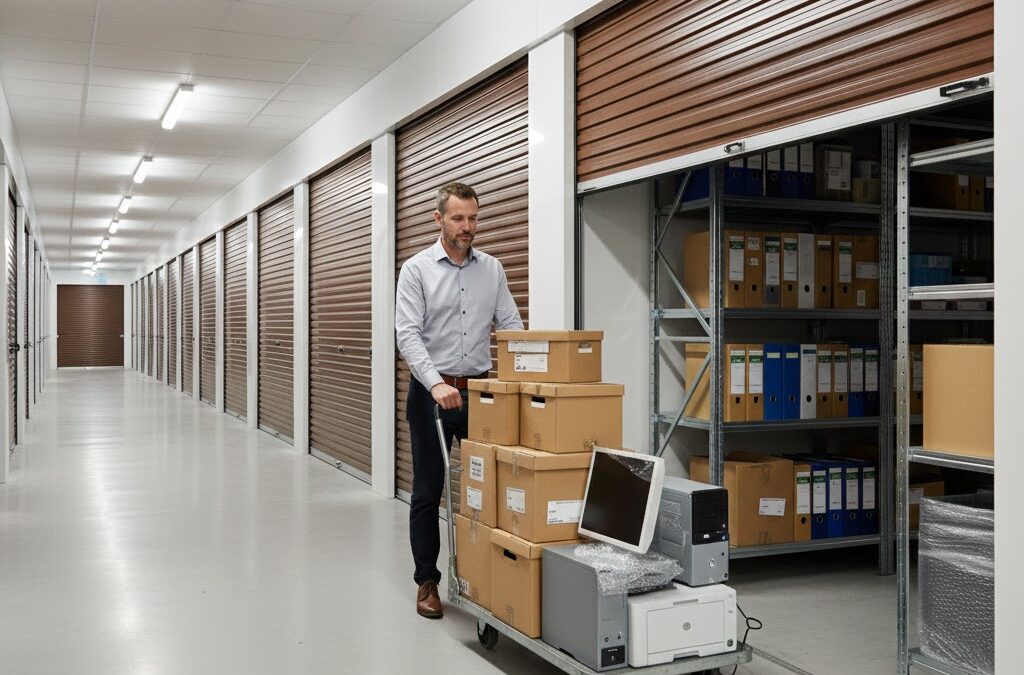
When you’re running a business, large or small, you focus on growth, sales, and serving your customers. However, overlooking the potential impact of an unexpected event like a flood, fire, or severe equipment failure can put everything you’ve built at risk. Having a robust business continuity plan is crucial for continuity, ensuring your operation can quickly resume, regardless of what happens to your primary location. Disaster recovery storage plays an invaluable role in this strategy, providing a safe and accessible haven for your most critical assets.
Your business continuity plan hinges on preparedness, and that’s where the right business storage solutions come into play. Local businesses in Newbury need flexible, secure options to protect their data, equipment, and records. Professional facilities act as the ideal offsite backup location, giving you peace of mind that your operation can survive the unexpected.
Why Planning for the Worst is Essential
Let’s face it, things go wrong, and hoping for the best simply isn’t a viable strategy for any serious enterprise. A natural disaster, an act of vandalism, or a system crash can cripple your operations in a flash. Disaster recovery isn’t merely a corporate buzzword; it’s a proactive step that ensures your business can bounce back quickly from unexpected downtime, solidifying your business continuity plan. Without a plan, you’re leaving your entire enterprise vulnerable to potentially irreversible damage and long-term financial loss.
You’re basically taking a massive risk on the unknown if you keep all your eggs in one fragile basket. Think of a disaster recovery plan as having comprehensive insurance for your business’s physical and digital life, you hope you never need to use it, but you’ll be incredibly glad it’s there if a crisis occurs. A secure, offsite location allows you to protect the physical assets required to get back up and running fast.
Understanding the Cost of Downtime
The financial implications of unexpected downtime can be staggering for local companies. Every hour that phones aren’t answered, orders aren’t processed, or data isn’t accessible results in lost revenue and customer goodwill. Small and medium-sized enterprises often struggle the most to recover from a major physical or digital loss. This makes the modest investment in reliable secure storage a non-negotiable insurance policy against failure.
Downtime also damages trust, which is often harder to rebuild than equipment or premises. Customers need to know they can rely on you, and a seamless recovery process demonstrates professionalism and stability. By safeguarding your materials and information, you demonstrate a serious commitment to business continuity that strengthens your overall reputation.
How Offsite Storage Creates Business Resilience
Offsite business storage provides a secure, external location to store critical documents, equipment, and vital data backups, keeping them well away from your primary office risks. This strategy guarantees that even if your main workplace is rendered unusable, you have immediate access to the necessary physical resources. Storing assets offsite is the most effective way to eliminate the single point of failure that exists when everything is kept under one roof. It’s the simplest way to ensure your business remains operational during periods of crisis.
Consider the time the pipe burst over the Christmas break in the office of a client we’ll call Alex, who runs a professional services firm. Because Alex had proactively moved his archival storage of client agreements and several spare servers into a dedicated unit, the flood caused him no critical loss of data or paperwork. He was able to set up a temporary remote office and retrieve the vital components he needed, minimising downtime and saving his contracts from water damage.
Securing Data and Equipment
The core function of storage in a disaster plan is safeguarding what can’t be easily replaced. Data backups are non-negotiable, and storing them offsite ensures they’re safe even if your main office is compromised by physical damage or local issues. Having essential spare equipment like computers, network switches, or specialised tools ready for immediate use eliminates lengthy procurement delays during an emergency. A range of units suitable for housing sensitive technology and important critical documents is essential for effective disaster recovery storage.
A quality self-storage provider also maintains robust security that many small businesses can’t afford on their own premises. Professional facilities offer features like 24-hour video recording, security alarms, and strictly controlled access to enhance your protection. This level of professional security ensures your recovery assets are protected against both natural disasters and theft.
Choosing the Right Business Storage Partner
Not all storage units are created equal, especially when your company’s survival depends on their security and reliability. When selecting a disaster recovery storage solution, you must treat it as an extension of your own premises. You need absolute confidence in the provider’s operational standards and the features they offer.
You must choose a partner that understands the unique needs of business users, particularly regarding access and security. Businesses often need to retrieve items outside standard office hours or make last-minute deposits. If your company requires commercial-grade space for inventory, documents, or equipment, exploring dedicated business storage options is the best first step.
Key Factors for Disaster Recovery Storage
To guarantee your assets are fully protected and retrievable, evaluate the following essential factors before booking. Tailoring your storage to the specific needs of your business is key to a functional disaster plan.
- Advanced Security Protocols: The facility should feature comprehensive 24/7 CCTV monitoring, perimeter fencing, and controlled electronic access gates. Superior security is paramount when storing expensive hardware and confidential paperwork.
- Accessibility: Choose a location that’s easily reachable, even during local disruptions, and offers appropriate access so you can retrieve critical items instantly during an emergency.
- Unit Environment: For sensitive electronics, delicate documents, or specialised inventory, check if climate-controlled storage units are available. These units regulate temperature and humidity to prevent moisture damage, mould, or warping.
- Contract Flexibility: Look for a provider that offers flexible contracts and short-term options. Disaster planning might require rapid scaling or a short-term relocation, so avoid being tied into restrictive long-term agreements.
What to Store for a Swift Recovery
Right, so what actually needs to go into your offsite storage for disaster recovery? The rule of thumb is to store anything that cannot be quickly replaced or recreated. This includes physical documents, IT hardware, and specific operational items crucial for maintaining service. Facilities can accommodate everything from business archives to individual personal storage needs for sole traders.
Essential Assets for Business Continuity
Here’s a breakdown of the materials most commonly stored in units for disaster preparedness:
- Data Backups and Redundant Hardware: Store copies of server images, databases, and financial files. Also include spare network switches, laptops, and hard drives needed to set up a temporary office.
- Critical Paper Documents: Keep physical copies of contracts, legal documents, patents, insurance policies, and critical compliance certifications. These hard copies often serve as the ultimate legal fallback during recovery.
- Specialised Equipment and Tools: If your business relies on specific machinery, tools, or valuable demonstration samples, store backup versions. For oversized or bulk items, you might want to secure container storage options for large commercial equipment that requires long-term protection.
- Operational Supplies: Store a small reserve of stationery, key marketing materials, and essential packaging supplies. Having pre-printed letterheads or shipping labels available can save valuable time during the initial recovery phase.
Implementing and Maintaining Your Recovery Plan
Having a secure storage unit is only half the battle; your business continuity plan needs a structured element to use it effectively when disaster strikes. The most secure unit in the world is useless if nobody knows how to access it or what’s inside. Regularly testing your retrieval process is just as important as the physical storage itself.
Making Your Plan Operational
Think of your disaster recovery plan as a detailed user manual for your business’s survival. Your employees need to understand their roles and responsibilities during an emergency scenario. Ensure your plan is documented, easily accessible (ideally stored electronically and physically offsite), and regularly reviewed for accuracy.
- Establish Clear Access Protocols: Define who holds the key or access code for the unit, and ensure at least two senior members of the team have these details. Establishing clear procedures for accessing the storage unit in an emergency removes confusion during a stressful time.
- Maintain a Detailed Inventory: Keep a meticulous, up-to-date inventory of everything stored, noting the date of the last data backup deposit. This inventory should be cloud-based and printed, showing exactly what you have and where it’s located within the unit.
- Schedule Regular Audits: Treat your storage unit like an active part of your business infrastructure. Schedule regular data backups and test them periodically to ensure they’re working and can be restored successfully. Test the physical retrieval process annually to ensure it’s smooth and efficient.
Ready to Secure Your Business Future?
Disaster preparedness isn’t about fear; it’s about confidence and control. By choosing disaster recovery storage, you gain a critical layer of resilience that ensures continuity and protects your bottom line. Professional facilities help you find the perfect short-term storage solutions or long-term secure home for your essential assets.
Expert teams can check your availability and help you select the ideal unit size for your precise requirements. Don’t wait until the unexpected happens to realise you needed a backup plan. Secure your peace of mind today. If you’re ready to protect your documents and equipment, please contact us to discuss your options.