
 01635 581 811
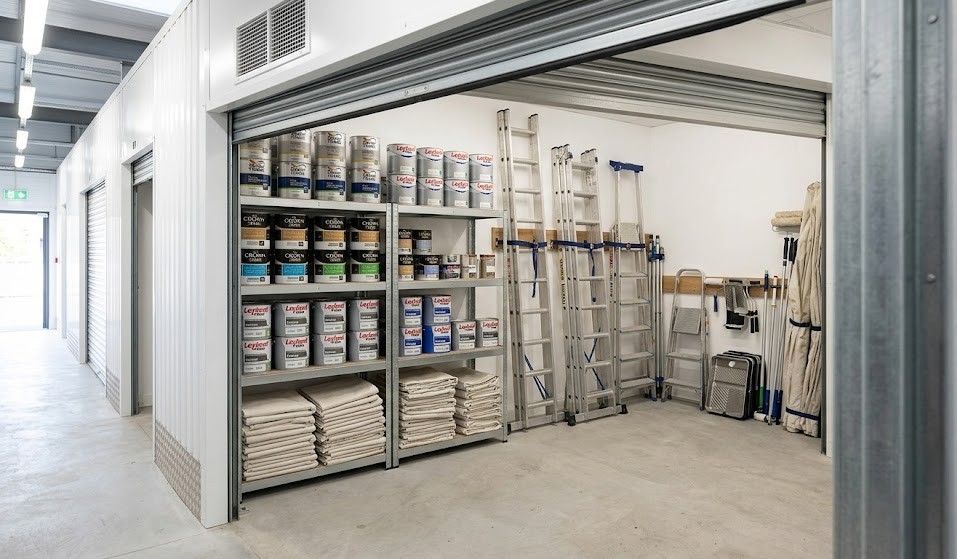
Professional decorators know the reality: you finish a major commercial repaint on a Friday, and your next big project doesn’t start for three weeks. In between, you’ve got ladders cluttering your van, 40 litres of leftover paint taking up garage space, and spray equipment that needs proper storage. This downtime between large projects creates a storage challenge that directly affects your efficiency and profitability.
The problem compounds when you’re juggling multiple clients. A school refurbishment wraps up in July, but the office block contract doesn’t begin until September. You can’t afford to keep all that decorating equipment in your vehicle or cramming your workspace, yet you need quick access when smaller jobs come through. That’s where strategic decorator equipment storage planning makes the difference between a decorator who’s constantly reorganising and one who operates like a well-oiled business.
Why Decorators Need Dedicated Storage Space
Most decorating businesses start with equipment stored wherever there’s room – the garage, a shed, even spare bedrooms. But as your client list grows and projects scale up, this approach creates genuine problems.
Space efficiency matters financially. When you’re storing 20 dust sheets, multiple extension poles, and industrial-grade sanders in your home, you’re sacrificing living space for business needs. More critically, you’re risking damage to expensive equipment from improper storage conditions. A spray gun left in a damp garage can develop rust. Paint stored in freezing temperatures separates and becomes unusable.
Security becomes non-negotiable once you’ve invested in professional-grade equipment. A decent airless sprayer costs £800-£1,500. Add in scaffolding components, power tools, and specialised brushes, and you’re looking at thousands of pounds worth of kit. Leaving this in an unlocked van or garden shed isn’t just risky – it’s a business liability that could halt your operations overnight.
Access requirements change throughout the year. During peak season (typically April through September), you need frequent access to everything. But between November and February, when larger projects slow down, you still require secure storage that doesn’t cost a fortune or demand constant attention.
Think of it like a chef’s knife collection. You wouldn’t store professional knives loose in a drawer where they’ll get damaged, but you also can’t have them cluttering your workspace when you’re not using them. They need proper storage that protects the investment whilst keeping them accessible when needed.
What Actually Needs Storing Between Projects
Let’s be specific about what takes up space. Understanding your storage requirements helps you choose the right solution rather than paying for wasted space.
Paint and Coatings:
- Leftover emulsion in various colours (often 10-30 litres)
- Unopened tins you ordered as contingency
- Specialist coatings like anti-condensation or fire-retardant paint
- Primers and undercoats specific to certain surfaces
- Solvents, thinners, and cleaning agents
These materials can’t just sit anywhere. Paint requires stable temperatures between 5°C and 25°C to maintain its consistency. Store it too cold, and emulsion freezes and becomes unusable. Too hot, and oil-based products can separate or develop skin.
Equipment and Access Gear:
- Extension ladders and step ladders in multiple heights
- Trestles and scaffold boards
- Spray equipment (guns, hoses, compressors)
- Sanders (orbital, detail, pole sanders)
- Paint rollers, frames, and extension poles
- Brushes in various sizes (which need flat storage to maintain bristle shape)
- Cutting-in tools and edging equipment
Protective Materials:
- Dust sheets (both cotton and plastic)
- Masking tape in various widths
- Plastic sheeting for large-scale protection
- Drop cloths and floor protection
- Respirators and safety equipment
Documents and Records:
- Colour charts and sample pots
- Project specifications and technical data sheets
- Client contracts and completion certificates
- Before-and-after photos for portfolio building
Here’s the reality: a typical decorator working on large projects needs between 100-200 square feet of storage space to properly organise and protect all this equipment between jobs. That’s roughly the size of a small bedroom, but it needs to be dedicated space with proper conditions.
The Hidden Costs of Poor Storage Solutions
Professional decorators lose money in ways they don’t anticipate, all stemming from inadequate storage planning.
Material wastage hits harder than most realise. When a decorator stores paint incorrectly and it becomes unusable, that’s not just the cost of the paint – it’s the time spent disposing of it properly (you can’t just bin it) and the expense of buying replacement materials for the next job.
One decorator in Newbury had been storing six 5-litre tins of specialist anti-mould paint worth £100 (£600 total value) in his garage for an upcoming bathroom project. The garage wasn’t insulated, and winter temperatures dropped below freezing for five consecutive nights. When he opened the tins to start the job, he discovered the paint had frozen and separated into watery liquid with solid lumps that wouldn’t remix. The emulsion-based formula was permanently ruined. He had to bin the unusable paint (paying £45 for hazardous waste disposal), purchase replacement anti-mould paint at short notice (£720 because he needed it immediately from a retail supplier rather than his usual trade wholesaler), and delay the project start by three days whilst waiting for the new paint to arrive. The total cost of improper storage was £765 plus three days of lost earnings from the delayed project. A month of proper climate-controlled storage would’ve cost £90 and prevented every penny of that loss.
Equipment deterioration happens gradually, then suddenly. Spray equipment left in damp conditions develops internal corrosion. Brushes stored flat under heavy items lose their shape and become useless for precision work. Ladders left outside develop weakened joints that eventually fail safety inspections. The cost isn’t just replacement – it’s the jobs you can’t take because you don’t have functioning equipment.
Time wastage compounds daily. When your equipment’s scattered across three locations – some in the van, some at home, some at your mate’s lock-up – you spend hours each week just locating and transporting what you need. That’s billable time you’re not charging for. If you waste just two hours per week at an average decorator’s rate of £25-£30 per hour, that’s £2,600-£3,120 annually in lost productivity.
Insurance complications create unexpected problems. Many home insurance policies don’t cover business equipment stored at residential properties, or they limit coverage significantly. If £5,000 worth of decorating equipment gets stolen from your garage, you might discover your claim’s denied because it was commercial property. Proper business storage often includes insurance options specifically designed for trade equipment.
Organising Storage for Quick Access
The difference between storage that helps your decorating business and storage that becomes another problem lies entirely in organisation. Random piling doesn’t work when you need to grab specific items quickly.
Zone your storage by frequency of use. Items you need weekly go near the front and at waist height. This includes your everyday brushes, rollers, standard white emulsion, and basic prep materials. Equipment used monthly – specialist tools, less common paint colours, larger ladders – can sit further back. Seasonal items or rarely used equipment go at the very back or on high shelves.
Group by project type rather than by equipment category. Create a “bathroom projects” section with waterproof coatings, mould-resistant paint, small brushes for tight spaces, and tile edge tools. Have a “commercial projects” zone with large rollers, bulk emulsion, heavy-duty dust sheets, and spray equipment. When a job comes in, you can gather everything from one area rather than hunting throughout your storage space.
Label boxes clearly showing:
- Contents
- Purchase date
- Project it was bought for (helps track leftover quantities)
- Any special storage requirements
Implement shelving that maximises vertical space. Floor space costs money in storage units. Proper industrial shelving lets you stack safely whilst keeping everything visible and accessible. Store paint on lower shelves (it’s heavy and you need stability), tools at mid-height, and lightweight items like dust sheets up top.
Create a “ready to go” section for your most common job requirements. Pack a set of boxes or crates with the essentials for a standard room repaint: brushes, rollers, prep materials, dust sheets, and basic tools. When a quick job comes in, you grab the pre-packed kit rather than assembling it from scratch. This approach cuts your preparation time by 60-70%.
Consider how a professional kitchen organises its stations. Everything the chef needs for a specific type of dish is grouped together and immediately accessible. Your storage should work the same way – functional zones that support quick, efficient work.
Temperature and Environmental Requirements
Paint and decorating materials aren’t like storing furniture or files. They’re chemically active products that respond to environmental conditions, and storing them incorrectly destroys their usability – like the difference between storing wine in a proper cellar versus leaving bottles in a hot shed where temperature swings ruin the contents.
Temperature stability matters more than specific temperature. Most paints handle temperatures between 5°C and 25°C without problems. What damages them is fluctuation – a storage space that’s 3°C one week and 18°C the next. These swings cause expansion and contraction that breaks down paint chemistry. Water-based emulsions are particularly vulnerable; freeze them once and they’re ruined permanently.
Humidity control prevents:
- Metal equipment (spray guns, ladder hinges, tool handles) from rusting
- Paper-based materials (sandpaper, masking paper) from deteriorating
- Paint tins from corroding, leading to contamination
- Mould growth on fabric dust sheets and natural-bristle brushes
Aim for relative humidity below 60%. Anything above 70% creates active problems for your stored equipment.
Ventilation prevents chemical buildup. Even sealed paint tins release minimal vapours over time. In a completely sealed space with dozens of tins, these vapours accumulate and create both a safety hazard and an unpleasant working environment. Proper ventilation doesn’t mean leaving doors open – it means choosing storage with adequate air circulation.
Light protection extends material life. Direct sunlight degrades paint, causes plastic equipment to become brittle, and fades colour samples. If your storage has windows, position paint and samples away from direct light, or use opaque covering.
Climate-controlled storage isn’t just a luxury for decorators – it’s a business necessity that protects thousands of pounds worth of materials and equipment. The modest additional cost of personal storage with climate control pays for itself the first time it prevents a batch of paint from freezing or specialist coatings from degrading.
Calculating the Right Storage Size
Most decorators either over-estimate and waste money, or under-estimate and end up with a cramped, disorganised space that defeats the purpose. Here’s how to calculate what you actually need.
Start with an inventory. List everything you currently store for your decorating business. Be thorough – count the ladders, measure how much shelf space your paint requires, and note the dimensions of larger items like trestles and scaffold boards.
Add 30% for growth and working space. A storage unit packed to capacity’s unusable. You need room to move, space to organise, and capacity for new equipment as your business grows. That 30% buffer makes the difference between functional storage and a glorified cupboard.
Consider your project cycle. If you typically have 2-3 weeks between large projects but take on smaller jobs during that time, you need storage that accommodates your full equipment range whilst allowing quick access to frequently used items. If you have longer gaps (6-8 weeks), you might consolidate more and accept slightly less convenient access.
Account for seasonal variation. Your storage needs in peak season differ from winter requirements. Some decorators use flexible storage solutions – a larger unit during busy months when they’re cycling through more materials, then downsizing in winter when work slows. This approach requires planning but can save significant money annually.
Storage size guidelines:
- 50-75 sq ft: Suitable for sole traders with basic equipment doing primarily domestic work
- 100-150 sq ft: Works for established decorators with spray equipment and multiple project types
- 150-200 sq ft: Necessary for small teams or decorators handling large commercial projects with extensive material stocks
- 200+ sq ft: Required for decorating businesses with multiple employees or those offering specialist services requiring additional equipment
A 150 sq ft unit accommodates:
- Two extension ladders and three step ladders
- Full spray equipment setup
- 50-80 litres of paint on shelving
- Complete tool collection on wall-mounted storage
- Dust sheets, prep materials, and safety equipment
- Small workspace for equipment maintenance
If you’re unsure, it’s worth speaking directly with storage providers who understand trade requirements. They can often suggest optimal layouts that maximise your chosen space.
Security Considerations for Valuable Equipment
Professional decorating equipment represents a substantial investment that attracts thieves who know exactly what it’s worth. Security isn’t paranoia – it’s protecting your ability to work.
Individual unit access beats shared warehouse space every time. When only you have keys to your storage unit, you control who sees your equipment and when. Shared spaces where multiple people have access create opportunities for theft that you can’t control, regardless of other security measures.
24-hour CCTV coverage should be standard, not optional. But not all CCTV’s equal. Ask whether cameras cover unit doors specifically, not just common areas. Verify that footage’s actually monitored and retained long enough to be useful if something goes wrong. Some facilities have cameras that don’t record or delete footage after 24 hours, which is essentially useless.
Look for multiple security layers:
- Secure fencing around the entire property
- Gated entry with personal access codes
- Motion-sensor lighting throughout
- Regular security patrols (particularly overnight)
- Alarm systems on individual units
Each layer makes theft harder and riskier for criminals, who typically look for easy targets.
Verify insurance coverage:
- Does the facility’s insurance cover your stored items, or just building damage?
- What’s the coverage limit per unit?
- Are high-value items like spray equipment specifically included?
- What’s the excess on any claim?
Many decorators discover too late that facility insurance’s minimal and their home insurance doesn’t cover business equipment stored off-premises. Separate business insurance that specifically covers stored equipment might be necessary.
Document everything you store. Photograph your equipment with serial numbers visible. Keep receipts and proof of purchase. Create a detailed inventory with approximate values. If theft occurs, this documentation makes insurance claims straightforward and increases the likelihood of police recovering stolen items if they turn up.
The packaging you use for storage also affects security. Equipment stored in clearly labelled boxes that identify contents is more vulnerable than items in unmarked, sealed containers that don’t advertise what’s inside.
Making Storage Work with Your Business Model
Storage isn’t just about having space – it’s about integrating that space into how you actually operate day-to-day.
Location determines usability. Storage 30 minutes from your usual working area might save £20 monthly, but if you need to visit it three times a week, you’re losing 3 hours in travel time. That’s £75-£90 in lost billable hours, making the “cheaper” option significantly more expensive. Choose storage within 10-15 minutes of where you work most frequently.
Access hours must match your schedule. Many decorators start early (7am site starts are common) and work late when deadlines loom. Storage with restricted access hours – say, 9am-5pm – forces you to plan around someone else’s schedule rather than your clients’ needs. Twenty-four-hour access eliminates this constraint.
Loading access affects efficiency. Can you reverse your van up to your storage unit, or do you need to carry everything 50 metres from a car park? Drive-up access saves your back and cuts loading time by half. For decorators regularly moving ladders, tins of paint, and heavy equipment, this isn’t a luxury – it’s a practical necessity. Container storage often provides excellent drive-up access for trade users with vehicles and substantial equipment.
Flexibility supports business growth. Your storage needs change as your business evolves. Can you upgrade to a larger unit without penalty when you take on bigger projects? Can you downsize in quieter months? Rigid contracts that lock you into fixed space for 12 months don’t accommodate the reality of how decorating businesses operate.
Consider dual-purpose use. Some decorators use their storage unit as more than just equipment parking. With proper setup, it becomes a workspace for equipment maintenance, paint mixing, or even meeting clients to discuss colour choices away from active job sites. This requires adequate lighting and possibly electrical access, but it transforms storage from passive space into an active business asset.
Long-Term Storage Strategy
Smart decorators think beyond immediate needs and develop storage strategies that support sustainable business growth.
Regular inventory audits prevent accumulation of useless materials. Every three months, review what’s actually in storage. Paint that’s been sitting for 18 months probably won’t be used – dispose of it properly rather than letting it take up space. Tools you haven’t touched in six months might be candidates for selling or donating. This discipline keeps storage costs aligned with actual needs rather than expanding indefinitely.
Systematic rotation ensures materials stay fresh. Paint has a shelf life of roughly 2-3 years if stored correctly, but quality degrades over time. Use a “first in, first out” system – mark purchase dates clearly and use older stock before newer purchases. This simple practice prevents waste and ensures you’re always working with materials in optimal condition.
Seasonal adjustments optimise costs. If your business naturally slows in winter, could you consolidate equipment and move to a smaller unit for three months? The savings might be modest, but over several years, this approach adds up. Conversely, expanding temporarily during peak season gives you the space to store materials for multiple concurrent projects without cramping your operation.
Digital documentation supports physical organisation. Photograph your storage layout and keep a digital inventory accessible from your phone. When you’re at a supplier deciding whether to buy more masking tape, you can check instantly whether you’ve already got 10 rolls in storage. This prevents duplicate purchases and helps you maintain lean operations.
Plan for equipment lifecycle. Professional decorating equipment doesn’t last forever. Ladders have a working life of approximately 5-7 years with heavy use. Spray equipment needs replacing every 3-5 years. Factor these replacements into your storage planning – you need space not just for current equipment but for new purchases that will arrive before old items are fully retired.
Professional Operational Standards
Storage between large projects isn’t just about finding somewhere to put your ladders. It’s about creating a system that protects your investment, maintains equipment in working condition, and supports efficient operations when the next big job comes through. Poor storage costs decorators thousands annually in wasted materials, damaged equipment, and lost productivity – costs that disappear when you implement proper solutions.
The decorators who build sustainable, profitable businesses treat decorator equipment storage as essential infrastructure, not an afterthought. They choose facilities with appropriate security, climate control, and access arrangements that match their working patterns. They organise systematically, maintain regular inventory discipline, and integrate storage into their operational workflow rather than treating it as separate from their core business.
Whether you’re a sole trader managing the gap between domestic projects or running a small team handling commercial contracts, your storage solution should work as hard as you do. It should protect what you’ve invested in, give you quick access to what you need, and adapt as your decorating business grows. That’s not complicated – it’s just about making deliberate choices that serve your actual requirements rather than accepting whatever’s cheapest or closest.
Newbury Self Store understands that professional decorators need storage supporting project transitions, not generic warehouse space. You need facilities where paint stays at stable temperatures, where decorating equipment remains organized for quick access, and where security protects your substantial equipment investments. We know that your decorating equipment isn’t just tools – it’s the foundation of professional installations that transform clients’ spaces.
If you’re currently working around inadequate storage or planning for business growth, contact us to discuss storage options designed for trade professionals who need reliable space without complicated contracts. Proper storage protects your investment and ensures every project starts with organised, maintained equipment ready to deliver professional results.