
 01635 581 811
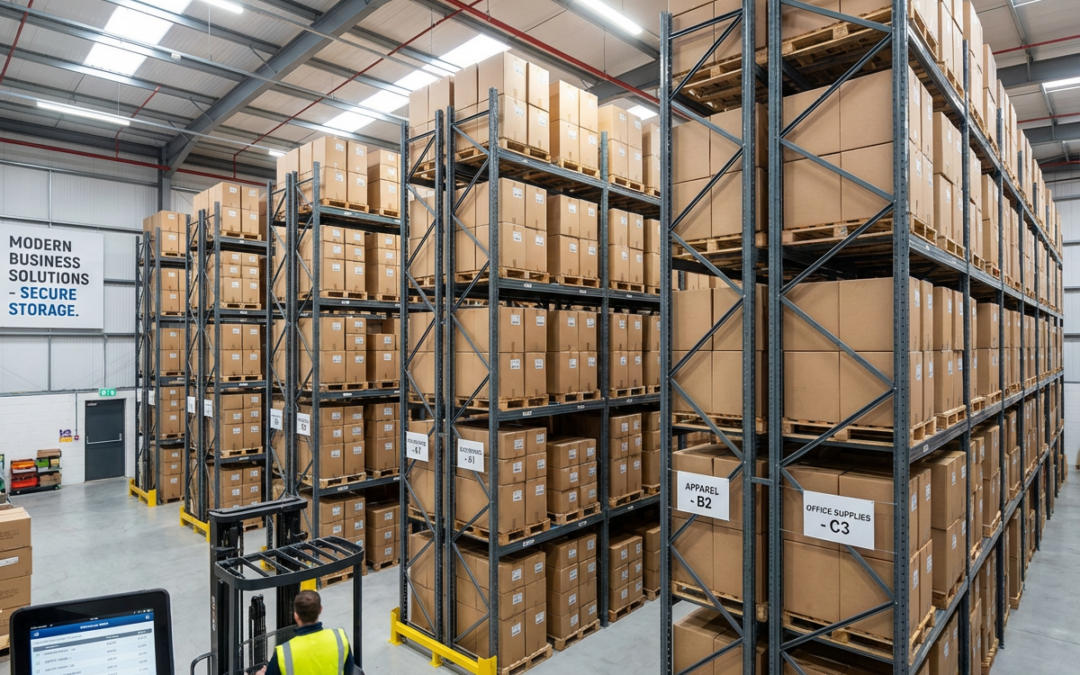
Running an e-commerce business is a thrilling ride. From that first sale notification to watching your brand grow and orders increase, it represents the realisation of entrepreneurial dreams. However, amidst the excitement of product development, marketing efforts, and customer satisfaction, a significant physical challenge often emerges for many online retailers: the practical issue of storing inventory. If your spare room is overwhelmed with boxes, your garage has become inaccessible, or your thoughts are consumed by towering stacks of stock, then your business is clearly in need of a robust Business Storage Strategy.
So, Your Online Shop’s Taken Off? Brilliant! But Where’s All The Stuff Going?
It’s a common narrative for growing businesses. Operations often begin on a small scale, perhaps with a brilliant idea and a limited range of products. The kitchen table might serve as the initial packing station, and a spare bedroom as the first warehouse. This approach is charming, cost-effective, and, for a time, perfectly adequate. But then, success brings expansion. Order volumes ramp up, product lines diversify, and suddenly, “making do” transforms into a struggle against encroaching stock.
- That Familiar Tale: From Kitchen Table to Stock Everywhere!
Many entrepreneurs recall those early days with fondness: the satisfaction of hand-packing each order, the pride in seeing products dispatched. As an e-commerce venture flourishes, however, the physical reality of inventory management can rapidly become a significant burden. What starts as a manageable collection of boxes in a corner can quickly escalate, threatening to take over an entire home. The dining table might disappear under layers of bubble wrap, and hallways can become obstacle courses of packages. Locating a specific SKU can feel like an exhaustive search. If this scenario resonates, be assured, it’s a typical growing pain for successful online retailers. - Recognising the Tipping Point: When “Making Do” Just Won’t Do
There inevitably comes a moment for every expanding e-commerce business when improvised storage solutions cease to be viable. This tipping point might be the realisation that the car no longer fits in the garage, or when concerned family members comment on the “stock situation.” More critically, it could manifest as misplaced items, order delays due to an inability to locate products, or purchasing decisions based on assumptions rather than accurate stock levels. This situation is not merely inconvenient; it is detrimental to business operations. Damaged stock from overcrowding, inefficient packing processes, and the inherent stress of a chaotic environment can all erode valuable time and profits. - How a Smart Business Storage Strategy Isn’t Just About Space, It’s About Sanity (and Profit!)
It is important to understand that developing a proper Business Storage Strategy extends beyond simply finding a larger area for storage. It is about reclaiming operational efficiency, protecting valuable assets, and establishing a streamlined system that supports business growth rather than hindering it. Consider the benefits: accurate stock counts, faster order fulfilment, reduced risk of damaged goods, and an enhanced professional image. Furthermore, personal well-being is a significant factor. A well-organised inventory system translates to reduced stress and more time to concentrate on enjoyable aspects of the business, such as further expansion. Viewed from this perspective, investing in a dedicated storage solution becomes a strategic imperative that yields substantial returns, rather than an expense.
Getting Started: What Do You Really Need for Your E-commerce Inventory Storage?
Before considering the location for storing goods, a comprehensive understanding of what is being stored and the precise space it requires is essential. Proceeding to select a storage solution without this foundational knowledge is akin to packing for a holiday without knowing the destination or climate; the outcome will likely be suboptimal.
- The Big Stocktake: Getting Honest About Your Inventory
While potentially seeming like a tedious task, conducting a thorough inventory audit is the absolute cornerstone of effective E-commerce Inventory Storage. It requires knowing exactly what stock is held, the quantity of each item, and its physical characteristics.- Itemise Everything: Compile a list of every single product line or Stock Keeping Unit (SKU).
- Count Accurately: Avoid estimations. Obtain precise numbers for each SKU.
- Measure and Weigh: Understand the dimensions and weight of products, both individually and as they are typically boxed or stored. This information is crucial for planning shelving and optimising space.
- Assess Turnover: Identify which items sell quickly and which are slower-moving. This will influence how storage is organised for accessibility.
- Note Special Requirements: Determine if any items necessitate climate control, are fragile, or are particularly valuable and require enhanced security.
- A comprehensive audit provides the necessary data to make informed decisions. It might also reveal obsolete stock that is occupying valuable space, presenting an opportunity to clear out inventory and potentially recoup some capital.
- Peering into the Crystal Ball: Forecasting Your Future Stock Needs
Current inventory levels are one aspect of planning; future requirements are another. The e-commerce landscape is dynamic. Are there plans to launch new product lines? Are seasonal peaks, such as the Christmas rush, anticipated? Is a significant promotion imminent?- Analyse Sales Data: Review past trends to predict future demand.
- Factor in Growth: Be realistic yet optimistic regarding the business’s growth trajectory.
- Consider Lead Times: Ascertain how long it takes to receive new stock from suppliers, as this affects the buffer stock needed.
- Seasonal Fluctuations: For businesses selling seasonal items, storage needs will likely vary. The strategy must accommodate these changes.
- Forecasting helps to avoid the predicament of insufficient space or popular stock just when it is most needed, allowing for scalable planning.
- It’s Not Just About Square Feet: Thinking Through Access, Security, and Flow
While the volume of stock is a primary consideration, it is not the sole factor. How inventory is accessed and managed is equally important.- Accessibility: How frequently will stock need to be accessed? Daily? Weekly? Will individual items be picked, or will entire pallets be retrieved?
- Workflow: Consider the order fulfilment process. How can the storage space be laid out to make picking, packing, and shipping as efficient as possible? Visualise the journey of an item from shelf to shipping box.
- Security: What level of security do the goods require? This could range from basic lock-and-key arrangements to comprehensive CCTV and alarm systems.
- Environment: Do products have specific temperature or humidity requirements?
- Logistics: How easy is it to transport stock in and out? Are there loading bays? Is parking convenient? What about courier collections?
- Considering these practical aspects will aid in selecting not only the correct size of storage but also the appropriate type and location.
Exploring Your Options: Finding the Perfect Home for Your E-commerce Goods
Once inventory and operational needs are clearly defined, it’s time to examine the various E-commerce Inventory Storage solutions available. Each presents distinct advantages and disadvantages, and the optimal choice will depend on specific business circumstances.
- Keeping it In-House: The Pros and (Often Many) Cons
For many start-ups, utilising a spare room, garage, or a portion of their home is the initial default.- Pros: It is initially inexpensive, offers convenient access at all hours, and provides complete control.
- Cons: This is rarely a scalable solution. As the business grows, domestic space diminishes. It can appear unprofessional to suppliers or clients. Home environments are often suboptimal for stock due to issues like dampness or temperature fluctuations. Security can also be a concern. Critically, it blurs the boundary between work and home life, potentially leading to burnout. Perhaps you’ve even found yourself using Personal Storage in the past, a service we offer for household items, just to make room for burgeoning business stock – a clear indicator that space is becoming a premium.
- Third-Party Logistics (3PL): A Helping Hand, But Is It Your Hand?
3PL companies provide comprehensive services, managing everything from receiving and storing goods to picking, packing, and shipping orders.- Pros: This approach is largely hands-off, freeing up time to focus on other business areas. 3PLs are logistics experts and often utilise sophisticated systems. It can be highly scalable.
- Cons: It can be costly, with fees often based on transactions, storage space utilised, and various other charges. A degree of control over stock and the fulfilment process is lost, which can impact quality control and branding (e.g., custom packaging). It may not be cost-effective for businesses with very low order volumes or highly specialised products.
- The Flexible Friend: Why Self Storage Could Be Your E-commerce Hero
Self storage offers an excellent intermediate solution, providing dedicated, secure space without the complexities or high costs associated with 3PL, or the inherent limitations of home storage. It is an increasingly popular choice for astute e-commerce retailers.- Pros:
- Cost-Effective: Typically, a flat fee is paid for the unit, making budgeting predictable.
- Flexibility: A wide range of unit sizes is available, with the ability to easily scale up or down as needs change, ideal for seasonal peaks or rapid growth.
- Control: Businesses manage their own stock, arrange it as desired, and can implement their own quality control processes.
- Security: Reputable facilities offer excellent security features such as CCTV, alarms, and controlled access.
- Accessibility: Many facilities provide extended access hours, some even 24/7, allowing inventory management on a flexible schedule.
- Professionalism: It presents a more professional image than a cluttered garage. Some facilities can even accept deliveries on a business’s behalf.
- Spotlight on Newbury Self Store: Our Tailored Solutions for Businesses Like Yours Here at Newbury Self Store, we have a deep understanding of the unique challenges that e-commerce businesses face. We offer a variety of unit sizes perfectly suited for E-commerce Inventory Storage, from compact lockers for smaller stock levels to larger units capable of accommodating significant quantities of goods. Our Business Storage solutions provide clean, dry, and secure environments ideal for your products. Furthermore, our flexible terms mean you are not locked into lengthy, complicated leases. Our aim is to provide straightforward, supportive service to help your business thrive.
- Pros:
Making Your Chosen Space Work Wonders: Clever Tricks for E-commerce Stock
Securing a storage unit is an excellent first step. The next phase involves optimising that space to make inventory management as efficient as possible. A well-organised unit is not merely aesthetically pleasing; it is a cornerstone of operational efficiency.
- Think Upwards! Making the Most of Vertical Space
A common oversight is the underutilisation of a storage unit’s height. While floor space is finite, vertical space often remains untapped.- Invest in Shelving: Sturdy, adjustable shelving units are invaluable. They permit safe stacking of goods and easy access. Consider freestanding metal shelves capable of bearing significant weight.
- Use Bins and Containers: Clear, stackable bins are excellent for smaller items, allowing visibility of contents and maintaining tidiness. Ensure they are clearly labelled.
- Pallet Racking (for larger units): For businesses dealing with palletised goods, appropriate racking is essential for safety and accessibility.
- A Place for Everything: Smart Systems for Finding Stock Fast
The phrase “I know it’s in here somewhere…” often precedes a lengthy search in a disorganised space. A logical system is crucial.- SKU-Based Organisation: If SKUs are used, they should be central to the organisational system. Arrange items by SKU, or create a map of the unit indicating where different SKU ranges are located.
- Zone it Out: Divide the unit into zones. For instance, high-turnover items near the front, bulk storage at the back, and a dedicated packing area if space permits.
- Clear Labelling: Label shelves, bins, and even aisles if the unit is large enough. Labels should be large, bold, and easily readable from a distance. Consistency is key.
- First-In, First-Out (FIFO): For perishable goods or items with a limited shelf life (even if it’s just a fashion season), ensure that the oldest stock can be accessed first.
- Smooth Operations: Designing Your Space for Easy Picking and Packing
Consider the physical journey an order takes. How can steps be minimised and the process made as ergonomic as possible?- Create Clear Aisles: Avoid cramming everything so tightly that movement is restricted. Ensure sufficient space to manoeuvre, whether carrying boxes or using a trolley.
- Dedicated Packing Station: If room allows, set up a small packing bench within the unit or nearby. Keep essential packing supplies readily available.
- Logical Flow: Arrange the most popular items in the most accessible locations to accelerate picking times.
- Boxing Clever: Don’t Forget Your Packaging Arsenal!
Efficient inventory storage also encompasses having packing supplies organised and readily accessible. There is nothing more frustrating than being prepared to ship an order only to have to search for the correct size box or a roll of tape.- Store Supplies Neatly: Dedicate a specific area in the unit for boxes, mailers, bubble wrap, tape, and labels.
- Variety of Sizes: Maintain a good range of box sizes to suit different products, minimising wastage on void fill and reducing shipping costs.
- Easy Access: Ensure packaging supplies are as easily accessible as the products themselves. At Newbury Self Store, we recognise that packaging is a vital part of the e-commerce process. That’s why we offer a range of quality Packaging materials on-site. Exploring our packaging options can help streamline your dispatch process, ensuring you have the right materials when you need them. This is just another way we aim to simplify operations for our business customers.
Weaving Your E-commerce Inventory Storage into the Fabric of Your Business
Your E-commerce Inventory Storage should not function as an isolated component. It needs to be an integral part of overall business operations, managed with the same diligence applied to your website or marketing strategies.
- Tech to the Rescue: Software That Keeps Your Stock in Check
Manual stock tracking using spreadsheets has its limitations. As a business grows, inventory management software becomes indispensable.- Real-Time Tracking: Effective software can synchronise with sales channels (website, marketplaces) to update stock levels in real-time, thereby preventing overselling.
- Low Stock Alerts: Configure alerts to provide notification when items are running low, enabling timely reordering.
- Sales Data and Reporting: Utilise the data to identify trends, best-selling items, and slow-moving stock, which helps in refining purchasing and storage strategies.
- Integration: Look for software that integrates with accounting tools and shipping providers to create a seamless workflow.
- Stay Sharp: Regularly Reviewing and Tweaking Your Strategy
Your Business Storage Strategy is not a static plan. As your business evolves, so too should your storage arrangements.- Regular Audits: Continue to conduct physical stocktakes (perhaps less comprehensively than the initial one, but on a regular basis) to ensure system records accurately reflect reality.
- Review Space Utilisation: Is the space still being used optimally? Could it be reorganised for improved efficiency? Is more, or perhaps less, space required?
- Analyse Performance: Are fulfilment targets being met? Are there any bottlenecks in the picking and packing process that relate to storage?
- Adapt to Change: New products, shifting sales patterns, or supplier issues may all necessitate adjustments to the strategy.
- Protecting Your Assets: Why Security is Non-Negotiable
Your inventory represents one of your most significant business assets. Its protection is paramount.- Physical Security: Choose a storage facility with robust security measures: good lighting, perimeter fencing, CCTV surveillance, individual unit alarms, and controlled access systems.
- Insurance: Ensure adequate insurance coverage for stock, both in transit and while in storage. Review the terms of your business insurance and the storage facility’s policy.
- Access Control: Be mindful of who has access to your unit. Keep keys secure and limit access to trusted personnel.
- At Newbury Self Store, security is a top priority. Our facility is equipped with modern security systems to provide peace of mind that your valuable E-commerce Inventory Storage is well-protected.
Ready to Tame the Stock Monster and Grow Your E-commerce Empire?
Feeling overwhelmed by inventory is often a sign of success, but it also serves as a call to action. Implementing a well-considered Business Storage Strategy is a pivotal step in elevating your e-commerce business. It is about creating order from chaos, achieving efficiency from clutter, and laying a solid foundation for future growth.
- Crafting Your Personalised Business Storage Strategy: It’s Easier Than You Think
While it may seem like a substantial undertaking, by breaking the process down – understanding stock, forecasting needs, exploring options, and planning the space – a strategy that genuinely works for your business can be created. The benefits, including improved efficiency, reduced stress, protected assets, and enhanced customer satisfaction, are well worth the effort. This will free up not only physical space but also mental capacity, allowing for a greater focus on innovation and brand scaling. - Let’s Chat About Your Space: The Team at Newbury Self Store is Ready to Help
If your business is based in or around Newbury and you are seeking a flexible, secure, and affordable solution for your E-commerce Inventory Storage, we would be delighted to discuss your requirements. The friendly team at Newbury Self Store can assist in determining the ideal unit size for your needs and answer any questions you may have. We are dedicated to supporting local businesses and understand the dynamic nature of e-commerce. You can learn more about our comprehensive services on our Newbury Self Store, or get in touch directly for a personalised consultation via our Contact Section. - Got Bulk? Overflowing Stock? Perhaps Our Container Storage is the Answer
For some e-commerce businesses, particularly those dealing with larger items, managing seasonal overflow, or handling bulk purchases, standard self storage units might not be the only solution. If you find yourself with significant quantities of stock that require robust, easily accessible, and cost-effective space, our Container Storage options offer an excellent alternative. These units provide generous, ground-level access, perfect for heavier or more awkwardly shaped goods, offering another flexible dimension to your business’s storage capabilities.
Do not let inventory headaches hinder your e-commerce business. With a thoughtful Business Storage Strategy and the right support, you can transform stock management from a challenge into a streamlined asset.