
 01635 581 811
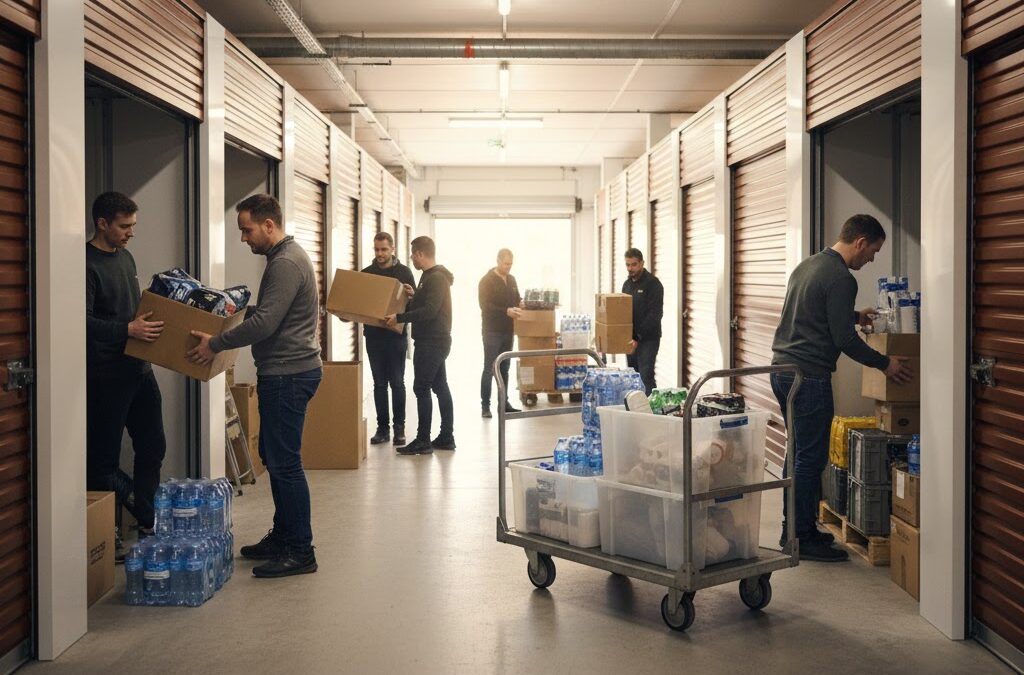
Most people think about self-storage when decluttering homes or managing house moves. Yet storage facilities serve a far more critical function that becomes apparent during emergencies: they provide essential infrastructure for community crisis storage when disasters strike. Whether it’s flooding, severe storms, or other large-scale disruptions, accessible storage units become vital logistical hubs that significantly improve local crisis response efficiency and speed recovery efforts.
When emergencies overwhelm normal systems, communities need immediate solutions for storing relief supplies, protecting displaced residents’ belongings, and maintaining emergency service operations. Professional storage facilities offer the secure, accessible space that makes effective crisis response possible rather than chaotic.
This isn’t theoretical planning for unlikely scenarios. UK communities face regular disruptions – flooding affects thousands of properties annually, winter storms knock out power for days, and infrastructure failures create immediate displacement needs. Having robust storage infrastructure ready before crises occur makes the difference between effective response and preventable chaos.
Supporting Emergency Services and Relief Organisations
Local crisis response depends heavily on logistics. Emergency services, local councils, and relief organisations need secure locations to centralise supplies, coordinate operations, and deploy resources quickly. Storage facilities provide exactly this infrastructure when normal locations become unavailable or inadequate.
Dedicated Space for Relief Operations
Local authorities and NGOs coordinate large-scale relief efforts during significant emergencies. They need clean, dry, secure environments to manage critical inventory – first aid supplies, emergency food parcels, communication equipment, temporary bedding, sanitation supplies, and countless other essentials that displaced or affected residents require.
Community crisis storage hubs ensure these materials stay protected from further damage whilst remaining easily trackable and distributable. Proper storage prevents the disorganisation that hampers relief efforts and wastes precious time during emergencies. When supplies are properly catalogued and stored systematically, response teams can locate and deploy exactly what’s needed immediately.
Business storage solutions provide the professional space that relief operations require – secure, accessible, and properly maintained regardless of external conditions. This reliability proves essential when everything else is disrupted.
Emergency Service Equipment Staging
Fire services, police, medical teams, and rescue operations require specialised equipment that must deploy instantly. Crises often necessitate temporary command posts or staging areas far from regular headquarters. Storage facilities throughout communities act as distributed equipment caches for vital gear that needs positioning strategically before emergencies occur.
Consider Rachel’s experience coordinating flood relief last winter. Her usual community centre became unusable when the river burst its banks. She secured a large storage unit that held hundreds of sandbags, generator fuel, industrial pumps, and heavy-duty drying equipment. That pre-positioned equipment meant her team could respond immediately to flooding reports rather than scrambling to source supplies whilst water levels rose. Properties were protected that would otherwise have flooded simply because equipment was accessible when needed most.
For bulky equipment requiring ground-level access, container storage options offer drive-up convenience that simplifies loading heavy generators, pumps, and similar emergency equipment without navigating narrow corridors or lifts.
Organised Logistics for Rapid Deployment
Effective emergency response depends on organisation. Teams facing unfolding crises can’t waste precious time sorting through chaotic supplies trying to locate specific items. Pre-packed, labelled, and systematically stored equipment enables immediate deployment following clear inventory protocols.
Think of it like a hospital emergency department. Everything has its designated place. Staff know exactly where equipment is located and can access it instantly without searching. The same principles apply to crisis response – organisation directly determines response speed and effectiveness.
Storage units allow this systematic preparation. Relief organisations can pre-position supplies in logical arrangements. Medical kits stay together. Food supplies occupy dedicated sections. Communication equipment remains readily accessible. Seasonal items like thermal blankets or cooling supplies can be rotated as needed.
This preparation isn’t about creating complexity – it’s about eliminating friction during highly stressful operations when clear thinking becomes difficult and every minute matters.
Protecting Displaced Residents’ Belongings
Beyond organisational support, storage provides deeply personal assistance to residents facing displacement. When properties become uninhabitable through flooding, fire, or structural damage, people suddenly face safeguarding everything they own whilst dealing with enormous emotional stress.
Immediate Security During Chaos
Displacement creates impossible situations. You’re told your home is unsafe and you need to leave immediately. Where do you put furniture, clothing, electronics, documents, family heirlooms – everything that defines your household? Friends and family might offer temporary space, but imposing on their homes whilst your situation remains uncertain creates awkward tensions.
Community crisis storage provides secure space where displaced families can store belongings whilst negotiating insurance, finding temporary accommodation, and planning rebuilding or relocation. This practical support addresses a major logistical problem during periods when people are least capable of dealing with complex arrangements.
Personal storage solutions offer the flexibility that displacement situations demand – month-by-month contracts that don’t lock families into lengthy commitments whilst their circumstances remain uncertain.
Safeguarding Irreplaceable Items
Evacuation orders often provide minimal warning. You have perhaps an hour, maybe less, to gather essentials and leave. What do you take? What gets left behind? These impossible decisions haunt people who’ve faced evacuation scenarios.
Storage facilities offer solutions for safeguarding items that simply cannot be replaced. Family photographs, inherited jewellery, important documents, legal papers, children’s memory boxes – these irreplaceable possessions deserve protection beyond hoping they survive whatever emergency threatens your property.
Having accessible storage means you can pre-position truly irreplaceable items before crises develop. If flooding threatens, you’ve already moved vulnerable possessions to safety. If evacuation becomes necessary, you’re not making heartbreaking choices about what to abandon. This proactive approach provides enormous peace of mind.
Take the Johnson family’s situation. They lived in a flood-prone area and had experienced near-misses during previous heavy rainfall. Rather than gambling each time, they rented a small unit specifically for irreplaceable items – photo albums, inherited furniture, important documents, and sentimental possessions. When serious flooding finally occurred, their home suffered extensive damage but everything truly irreplaceable was already safe. The relief they felt whilst dealing with insurance and repairs was immeasurable because they weren’t also mourning lost memories.
Proper Preparation Protects Belongings
Even during rushed evacuations, protecting belongings properly minimises damage and simplifies eventual recovery. Taking a few moments for appropriate packing prevents problems that cause additional stress during already difficult situations.
Essential Protection Measures
Use waterproof containers for documents and electronics. Sealed plastic boxes prevent moisture damage that ruins paperwork and destroys electronic equipment. This small investment protects items worth far more.
Wrap furniture in protective covers. Dust covers and moving blankets keep furniture clean and prevent scratches or damage during storage. You’ll want these items in good condition when re-establishing your home.
Label everything clearly. Mark boxes with contents and which room they came from. This specificity dramatically speeds the process of retrieving items and eventually moving back home.
Create basic inventories. Photograph contents and list major items. This documentation helps with insurance claims and ensures you can verify everything’s present when circumstances allow retrieval.
You can source quality protective materials – waterproof storage boxes, furniture covers, bubble wrap, and strong tape – from the packaging shop to ensure proper protection even during rushed packing.
Security Standards Matter During Crises
Choosing where to place essential belongings or relief supplies during emergencies demands trust. You need facilities that maintain rigorous security year-round, not just during normal circumstances. When communities face crises, security becomes even more critical as opportunistic theft unfortunately increases during chaotic periods.
Comprehensive Protection Measures
24/7 CCTV monitoring provides constant surveillance across all facility areas. Every movement gets recorded, creating accountability and deterring potential problems before they develop.
Secure perimeter fencing with electronic gate access prevents unauthorised entry. Only individuals with proper access codes can enter facilities, ensuring only legitimate users and authorised personnel access stored items.
Individual unit alarms offer additional protection layers. Even if someone somehow bypassed perimeter security, they couldn’t access specific units without triggering immediate alerts.
Controlled access logging creates digital records of every entry and exit. This tracking establishes exactly who accessed facilities when, providing accountability that significantly enhances overall security.
Newbury Self Store implements these security measures as standard features, understanding that emergency situations demand reliable protection when people and organisations are most vulnerable.
Flexibility for Emergency Situations
Crises don’t follow predictable timelines. Families might need storage for two weeks whilst insurance processes claims, or they might need space for six months whilst properties undergo extensive repairs. Relief organisations might require space for specific operations lasting days or ongoing programmes requiring months of storage.
Standard rigid contracts don’t work for these unpredictable situations. Month-by-month rolling agreements provide the flexibility that emergency circumstances demand. Families and organisations can secure space immediately without worrying about lengthy commitments that might not suit their actual needs.
This flexibility extends to unit sizing. Initial displacement might require substantial space for entire households’ contents. As situations stabilise and families retrieve essential items, downsizing to smaller units reduces costs whilst maintaining security for remaining possessions. This adaptability proves invaluable when people are managing multiple stressful challenges simultaneously.
Building Community Preparedness
Effective crisis response starts before emergencies occur. Communities that establish relationships between emergency services, relief organisations, and storage providers respond considerably more effectively when actual crises develop.
Local authorities can pre-identify suitable storage facilities for relief operations. Relief organisations can pre-position emergency supplies in accessible locations. Residents can understand options available if displacement occurs. This preparation transforms chaotic scrambling during emergencies into organised response following established plans.
Think of it like fire drills. Nobody wants fires, but practising responses ensures everyone knows what to do if fires occur. Similarly, understanding storage infrastructure and establishing plans before crises means everyone responds more effectively when emergencies actually happen.
Creating Resilient Communities
Local crisis response effectiveness depends partly on physical infrastructure like storage facilities that provide the logistical support emergency situations demand. Communities with robust, accessible storage options recover faster and more effectively than those lacking this infrastructure.
This isn’t about commercial promotion – it’s about genuine community resilience. When storage facilities understand their role in crisis response and maintain standards that support emergency needs, entire communities benefit through faster recovery, better-protected residents, and more effective relief operations.
The difference between communities that recover quickly and those that struggle often comes down to logistical support infrastructure that most people never consider until emergencies occur. Having that infrastructure ready before it’s needed makes all the difference.
Ready to establish emergency storage plans for your organisation or household? Contact the team for straightforward advice about securing space for relief operations, emergency equipment staging, or personal displacement situations. Professional storage infrastructure supports effective crisis response when communities need it most.