
 01635 581 811
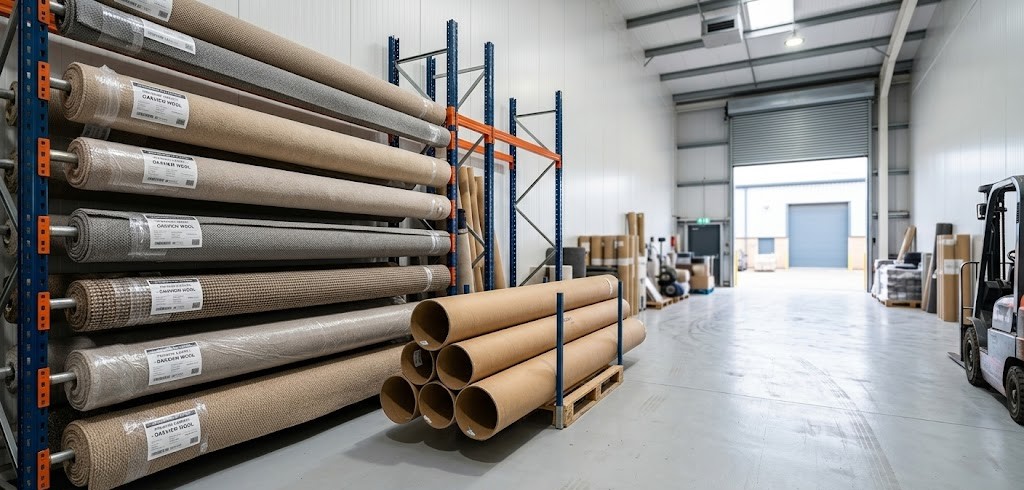
Carpet fitters face a unique storage challenge that most tradespeople don’t encounter. You’re not just dealing with tools or equipment – you’re managing bulky carpet rolls, underlay, grippers, and, critically, those accumulated template patterns that represent years of complex carpet fitting jobs. A single carpet roll can measure 4 metres wide and weigh upwards of 100kg, and those cardboard or paper templates for awkward staircases, bay windows, or heritage properties? They’re irreplaceable records of your craftsmanship.
The problem intensifies when you’re operating from a domestic garage or a small workshop. One major contract – say, a hotel refurbishment or a block of new-build flats – can mean storing 15-20 rolls simultaneously. Add in your template archive, and suddenly your workspace resembles a paper mill crossed with a textile warehouse. That’s where strategic carpet fitter roll storage becomes less about convenience and more about protecting your livelihood.
Why Carpet Fitters Need Dedicated Storage Space
Most carpet fitters start their business from home, using a garage or spare room to store materials between jobs. This works brilliantly until it doesn’t. The turning point usually arrives when you land your first substantial commercial contract or when residential work picks up during the spring moving season.
Carpet rolls demand specific storage conditions. They can’t be stored vertically for extended periods without risking permanent creasing or compression damage to the pile. Damp environments cause mould growth that ruins natural fibres like wool within weeks. Even synthetic carpets suffer – the backing can degrade, adhesives can fail, and that musty smell becomes impossible to shift.
Templates present a different problem entirely. These aren’t just scraps of paper – they’re precise records of complex cuts for properties you might service repeatedly. A pattern for a Victorian terrace staircase with its awkward winders, or a template for a listed building’s irregularly shaped drawing room, represents hours of measuring and problem-solving. Lose that template, and you’re starting from scratch on your next visit.
What Happens When Storage Goes Wrong
Consider the carpet fitter who stored 12 rolls of premium wool carpet in a garden shed for six weeks during a particularly wet autumn. The shed had seemed adequate – it was weatherproof and lockable. But condensation built up overnight, and the temperature fluctuations created the perfect environment for mildew. By the time the installation date arrived, £4,000 worth of carpet was unsalvageable. The insurance claim was rejected because the policy specifically excluded improper storage conditions.
Or take the established fitter in Thatcham who kept 15 years’ worth of templates in cardboard boxes in his loft – patterns for 80+ properties including several heritage homes and commercial premises. A minor roof leak went unnoticed for months. When he needed a specific pattern for a returning customer’s extension, he discovered the entire archive had turned to papier-mâché. Re-measuring and cutting a complex bay window pattern for the Victorian property added two full days to the job and wiped out his profit margin entirely. The customer was understanding but disappointed by the delay. Worse, he’d lost patterns for a hotel chain he serviced annually, meaning his competitive advantage of quick turnaround was gone. The time value of recreating 80 templates would’ve exceeded £8,000 at his hourly rate, even though he’d never actually bill that. The loss wasn’t just historical – it was future competitive advantage destroyed by a £50 roof repair that went undiscovered.
These aren’t extreme scenarios. They’re remarkably common.
The True Cost of Roll Damage
Carpet rolls represent significant capital tied up in inventory. A mid-range carpet suitable for residential properties costs £15-25 per square metre. A standard 4-metre-wide roll covering 40 square metres represents £600-1,000 of stock. If you’re holding five rolls for an upcoming project, that’s potentially £5,000 sitting in storage.
Damage to that stock doesn’t just mean replacing the carpet. It means:
- Delayed installation dates whilst you source replacement materials
- Potential penalty clauses in commercial contracts
- Damage to your professional reputation
- Lost deposits if customers cancel due to delays
- Strained relationships with suppliers if you need rush orders
The financial impact extends beyond the immediate loss. A single delayed project can create a domino effect, pushing back subsequent jobs and leaving gaps in your schedule that represent lost earnings.
Template Archives: Your Competitive Advantage
Experienced carpet fitters know that template archives aren’t just useful – they’re a genuine competitive advantage. When a customer rings asking for additional work at a property you fitted three years ago, being able to pull the original template from your archive transforms the job from a full day’s work into a half-day installation – like a carpenter’s collection of jigs and patterns where accumulated expertise becomes tangible.
This matters particularly in these scenarios:
Period Properties: Heritage homes with irregular room shapes, non-square corners, and unique architectural features. A template for a Victorian bay window or a Georgian townhouse staircase can save 4-6 hours of re-measuring and test-fitting.
Commercial Premises: Hotels, offices, and retail spaces often require phased refurbishment. Having templates for previously completed areas ensures perfect consistency when you return for additional floors or rooms.
Property Portfolios: Landlords and letting agents who manage multiple properties frequently use the same fitter. Templates for their various properties mean faster turnarounds and more competitive quotes.
Warranty Work: If a customer reports an issue with a previous installation, having the original template helps you assess whether the problem stems from the initial carpet fitting or subsequent damage.
What Carpet Fitters Actually Need to Store
Before exploring storage solutions, it’s worth itemising what you’re actually dealing with. The storage requirements for a working carpet fitter typically include:
Rolls and Materials:
- Current project rolls (typically 3-8 rolls for residential work, 10-20 for commercial contracts)
- Underlay in various grades
- Gripper rods and threshold strips
- Adhesives and tapes (which have specific temperature requirements)
Tools and Equipment:
- Knee kickers, power stretchers, and seaming irons
- Cutting tools including carpet knives and shears
- Measuring equipment and straight edges
- Installation accessories like stair rods and door bars
Template Archives:
- Cardboard or paper patterns organised by property or customer
- Measuring notes and installation specifications
- Property photos showing layout and obstacles
Business Paperwork:
- Sample books (which can be surprisingly bulky)
- Product catalogues and technical specifications
- Business paperwork and customer records
The challenge is that these items have conflicting storage needs. Rolls need horizontal space, templates need dry, flat storage, and tools need accessibility.
Why Standard Storage Solutions Fall Short
Most carpet fitters initially try to make do with domestic or improvised storage. Here’s why these approaches typically fail:
Domestic Garages: Great for tools and a few rolls, but inadequate once your business grows. The space’s rarely climate-controlled, and you’re constantly moving vehicles to access materials. Security can be questionable, particularly for expensive stock.
Garden Sheds: Affordable but vulnerable to temperature extremes and moisture. Even “weatherproof” sheds experience condensation. They’re also prime targets for theft – carpet rolls might not seem valuable, but they’re easy to sell.
Workshop Units in Industrial Estates: Often prohibitively expensive for sole traders or small operations. You’re paying for features you don’t need (three-phase power, loading bays) whilst still facing security concerns outside business hours.
Spare Rooms or Lofts: Suitable for templates and samples but completely impractical for rolls. The weight of multiple carpet rolls can exceed safe floor loading limits in residential properties.
The ideal solution needs to balance security, climate control, accessibility, and cost. For many carpet fitters, that means business storage designed specifically for trade inventory.
How Professional Storage Protects Your Investment
Purpose-built storage facilities address the specific challenges carpet fitters face. The key features that matter most:
Climate Control: Consistent temperature and humidity levels prevent mould growth, adhesive degradation, and pile damage. This is non-negotiable for natural fibre carpets and essential for protecting templates.
Horizontal Space: Unlike domestic storage where you’re constantly trying to fit things around cars, bikes, and household items, dedicated storage units provide clear floor space for properly storing rolls horizontally.
Security: Proper facilities offer CCTV, individual unit alarms, and controlled access. Your £10,000 of carpet inventory deserves better protection than a padlock on a shed door.
Flexible Access: Need to collect materials at 6am before an early start? Or drop off rolls after finishing a late job? Facilities with extended or 24-hour access mean your storage works around your schedule, not the other way around.
Scalability: Your storage needs fluctuate with your workload. Professional storage lets you scale up during busy periods and scale down when work’s quieter, without the commitment of a long-term commercial lease.
Organising Your Storage Unit for Maximum Efficiency
Simply renting a unit and dumping everything inside defeats the purpose. Strategic organisation transforms storage from a necessary expense into a business asset – like the difference between a professional filing system where everything has its designated place versus a cluttered drawer where you’re constantly rummaging. Here’s how to set up a unit that actually works:
Zone Your Space: Create distinct areas for current projects, general inventory, and archives. This seems obvious, but the temptation to just stack everything wherever it fits is strong when you’re tired after a long installation.
Roll Storage System: Store rolls horizontally on purpose-built racks or pallets. Never stand rolls on end for more than a few days – the weight compresses the pile at the bottom. If you’re storing multiple rolls, keep a clear inventory list noting which carpet’s which. Wrapping rolls in protective plastic sheeting adds an extra layer of protection.
Template Filing: Invest in large flat files or plan chests for template storage. Organise by customer name or property address, with clear labelling. Consider photographing templates and storing digital copies as backup – it’s saved more than one fitter when a physical template was damaged.
Tool Storage: Keep frequently used tools near the front of your unit for quick access. Heavy equipment like power stretchers can live towards the back. Proper tool storage also means you can use your van more efficiently, loading only what you need for each specific job.
Sample and Catalogue Storage: These need protection from dust and moisture but also need to be accessible when meeting customers. Shelving units work well, keeping materials organised and easy to browse.
The Template Archive: Best Practice
Templates deserve special attention because they’re utterly irreplaceable. Here’s how to protect this accumulated knowledge:
Material Choice: Whilst traditional cardboard works, consider upgrading to more durable materials for templates you’ll reference repeatedly. Plastic sheeting or treated paper resists moisture better and lasts longer.
Documentation: Don’t just store the template – store the context. Note the date, property address, specific room, carpet type used, and any installation challenges. Your future self will thank you.
Digital Backup: Photograph or scan important templates. Store these digital copies in cloud storage. It’s not a replacement for the physical template, but it’s invaluable insurance.
Regular Audits: Review your archive annually. Discard templates for properties that have since been demolished or customers who’ve moved. This keeps your archive manageable and relevant.
Organisation System: Develop a consistent filing system and stick to it. Whether you organise alphabetically by customer surname, by postcode, or by date, consistency’s what makes the archive useful.
Calculating the Right Storage Size
Carpet fitters typically need more space than they initially estimate. As a rough guide:
50-75 sq ft: Suitable for sole traders storing 5-8 rolls plus tools and a modest template archive. This works if you’re primarily doing domestic installations with quick turnover.
100-150 sq ft: Better for established carpet fitters handling both residential and small commercial work. Accommodates 10-15 rolls, full tool kit, comprehensive template archive, and sample books.
200+ sq ft: Necessary for fitters regularly handling large commercial contracts or those storing materials for multiple simultaneous projects. Provides space for 20+ rolls plus everything else.
Remember that you need circulation space – you can’t pack a unit to the ceiling and expect to find anything. A good rule’s to estimate your storage needs, then add 30% for working space.
When Storage Becomes a Business Investment
It’s tempting to view storage costs as an overhead to be minimised. That’s the wrong perspective. Proper carpet fitter roll storage is a business investment that delivers measurable returns:
Bulk Purchasing: With adequate storage, you can buy carpet rolls when suppliers offer discounts rather than ordering specifically for each job. A 15% discount on five rolls quickly exceeds monthly storage costs.
Job Flexibility: Storage means you can accept projects with longer lead times, knowing you have space for materials delivered weeks before installation. This expands your potential customer base.
Professional Image: Meeting customers at a storage facility to show them materials from your organised, climate-controlled unit’s considerably more professional than rummaging through a cluttered garage.
Reduced Stress: Knowing your materials are secure and properly stored eliminates a persistent background worry. That mental space matters more than many fitters realise.
The question isn’t whether you can afford proper storage. It’s whether you can afford the risks and limitations of inadequate storage.
Protecting Templates During Transport
Your template archive’s only valuable if you can access it when needed. Many fitters keep frequently-used templates in their van, which creates new risks. Templates can be damaged during transport, exposed to moisture, or simply lost in the chaos of a working vehicle.
Consider maintaining two categories: active templates for current or recent customers that travel with you, and archive templates that remain in storage. Use rigid portfolio cases for templates in your van – the kind architects use for drawings. These protect against crushing, moisture, and accidental damage.
For the main archive in storage, flat files or plan chests are ideal. They’re designed specifically for storing large sheets of paper or card, keeping everything flat, organised, and protected. Yes, they’re an investment, but they’re considerably cheaper than re-measuring complex properties.
Making Storage Work with Your Schedule
Access hours matter more than many fitters initially realise. A facility that closes at 6pm’s useless when you finish a job at 7pm and need to drop off leftover materials. Similarly, if you regularly start jobs early morning, you need access to collect materials before standard business hours.
Look for facilities offering extended access or, ideally, 24-hour access with individual PIN codes. This flexibility means storage enhances your business rather than constraining it. You can collect materials the evening before an early start, drop off returns immediately after finishing a job, and reorganise your unit during quieter periods without rushing.
Drive-up access is another feature worth prioritising. Carrying heavy carpet rolls any distance is exhausting and increases damage risk. Being able to reverse your van directly to your unit door makes loading and unloading dramatically easier.
The Security Question
Carpet rolls are surprisingly attractive to thieves. They’re valuable, relatively easy to transport, and simple to sell. A van loaded with premium carpet can represent £15,000-20,000 of stock – enough to make it worth criminals’ whilst.
Your storage facility’s security directly protects your business assets. Essential features include:
- Individual unit alarms that trigger if your specific unit’s accessed outside your normal patterns
- Comprehensive CCTV covering access points and corridors
- Controlled access requiring PIN codes or key cards that create an audit trail
- Physical security like perimeter fencing and good lighting
- On-site presence during business hours
Don’t assume all storage facilities offer equivalent security. Visit potential facilities, ask specific questions about security measures, and check whether they’ve experienced break-ins. Your insurance company will also have views on acceptable security standards – inadequate security can invalidate your cover.
Planning for Business Growth
Your storage needs today won’t match your needs in two years. If your business is growing – and if you’re reading this, it probably is – choose a facility that can accommodate expansion. Starting with a 75 sq ft unit’s fine if you can easily upgrade to 100 or 150 sq ft as your inventory grows.
Flexible storage arrangements let you scale without the commitment of commercial property leases. This is particularly valuable for carpet fitters, where work can be seasonal or project-dependent. You might need extra space during busy periods and less during quieter months.
Beyond Storage: Supporting Infrastructure
The best storage facilities offer more than just space. Look for additional features that support your business:
Packaging Supplies: Need boxes for storing offcuts or materials for protecting finished work? On-site packaging supplies save separate trips to suppliers.
Loading Equipment: Trolleys and handling equipment make moving heavy rolls safer and easier. Some facilities provide these free of charge.
Meeting Space: A few facilities offer meeting rooms you can book for customer consultations. This provides a professional alternative to meeting at customers’ homes or in coffee shops.
Waste Disposal: Carpet fitting generates waste – old underlay, packaging, offcuts. Facilities with waste disposal arrangements simplify this aspect of your operation.
These might seem like minor conveniences, but they accumulate into significant time savings over months and years.
Making the Storage Decision
The decision to invest in professional storage often comes down to a single question: what’s the cost of not having proper storage? Calculate what you’re currently risking – damaged inventory, lost templates, restricted business capacity, and the stress of inadequate arrangements.
For most established carpet fitters, professional storage isn’t an expense – it’s an investment that pays for itself through protected inventory, increased capacity, and business flexibility. The monthly cost typically equals one or two hours of your billable time, whilst the benefits extend across every aspect of your operation.
If you’re currently making do with inadequate storage, you already know the limitations. The question isn’t whether professional storage would help – it’s how much longer you can afford to wait before making the change. Your business deserves infrastructure that supports growth rather than constraining it. Your carefully accumulated template archive deserves protection that matches its value. And you deserve the peace of mind that comes from knowing your materials are secure, accessible, and properly maintained.
Newbury Self Store understands the unique requirements carpet fitters face because we’ve helped dozens of tradespeople solve exactly these challenges. You need facilities where carpet rolls stay protected from mould, where template archives remain organized and accessible, and where security protects your substantial inventory investments. We know that your carpet rolls aren’t just stock – they’re the foundation of professional installations that transform clients’ homes.
Contact us to discuss storage solutions designed specifically for trade professionals. Let’s find the right carpet fitter roll storage solution for your business that protects your investment and supports your growth.