
 01635 581 811
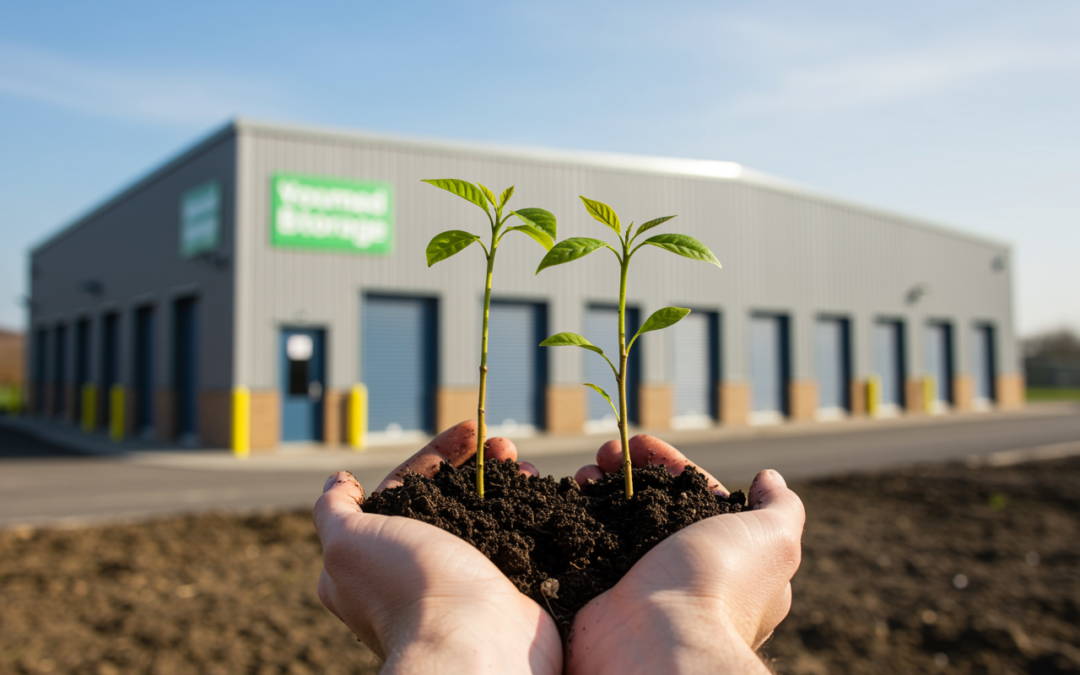
Self-storage has always been about creating space; clearing out the garage, making room for a growing family, or giving a small business somewhere to keep its stock. However, imagine if every time someone booked a unit, they were not just solving their own space problem. Consider a scenario where they were actively helping restore the planet.
This concept turns an everyday decision into something genuinely restorative for the environment. It represents a shift from simply consuming space to contributing to a cycle of renewal. For every storage unit booked, two trees get planted. Not one; two. It is a simple commitment that transforms a standard logistical transaction into a meaningful environmental contribution.
This is not about offsetting carbon or ticking a corporate responsibility box. It is about going beyond neutral to create a net positive impact. When you store your belongings, you are not just protecting what matters to you; you are contributing to reforestation projects that rebuild ecosystems, support wildlife, and pull carbon dioxide out of the atmosphere for decades to come.
Why Two Trees Matter More Than You Think
The number might seem modest at first glance. Two trees. However, consider what those two trees actually do over their lifetime.
A single mature tree absorbs roughly 22 kilograms of carbon dioxide each year. Over 40 years, that is nearly a tonne of CO2 removed from the atmosphere per tree. Multiply that by two for every unit booked, and the impact starts to add up quickly. When hundreds of families and businesses choose storage throughout the year, those individual contributions become forests.
Trees do far more than capture carbon. They prevent soil erosion, filter water, create habitats for birds and insects, and produce oxygen. Two trees planted in the right location can stabilise a riverbank, provide shade that reduces local temperatures, or offer nesting sites for declining bird species. They are not just carbon sinks; they are the building blocks of functioning ecosystems.
Here is an analogy that makes the scale clearer: imagine every storage customer as someone who is not just tidying their own home but also planting a small garden in a neglected public space. Individually, each garden is modest. Collectively, they transform entire neighbourhoods. That is what this tree-planting commitment achieves; small, repeated actions that compound into genuine environmental restoration.
How the Tree-Planting Programme Actually Works
Transparency matters when it comes to environmental claims. It is easy for businesses to make green promises without backing them up with verifiable action. Therefore, understanding how the process works in practice is essential.
When you book a storage unit, the tree-planting commitment activates automatically. There is no extra form to fill out, nor is there an opt-in required. It is built into the service. The trees are planted through established reforestation projects partners who work in areas that need it most, such as regions affected by deforestation, wildfire damage, or land degradation.
These are not token gestures. The planting projects focus on native species suited to local conditions, which means the trees have a far better chance of survival and long-term growth. Fast-growing exotic species might sound impressive on paper, but they often fail to support local wildlife or integrate into existing ecosystems. Native trees, by contrast, become part of the landscape’s natural recovery.
The planting happens in verified locations, and the projects are managed by organisations with proven track records in reforestation. This ensures that the trees actually get into the ground, receive proper care during their critical early growth period, and contribute to measurable environmental outcomes.
What Carbon Positive Actually Means
You have probably heard terms like “carbon neutral” or “net zero” used frequently. They are important concepts, but carbon positive goes a step further. Here is the difference.
Carbon neutral means balancing out the carbon you produce. If a business generates 100 tonnes of CO2 through its operations, it offsets that by funding projects that remove or prevent 100 tonnes elsewhere. The net result is zero additional carbon in the atmosphere.
Carbon positive means removing more carbon than you produce. It is not about breaking even; it is about actively improving the situation. When a storage facility operates with energy-efficient lighting, well-insulated buildings, and then plants trees on top of that, the environmental benefit exceeds the carbon cost of running the operation. This is a key differentiator for emerging green self storage UK facilities.
This approach acknowledges a simple truth: we cannot just stop making things worse. We need to start making things better. Every storage unit booked does not just minimise harm; it contributes to genuine restoration.
The Hidden Environmental Footprint of Storage
Most people do not think about the environmental impact of storage. It is not like driving a car or flying on holiday, where the carbon cost feels obvious. Yet every building has a footprint.
Storage facilities use electricity for lighting, security systems, and climate control in certain units. They require construction materials like steel, concrete, and insulation. Customers drive to and from their units, adding transport emissions. Even the packaging used to protect belongings adds to the total.
None of this makes storage inherently bad, but it does mean there is a responsibility to address those impacts. Some facilities ignore the issue entirely. Others make vague commitments to being green without specifics. The tree-planting programme offers something concrete; a measurable action that directly counteracts the environmental impact of storage operations.
It also creates a ripple effect. When customers know their storage decision supports reforestation projects, they are more likely to think about other environmental choices. It is not preachy or performative; it is simply showing that everyday decisions can align with environmental values without requiring sacrifice or inconvenience.
Real-World Impact: What Happens After Planting
Planting trees is the start, not the finish. What happens in the months and years after planting determines whether the commitment creates lasting value or just feels good in the moment.
The partners involved in this programme monitor survival rates, track growth, and replace trees that do not make it. Young trees are vulnerable; they need adequate rainfall, protection from grazing animals, and sometimes initial watering support. Projects that skip this follow-up care often see failure rates above 50%, which undermines the entire purpose.
Successful reforestation also involves local communities. When nearby residents benefit from the trees, whether through improved water quality, sustainable harvesting of certain products, or employment in planting and maintenance, they have a vested interest in protecting the new forest. This community involvement dramatically increases long-term survival rates and ensures the environmental benefits last for generations.
Over time, those two trees per unit become part of something much larger. They join other plantings to form corridors of habitat that allow wildlife to move safely between fragmented forest areas. They help stabilise microclimates, reducing temperature extremes and supporting agriculture in surrounding areas. They become part of the landscape’s natural infrastructure.
Why This Matters for Families and Businesses
Environmental action often feels abstract, like something governments and large corporations should handle, not something individuals can meaningfully influence. However, this programme demonstrates how ordinary decisions can have tangible environmental impact.
At Newbury Self Store, we witness this shift in perspective daily. For families using personal storage during a house move or renovation, it means their practical need for space contributes to something positive. They are not just solving a logistical problem; they are participating in reforestation without any extra effort or cost.
I recall a customer named Sarah who came to us while downsizing from a large family home. She felt guilty about the waste and the environmental cost of moving boxes and driving vans. When she learned that her booking would plant two trees, her entire demeanour changed. She told me she felt she was finally contributing something back rather than just consuming resources. That emotional shift is significant.
For small businesses relying on business storage to manage stock or archive documents, it adds an environmental dimension to their operations. They can genuinely tell customers that their business practices support reforestation because every unit they rent plants two more trees. It is environmental action that does not require lifestyle changes, expensive equipment, or complicated carbon accounting. It is built into a service people already need.
Practical Steps You Can Take Beyond Tree Planting
Choosing storage that supports reforestation is a solid start, but there are other ways to reduce the environmental footprint of storing your belongings and support the green self storage UK movement.
Use quality packaging materials that last. Cheap boxes and flimsy wrapping often need replacing, creating waste. Investing in sturdy boxes, packaging supplies, and reusable protective materials means less waste over time. Bubble wrap can be reused multiple times if stored carefully. Heavy-duty boxes survive several moves, effectively becoming sustainable packaging materials through reuse.
Declutter before you store. Every item you store has an environmental cost regarding the space it occupies, the materials used to protect it, and the energy used to secure and maintain the facility. Before boxing everything up, honestly assess what you actually need to keep. Donate usable items to charity, recycle what you can, and only store things with genuine value or purpose.
Consolidate trips to your storage unit. If you need to access your belongings regularly, plan ahead and combine trips. Reducing unnecessary journeys cuts fuel consumption and lowers your personal carbon footprint. It is a small change, but it adds up over time.
Choose climate-controlled storage only when necessary. Climate control protects sensitive items like electronics, documents, and antiques, but it uses more energy than standard units. If you are storing furniture, tools, or other robust items, a standard unit might be perfectly adequate and more energy-efficient.
The Bigger Picture: Storage as Part of Sustainable Living
Self-storage often gets overlooked in conversations about sustainable living, but it plays a genuine role. It allows people to downsize their homes without discarding everything, reducing the pressure to live in larger, more energy-intensive properties. It gives businesses flexibility to operate from smaller premises, cutting commercial energy use.
When someone stores seasonal items instead of keeping them in a heated home year-round, there is an energy saving. When a business uses storage instead of renting a larger warehouse, there is an efficiency gain. These are not dramatic changes, but they are part of a broader pattern of using space more intelligently.
The tree-planting programme adds another layer to that sustainability story. It acknowledges that even efficient storage has an environmental cost, and it takes active steps to address that cost. It turns storage from a neutral transaction into a positive contribution, a core principle of green self storage UK initiatives.
Making Environmental Commitments That Actually Mean Something
The storage industry is not known for bold environmental action. Most facilities focus on security, access, and price; all important factors, but not the whole picture. When a storage provider commits to planting two trees for every unit booked, it signals a different set of priorities.
It shows that environmental responsibility does not have to be complicated or expensive. It does not require customers to pay extra or jump through hoops. It is simply built into the service as a standard practice, the same way security cameras and access codes are standard features.
This approach also sets an expectation. When customers see that their storage choice supports reforestation projects, they start asking why other services do not do the same. It creates pressure across the industry to take environmental impact seriously, not just as marketing but as operational practice. We are proud to lead the way in green self storage UK standards.
What Happens Next
The commitment to plant two trees for every unit booked is not a limited-time promotion or a temporary initiative. It is an ongoing practice that grows more impactful as more people choose storage that aligns with their environmental values.
Every unit booked adds two more trees to reforestation projects. Every month, those numbers compound. Over years, the cumulative impact becomes forests; real, functioning ecosystems that support wildlife, clean air and water, and pull carbon out of the atmosphere for decades.
If you are looking for storage that does more than just hold your belongings, this is it. Whether you need container storage for a house move, space for business stock, or somewhere to keep seasonal items, your choice contributes to genuine environmental restoration. It is storage that makes space in your life and room for forests to grow. That is not a marketing slogan; it is what actually happens when you book a unit.
Storage does not have to be just about creating space. It can be about creating forests, supporting ecosystems, and actively improving the environment. The commitment to plant two trees for every unit booked turns an everyday decision into meaningful environmental action.
This is not about offsetting harm or achieving carbon neutrality. It is about going beyond that to create genuine positive impact. Every unit booked removes more carbon than it produces, contributes to reforestation in areas that need it most, and supports the long-term health of our planet.
When you need storage, you are already making a practical choice to solve a space problem. With this tree-planting programme, that choice does something more; it helps rebuild forests, support wildlife, and create a healthier environment for everyone. That is what carbon positive storage means in practice: storage that gives back more than it takes.
If you are ready to make space in your life whilst contributing to reforestation, call 01635 581 811 or reach out to our team to discuss your storage needs.