
 01635 581 811
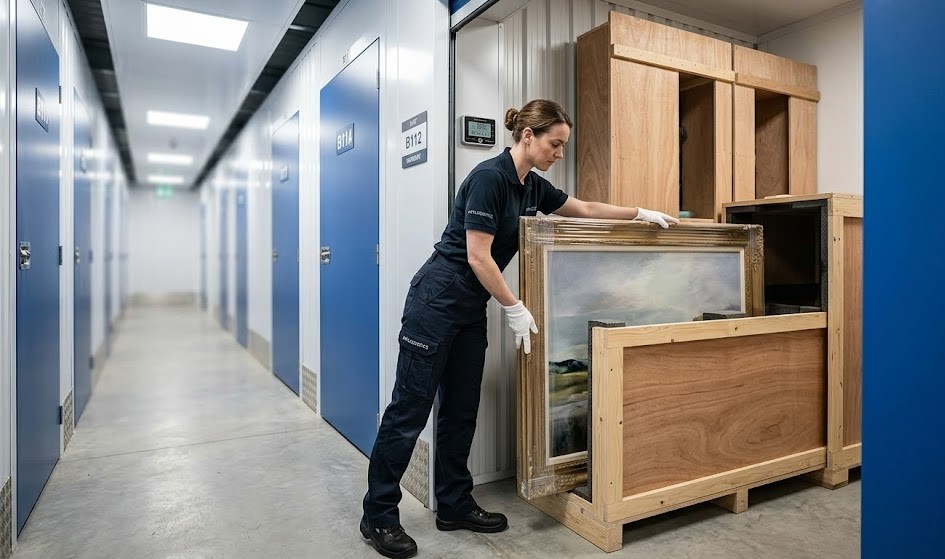
Art galleries face a unique challenge that few other businesses encounter: they’re constantly juggling valuable, often irreplaceable items that don’t belong to them. One month you’re displaying a series of contemporary sculptures worth hundreds of thousands of pounds, the next you’re preparing for a travelling exhibition of 18th-century watercolours. Between these shows, you need somewhere secure, climate-appropriate, and accessible to store pieces that might be heading to another venue, returning to their owners, or waiting for the next rotation.
For galleries operating with limited on-site space – which is most of them – this creates a real headache. You can’t stack paintings in a back office. You can’t store delicate ceramics in a damp basement. And you certainly can’t tell a lender that their loaned artwork is sitting in someone’s garage until the next exhibition opens.
This is where proper art gallery storage solutions become essential. Not just any storage will do. You need facilities that understand the specific requirements of handling valuable artworks, from temperature control to security protocols. You need flexibility to accommodate pieces of wildly different sizes and storage needs. And you need easy access, because exhibition schedules don’t wait for anyone.
Why Rotating Exhibitions Create Storage Pressure
Most galleries operate on a rotating exhibition model, particularly smaller and mid-sized venues. A typical schedule might include four to six major rotating exhibitions per year, each running for six to twelve weeks. Between these shows, there’s a transition period where one exhibition’s being dismantled whilst the next is being installed.
Here’s where it gets complicated. Not all loaned artworks arrive and depart on the same schedule. A lender might send pieces three weeks before an exhibition opens to allow time for condition reports and installation. Another lender might not be able to collect their works until a month after the show closes because they’re coordinating with other venues. Some pieces might be part of a touring exhibition that moves to Glasgow next, whilst others are heading back to private collections in London.
During transition periods, you’re simultaneously managing:
- Artworks from the closing exhibition waiting to be collected
- Pieces for the upcoming exhibition arriving early
- Items from a cancelled or postponed show that need temporary housing
- Works that were meant to tour but had their next venue fall through
- Packaging materials, crates, and custom-built display cases
All of this needs to go somewhere safe. And “somewhere” can’t be the gallery floor, because you’re trying to install the new show.
The Hidden Costs of Inadequate Storage
When galleries try to make do with unsuitable storage arrangements, the consequences add up quickly. Galleries have kept loaned artworks in shared spaces with maintenance equipment, exposing valuable pieces to dust, vibration, and temperature fluctuations. Others have rented commercial units without climate control, only to discover condensation damage when they retrieved works weeks later.
One gallery manager described storing framed prints in a friend’s spare room because they’d run out of space during a particularly busy exhibition season. When it came time to return the works, several frames showed signs of warping from central heating. The cost of conservation work and the damage to the gallery’s reputation with lenders far exceeded what proper exhibition storage would have cost.
Insurance is another factor that catches galleries off-guard. Many insurance policies for loaned artworks specify storage conditions. If you’re keeping valuable pieces in facilities that don’t meet these requirements, you might find your coverage’s void. That’s a risk no gallery can afford to take.
There’s also the practical issue of accessibility. If you’re storing works 40 minutes away in a facility with limited access hours, you can’t respond quickly when a lender requests an urgent return or when a curator needs to inspect a piece for condition reporting. Flexibility matters when you’re working with borrowed collections.
What Proper Art Storage Actually Requires
Professional art storage isn’t about finding the cheapest available space. It’s about matching storage conditions to the specific needs of the valuable artworks you’re handling. Different mediums have different vulnerabilities, and your art gallery storage solutions need to accommodate all of them.
Climate control’s non-negotiable for most artworks. Paintings, works on paper, textiles, and many sculptures require stable temperature and humidity levels. Fluctuations cause materials to expand and contract, leading to warping, cracking, and deterioration. Ideally, you’re looking at temperatures between 16-20°C with relative humidity around 45-55%. Even small variations can cause problems over time.
Think of climate control like maintaining a wine cellar. You wouldn’t store expensive wine in a garage where temperature swings wildly. The same principle applies to valuable artworks – stable conditions preserve value and prevent damage that’s often irreversible.
Security measures need to be appropriate for the value you’re storing. This means more than just a padlock. Look for facilities with CCTV coverage, individual unit alarms, secure perimeter fencing, and controlled access systems. When you’re responsible for someone else’s valuable artwork, you need to demonstrate you’ve taken every reasonable precaution.
Space configuration matters more than you might think. You need enough room to store crated works upright without stacking them dangerously. You need space to manoeuvre when retrieving specific pieces. And you need the ability to organise works by exhibition, lender, or departure date so you’re not constantly shifting everything around to access what you need.
Sizing Your Storage Needs
Most galleries underestimate how much space they’ll need for rotating exhibition storage. It’s not just about the artworks themselves – it’s about the packaging, the documentation, and the breathing room you need to work safely.
A useful rule’s to calculate the volume of your largest anticipated exhibition, then add 30-40% for packaging materials and access space. If you’re storing ten large canvases in custom crates, each crate might be 150cm x 120cm x 30cm. That’s substantial volume before you’ve even considered smaller works, pedestals, display cases, or the space you need to actually move around.
Think about how you’ll organise the space. Works that are departing soon should be easily accessible near the front. Pieces that won’t be needed for months can go further back. You need a system that prevents you from having to unpack everything to reach one specific work.
For galleries handling multiple exhibitions simultaneously – perhaps a main gallery show plus a smaller project space – you might need separate storage zones for different collections. This prevents mix-ups and makes inventory management much simpler.
The Packing and Transport Connection
Storage doesn’t exist in isolation from the rest of your exhibition workflow. How you pack artworks for storage directly affects their condition when you retrieve them. And how accessible your storage is determines how efficiently you can coordinate transport and installation schedules.
Works should never be stored without proper protection, even if they’re in a secure facility. Paintings need acid-free paper or glassine to protect surfaces. Sculptures need cushioning to prevent impact damage. Works on paper should be stored flat in solander boxes or upright in plan chests, never rolled unless specifically designed for that.
Many galleries keep their own supply of packing materials in storage alongside the artworks. This makes sense – you need bubble wrap, corner protectors, and archival tissue on hand when you’re preparing works for return to lenders. Having these materials in the same location as the artworks streamlines the packing process.
Transport coordination becomes much easier when your storage’s local and accessible. If a courier can collect works directly from your storage facility, you’ve eliminated an extra handling step. If you can access storage outside normal gallery hours, you can coordinate collections and deliveries around your installation schedule rather than being constrained by your own opening times.
Managing Lender Relationships Through Proper Storage
Here’s something that doesn’t get discussed enough: how you store loaned artworks affects your ability to secure loans in the future. Lenders talk to each other. If word gets around that your storage arrangements are questionable, you’ll find it harder to borrow significant works.
Professional lenders – whether museums, private collectors, or artists’ estates – often request detailed information about storage conditions before agreeing to loans. They want to know about climate control, security measures, handling protocols, and insurance coverage. If you can’t provide satisfactory answers, they’ll simply decline the loan.
Think of proper storage as an investment in lender relationships. When you return artworks in the same condition they arrived, with proper documentation and within agreed timeframes, lenders remember. When you can respond quickly to condition report requests or provide photographic evidence of storage conditions, you’re demonstrating professionalism that encourages future collaborations.
One curator describes storage as “the invisible part of exhibition-making that determines whether you get to make exhibitions at all.” That’s not an exaggeration. Your storage practices directly impact your ability to present ambitious programmes.
Flexible Storage for Changing Exhibition Programmes
Gallery programmes rarely stay static. You might plan for four exhibitions in a year, then get offered an unexpected touring show that requires rapid turnaround. You might have a show extend by popular demand, pushing everything else back. Or you might have a cancellation that leaves you with artworks in storage longer than anticipated.
This variability means you need storage solutions that can scale up or down without long-term commitments. Personal storage facilities that offer flexible rental terms work well for smaller galleries because you’re not locked into paying for space you don’t need during quieter periods.
Consider your exhibition calendar when planning storage. If you know you’ll have peak periods – perhaps during festival seasons or around major art fairs – you can anticipate needing additional capacity. If you have quieter months, you might consolidate into smaller spaces to reduce costs.
Some galleries maintain a base level of storage year-round for packaging materials, display equipment, and archival materials, then add temporary capacity for specific exhibitions. This hybrid approach balances cost efficiency with flexibility.
The Documentation and Inventory Challenge
When you’re storing artworks from multiple lenders across different exhibitions, keeping track of everything becomes crucial. You need to know exactly what you have, where it is, what condition it’s in, and when it needs to be returned.
Essential tracking information includes:
- Artwork details (artist, title, medium, dimensions, value)
- Lender information and contact details
- Loan agreement terms and return dates
- Condition reports with photographs
- Storage location within your facility
- Insurance documentation
- Transport and handling requirements
This might sound bureaucratic, but it’s essential. When a lender calls asking about their work, you need to answer immediately and accurately. When you’re planning transport, you need to know which works are going where and when. When you’re doing insurance audits, you need comprehensive records.
Digital inventory systems help enormously, but they only work if you keep them updated. Every time you move a work, receive a piece, or return something to a lender, the system needs to reflect that change. This discipline prevents the chaos that develops when you’re juggling multiple exhibitions.
Security Considerations for High-Value Loans
Some galleries handle artworks worth more than their annual operating budget. A single painting on loan might be valued at several hundred thousand pounds. This creates security obligations that go beyond standard precautions.
Essential security features include:
- Individual unit alarms that alert you to unauthorised access attempts
- CCTV coverage with recorded footage retained for adequate periods
- Access logs that track who entered storage and when
- Restricted access so only authorised staff can retrieve works
- Secure transport protocols for moving works between gallery and storage
Some lenders require specific security measures as conditions of the loan agreement. Review these requirements before arranging storage, because retrofitting security measures is more expensive than getting it right from the start.
Insurance companies also have views on security. Higher-value works typically require higher security standards to maintain coverage. Check your policy terms carefully, and ensure your storage arrangements meet or exceed the specified requirements.
Making Storage Work as Part of Your Exhibition Workflow
The best storage solutions integrate seamlessly with your existing exhibition processes. You shouldn’t be constantly fighting against your storage arrangements – they should make your job easier.
Think about the logistics of a typical exhibition changeover. You’re deinstalling one show whilst preparing for the next. Works from the closing exhibition need to be packed, documented, and moved to storage. Works for the new exhibition need to be unpacked, condition-checked, and prepared for installation. If your storage’s inconveniently located or difficult to access, this process becomes unnecessarily stressful.
Proximity matters. Storage that’s 10 minutes from your gallery’s far more useful than storage that’s 45 minutes away. You can make multiple trips if needed. You can respond to unexpected issues. You can coordinate transport more efficiently.
Access hours matter too. If your storage facility only allows access during standard business hours, you’re constrained in how you schedule installation work. Many galleries prefer facilities with extended or 24-hour access, giving them flexibility to work around exhibition schedules rather than storage opening times.
When to Consider Dedicated Art Storage Facilities
For larger galleries or those handling particularly valuable or sensitive works, dedicated art storage facilities offer advantages that general self-storage can’t match. These specialist facilities provide museum-grade climate control, enhanced security, and staff trained in art handling.
The trade-off’s cost. Specialist art storage’s significantly more expensive than general self-storage. For many smaller galleries, the additional expense isn’t justified by the storage needs. But for institutions handling major loans or irreplaceable works, the extra security and environmental control provides essential protection.
Consider specialist facilities for:
- Works valued above certain thresholds (often £100,000+)
- Particularly fragile or sensitive pieces
- Collections with very specific environmental requirements
- Long-term storage where cumulative environmental impact matters
- Situations where lenders specifically require museum-grade storage
For most rotating exhibition needs, well-chosen general storage with appropriate climate control and security measures provides adequate protection at manageable cost.
Planning for Growth and Programme Development
As your gallery develops its programme, storage needs evolve. A gallery that starts by presenting local artists’ work might gradually attract touring exhibitions from national institutions. A project space might expand into a full exhibition programme. These changes increase both the volume and value of works you’re handling.
Build flexibility into your storage planning. Don’t commit to long-term arrangements that lock you into specific capacity levels. As your programme grows, you need the ability to expand storage without major disruption or financial penalty.
Review your storage arrangements annually as part of exhibition planning. Look at the past year’s usage patterns. Did you run out of space during peak periods? Did you pay for unused capacity during quiet months? Are your current arrangements still appropriate for the types of works you’re now handling?
Storage is an operational expense that directly enables your artistic programme. Getting it right means you can focus on curating exhibitions rather than worrying about where to put things between shows.
Practical Steps for Setting Up Exhibition Storage
If you’re currently managing without dedicated storage or looking to improve your current arrangements, here’s a practical approach:
Audit your actual needs. Look at your exhibition schedule for the next 12 months. Identify when you’ll have works in storage, how many pieces, and what their storage requirements are. This gives you realistic parameters rather than guesswork.
Identify suitable facilities. Look for locations that offer climate control, good security, flexible access, and proximity to your gallery. Business storage options designed for commercial users often provide the flexibility galleries need.
Visit facilities before committing. Check the actual climate control systems, security measures, and access procedures. Ask about insurance requirements and whether they’ve worked with galleries or similar organisations before.
Set up proper documentation systems. Before you move anything into storage, establish how you’ll track inventory, manage condition reports, and coordinate returns. Digital tools help, but even a well-maintained spreadsheet’s better than nothing.
Plan the layout. Think about how you’ll organise the space to make frequently-accessed works easily retrievable whilst keeping long-term storage secure and protected.
Establish handling protocols. Ensure everyone who’ll access storage understands proper handling procedures, packing requirements, and documentation expectations.
Making Storage an Asset Rather Than an Afterthought
Too many galleries treat storage as a necessary evil – something to sort out when they’ve run out of space rather than a planned part of their operations. This reactive approach leads to compromised solutions, higher costs, and unnecessary stress during already-busy exhibition periods.
When you approach storage strategically, it becomes an asset that enables better programming. You can accept touring exhibitions with confidence because you know you have appropriate storage for works arriving early or departing late. You can plan multiple simultaneous exhibitions because you’re not constrained by on-site space. You can build stronger lender relationships because you can demonstrate professional storage practices.
The galleries that handle rotating exhibitions most successfully are those that have integrated storage planning into their operational model from the start. They’ve calculated realistic space requirements, budgeted appropriately, and established systems that make storage management routine rather than chaotic.
For galleries operating in areas like Newbury, where commercial property costs make expanding gallery space prohibitively expensive, good storage arrangements provide a practical alternative to costly building expansion. You gain the space you need without the overheads of maintaining additional gallery premises.
Building a Sustainable Exhibition Programme
Ultimately, how you handle storage for loaned artworks reflects your overall approach to gallery management. Professional storage practices demonstrate respect for lenders, care for artworks, and commitment to sustainable operations.
When you’re negotiating loans for future exhibitions, your track record matters. Lenders want to work with galleries that have proven they can handle valuable works responsibly. Your storage arrangements are part of that proof.
When you’re planning ambitious programmes, knowing you have reliable storage removes a significant source of uncertainty. You can focus on curatorial decisions and artistic vision rather than worrying about where everything will go between shows.
And when you’re managing budgets, proper storage prevents the expensive mistakes that result from inadequate facilities – conservation costs, insurance claims, damaged lender relationships, and lost exhibition opportunities.
Getting storage right isn’t glamorous. It won’t feature in your exhibition marketing or critical reviews. But it’s fundamental to running a successful gallery programme. The galleries that treat storage as a core operational requirement rather than an afterthought are the ones that can present ambitious, professional exhibitions consistently.
If you’re currently struggling with inadequate storage or planning for programme expansion, now’s the time to address it properly. Calculate your actual needs, research appropriate facilities, and establish systems that will support your exhibition programme for years to come. Your future self – and your lenders – will thank you for it.
Newbury Self Store understands that galleries need storage solutions matching the value and sensitivity of the works they handle. Whether you’re a small project space or an established gallery, finding the right balance of climate control, security, and flexibility’s essential to professional operations.
Contact us to discuss specific requirements and find art gallery storage solutions that support your exhibition programme without breaking your budget. Your artworks deserve protection that matches their value.