
 01635 581 811
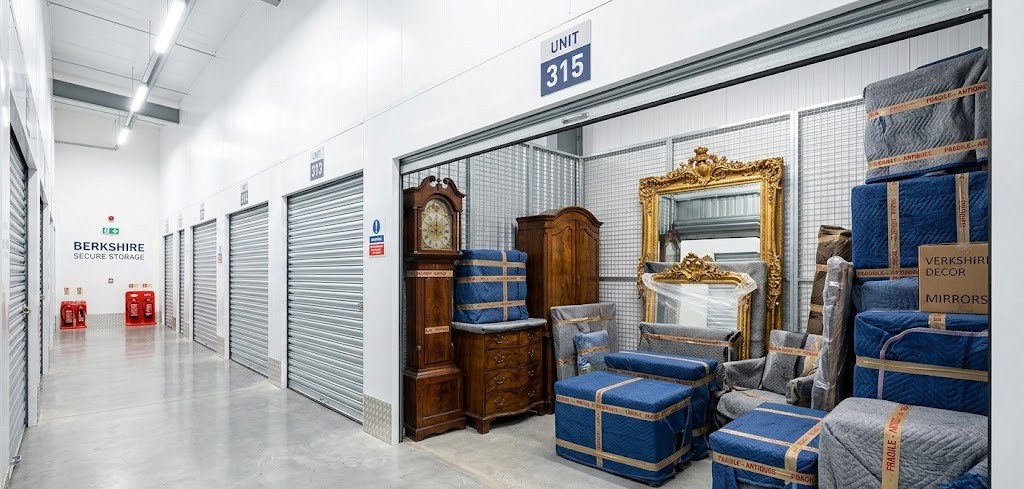
Antique dealers face a particular challenge that most other businesses don’t encounter: their stock isn’t just valuable, it’s irreplaceable. A Georgian mahogany bureau or a Victorian porcelain tea set can’t simply be reordered from a supplier if something goes wrong. Each piece represents a slice of history, and protecting it between antique fairs requires more than just empty floor space.
The circuit of antique fairs, markets, and shows forms the backbone of many dealers’ business models. You might exhibit at Newark one weekend, Ardingly the next, then Newbury Racecourse a fortnight later. Between these events, your stock needs somewhere secure to rest. But here’s the thing: antiques don’t just need space, they need the right environment. Temperature swings, moisture, and poor air circulation can cause damage in weeks that centuries of careful ownership avoided.
Climate-controlled storage isn’t a luxury for antique dealers, it’s essential business infrastructure. The difference between standard storage and a properly controlled environment can mean the difference between preserving value and watching it deteriorate. Finding the right antique storage solutions becomes critical when your livelihood depends on maintaining stock condition.
Why standard storage fails antique stock
Think of an antique piece like a living thing that’s been preserved through careful attention. Wood expands and contracts with humidity changes. Veneers lift when moisture levels fluctuate. Metal corrodes in damp conditions. Textiles attract mould. Paper yellows and becomes brittle in heat.
Standard storage units might keep your stock dry from rain, but they don’t control what happens inside. On a hot summer day, a metal storage unit can reach 40°C or higher. In winter, temperatures can drop to freezing. These extremes create condensation, warping, and cracking.
I’ve seen dealers lose thousands of pounds worth of stock because they didn’t understand this fundamental point: antiques survived this long because they lived in relatively stable environments. Stick them in a garden shed or basic storage unit, and you’re asking for trouble.
What climate control actually means
Climate-controlled storage maintains consistent temperature and humidity levels year-round. Most facilities keep temperatures between 10-20°C and relative humidity around 50-55%. This stability prevents the expansion, contraction, and moisture damage that destroys antique materials.
It’s not about keeping things warm in winter and cool in summer for comfort. It’s about eliminating the fluctuations that cause physical damage to materials that are already decades or centuries old.
The investment in business storage with proper climate control pays for itself the first time it prevents damage to a high-value piece. Consider this: a single damaged Victorian mirror or cracked Georgian table can represent losses far exceeding a year’s storage costs. Effective antique stock protection starts with the right environmental controls.
Materials that demand climate control
Not every antique requires the same level of environmental care, but certain materials are particularly vulnerable.
Wood furniture tops the list. Solid wood and veneered pieces react dramatically to humidity changes. Joints loosen, veneers lift, and cracks appear in solid panels. French-polished surfaces can bloom or cloud in damp conditions. Marquetry and inlay work can pop out entirely if the base wood moves differently from the decorative elements.
Upholstered furniture faces different risks. Fabric attracts mould and mildew in damp conditions. Horsehair stuffing can become a home for pests. Leather dries out and cracks in low humidity but can develop mould in high humidity.
Ceramics and porcelain might seem stable, but they’re hygroscopic, they absorb moisture from the air. This moisture can carry soluble salts that crystallise and cause the piece to crack or flake. Restored pieces are particularly vulnerable because modern adhesives and fills react differently to temperature changes than the original ceramic.
Metalware corrodes rapidly in damp conditions. Silver tarnishes. Iron rusts. Bronze develops active corrosion. Even small amounts of moisture in the air can cause significant damage over weeks or months.
Paintings and prints deteriorate quickly in poor conditions. Canvas expands and contracts with humidity, causing paint to crack. Paper yellows and becomes brittle in heat. Mould grows on both. Frames warp and joints open.
Books and paper goods are among the most vulnerable items. Paper absorbs moisture readily, leading to foxing (brown spots), mould growth, and insect damage. Leather bindings dry out and crack in low humidity but rot in high humidity.
Textiles including tapestries, rugs, and vintage clothing need stable conditions to prevent mould, fading, and fibre degradation. Moths and carpet beetles thrive in warm, undisturbed spaces.
The fair circuit reality
Here’s a scenario familiar to many dealers: You’ve just finished a three-day fair at Kempton Park. You’ve sold well, but you’ve also acquired new stock from other dealers and private sellers. You’ve got another fair in two weeks at Ardingly, but you don’t have room at home for everything, and you certainly don’t want your living room looking like an antique shop.
You need somewhere to store the pieces you didn’t sell, the new acquisitions that need restoration or research, and the items you’re holding for specific customers. This stock might sit for anywhere from a few days to several months, depending on your schedule and sales.
During this time, your stock isn’t earning money, but it’s still representing significant capital. Protecting that capital means protecting the condition of each piece. A climate-controlled unit gives you the peace of mind that your Georgian chairs will be in the same condition when you unpack them in three months as they were when you stored them.
Beyond temperature: complete protection
Climate control addresses the biggest environmental threats, but comprehensive antique stock protection requires thinking about other factors too.
Security matters enormously when you’re storing high-value, portable items. Look for facilities with individual unit alarms, CCTV coverage, and controlled access. Some dealers prefer units that aren’t on the ground floor, reasoning that they’re harder for opportunistic thieves to target.
Access flexibility becomes crucial when you’re working around fair schedules. You might need to pack a van at 5am to reach a fair for setup, or you might return late on a Sunday evening and need to unload immediately. Personal storage facilities with extended access hours or 24/7 availability remove the stress of working around restrictive opening times.
Unit size needs careful consideration. Too small, and you’re constantly playing Tetris with valuable items, increasing the risk of damage. Too large, and you’re paying for empty space. Most dealers find that their storage needs fluctuate with the season and their success rate at fairs. A facility that allows you to adjust your unit size as needed provides valuable flexibility.
Packing and organisation within your unit determines how efficiently you can work. Imagine trying to find a specific piece the night before a fair when everything’s stacked randomly. Smart dealers invest time in proper packaging and labelling, creating a system that lets them locate and access items quickly.
Setting up your storage unit
Think of your storage unit as a temporary warehouse, not just a dumping ground. The way you organise it directly affects how efficiently you can operate your business.
Start by creating zones. Keep items for your next fair near the front for easy access. Place long-term stock or pieces awaiting restoration further back. Reserve a section for packing materials and equipment.
Invest in proper shelving. Don’t stack heavy items directly on top of each other, this invites damage and makes access difficult. Metal shelving units provide sturdy, adjustable storage that keeps items off the floor and organised.
Wrap items properly. Even in climate-controlled conditions, pieces need protection from dust and accidental knocks. Acid-free tissue paper works well for ceramics and glassware. Furniture blankets protect larger pieces. Bubble wrap serves for general protection, but avoid letting it contact surfaces directly for long periods, it can trap moisture against the item. Quality packaging materials are essential for proper antique stock protection.
Label everything clearly. Use a numbering system that corresponds to an inventory list. When you’re packing for a fair at midnight, you’ll thank yourself for this organisation.
Leave walkways. You need to move through your unit safely with items in hand. A narrow, cluttered space leads to accidents and damage.
The cost-benefit calculation
Climate-controlled storage costs more than basic units, typically 20-40% more depending on the facility and location. For antique dealers, this isn’t an optional expense to minimise; it’s insurance against loss.
Consider the mathematics: If you store £20,000 worth of stock and climate control costs an extra £30 per month, you’re paying £360 annually for protection. If that protection prevents damage to even one significant piece, it’s paid for itself many times over.
The calculation becomes even clearer when you factor in reputation. Antique dealing relies heavily on trust and reputation. Selling a piece that develops problems because of poor storage damages your standing with customers and other dealers. That reputational cost can exceed the financial loss of the damaged item.
Seasonal considerations
The British climate presents particular challenges for antique storage. Our damp winters and increasingly warm summers create exactly the kind of fluctuations that damage vulnerable materials.
Winter brings the greatest risk of condensation. When cold air meets warm surfaces, moisture forms. In an unheated storage unit, this condensation can appear on metal, glass, and even wooden surfaces. Climate control prevents this by maintaining consistent temperatures that don’t allow condensation to form.
Summer heat poses different problems. High temperatures accelerate chemical degradation in materials. Adhesives soften. Finishes can bloom or crack. Textiles fade. Insects become more active. Again, climate control maintains conditions that prevent these problems.
The transition seasons, spring and autumn, often bring rapid temperature swings that can be particularly damaging. A week of warm days followed by cold nights creates repeated expansion and contraction cycles. Climate-controlled facilities smooth out these fluctuations.
Making storage work for your business model
Different dealers operate different business models, and antique storage solutions need to match your specific requirements.
Full-time fair dealers who work the circuit constantly need storage that functions as their primary stock room. Accessibility matters more than for occasional sellers. You might visit your unit several times per week to swap stock, collect pieces for customers, or store new acquisitions.
Shop dealers who also do fairs need overflow storage for pieces that don’t fit in the shop or items being held for specific fairs. Your unit becomes an extension of your shop space, housing stock that rotates in and out.
Specialist dealers who focus on particular periods or types of antiques often need long-term storage for pieces waiting for the right buyer. A specialist in Art Deco furniture might hold a piece for months until they find a collector willing to pay the right price. Climate control ensures the piece remains in perfect condition during this wait.
Restorers and dealers who buy pieces needing work require space for items awaiting restoration. These pieces might be particularly vulnerable to environmental damage because existing problems can worsen rapidly in poor conditions.
When to expand or consolidate
Your storage needs change as your business evolves. Recognising when to adjust your space prevents both wasted money and operational headaches.
Expand when you’re consistently struggling to fit everything in, when you’re turning down good stock because you lack space, or when your current unit has become so packed that accessing items takes too long.
Consolidate when you find yourself with empty space for months at a time, when you’ve shifted business focus to smaller items that take less room, or when you’re reducing your fair schedule.
The flexibility to adjust unit size without penalty gives you the freedom to match your storage costs to your current business needs. Speak with facilities that offer this flexibility, it’s worth prioritising even if the base cost is slightly higher.
Location matters more than you think
A storage facility’s location affects your business efficiency in ways that aren’t immediately obvious. A unit that’s 30 minutes further away might save you £50 per month, but if you visit three times per week, you’re spending an extra three hours driving. Value your time honestly when making this calculation.
Proximity to major fair venues can provide strategic advantages. A unit near the M4 corridor gives you easy access to fairs across the South and Midlands. Being near Newbury puts you within striking distance of major venues while keeping costs lower than London-area storage.
Consider your packing routine too. If you pack your van at your storage unit rather than at home, you need adequate parking and loading space. Container storage with drive-up access can save significant time and physical effort when you’re loading heavy furniture.
Building long-term relationships
The storage facility you choose becomes a partner in your business. Building a good relationship with the facility management can provide benefits beyond the basic service.
Reliable facilities understand the needs of business customers. They maintain their climate control systems properly. They respond quickly to any issues. They provide proper insurance documentation when you need it. They work with you when your circumstances change.
Don’t treat your storage facility as a purely transactional relationship. The staff can often provide useful flexibility around access times, unit changes, or special requirements if they know you as a reliable, professional customer.
Protecting what can’t be replaced
Antique dealing isn’t like other retail businesses. You can’t simply reorder stock that gets damaged. Each piece is unique, and its condition directly determines its value. A crack, warp, or patch of mould can reduce a piece’s value by hundreds or thousands of pounds.
Climate-controlled storage isn’t about luxury or perfectionism. It’s about protecting irreplaceable items that represent your business capital, your reputation, and your customers’ trust. The cost of proper antique storage solutions is tiny compared to the cost of damaged stock and lost reputation.
When you’re choosing storage, start with the assumption that you need climate control, then look for reasons why a particular piece might not require it, rather than the other way around. This approach protects your business and your stock.
Moving forward
The antique trade combines passion for history with hard-headed business sense. You need both to succeed. Proper storage represents the business-sense side of the equation, the practical infrastructure that lets you pursue your passion without risking your capital.
If you’re currently using basic storage or keeping stock in less-than-ideal conditions, the transition to climate-controlled space should be your next business investment. If you’re just starting out in the trade and building your stock, factor proper antique stock protection into your business plan from the beginning.
Your antiques have survived decades or centuries to reach you. Your job is to ensure they survive your stewardship in the same condition, ready to pass on to their next custodian. Climate-controlled storage gives you the tools to fulfil that responsibility while building a sustainable, profitable business.
The dealers who thrive in this trade are those who understand that protecting stock is protecting profit. Every piece that leaves your storage in perfect condition, ready to delight a customer or shine at a fair, justifies the investment you’ve made in proper storage. That’s not an expense, it’s the foundation of a professional operation.
For antique dealers working the fair circuit, storage isn’t just about finding space. It’s about creating the right environment for irreplaceable items that represent both your passion and your livelihood. Get the environment right, and everything else becomes easier. Contact us to discuss how climate-controlled antique storage solutions can support your antique business between fairs and beyond.