
 01635 581 811
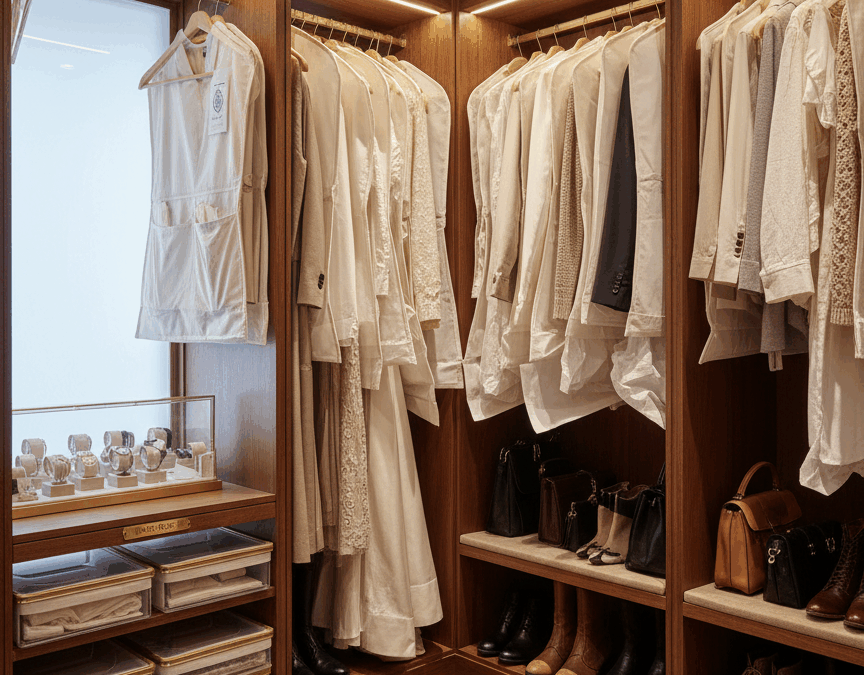
Your wardrobe isn’t just a collection of clothes; it’s an investment. Those exquisite silk blouses, that perfectly tailored suit, the cashmere jumper that feels like a hug, or perhaps a vintage Chanel handbag that tells a story – these are more than just fabric and thread. They are expressions of your style, carriers of memories, and often, significant financial outlays. So, doesn’t it make sense to give them the five-star treatment they deserve, even when they’re not being worn? This is where Advanced Storage Techniques come into play, ensuring your Expensive Clothing Storage strategy preserves their beauty, value, and longevity.
Many of us have experienced that pang of disappointment: pulling out a beloved garment only to find it misshapen, nibbled by pests, or worse for wear. For those truly special items, standard “chuck it in the wardrobe” methods simply won’t cut it. We’re talking about going beyond basic hangers and delving into a world of preservation, a world where Newbury Self Store can be your trusted partner in safeguarding your sartorial treasures.
Why Do Your Finest Garments Demand More Than Just a Hanger?
Think about the materials that make up your most cherished clothing and accessories. Delicate silks, luxurious cashmere, supple leathers, intricate beadwork, structured couture – these aren’t your everyday, hard-wearing fabrics. They are susceptible to a host of environmental factors and improper handling.
- The Delicate Nature of Luxury: Fine fibres are prone to snagging, stretching, and fading. Natural materials like wool and silk are particularly attractive to pests. Leather can dry out and crack, or conversely, develop mildew in damp conditions.
- Maintaining Shape and Structure: A bespoke suit jacket or a heavily embellished gown relies on its structure. Incorrect hanging or folding can lead to permanent creasing, distortion, and damage to its intended silhouette.
- The Enemy of Elegance: Environmental Threats: Light (both natural and artificial), humidity, extreme temperatures, dust, and pests are all silent assassins lurking in wait for your precious items.
- Investment Value: Let’s be frank, many high-end pieces are investments. Proper care and storage not only keep them looking their best for your enjoyment but also help retain their resale value should you ever choose to part with them. This is particularly true for collectors of designer or vintage fashion, where provenance and condition are paramount. Even for a small fashion boutique or a stylist, protecting inventory with professional Expensive Clothing Storage is a sound business decision, potentially leveraging options like Newbury Self Store’s Business Storage for larger collections.
Understanding these vulnerabilities is the first step towards implementing effective Advanced Storage Techniques.
The Pre-Storage Ritual: Preparing Your Garments for Their Rest
Before any item of expensive clothing or any prized accessory goes into storage (whether that’s a dedicated section of your wardrobe or a secure unit), a little preparation goes a long way. Think of it as a spa day for your clothes.
Cleanliness is Next to Godliness (and Garment Longevity)
This is non-negotiable. Always clean your garments according to their care labels before storing them for any extended period.
- Professional Cleaning is Often Best: For many delicate and high-value items (silks, woollens, tailored pieces, beaded gowns), professional dry cleaning is the safest bet. Ensure your dry cleaner has experience with luxury fabrics.
- Beware of Invisible Stains: Perfumes, body oils, food and drink spills (even if they seem to have disappeared) can oxidise over time, leading to permanent stains and attracting pests. Moths, for instance, are drawn to food and perspiration residues.
- Empty Those Pockets: Forgotten tissues, pens, or lipstick can cause untold damage over time. Heavy items can also distort the shape of pockets and the garment itself.
Inspect and Repair: A Stitch in Time Saves Nine (and Your Designer Dress)
Take a moment to inspect each item for any loose buttons, fraying seams, or tiny holes. It’s far better to address these minor issues before storage. Small problems can become big ones if left unattended, especially if the garment is packed away for a season.
Your At-Home Sanctuary: Advanced Wardrobe Wisdom
For items you want to keep accessible but still protect, upgrading your wardrobe setup is key. This is where you begin to implement hands-on Advanced Storage Techniques.
Hangers Aren’t Just Hangers: Choosing Wisely
- Say No to Wire: Wire hangers are the enemy of good tailoring. They can distort shoulder lines, cause rust stains, and snag delicate fabrics. Banish them!
- Embrace Padded or Wooden Hangers: For tailored jackets, coats, and dresses, use sturdy wooden hangers with a contoured shape to support the shoulders. For delicate blouses, silks, and knitwear (if hanging is appropriate – see below), padded hangers are ideal to prevent stretching and marking.
- Trouser Power: Use clamp-style hangers for trousers, hanging them from the cuff or waistband to avoid creasing. Alternatively, use hangers with a flocked bar.
The Art of Folding: When Not to Hang
Not everything benefits from hanging. Heavy knitwear, cashmere, and some embellished or bias-cut garments can stretch or distort under their own weight on a hanger.
- Gentle Folds: Fold these items carefully, using acid-free tissue paper (more on this below) between layers to cushion them and prevent creasing.
- Shelf Savvy: Store folded items on clean, flat shelves or in drawers lined with acid-free paper. Don’t overstack them, as this can crush the fibres and cause deep-set wrinkles.
Garment Bags: A Breathable Barrier
For items like suits, evening gowns, or anything particularly delicate, garment bags offer an extra layer of protection against dust, light, and accidental snags.
- Choose Breathable Materials: Opt for bags made from cotton, muslin, or non-woven polypropylene. Avoid plastic bags (like those from the dry cleaner) for long-term storage, as they can trap moisture and cause yellowing or mildew. Plastic also doesn’t allow fabrics to breathe, which is crucial for natural fibres.
- Give Them Space: Don’t cram garments into bags. Allow for air circulation.
Acid-Free Tissue Paper: Your Secret Weapon
This is a staple in museum-quality textile preservation and a must for Expensive Clothing Storage.
- Why Acid-Free? Standard tissue paper contains acids that can transfer to fabrics over time, causing yellowing and degradation.
- How to Use It:
- Stuff into sleeves, bodices, and folds to help garments retain their shape.
- Interleave between folded items.
- Wrap around delicate embellishments or hardware (like buckles on handbags) to prevent snagging or tarnishing.
- You can find quality packaging supplies, including acid-free options, to help with this.
Light and Climate Control in Your Wardrobe
- Darkness is Golden: Keep wardrobe doors closed to protect garments from light, which can cause fading. If your wardrobe has glass doors, consider a curtain or blind.
- Stable Temperatures: Avoid storing precious clothes in attics or basements where temperatures and humidity fluctuate wildly. A cool, consistent environment is best.
- Humidity Management: High humidity encourages mould and mildew, while very low humidity can make natural fibres brittle. Aim for a relative humidity of around 50-55%. Dehumidifiers or moisture-absorbing crystals (like silica gel sachets, but be careful they don’t touch fabrics directly) can help in damp-prone areas.
Stepping Up: When Personal Storage Becomes the Ultimate Guardian
Sometimes, even the best at-home setup isn’t enough, especially if you have:
- A large collection of valuable clothing.
- Seasonal items that take up significant space (think skiwear, heavy coats, or summer occasion wear).
- Extremely delicate or valuable pieces like couture gowns or historical garments.
- A lack of suitable space in your home that meets the ideal environmental conditions.
- Concerns about security for your high-value items.
This is where a dedicated Personal Storage unit at a facility like Newbury Self Store becomes an invaluable part of your Expensive Clothing Storage strategy.
The Climate-Controlled Advantage
Many modern storage facilities offer climate-controlled units. This means the temperature and humidity are regulated, providing a stable environment that’s far superior to many home closets, attics, or garages. This consistency is paramount for preserving delicate fabrics, leathers, and furs over the long term. It’s one of the core Advanced Storage Techniques for serious collectors or those with significant investments in their wardrobe.
Space to Breathe (Literally)
Overcrowding is a major sin in the world of garment care. Cramming clothes together crushes fibres, causes wrinkling, and restricts airflow, which can lead to mustiness or mildew. A storage unit allows you to give your clothes the space they need. You can install freestanding rails or shelving to replicate (or even improve upon) a high-end closet. For very large items or collections, even Container Storage could be an option, provided the internal setup is managed correctly for clothing.
Enhanced Security and Peace of Mind
High-value clothing and accessories can be a target for theft. Reputable storage facilities like Newbury Self Store offer robust security features such as CCTV, secure access controls, and well-lit premises, giving you peace of mind that your investments are protected.
Packing for Preservation: Advanced Techniques for Your Storage Unit
Once you’ve decided to use a personal storage unit, how you pack your items is crucial.
- Boxes vs. Rails:
- Boxes: For folded items, use sturdy, acid-free archival boxes. Line them with acid-free tissue. Don’t use standard cardboard boxes for long-term storage of valuables, as their acidity can damage textiles. Ensure boxes are not overpacked.
- Wardrobe Boxes: These are tall boxes with a built-in rail, excellent for hanging suits, dresses, and coats. Ensure the garments inside are in breathable garment bags.
- Freestanding Rails: If your unit allows, setting up a sturdy freestanding garment rail is an excellent option, mimicking a wardrobe.
- The No-Plastic Rule (Revisited): Absolutely no plastic bags or containers that seal completely. Fabrics need to breathe. If using plastic containers for structure, ensure they are not airtight or use them only for very short-term transit, with items inside already protected by breathable materials.
- Labelling is Your Friend: Clearly label every box or garment bag with its contents. An inventory list kept separately (perhaps one at home, one in your phone, and even a copy inside the unit in a protected sleeve) is indispensable.
- Elevate Off the Floor: Never store clothing boxes directly on the concrete floor of a storage unit. Use pallets or shelving to allow air circulation underneath and protect against any unlikely spills or moisture.
Zooming In: Specialist Storage for Accessories
Your Advanced Storage Techniques shouldn’t stop at clothing. Accessories need love too!
Handbag Heaven
- Stuff Them: Maintain the shape of your handbags by stuffing them with acid-free tissue paper or a purpose-made handbag pillow. Avoid newspaper, as the ink can transfer.
- Dust Bags are a Must: Always store handbags in their original dust bags, or use soft cotton pillowcases.
- Buckle Up (or Protect): Wrap any metal hardware (buckles, chains) in tissue paper to prevent it from tarnishing or imprinting on the bag.
- Store Upright or Flat: Depending on the bag’s structure, store it upright on a shelf or lay it flat. Avoid hanging handbags by their straps for long periods, as this can stretch or distort the handles.
- Leather Care: Condition leather bags periodically with a quality leather conditioner before storage.
Shoe Shrine Strategies
- Clean Soles, Happy Shoes: Always clean shoes before storing them. Remove dirt and debris from soles and uppers.
- Shoe Trees for Shape: Insert cedar shoe trees into leather shoes to help maintain their shape, absorb moisture, and impart a fresh scent. For boots, use boot shapers.
- Original Boxes or Clear Containers: Store shoes in their original boxes (if they are sturdy and not acidic) or in clear, stackable shoe boxes that allow for some air circulation. Add silica gel packets to absorb moisture if needed, but ensure they don’t directly touch the shoe material.
- Wrap Delicate Details: For shoes with embellishments, wrap them in acid-free tissue.
Hat Preservation Pointers
- Hat Boxes are Best: Store hats in dedicated hat boxes to protect them from dust and crushing.
- Crown Support: Stuff the crown of the hat with acid-free tissue to help it keep its shape.
- Brim Care: Store hats with brims flat or upside down on their crown to prevent the brim from misshaping.
Jewellery Jems: Safe and Sound
- Anti-Tarnish Solutions: Store silver jewellery in anti-tarnish bags or cloths.
- Individual Compartments: Use a jewellery box with separate, soft-lined compartments to prevent items from scratching each other.
- Pearls Need to Breathe: Don’t store pearls in airtight bags for long periods; they benefit from some moisture in the air. Lay them flat.
- Delicate Chains: Fasten chains and hang them or lay them flat to prevent tangling.
The Long Game: Maintaining Your Stored Collection
Expensive Clothing Storage isn’t a “set it and forget it” affair.
- Regular Check-Ups: If possible, visit your storage unit periodically (e.g., every 6-12 months) to inspect your items. Check for any signs of pests, mildew, or other issues. This allows you to catch any potential problems early.
- Airing Out: If garments are stored for very long periods, it can be beneficial to air them out in a controlled environment.
- Pest Prevention: Use natural moth repellents like cedar blocks or lavender sachets in your storage area (both at home and in your unit). Avoid direct contact with garments. Refresh them regularly. Check for any signs of pest activity.
Your Fashion Legacy, Preserved
Your expensive clothing and accessories are more than just material possessions; they are part of your story. Implementing Advanced Storage Techniques is an act of care that ensures these beautiful items remain in pristine condition, ready for you to enjoy for years, or even generations, to come. It’s about respecting the craftsmanship, the artistry, and the investment.
At Newbury Self Store, we understand the unique needs associated with storing valuable items. From our range of Personal Storage unit sizes to our helpful advice on packaging, we’re here to help you create the perfect, secure environment for your cherished wardrobe.
If you’re ready to give your finest garments the protection they deserve, or if you simply need more space to organise your collection properly, contact Newbury Self Storage today. Let’s discuss how our solutions can help you master the art of Expensive Clothing Storage and keep your prized pieces looking impeccable.