
 01635 581 811
Adult education moves at a different pace to traditional schooling. Your learners juggle jobs, families, and personal commitments alongside their studies. They need flexible, accessible learning environments that adapt to their lives – not the other way round.
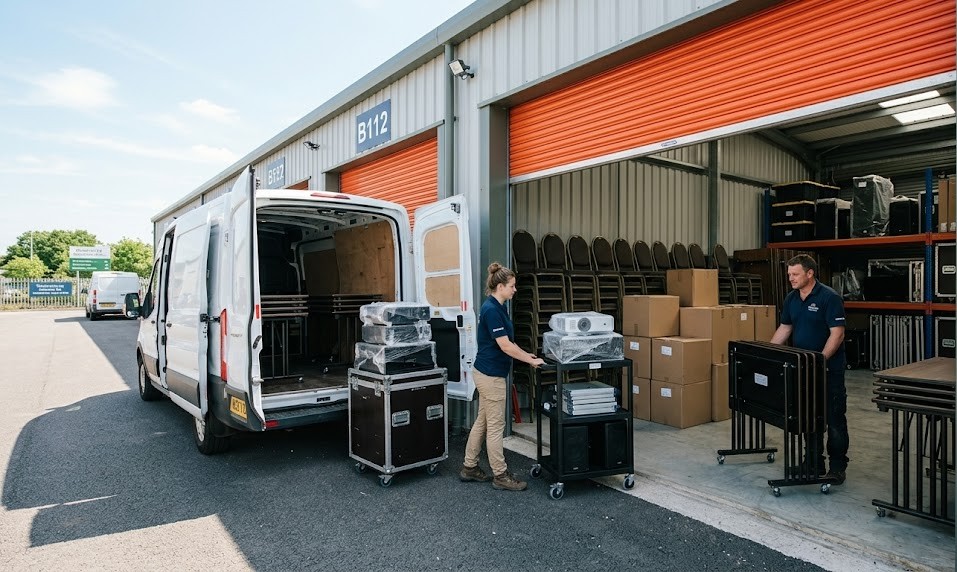
That flexibility often means teaching in community centres, church halls, business premises, or rotating between multiple venues. It’s practical. It reaches learners where they are. But it creates a logistical challenge: how do you transport, protect, and organise all the classroom equipment, materials, and resources that make your courses effective?
The answer isn’t stuffing everything into the boot of your car or stacking boxes in a spare room at home. Professional mobile classroom storage transforms how adult education providers operate, protecting valuable teaching resources whilst making setup and pack-down genuinely manageable.
Why Adult Education Equipment Needs Proper Storage
Teaching adults requires different resources to school-age education. You’re not just dealing with textbooks and whiteboards. Depending on your courses, you might have IT equipment, specialist tools for vocational training, art supplies, catering equipment for hospitality courses, or bulky items like sewing machines or carpentry tools.
These resources represent significant investment. A single laptop costs hundreds of pounds. Specialist teaching equipment for trades training runs into thousands. Losing or damaging these items doesn’t just hit your budget – it disrupts your entire teaching schedule.
Then there’s the practical reality of mobile teaching. You can’t leave equipment at venues between sessions. Most community spaces are booked by multiple groups, and security varies wildly. You need somewhere secure to store everything when it’s not in use, organised in a way that makes packing for each session straightforward rather than stressful.
Climate control matters more than most people realise. Electronic equipment, art materials, musical instruments, and paper-based teaching resources all deteriorate in damp or temperature-fluctuating conditions. A storage solution that protects against these elements prevents costly replacements and ensures your materials are always in teaching-ready condition.
Common Equipment Storage Challenges
Picture a typical week for an adult education provider running three different courses. Monday evening: IT skills at a community centre. Wednesday afternoon: art classes at a church hall. Friday evening: cooking courses at a hired kitchen space.
Each session requires different equipment. The IT course needs laptops, a projector, cables, handouts, and backup materials. Art classes require easels, paints, brushes, canvases, and protective sheeting. Cooking sessions need specialised utensils, ingredient storage, and safety equipment.
Without proper organisation, you’re spending hours before each session hunting through boxes, checking you’ve packed everything, and loading the car. After the session, you’re packing up whilst tired, increasing the risk of leaving something behind or damaging equipment through hasty handling.
Security concerns escalate when equipment lives in your home or vehicle. Home insurance policies often exclude business equipment or limit coverage significantly. Vehicle theft’s common, and a car full of teaching resources makes an attractive target.
Space at home becomes another issue. Spare rooms fill with boxes. Garages become impassable. Partners and family members grow frustrated with the encroachment on shared living space. Professional boundaries blur when your home doubles as a storage facility.
One IT skills tutor ran evening classes at three different community centres across Newbury and Thatcham, teaching 45 learners weekly. She’d been storing eight laptops, a projector, router, cables, and course materials in her spare bedroom for two years. Her partner complained constantly about the clutter, and she was spending 90 minutes before each session sorting through boxes to pack the right equipment. She’d twice left behind essential cables, forcing her to cancel parts of lessons. After moving everything to proper storage with organized shelving and labeled containers, her packing time dropped to 15 minutes per session. Over a 40-week teaching year, that saved her 50 hours – more than a full working week. The storage cost £85 monthly, but the time savings alone were worth over £1,000 at her hourly rate.
Designing Your Mobile Storage System
Effective mobile classroom storage starts with understanding exactly what you need to store, how often you access it, and how you’ll transport it to different venues.
Inventory everything first. List every piece of equipment, teaching material, and resource you use regularly. Note which items go together for specific courses. Identify anything fragile, valuable, or requiring special storage conditions. This audit reveals patterns that inform your storage strategy.
Group items by course or session type. Create “kits” that contain everything needed for a specific class. An IT course kit might include all laptops, cables, a projector, backup batteries, handouts, and spare materials in dedicated containers. This approach means you’re grabbing complete, pre-organised sets rather than assembling equipment from scratch each time – like having pre-packed hospital emergency kits where everything you need is ready to go, rather than hunting through supply cupboards during a crisis.
Container choice matters enormously. Cardboard boxes disintegrate with repeated handling and offer no protection against moisture or impacts. Invest in robust plastic storage boxes with secure lids. Clear containers let you see contents without opening them. Stackable designs maximise space efficiency in your storage unit.
Label everything clearly. Use waterproof labels that won’t peel off with handling. Include contents lists on each container and colour-code by course or equipment type. When you’re packing for a Wednesday evening session, you should be able to identify exactly which containers you need within seconds.
Think about transportation logistics. Heavy equipment needs wheeled containers or trolleys. Fragile items require padding and secure positioning. Items used across multiple courses might need duplicate storage in different kits rather than constant repacking. The goal’s making vehicle loading and unloading a smooth, repeatable process rather than a logistical puzzle each time.
Protecting Electronic Equipment
Technology drives many adult education courses. IT skills, digital literacy, online safety, and vocational courses increasingly rely on laptops, tablets, projectors, and audio equipment.
Electronics are simultaneously essential and vulnerable. They’re expensive to replace, contain sensitive data, and fail spectacularly when exposed to moisture, extreme temperatures, or physical shocks.
Dedicated cases provide the first line of defence. Laptop cases with foam padding protect against impacts during transport. Hard cases for projectors prevent damage from being knocked or dropped. Cable organisers stop tangled messes that damage connectors and waste time untangling.
Store electronics in climate-controlled conditions. Temperature fluctuations cause condensation inside devices, corroding components and causing failures. Extreme cold affects battery performance. Heat damages screens and internal components. A storage unit with climate control maintains stable conditions year-round.
Battery management extends equipment life. Lithium batteries in laptops and tablets degrade faster when stored fully charged or completely flat. Aim for 50-60% charge for long-term storage. Check and recharge batteries monthly to prevent deep discharge damage.
Data security requires attention. Teaching materials often contain personal information about learners. Ensure devices are password-protected and encrypted. Consider whether equipment needs to leave storage between sessions or if some items can remain secure until needed.
Regular maintenance prevents problems. Check equipment monthly for physical damage, software updates, and battery health. Clean screens and keyboards. Test all functionality before packing for a session. This proactive approach catches issues in your storage unit rather than discovering them five minutes before a class starts.
Organising Course Materials and Consumables
Beyond equipment, adult education requires substantial course materials. Handouts, textbooks, workbooks, art supplies, craft materials, and vocational consumables all need organised storage.
Paper materials deteriorate quickly in poor conditions. Moisture causes mould and warping. Sunlight fades printed materials. Pests damage stored paper. Use sealed plastic containers for printed materials, with silica gel packets to control moisture. Store materials flat rather than folded to prevent permanent creasing.
Consumable supplies need stock management. Art courses consume paints, brushes, and canvases. Cooking classes need ingredients and disposable items. Craft courses use fabrics, threads, and adhesives. Track usage rates and maintain buffer stock to prevent running out mid-course.
Create a restocking system. Keep a running inventory of consumables in your storage unit. Note when items drop below reorder levels. Bulk buying reduces costs, but only if you have space to store larger quantities properly. Balance economy with practical storage capacity.
Rotation matters for dated materials. Teaching resources become outdated as regulations change, technology advances, or course content evolves. Review materials annually. Discard obsolete resources to free space for current materials. Update handouts and workbooks to reflect latest information.
Seasonal courses require advance planning. If you run courses that only operate during specific terms, pack those materials separately. Label containers with “Autumn Term” or “Spring Course” so you’re not sorting through everything when preparing for seasonal programmes.
Setting Up Your Storage Unit
Choosing the right storage unit size prevents wasted space and money. Too small means cramming equipment dangerously. Too large wastes budget on unused space.
Calculate your actual storage needs. Measure your current equipment and materials. Account for growth – new courses, additional equipment, or expanding learner numbers. Add 20-30% buffer space for comfortable organisation and access.
Unit features affect usability significantly. Ground-floor units with drive-up access simplify loading and unloading. You’re not carrying heavy teaching equipment up stairs or waiting for lifts. Drive-up access means parking directly outside your unit, loading vehicles efficiently without long carries.
Climate control protects electronics and materials. The cost difference between standard and climate-controlled units is modest compared to replacing damaged equipment. For adult education providers storing technology and teaching materials, climate control’s essential rather than optional.
Security features matter when storing valuable equipment. Look for facilities with CCTV coverage, individual unit alarms, secure perimeter fencing, and controlled access. Insurance costs decrease with better security, often offsetting the premium for high-security facilities.
Access hours affect operational flexibility. Adult education often means evening or weekend teaching. Can you access your storage unit when you need to collect equipment for an evening class? 24-hour access provides maximum flexibility, though daytime-only access works if you can collect materials in advance.
Consider location carefully. Storage near your most frequent teaching venues reduces travel time and fuel costs. Calculate the time saved over a year – even 15 minutes per trip adds up significantly across multiple weekly sessions.
Maintaining Your Mobile Classroom System
A storage system only works if you maintain it consistently. Discipline in organisation prevents the gradual slide into chaos that makes mobile teaching stressful.
Return everything to its designated place after each session. It’s tempting to dump equipment in the unit when you’re tired after teaching. Don’t. Spend 10 minutes putting items in their proper containers and locations. This small investment prevents hours of searching and reorganising later.
Conduct monthly audits. Check equipment condition, restock consumables, and verify everything’s in its correct place. Update inventory lists. Identify any maintenance needs or upcoming replacements. Scheduled audits catch small problems before they become teaching-disrupting crises.
Clean equipment regularly. Dust accumulates in storage. Electronics need cleaning to prevent overheating. Art supplies need checking for dried-out paints or damaged brushes. Regular cleaning extends equipment life and ensures everything’s ready for use.
Review and refine your system quarterly. Are containers working well? Do you need additional organisation tools? Has course content changed, requiring different storage arrangements? Mobile classroom storage is an evolving system that should adapt as your teaching develops.
Document your system. Create a simple guide showing where everything lives, how items are organised, and which containers go with which courses. This documentation helps if someone else needs to collect equipment, and serves as a reference when you’re reorganising.
Preparing for Venue Changes
Adult education providers often face venue changes. Bookings fall through. Facilities close for refurbishment. Learner numbers grow, requiring larger spaces. Your storage system should enable quick adaptation to these changes.
Modular organisation provides flexibility. When equipment lives in standardised containers with complete course kits, moving to a different venue just means loading the same containers into your vehicle. The venue changes, but your preparation process remains consistent.
Keep venue-specific information with each course kit. Notes about parking, access arrangements, setup requirements, and venue contact details save time when teaching at multiple locations. Include photos of optimal room layouts for quick setup.
Maintain relationships with multiple venues. Don’t rely on a single location for each course. Having backup options means venue problems don’t cancel classes. Your storage system should accommodate equipment for courses at various locations without confusion.
Transport considerations vary by venue. Some locations have easy parking and access. Others require carrying equipment through narrow corridors or up stairs. Match your container choices to the most challenging venue you use – if one location requires carrying equipment upstairs, use smaller, lighter containers that make this manageable.
Build extra time into your schedule for setup and pack-down. Mobile teaching always takes longer than teaching in a fixed classroom. Factor this into your planning rather than rushing and risking damage to equipment or stress before sessions.
Scaling Your Adult Education Provision
Successful adult education programmes grow. More learners, additional courses, new subject areas – all require more equipment and storage space.
Plan for growth from the start. Choose storage solutions that can expand. Starting with a smaller unit’s fine, but select a facility where you can upgrade to larger units as needed. Moving between facilities is disruptive and time-consuming.
Financial planning for equipment investment becomes easier with proper storage. When you know exactly what you have, what condition it’s in, and what you’ll need for planned courses, budgeting for equipment becomes data-driven rather than guesswork.
Consider whether some equipment can be shared across courses. A projector works for IT classes, art history sessions, and vocational training. Shared equipment reduces costs but requires careful scheduling and organisation to ensure availability when needed.
Evaluate whether fixed premises make sense as you grow. At some point, the logistics of mobile teaching outweigh the benefits of flexibility. Having secure, organised storage makes this transition smoother – you’re not starting from chaos, but moving from well-organised mobile provision to a permanent base.
One adult education coordinator started with two evening courses and gradually expanded to twelve courses weekly across six venues, teaching over 150 learners. She began with a 50 sq ft storage unit and upgraded to 100 sq ft after two years as her equipment collection grew. The organized storage system she’d established from day one scaled perfectly – she simply added more labeled containers following the same system. When she eventually secured permanent premises after five years, the transition was seamless because everything was already catalogued and organized. She credited the storage system with making her growth manageable rather than overwhelming.
Sourcing Quality Storage Materials
The quality of your storage materials directly affects how well your mobile classroom system works. Cheap containers break. Poor-quality cases fail to protect equipment. False economy in storage materials costs more through damaged equipment and wasted time.
Invest in commercial-grade containers. They cost more initially but last years longer than consumer products. Look for containers with reinforced corners, secure latching lids, and comfortable handles. Stackable designs with interlocking lids prevent toppling.
Specialist equipment needs specialist cases. Don’t improvise protection for expensive electronics or fragile teaching materials. Purpose-designed cases provide proper protection and often include organisation features like foam inserts or compartments.
The packaging materials you use for protecting items during transport matter enormously. Bubble wrap, foam sheets, and protective wrapping prevent damage. Secure items properly within containers so they don’t shift during transport. A laptop rattling around in a box will eventually break, regardless of how good the box is.
Label makers create professional, durable labels that survive repeated handling. Handwritten labels fade and peel. Printed labels stay legible and maintain your organisational system’s effectiveness.
Making Storage Work for Your Teaching
Mobile classroom storage isn’t just about keeping equipment safe. It’s about making your teaching life manageable, protecting your investment, and ensuring you can focus on what matters – delivering excellent adult education.
When you know exactly where everything is, when equipment’s protected and maintained, when packing for a session takes minutes rather than hours, teaching becomes less stressful and more effective. You arrive at venues prepared and confident rather than anxious about forgotten items or damaged equipment.
The investment in proper storage pays for itself through reduced equipment replacement costs, lower insurance premiums, and the time saved in organisation and preparation. More importantly, it supports the quality of education you provide. Well-maintained equipment works reliably. Organised materials are always accessible. Professional storage enables professional teaching.
Adult learners deserve the same quality of resources and organisation as any educational setting. Mobile teaching doesn’t mean compromising on standards. With thoughtful storage solutions, you deliver consistent, high-quality adult education regardless of where your classroom happens to be that day.
If your current approach involves chaotic boxes, home storage that’s overwhelming your living space, or constant worry about equipment security, it’s time to consider professional storage. A dedicated unit with proper organisation transforms mobile teaching from logistically challenging to genuinely workable. Your teaching improves. Your stress decreases. Your equipment lasts longer.
Start by auditing what you actually need to store. Calculate the space required. Visit facilities offering climate-controlled units with good access. The right storage solution isn’t a luxury for adult education providers – it’s the foundation that makes mobile teaching sustainable and successful.
Newbury Self Store understands that adult education providers need storage that supports mobile teaching across multiple venues, not generic warehouse space. You need facilities where teaching equipment stays protected, where classroom equipment remains organized, and where you can access materials quickly before evening sessions. We know that your teaching resources aren’t just boxes – they’re the tools that help adult learners develop new skills and achieve their goals.
For adult education providers in the Newbury area looking to establish professional storage systems, we offer secure, accessible units suitable for teaching equipment and materials. Whether you’re running a single evening class or coordinating multiple courses across different venues, having dedicated business storage space removes the logistical barriers that make mobile teaching unnecessarily difficult. Contact us to discuss your specific requirements and find a storage solution that supports your educational mission.