
 01635 581 811
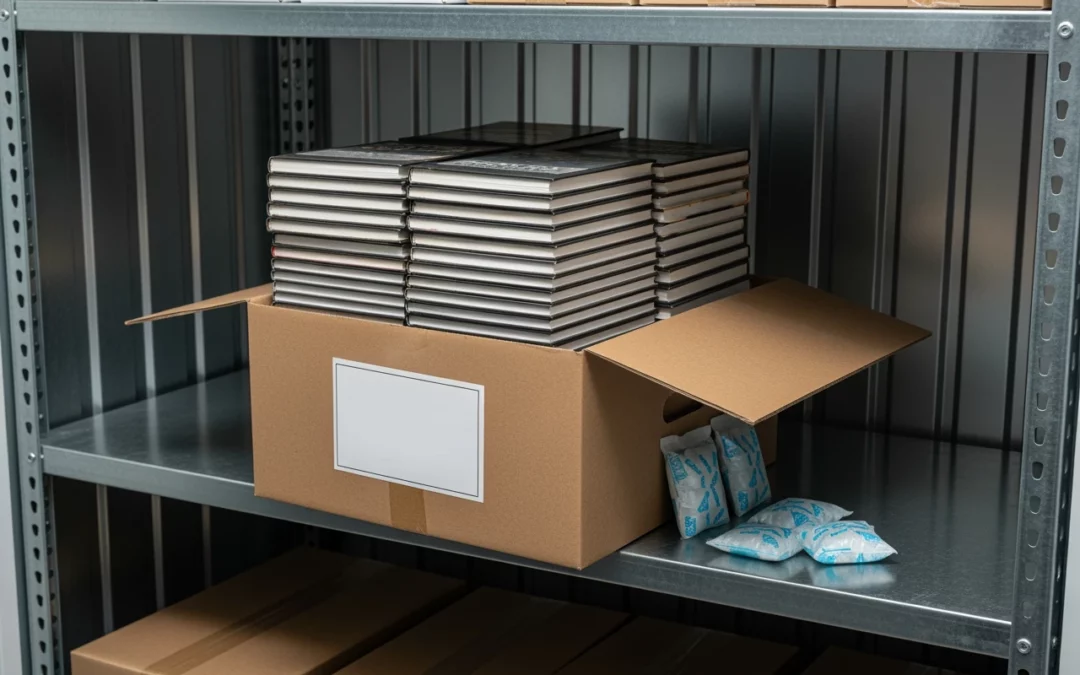
Books represent more than just printed pages. They are investments, memories, family heirlooms, and reference materials that can appreciate in value over decades. Yet paper remains one of the most vulnerable materials you will ever store, responding to moisture and temperature changes within hours of exposure.
The difference between books that emerge from storage pristine and those that suffer irreversible damage often comes down to understanding how paper behaves in enclosed spaces. A book stored incorrectly for six months can develop mould, warping, and foxing (those brown spots on aged paper) that no restoration expert can fully reverse. Storing books in self storage correctly is not a matter of chance; it is a matter of preparation and environment.
Understanding Why Books Deteriorate in Storage
Paper is hygroscopic, which means it naturally absorbs and releases moisture from the surrounding air. Think of it like a sponge that never stops reacting to its environment. When humidity rises above 60%, paper fibres swell. When it drops below 30%, they contract and become brittle.
This constant expansion and contraction causes warping, where book covers curl and pages develop waves. The glue in bindings deteriorates faster in humid conditions, causing pages to separate from spines. Meanwhile, mould spores (present everywhere in the air) activate and multiply rapidly once humidity exceeds 65%, creating those telltale musty smells and stains that signal permanent damage.
Temperature fluctuations accelerate this process. A storage unit that reaches 30°C during summer days and drops to 10°C at night creates a condensation cycle. Moisture forms on cooler surfaces, settles into books, and creates the perfect breeding ground for deterioration. Understanding this cycle is the foundation of knowing how to protect books in storage effectively.
Preparing Books Before Storage
Start by inspecting every book you plan to store. Remove bookmarks, loose papers, and anything organic such as pressed flowers or newspaper clippings that might deteriorate or attract pests. These items can cause staining or create localised moisture problems that spread to surrounding pages.
Wipe dust from covers and page edges using a soft, dry cloth. Dust attracts moisture and can contain mould spores waiting for the right conditions to activate. For valuable books, consider using a specialist book cleaning cloth or soft brush designed for archival materials. Keep belongings safe by sourcing appropriate archival wraps and sleeves before packing day rather than improvising with unsuitable materials.
I once helped a customer retrieve a collection of first editions after two years in storage. She had wrapped each book individually in acid-free tissue paper before boxing them. When we opened those containers, the books looked exactly as they had going in, whilst an unwrapped collection in the next unit showed visible deterioration. That extra thirty minutes of preparation had saved thousands of pounds in book value.
Selecting Appropriate Storage Containers
Cardboard boxes designed for archive storage work exceptionally well for books. They allow air circulation whilst providing protection from light and dust. Look for boxes marked as acid-free or archival quality, as standard cardboard can release acids over time that yellow pages and weaken bindings.
Small to medium-sized boxes prevent overpacking. A box of books becomes extremely heavy very quickly, and overfilled containers stress book spines and make retrieval difficult. Aim for boxes you can comfortably lift, typically holding 15 to 20 average-sized books. This discipline is one of the most practical tips for how to protect books in storage during both transport and long-term placement.
Plastic containers can trap moisture if books are not completely dry when packed. If you must use plastic, choose containers with small ventilation holes and never seal them completely. Avoid bin bags, vacuum storage bags, or any completely sealed plastic wrapping, as books need gentle air circulation to remain stable.
Packing Books to Prevent Damage
Pack books vertically (standing upright) as they would sit on a shelf. This position supports the spine naturally and prevents warping. Laying books flat works only for oversized volumes too tall to stand in standard boxes, and even then, stack no more than three or four to avoid crushing the bottom volumes.
Fill boxes firmly enough that books support each other, but not so tightly that you force them in. Books should slide out with gentle pressure, not require yanking. Gaps allow books to slump and bend, whilst overpacking stresses bindings. Place heavier, larger books at the bottom of boxes and lighter, smaller ones on top.
Crumpled acid-free tissue paper or archival-quality bubble wrap can fill small gaps at the ends of boxes. You can source all packing essentials for book storage in one place rather than substituting with unsuitable alternatives like printed newspaper, which transfers ink to covers over time.
Organising Your Storage Unit for Book Protection
Within your storage unit, position book boxes away from external walls where temperature fluctuations are greatest. The centre of the unit maintains the most stable conditions. Elevate boxes at least 10cm off the floor using pallets, plastic platforms, or shelving units. This protects against potential water intrusion and improves air circulation underneath boxes.
Metal shelving resists moisture better than wood and will not contribute to humidity problems. Just ensure shelves are rated for the weight, as books are surprisingly heavy in quantity. Leave space between boxes and stacks for air circulation. Packing boxes tightly together creates dead air pockets where humidity can concentrate and accelerate deterioration.
At Newbury Self Store, customers storing extensive book collections often combine climate-controlled units with proper shelving systems. This approach transforms storing books in self storage from a preservation challenge into a reliable long-term solution, whether you are protecting a personal library during a house move or maintaining business reference materials.
Special Considerations for Business Book Storage
Businesses storing archived documents, reference libraries, or compliance records face additional pressures beyond simple preservation. Documents that cannot be reproduced require the highest standard of environmental control and organised retrieval systems. Store confidential files in dedicated business storage units that offer both climate control and the security protocols required for sensitive materials.
For institutions managing large-format reference materials, maps, or periodical archives, store without stairs by choosing ground-level container units that allow trolleys and flat-bed carts to be used directly at the entrance. This dramatically reduces the physical handling that contributes to wear and damage of frequently accessed reference materials.
Long-Term Maintenance and Monitoring
Plan to inspect your stored books every three to four months, especially during the first year. These checks allow you to catch developing problems before they cause significant damage. Look for musty odours, visible mould spots, warping covers, or any condensation on container surfaces.
Keep a simple inventory of what you have stored and where. Photograph box contents before sealing them, or maintain a digital spreadsheet. This documentation helps you locate specific books without opening multiple containers, reducing unnecessary exposure to environmental changes. For businesses, this inventory becomes critical for compliance and efficient retrieval of specific reference volumes.
Consider rotating boxes if you are storing books for several years. Moving containers that were near walls to the centre and vice versa helps equalise any minor environmental variations. This rotation also gives you a regular reason to inspect everything, reinforcing the monitoring habit that how to protect books in storage guidance consistently recommends.
Protecting Your Investment in Knowledge
Books survive centuries when stored correctly, but deteriorate in months when conditions work against them. The techniques covered here work because they address paper’s fundamental vulnerabilities: moisture, temperature fluctuation, and physical stress. These are not complicated preservation methods requiring specialist equipment; they are practical approaches anyone can implement.
The key lies in understanding that books are not inert objects. They constantly react to their environment, and your job is to create conditions where those reactions work in your favour. Climate control provides the foundation, proper packing and positioning build on it, and regular monitoring ensures everything continues working as intended.
Quality packaging materials designed for long-term storage represent a small investment compared to replacing damaged books. Acid-free boxes, archival tissue, and proper labelling supplies cost less than you might expect and provide protection that standard moving boxes cannot match. Storing books in self storage with the right approach means your collection will be ready to enjoy whenever you need it again.
Call 01635 581 811 or contact us to discuss climate-controlled storage options that protect your book collection for the long term.