
 01635 581 811
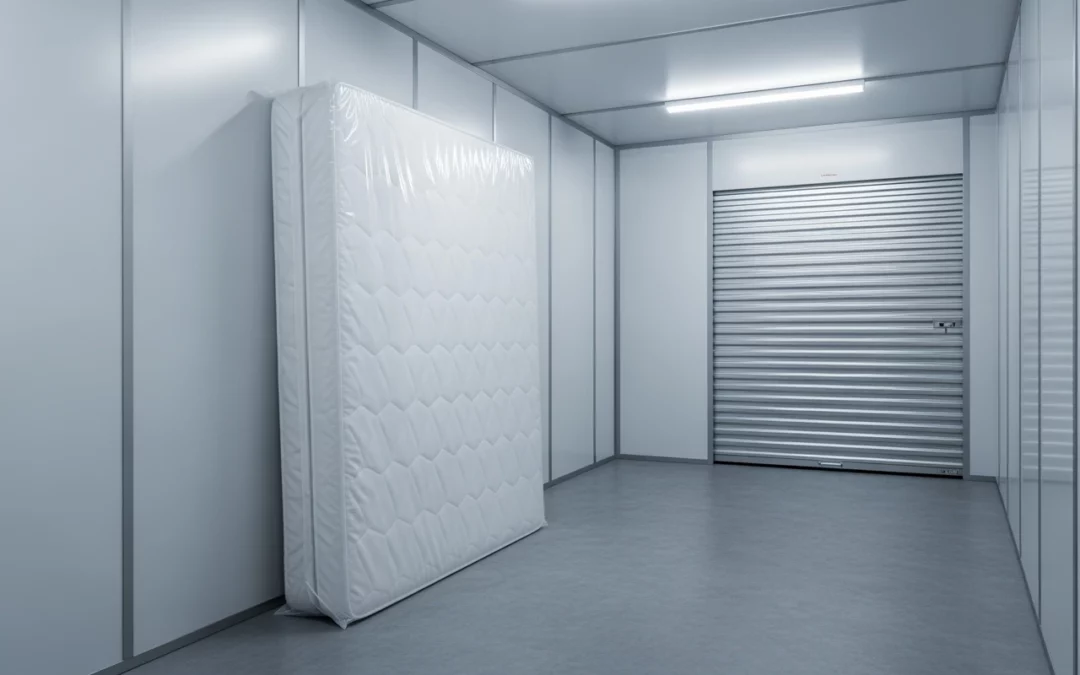
A quality mattress represents a significant investment in your health and comfort, often costing hundreds or even thousands of pounds. Yet when life circumstances require temporary storage, whether during a house move, university break, or extended travel, many people unknowingly destroy these valuable items through improper storage methods. The difference between a mattress that emerges fresh and supportive versus one riddled with mould, sagging, or musty odours comes down to understanding a few critical principles.
The stakes extend beyond financial loss. A compromised mattress can harbour allergens, lose its structural integrity, and ultimately force premature replacement. Knowing how to store a mattress properly before it enters a unit is not complicated, but it does require deliberate preparation and the right environment. Get these factors right, and your mattress will come out of storage in the same condition it went in.
Why Proper Mattress Storage Matters
Mattresses face three primary threats during storage: moisture infiltration, structural stress, and pest colonisation. Each threat accelerates when storage conditions fall below minimum standards, creating compounding damage that often remains invisible until you unpack the mattress months later.
Moisture poses the most insidious danger. Mattresses contain multiple layers of foam, fabric, and sometimes natural fibres that absorb humidity from surrounding air. When relative humidity exceeds 60%, mould spores activate and begin colonising these materials. Within weeks, a mattress stored in a damp environment develops that distinctive musty smell that never fully disappears, even with professional cleaning.
Structural damage occurs when mattresses rest in positions that concentrate weight unevenly across their internal support systems. Memory foam compresses permanently when stored incorrectly, whilst pocket springs can distort and lose tension. Think of a mattress like a suspension bridge: it is engineered to distribute weight across its entire surface when horizontal, not to bear concentrated stress at folding points or edges.
Preparing Your Mattress for Storage
Preparation determines whether your mattress survives storage intact. Start with thorough cleaning at least 48 hours before storage day. Vacuum both sides using the upholstery attachment, paying special attention to seams where dust mites congregate. For stains, use a fabric cleaner specifically formulated for mattresses, applying sparingly to avoid saturating the internal layers.
Drying time matters more than most people realise. A mattress that feels dry to the touch may still contain moisture deep within its foam layers. After any cleaning, position the mattress upright in a well-ventilated room for a minimum of 24 hours, ideally with a fan circulating air across both sides. Storing a mattress with residual moisture guarantees mould growth, regardless of how perfect your storage environment might be.
I have seen countless mattresses ruined after just six months in a damp garage, their owners shocked to discover irreversible damage that could have been prevented with proper preparation. A few extra hours of drying time before storage day is one of the simplest and most effective steps you can take when learning how to store a mattress correctly.
Choosing the Right Protective Covering
Protective covering requires careful material selection. Never wrap a mattress in standard plastic sheeting, which traps moisture and creates a greenhouse effect. Instead, use breathable mattress bags made from woven polypropylene or specialised storage covers with ventilation panels. These materials shield against dust and pests whilst allowing trapped moisture to escape.
Select a cover that fits your mattress size precisely. Oversized bags bunch and tear, whilst undersized covers stress seams and leave portions exposed. Quality mattress storage bags feature reinforced corners and heavy-duty zippers that will not fail during handling. For storage periods exceeding six months, adding moisture-absorbing packets inside the bag provides an additional layer of protection.
Seal the bag completely, but only after placing the mattress in its final storage position. This prevents trapping humid air from the packing area inside the covering. Sealing whilst the mattress is still warm from a recently cleaned environment risks locking condensation against the fabric surface.
Choosing the Right Storage Position
How you position a mattress during storage directly impacts its structural longevity. Flat storage represents the gold standard, maintaining the mattress in its designed orientation. This position preserves spring tension, prevents foam compression, and distributes any residual weight evenly across the entire surface.
Space constraints sometimes necessitate alternatives. If you must store a mattress on its side, ensure it rests against a flat wall with support along its entire length. Never bend or fold a mattress, even partially. Modern mattresses contain memory foam and gel layers that develop permanent creases when flexed beyond their design limits.
For those storing multiple items, resist the temptation to stack boxes or furniture on top of your mattress. I once helped a student who had stored her mattress flat but placed three boxes of textbooks on top. After four months, those boxes left permanent depressions that made the mattress unusable. Even moderate weight concentrated on a mattress surface for extended periods creates indentations that simply will not recover.
Newbury Self Store provides units that maintain consistent quality storage. Their purpose-built infrastructure eliminates the guesswork and risk associated with home storage locations, providing the stable environment mattresses require for long-term preservation.
Storage Duration and Maintenance Checks
Even a perfectly stored mattress benefits from periodic inspection. For storage periods exceeding three months, schedule a monthly check to verify covering integrity, look for moisture accumulation, and confirm the storage position has not shifted.
Warning signs require immediate action. Any musty smell, visible moisture on the covering exterior, or tears in the protective bag demand investigation. Catching problems early often means the difference between minor remediation and total mattress loss.
Long-term storage beyond 12 months increases risk significantly. If extended storage becomes necessary, consider upgrading to container storage with ground-level access for easier inspection and repositioning of the mattress without assistance. Knowing how to store a mattress for extended periods requires planning for access, not just initial placement.
Common Mistakes That Damage Mattresses
The plastic wrap trap catches many well-intentioned people. Standard moving plastic seems protective but actually creates a moisture prison. Condensation forms between the plastic and mattress surface, particularly when temperature fluctuations occur. Within weeks, this trapped moisture activates mould spores embedded in the fabric.
Basement and garage storage fails more often than it succeeds. These spaces might seem convenient and cost-effective, but their environmental instability makes them unsuitable for mattress storage. The money saved on storage fees rarely justifies replacing a ruined mattress, as mattress storage tips UK experts consistently highlight.
Another frequent error involves storing mattresses near strong-smelling items like paint, petrol, or cleaning chemicals. Mattress materials absorb odours readily, and chemical smells prove nearly impossible to remove once absorbed into foam layers. Always choose a dedicated, clean storage environment away from any chemical storage.
Professional Storage Solutions
Purpose-built storage facilities solve the environmental control challenges that make home storage risky. Climate-controlled units maintain steady temperature and humidity levels, provide pest-free environments, and offer security that home storage locations cannot match.
The cost analysis favours professional storage when you factor in mattress replacement risk. A mid-range double mattress costs £400 to £800. Storing it in a climate-controlled unit for six months might cost £200, whilst improper home storage risks destroying the entire investment. Protect your furniture and bedding together in a single accessible unit rather than spreading items across unsuitable home spaces.
Those managing seasonal business stock such as hospitality or accommodation providers needing to store spare mattresses between seasons benefit particularly from professional storage solutions. Consistent conditions keep spare stock guest-ready without the deterioration that unmanaged storage causes.
Access convenience matters too. Quality facilities offer extended access hours and large-scale storage that makes mattress retrieval straightforward. When you are ready to reclaim your mattress, you will not need to navigate narrow basement stairs or clear out an entire garage to reach it.
Protecting Your Investment
Understanding how to store a mattress correctly protects both your financial investment and your future sleep quality. The principles are not complicated: maintain climate control, position the mattress flat, use breathable protective covering, and choose storage locations designed for long-term preservation.
The difference between success and failure often comes down to environment selection. Home storage spaces rarely provide the stability mattresses require, whilst professional facilities eliminate the variables that cause damage. When you consider the replacement cost of a ruined mattress against modest storage fees, the decision becomes straightforward.
Proper preparation takes a few hours but preserves a mattress worth hundreds of pounds. Thorough cleaning, complete drying, and quality protective materials set the foundation for successful storage. Combined with appropriate environmental conditions, these steps ensure your mattress emerges from storage in the same condition it entered. Following proven mattress storage tips UK storage professionals recommend consistently produces better outcomes than improvised home solutions.
Call 01635 581 811 or contact us to discuss climate-controlled mattress storage options tailored to your timeline and needs.