
 01635 581 811
The Storage Challenge for Event Businesses
Growing Inventory Outpacing Available Space
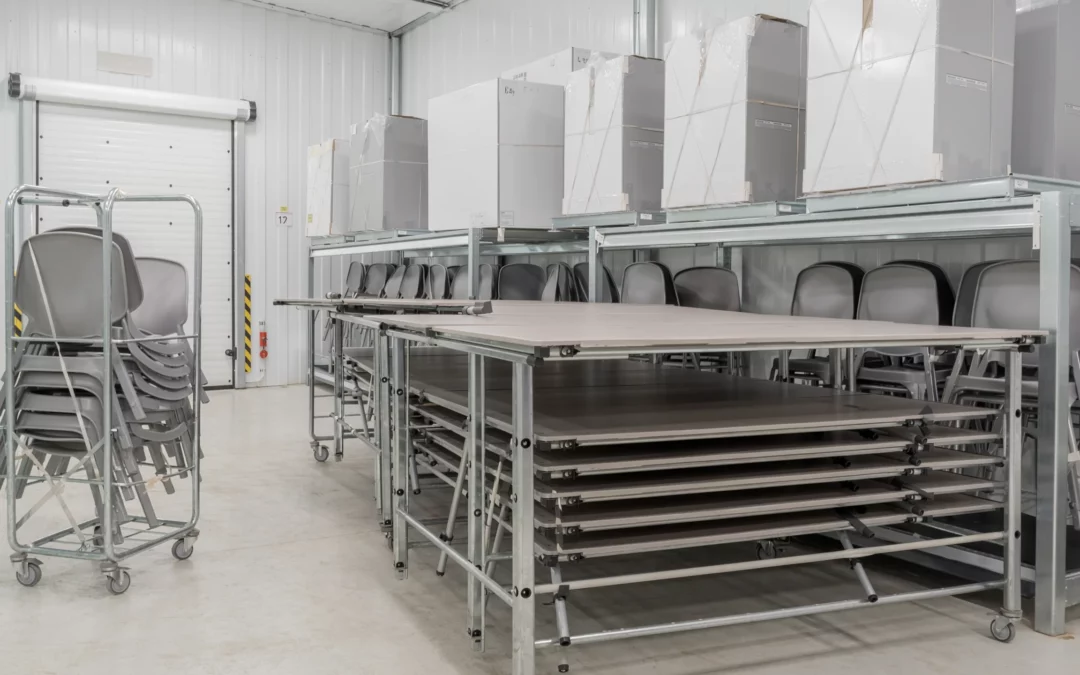
You’ve built a function business worth being proud of. The bookings are coming in, the reputation is growing, and the equipment list keeps expanding. But somewhere along the way, the storage situation quietly became a problem. Folding tables are wedged against office walls. Chairs are eating up the garage. Display units are crammed into whatever space is left. It’s not just untidy; it’s costing you time, money, and peace of mind before every single event.
The Cost of Unprotected, Disorganised Equipment
Most function businesses in West Berkshire reach this point faster than they expect. A handful of tables for local events turns into a full inventory for weddings, corporate functions, and community gatherings across Reading, Newbury, and Thatcham. The equipment grows. The storage doesn’t. And every time you need to load up for a job, you’re dealing with the fallout.
Understanding Your Storage Requirements
Calculating Space for Tables and Stacked Chairs
Good function equipment storage West Berkshire event businesses rely on needs more careful planning than most people expect. A standard 6-foot banquet table measures roughly 183cm x 76cm when open, but folds down to about 5cm thick. Stack twenty of them and you’ve got a metre-high pile that still takes up the full footprint.
Chairs are a different problem altogether. Folding chairs stack 10-12 high safely, with each stack taking around 50cm x 50cm of floor space. Chiavari chairs, which are popular for weddings, are harder to stack and need more careful handling. A set of 100 could need 8-10 separate stacks, plus room to move between them.
Accounting for Display Unit Dimensions and Access Paths
Display units vary hugely. Pop-up exhibition stands pack into wheeled cases, while wooden display panels need to stay flat and dry. Glass cases can’t stack at all and need their own protection. As a rule, add at least 20% extra space for protective materials and clear walkways.
Think about how often you’ll need each item too. Equipment used every week should sit near the entrance. Seasonal items, like Christmas decorations or marquee walls, can go further back. Access frequency should shape your entire layout.
Choosing the Right Storage Solution
Why Indoor Storage Matters
Indoor storage is the right call for protecting your investment. West Berkshire sees cold winters and humid summers. Outdoor storage leaves your equipment exposed to moisture, temperature swings, rust, and warping. A dry, secure indoor unit is the foundation of reliable function equipment storage West Berkshire businesses depend on.
Ground-Level Container Access for Bulky Event Loads
Store bulky event furniture in an outdoor shipping container that sits at ground level, making it straightforward to load and unload large items without navigating staircases or narrow corridors. During busy event seasons, that ease of access saves a significant amount of time on every load.
Security Features That Protect Your Business Assets
Security is more important than many businesses realise. Your tables and chairs and display units represent real money and real income. Losing a set of tables days before an event is an immediate operational problem. Professional storage facilities provide CCTV, a monitored alarm system, and controlled access that a barn or garage simply cannot match.
Size Flexibility for Growing Operations
As your business grows, so will your storage needs. A 50 square foot unit might be fine to start with, but a new corporate contract could change things fast. The best storage facilities let you move to a larger unit without having to shift your entire inventory elsewhere.
Organising Tables and Chairs Efficiently
Protective Materials and Smart Stacking Methods
Good stacking starts with the right materials. Furniture blankets placed between tables prevent scratches that make your kit look worn. Edge protectors on metal corners reduce transport damage. These are small costs that keep your equipment looking professional for much longer.
Pick up packaging materials for your furniture including bubble wrap, transit blankets, pallet wrap, and furniture covers to keep your equipment protected between events.
Creating Zones and Maintaining Clear Access Aisles
Divide your unit into clear zones. Tables along one wall, chairs in a separate section, and a central aisle kept clear at all times. This setup speeds up loading before events and reduces the risk of accidental damage when you’re moving things around.
Labelling Systems for Fast Inventory Management
Labels make a real difference. Mark each stack clearly with quantity and type: “20 x 6ft Rectangle”, “50 x Black Chiavari”, “8 x Cocktail Tables”. Add condition notes for anything that needs attention or careful handling. A whiteboard near the entrance is a simple way to track what’s currently out on hire.
Display Unit Storage Best Practices
Keeping Modular Systems Complete and Component-Ready
Display equipment needs more care than tables and chairs. Every modular system is different, and losing just one connecting piece can make the whole setup unusable. Keep components together and store each system as a complete unit.
For each display system, create a simple inventory sheet listing every part, from main panels down to small clips and connectors. Check everything off when storing and again when retrieving. It takes minutes and saves a lot of stress at the venue.
Photographing and Documenting Units Before Storage
Before you put a display unit away, photograph it fully assembled. These images are invaluable when you’re setting up later, especially for complex modular systems. Store them digitally alongside your inventory records so they’re easy to find when you need them.
Handling and Protecting Glass and Fragile Components
Wrap all glass components individually in bubble wrap, then box them with a clear label on the outside. Store these boxes at eye level or below to avoid dropping accidents. Mark them “FRAGILE” and position them away from high-traffic areas of your unit.
The Business Case for Professional Storage
Cost Savings Over Warehouse Leases and Multi-Site Logistics
Professional storage solutions often work out cheaper than the alternatives. Think about what you’re actually paying for that warehouse lease, the vehicles needed to manage multiple sites, and the staff time spent moving stock between locations. Newbury Self Store brings everything together in one secure, easy-to-access place.
Operational Efficiency with Centralised, Team-Accessible Storage
When your storage is centralised, your whole team benefits. Everyone knows where things are. Loading for events becomes a straightforward process rather than a last-minute scramble. You can even put together standard loading lists for different event types, which speeds things up further each time.
Insurance and Presentation Benefits
How you store your equipment says something about how you run your business. Corporate clients who ask to inspect your operations will notice a well-organised, professional storage setup. It signals attention to detail that carries through to the events themselves.
It’s also worth speaking to your insurer. Professional storage facilities often come with security systems, climate control, and fire protection that reduce risk. Some policies offer better rates when equipment is stored properly. It’s a quick conversation that could save you money.
Practical Tips from Experience
The “First In, Last Out” Principle in Action
Here’s something I picked up after a decade managing event equipment: the “first in, last out” principle saves an enormous amount of time. A hotel chain in Reading used to store their conference equipment with no system at all, grabbing whatever was closest to the door. Their premium chairs were being used for small internal meetings while their everyday seats sat untouched at the back. After reorganising so that frequently used items were at the front and special-occasion pieces were stored deeper in, their equipment lasted longer and looked far better. One simple change, and the difference was significant.
Using the Professional Kitchen Analogy for Layout Planning
Think of your storage unit like a professional kitchen. A good chef doesn’t pile all their pots in a heap; they organise by how often things are used, by size, and by function. Your tables and chairs are like the everyday pots: workhorses that need a logical, accessible home. Your display units are more like specialist equipment: valuable, less frequently used, and worth storing with extra care. That analogy tends to stick and makes planning your layout a lot more intuitive.
Managing Condensation and Seasonal Weather Risks
West Berkshire weather brings its own storage challenges. Autumn temperature drops can cause condensation to form on metal furniture, leading to rust spots that make your kit look neglected. A small dehumidifier running during the transition seasons is an inexpensive fix that protects your equipment all year round.
Making Your Storage Work Harder
Rotation Systems to Extend Equipment Lifespan
A simple rotation system can add years to your equipment’s life. Use small dated stickers to track when each item was last used, then rotate your stock so that everything gets regular use. This prevents a situation where certain pieces wear out quickly while others sit idle.
Linking Maintenance Checks to Storage Routines
Secure dedicated storage for your event business with a unit that grows alongside your client list. A half-empty unit today could fill up quickly once you land a couple of larger contracts. Having the space ready in advance is far better than rushing to find a solution mid-season.
Link your maintenance checks directly to your storage routine. Check table legs when stacking. Tighten chair bolts during inventory counts. Clean display units before putting them away. Small habits like these catch problems early and prevent equipment letting you down at an event. That’s what well-managed function equipment storage West Berkshire looks like in practice.
Adjusting Layout for Seasonal Demand Shifts
Your storage layout shouldn’t stay the same all year. In summer, outdoor furniture may be in constant rotation. In winter, indoor display units tend to see heavier use. Adjust your layout at the start of each season to match demand. A setup that works well in January can become a frustration by June if you leave it unchanged.
Getting Started
Conducting an Honest Inventory Assessment
Start with a straightforward count of everything you own. List every table, chair, and display unit, and note its condition, size, and how often you use it. Include the protective materials each item needs. This information gives you a clear picture of what your storage solution actually needs to do.
Calculating Space Needs with a Growth Buffer
Once you have your inventory, calculate your space requirements and then add 30% on top. That buffer accounts for growth, access paths, trolleys, packaging supplies, and maintenance space. It’s always better to have a little extra room than to constantly shuffle things around to make everything fit.
Taking the Next Step with Newbury Self Store
If you’re just starting out and don’t yet need a full business unit, personal storage in Newbury can be a practical first step while your inventory is still manageable. As your bookings grow, upgrading to a larger or business-specific unit is straightforward.
Proper function equipment storage West Berkshire turns equipment management from a daily headache into a smooth, repeatable process. Your tables and chairs and display units represent a serious investment and a reliable source of income. They deserve a proper storage solution that keeps them in top condition.
Ready to sort your function equipment storage for good? Call 01635 581 811 or get in touch with our team to discuss the right unit size and layout for your business.