
 01635 581 811
You pack down your stall, load the van, and realise you have nowhere to put any of it. For thousands of pop-up retail traders, that moment after the event is just as stressful as the event itself.
Pop-up retail has grown from a marketing experiment into a genuine business model. Thousands of traders now work exclusively through temporary locations, moving between markets, festivals, shopping centres, and event spaces all year round. The success of this model depends on one factor most people overlook: what happens to your stock and equipment between locations.
That gap between events catches many traders off guard. You’ve invested in quality stock, built custom display units, and set up the technology to take payments. Then the event ends, and suddenly you’re scrambling to find somewhere secure to store everything until the next booking. Good pop-up shop storage isn’t a minor inconvenience to sort out later. It’s a business-critical decision that directly affects your profit and how smoothly your operation runs.
The True Cost of Inadequate Pop-Up Storage
A jewellery maker I worked with last year learned this the hard way. She’d been keeping her display cases and leftover stock in her spare bedroom between craft fairs. When a pipe burst in the adjoining bathroom, water damage wiped out £3,000 worth of velvet-lined cases and ruined packaging she’d bought in bulk. Her home insurance didn’t cover business stock, and she missed two events whilst replacing everything.
Poor retail storage decisions create problems that ripple through your whole operation. The direct costs are obvious: damaged stock, broken equipment, and theft. The indirect costs are just as damaging. You waste time moving items between short-term fixes. You can’t buy in bulk because there’s nowhere to keep the extra stock. And you miss opportunities because your equipment isn’t accessible when an unexpected booking comes in.
The numbers are simple. Missing even one profitable event, or replacing damaged kit, will likely cost more than a full year of proper storage. Yet many traders still treat pop-up shop storage as an afterthought rather than a smart business investment.
What Pop-Up Retailers Actually Need to Store
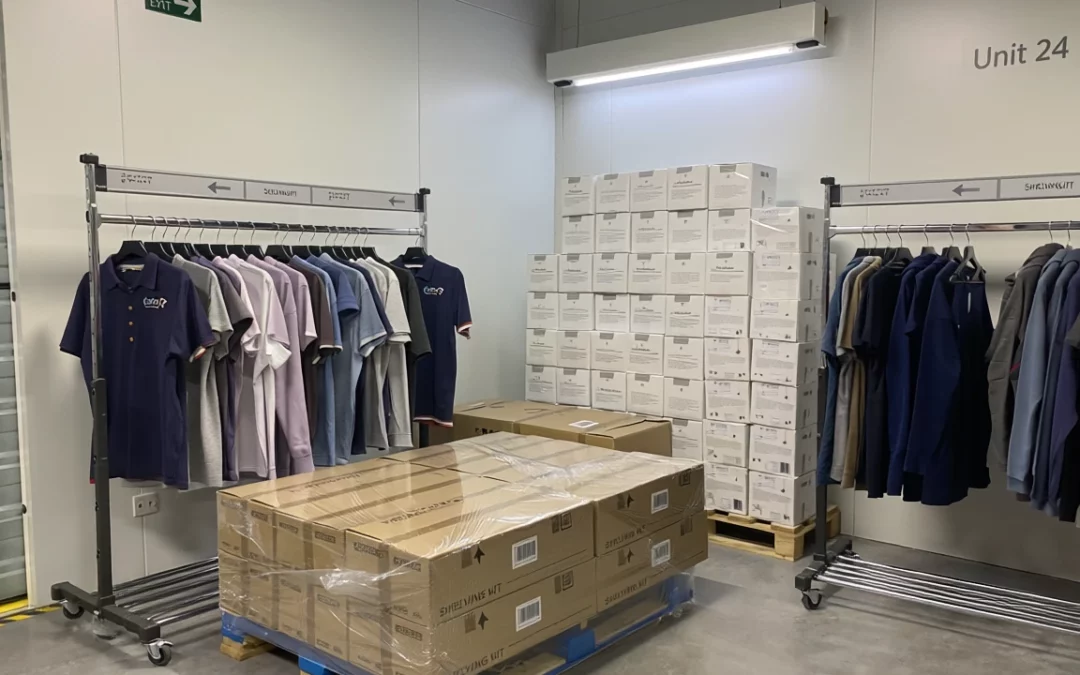
Storage for pop-up retail goes well beyond your selling stock. Your core inventory is just one part of a much larger operation. Display fixtures alone often take up more room than the products. A clothing pop-up needs rails, hangers, mirrors, and changing screens. A food vendor needs prep tables, serving equipment, and refrigeration units.
Branded materials are just as important. Your gazebo, signage, tablecloths, and promotional displays are what customers recognise across different locations. These items are often bulky and awkward, but losing or damaging them means costly replacements and a less polished appearance at your next event.
Point-of-sale technology is another key consideration. Card readers, tablets, receipt printers, and backup power supplies all represent significant investment. Keeping them in a dry, secure environment between events helps maintain their condition and reliability. A card reader that fails at a busy event doesn’t just cost you sales. It damages your reputation with customers who expect smooth, professional service.
Then there are your operational supplies. Bags, boxes, tissue paper, business cards, and receipt rolls are all cheaper when bought in bulk. On top of that, you need extension leads, lighting, assembly tools, cleaning supplies, and emergency repair materials. It all adds up quickly, and it all needs somewhere safe to live between events.
Why Standard Storage Solutions Fail Pop-Up Businesses
Traditional warehouse space is built around assumptions that simply don’t fit event-based businesses. Landlords want long-term commitments, often measured in years, not the short-term flexibility that seasonal businesses need. It works well for large, established companies with steady storage demands. For agile pop-up operations, it’s a poor match.
Access is another major problem. Many industrial estates only allow entry during standard business hours, Monday to Friday. But your market might be Saturday morning, your festival on Sunday afternoon, and your evening event might need a collection mid-week. If you can’t get to your stock when you actually need it, the storage is useless no matter what it costs.
Hidden costs make things worse. Warehouses rent in large blocks, so you end up paying for far more space than you use. Add in business rates, service charges, utilities, insurance, and security, and the total quickly becomes hard to justify, especially when it still doesn’t give event-based businesses the flexible storage they actually need.
How Professional Storage Supports Retail Agility
The difference between makeshift storage and a proper facility becomes clear the first time you use one. Flexible storage contracts mean you’re not tied to arrangements that don’t fit your trading calendar. You can scale your space up or down as your inventory changes with the seasons. You pay for what you actually use, when you actually need it.
Security matters a great deal when your entire business is sitting in storage between events. Good facilities provide CCTV, a monitored alarm system, and reinforced steel shutters. Your stock and equipment stay protected whether you’re in and out every week or leaving things untouched for months. That peace of mind lets you focus on growing your business rather than worrying about what’s in storage.
Access hours are equally important for pop-up traders. A facility that’s open seven days a week makes a genuine difference to event-based businesses that operate across weekends and varied schedules. You can collect your stock on a Saturday morning before a market, or drop everything off on a Sunday evening after a festival, without having to plan around restrictive weekday-only hours.
Newbury Self Store has been built around these practical realities. The facility is open seven days a week and understands that pop-up retailers, market traders, and event businesses operate on very different schedules to traditional storage customers. That understanding shapes everything from contract terms to access arrangements.
Think of professional storage as a business partner, not just a service. It’s the difference between renting a bare garage and joining a co-working space. One gives you four walls and a door. The other gives you infrastructure designed around how you actually work. For pop-up retail, that distinction has a direct impact on your efficiency and your ability to grow.
Practical Storage Strategies for Pop-Up Success
Good inventory rotation is what separates organised pop-up retailers from those who are always rushed. Keep fast-moving items near the front of your unit so you can grab them without unpacking everything. If you run different event formats, group your stock by event type. Your craft fair range might look very different from your wedding fair inventory, and smart organisation means faster packing every time.
Regular equipment maintenance between events protects your investment and prevents embarrassing failures on the day. Check display units for damage. Charge devices and run software updates. Prepare seasonal items properly before putting them away. Once you store your business stock securely, you have a stable, accessible base to work from and carry out these tasks properly between events.
Reliable retail storage also changes how you approach stock planning. You can order in larger volumes to get better prices, then hold the excess until you need it. You can build up stock ahead of peak seasons, spreading the cost over time. And you can hold onto successful product lines between events rather than clearing them out and reordering later at a higher price.
Seasonal adjustment is worth planning for too. Your storage needs at Christmas are probably very different from summer. Flexible storage arrangements that let you scale up and down mean you’re only ever paying for the space you’re actually using.
Calculating Your Actual Storage Requirements
Start with an honest assessment of everything you need to store. Lay it all out: stock, display units, equipment, supplies, and operational materials. Measure your largest items. Remember that a storage unit needs to stay accessible, not just packed as tightly as possible. A good facility can help you work out realistic requirements based on what you’ve actually got.
Think ahead when choosing your unit size. Where will your business be in six months? Will you add new product lines, move into different events, or pick up more display equipment? A little extra room built in from the start costs less than having to move to a bigger unit a few months down the line.
Also consider what you’re storing, not just how much. Display furniture might need to be stored upright to avoid warping. Outdoor equipment like gazebos needs dry conditions to prevent mould. Matching your pop-up shop storage to your actual needs protects your investment and avoids expensive replacements.
If you’re regularly moving large volumes or bulky equipment, it may be worth looking at whether you can access container storage 24/7. Outdoor shipping containers sit at ground level, making it straightforward to load directly from your vehicle, which saves real time and effort when you’re working alone or handling awkward items.
Protecting Your Investment Between Locations
Keeping your stock in a dry, secure environment is essential for many product types. Electronics, cosmetics, candles, and natural materials can all be affected by damp or poor conditions. Proper indoor retail storage within a secure warehouse provides a stable environment that helps protect your inventory between events.
Security is about layered protection. A facility with CCTV, a monitored alarm system, and reinforced steel shutters gives your stock and equipment solid, consistent protection. Make sure your insurance specifically covers business stock and equipment in storage, not just your home contents. Keep a photographic record and an inventory list so you can support any claim quickly and accurately.
Documentation is what separates a professional operation from a casual one. Keep detailed records of your inventory value, equipment serial numbers, and condition. Update them as your stock changes. Store digital copies somewhere outside your unit. If something does go wrong, thorough records make the whole process far more straightforward.
Before each event, it’s also worth taking the time to stock up on packing supplies so you’re never caught short. Having boxes, bubble wrap, and tape to hand means your stock travels safely and you’re not scrambling for materials on the day.
Building Storage Into Your Business Model
Pop-up retail offers real freedom and opportunity, but only when the basics work. Storage is one of those basics. The gap between a makeshift setup and a proper facility shows up in your profitability, your stress levels, and your ability to grow.
The most successful traders treat pop-up shop storage as infrastructure, not an overhead to minimise. They know that reliable, flexible, secure storage is what makes their business model sustainable. They build it into their pricing from day one, rather than constantly chasing cheaper options that end up costing more in the long run.
Your storage needs will change as your business develops. It might make sense to rent a personal storage unit when you’re starting out and your inventory is still modest. Most serious retailers, though, quickly reach the point where they need something more purpose-built for commercial use. The key is choosing a solution that fits your operation now and has room to grow with you.
Professional storage turns pop-up retail from a constant logistical challenge into a stable, scalable business. Your stock stays safe. Your equipment is always ready. And you have the flexibility to say yes to opportunities as they come up. That stability frees you to focus on what actually drives growth: great products, excellent service, and a reputation that brings customers back wherever you trade.
Ready to stop worrying about storage and start growing your pop-up business? Call 01635 581 811 or contact our team to discuss your specific requirements.