
 01635 581 811
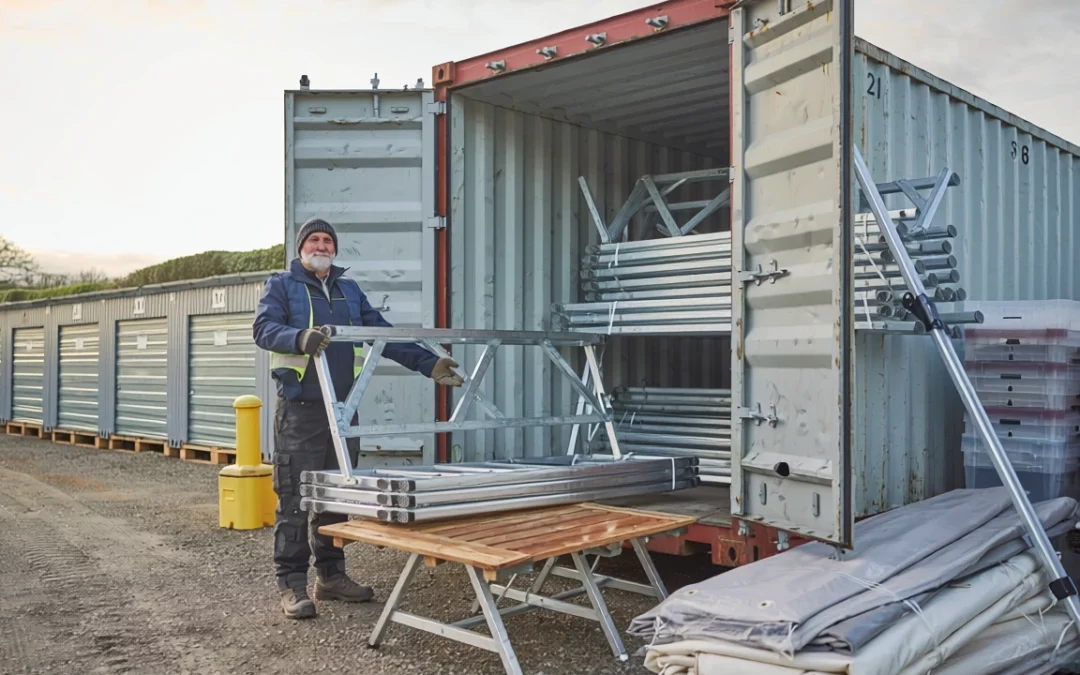
Most weekend traders don’t talk about the 5am alarm, the three trips to the car in the dark, or the gazebo that’s been living in the hallway for six months. They just get on with it. But the logistical grind behind a successful market stall is real, and for many traders, it starts long before the first customer arrives.
The storage problem is where it quietly unravels. Garages overflow with stock, spare rooms become makeshift warehouses, and vehicles stay permanently loaded with market equipment that should have a proper home. Finding the right Newbury market stall storage 24 hour solution is often the turning point that separates traders who struggle with logistics from those who have it under control.
Why Market Traders Need Dedicated Storage Solutions
The Weight and Volume of Equipment Most Traders Carry
Most customers have no idea how much a market trader actually moves. Beyond the visible stock, there’s a gazebo frame weighing 25 kilograms, folding tables, wind weights, storage boxes, signage, payment equipment, and often a generator or battery pack. A jewellery trader I worked with calculated she moved around 180 kilograms of market equipment each market day, making 12 trips from her flat to her car every Sunday at 5:30am.
Storage Conditions Required for Different Product Types
Not all stock can cope with the same environment. Food traders need dry, secure conditions to protect their products and maintain quality standards. Textile sellers need protection from moisture that causes mildew and discolouration. Antique and vintage dealers must guard against humidity changes that warp wood and tarnish metals. Domestic garages and sheds rarely offer this kind of consistent protection, and the result is stock degradation that hits your bottom line directly.
Managing Seasonal Stock Fluctuations
Seasonal trading adds another layer of complexity. Christmas traders might carry triple their normal stock levels from October through December, then scale right back in January. Garden product sellers face the reverse, with peak inventory through spring and summer. Without flexible storage that can grow and shrink with your needs, you either pay for space you’re not using or scramble for temporary solutions at your busiest time.
The Financial Impact of Poor Storage Choices
Opportunity Cost of Using Domestic Space for Stock
Home storage feels free, but the real cost shows itself over time. Traders who switch to flexible self-storage options in Newbury often find the monthly cost is quickly offset by the rental value they reclaim when a spare bedroom returns to its intended use. In Newbury, a spare room rents for around £450 a month, which is £5,400 a year in lost income. Add to that the cost of keeping vehicles outside, with higher insurance premiums and faster depreciation from weather exposure.
Vehicle Wear from Repeated Heavy Loading Cycles
Constant loading takes a serious toll on your vehicle. Moving 180 kilograms of equipment twice a week puts stress on suspension systems, wears down tyres faster, and speeds up interior deterioration. One furniture trader I spoke to found his van needed suspension repairs 18 months ahead of schedule, costing £840 in unplanned maintenance, all directly linked to repeated heavy loading.
Stock Damage and Losses from Inadequate Conditions
Poor storage conditions are where profits really disappear. Moisture ruins textiles, metal fixtures rust, and sun exposure through windows bleaches colours. One clothing trader reported losing around £300 worth of stock every month to mildew in her garage before she moved to business self-storage in Newbury with a dry, secure environment. That’s £3,600 a year in losses that were entirely preventable.
How 24 Hour Container Access Transforms Trading Operations
Evening Preparation Replacing Stressful Early Morning Loading
Newbury market stall storage 24 hour access changes everything about how weekend traders prepare for market day. Instead of rushing around at dawn, you can load your vehicle on Saturday evening when you’re calm and unhurried. You’re less likely to forget essentials, less likely to make mistakes, and you arrive at the market already organised rather than flustered. For traders running more than one stall at a time, evening preparation isn’t just convenient, it’s essential.
Weather Protection Through Drive-Up Container Access
British weather makes outdoor loading a genuine headache. With ground-level container access, you can pull up directly to your unit and load without carrying heavy items across a car park. Compare that to hauling market equipment from a domestic garage across a driveway in a downpour, watching cardboard boxes fall apart and stock get soaked before you’ve even left home. The ease of direct vehicle access alone makes a real difference to how your market morning begins.
Operational Flexibility Compared to Restricted Facility Hours
Think of Newbury market stall storage 24 hour access like having a commercial loading dock for your market business. Just as large retailers schedule deliveries at times that suit their operation, you get the freedom to work around your own schedule. If your market requires a 6am setup, you can collect stock at 4am without waiting for a facility to open or disturbing neighbours with early morning vehicle noise. That kind of flexibility removes the biggest scheduling constraint for weekend traders every week.
Newbury Self Store offers exactly this through shipping container storage in Newbury accessible 24 hours a day, 7 days a week, with ground-level access that makes loading and unloading large or heavy items straightforward.
Organising Your Market Container for Maximum Efficiency
Zone-Based Systems for Equipment and Stock Categories
Good organisation inside your storage container turns a chaotic search into a quick, efficient load. A zone-based system works well for most traders. Set up separate areas for display equipment, current stock, reserve inventory, and seasonal items. With clear zones, you can find anything in seconds rather than unpacking half the container to locate one missing piece.
Shelving and Positioning for Fast, Logical Access
Industrial shelving makes the most of vertical space and keeps everything accessible. It handles heavy loads and lets you stack boxes safely without crushing what’s below. Keep your most-used items at waist height near the container entrance. Seasonal stock and backup supplies can sit higher up or towards the back, where they’re out of the way until needed.
A good tip is to keep a dedicated “market day box” permanently packed with small essentials: tape, scissors, price tags, spare batteries. It lives at the front of your container and goes straight into your vehicle on every trading day. You’ll never forget a crucial supply again.
Inventory Tracking to Prevent Overordering and Lost Stock
Keeping track of your inventory prevents costly mistakes. Photograph your storage container layout, label your shelves clearly, and note items on an inventory sheet each time you take stock out for market. It’s a simple habit, but it stops the common problem of ordering more stock when boxes of the same product are already sitting forgotten at the back.
Security Considerations for High-Value Stock
Facility-Level Security Features
Market traders often store thousands of pounds worth of stock and equipment, so security has to be a priority. Newbury Self Store operates CCTV coverage across the facility, a state-of-the-art monitored alarm system, and reinforced steel entrance shutters. These measures work together to deter opportunists and provide accountability if anything does go wrong.
Individual Container Locking and Alarm Options
Security at the unit level matters just as much. Padlocks designed for container doors are far more resistant to bolt cutters and tampering than standard options from a hardware store. Some traders also use alarmed locks that send real-time alerts if someone tries to force entry, giving you immediate notification even when you’re miles away.
Insurance Requirements and Stock Documentation
Your insurance policy may set specific conditions for covering stock held in storage. Most require a secure locking mechanism and security measures at the facility. Before you move valuable inventory, check that your policy covers off-premises goods and that the storage facility meets your insurer’s standards. Falling short could leave you unprotected.
Keep thorough records as a matter of habit. Photograph your stock, hold onto purchase receipts, and maintain a list of item values. Store everything digitally in the cloud rather than in the container itself. If you ever need to make a claim, solid documentation speeds up the process and improves your chances of fair compensation.
The Weekend Trader’s Workflow
Friday Stock Checks and Replenishment Preparation
A well-organised trading week starts on Friday evening. Check your stock levels and identify anything running low. Catching shortfalls on Friday means you still have time to collect additional stock from suppliers before the weekend rush begins.
Saturday Pre-Packing and Container Organisation
Saturday is ideal for getting the container in order. Restock shelves with items sold the previous weekend, tidy up display materials, and mentally run through tomorrow’s setup. Many traders pre-load their vehicle on Saturday evening, leaving only perishables or fragile items to add on Sunday morning. That way, Sunday becomes a simple collection trip rather than a full loading operation.
Sunday Morning Loading and Post-Market Processing
With a good system in place, Sunday mornings are straightforward. Arrive at your container, load your pre-organised stock and equipment, and head to the market with time to spare. After trading, the process runs in reverse: unload, secure everything, and you’re done. Most traders get through the full post-market routine in around 20 minutes, compared to the hour or more that home storage typically demands.
Some traders keep a folding table and chair in their unit for post-market admin. Counting cash, reconciling card payments, and updating inventory records while everything’s still fresh in your mind is far better than arriving home exhausted and leaving it all for later.
Choosing the Right Container Size for Your Trading Needs
What a Standard 20-Foot Container Holds
Newbury Self Store offers standard 20-foot storage containers, each providing 160 square feet of internal space. That’s a generous footprint that comfortably accommodates a full gazebo, trestle tables, display equipment, and multiple boxes of stock, with room left over for proper shelving and organisation. For most market traders, a single container provides everything they need in one accessible unit.
Matching Container Capacity to Your Product Range
The 160 sq ft footprint suits a wide range of trading operations. Jewellery traders, craft sellers, and small food producers will find they have ample space with room to spare. Clothing traders with seasonal collections, home goods sellers, and traders covering multiple market locations can use the full footprint with zone-based organisation to keep everything clearly separated and easy to access.
Planning for Seasonal and Business Growth
When thinking about how you’ll use your container, factor in your busiest periods. Christmas stock, spring garden ranges, or bulk purchases can quickly fill space that seems generous in quieter months. Starting with a well-organised system from day one means you can absorb peak season inventory without the unit becoming chaotic. Picking up boxes and packing materials before you move in helps you protect stock properly and make the most of every square foot from the outset.
Making Container Storage Work for Your Market Business
Calculating the True Return on Storage Investment
The upfront cost of container access puts some traders off, but the real picture looks very different once you account for hidden expenses. Add up the opportunity cost of lost domestic space, stock damaged by poor conditions, vehicle wear, and the hours spent on inefficient loading. Most traders find that professional storage pays for itself within a few months through reduced losses and smoother operations.
Choosing a Location That Suits Your Market Schedule
Where your storage is located matters more than many traders realise. A facility close to major roads or your regular market sites cuts travel time and fuel costs. Work out how long it takes to get from potential storage locations to your most frequent markets. Saving just 15 minutes each way, twice a week, adds up to 26 hours a year. That’s time you could put towards sourcing better stock or expanding to new markets.
Using a Trial Period to Refine Your System
Newbury Self Store requires only two weeks’ notice, so you can try Newbury market stall storage 24 hour access without a long-term commitment. Use the first few months to fine-tune your organisation, build efficient loading habits, and measure the difference it makes. Track how long loading takes, how often stock gets damaged, and how you feel on market mornings. The numbers will tell the story clearly.
The benefits often go beyond the practical. Traders frequently report feeling less stressed once market equipment no longer takes over their home. Spare rooms go back to being spare rooms. Garages fit cars again. The separation between business and home life is harder to put a price on, but it’s one of the most valued changes traders mention once they make the switch.
Weekend market trading rewards those who plan ahead, stay organised, and build reliable systems around their operation. Getting your container access right gives you the foundation to trade professionally, protect your stock, and reduce the friction that eats into your time and profits. It shifts market mornings from rushed and reactive to calm and controlled, so you can focus on what actually matters: serving your customers and growing your business.
To find out which unit size suits your trading setup, call 01635 581 811 or speak to our team and we’ll help you get sorted before your next market day.