
 01635 581 811
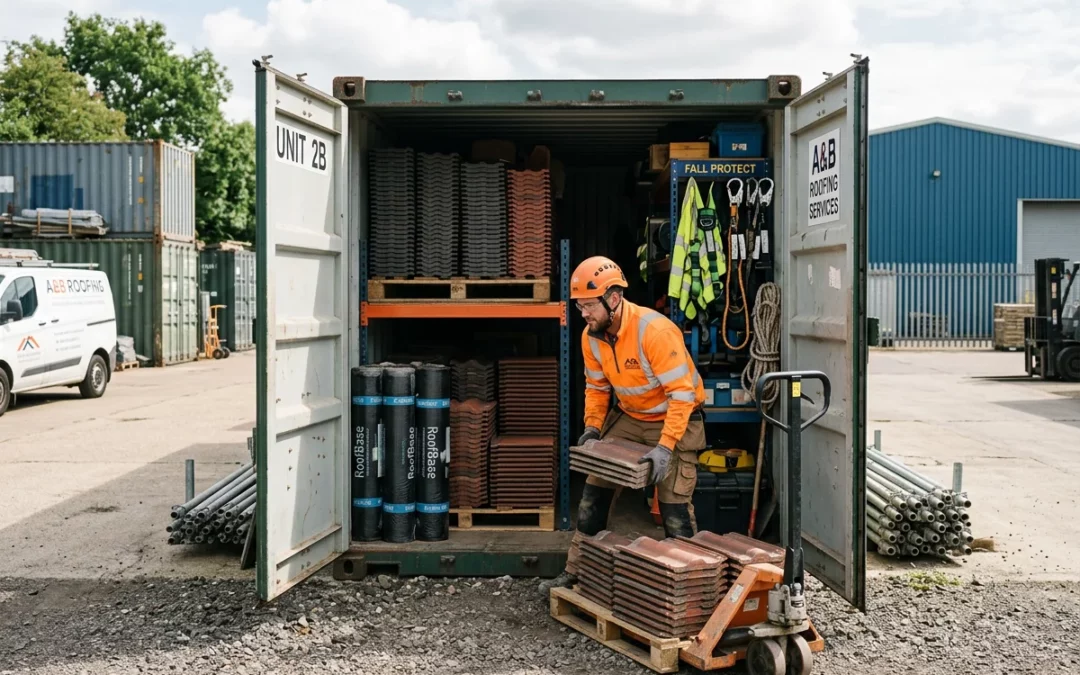
You’ve done the hard part. You’ve won the contract, priced it right, and ordered the materials. Then you spend the next morning shifting pallets around a cluttered garage just to find what you actually need. Sound familiar?
For roofing contractors, poor storage doesn’t just create inconvenience. It eats directly into the money you’ve already earned. Materials get damaged before they ever reach a roof. Tools go missing. Jobs start late. And the time you spend managing the chaos is time you’re not billing for.
The problem is particularly sharp in West Berkshire, where many roofing businesses run from residential properties or small units without proper storage space. You can’t leave £15,000 of materials on a driveway. Cramming everything into a domestic garage creates disorganisation that costs you time on every single job. There is a better way, and it’s more straightforward than most contractors expect.
The Real Cost of Poor Material Management
Most roofing contractors underestimate what disorganised storage actually costs them. It’s not just the odd damaged box of tiles. It’s the slow, cumulative drag on every part of your operation.
Start with the direct financial losses. Roofing materials are especially vulnerable to moisture, temperature changes, and physical impact:
- Felt stored in damp conditions loses its adhesive properties.
- Incorrectly stacked tiles develop hairline cracks that only show up during installation.
- Sealants that freeze and thaw become unusable.
These aren’t edge cases. They’re everyday occurrences eating into your margins.
Then there’s the time drain. A roofer I worked with last year calculated that his team spent an average of 45 minutes per job just locating and loading materials from his cluttered lock-up. Across 200 jobs a year, that’s 150 hours of billable time lost to poor organisation. At £50 per hour, that’s £7,500 in lost revenue before you even count the errors caused by rushing.
Safety compliance adds yet another layer. HSE regulations require proper storage for hazardous materials like adhesives and solvents. Keeping these alongside other equipment in unsuitable facilities isn’t just poor practice; it’s a liability that could invalidate your insurance if something goes wrong.
What Roofing Contractors Actually Need to Store
Roofing storage needs are more varied than most people realise. It’s not just about finding space. It’s about finding the right conditions for each type of material and equipment.
Bulk materials form the core of your storage needs:
- Tiles, slates, and ridge pieces need flat, stable surfaces that can take significant weight.
- Felt rolls and membranes must be stored vertically or on large-diameter tubes to prevent creasing.
- Battens and timber need to stay straight and dry to remain usable.
Generic storage spaces often can’t meet these specific requirements.
Specialist tools are another major consideration. Roofing nailers, angle grinders, hot air welding equipment, and safety gear like harnesses and scaffolding components all need secure, easy-to-reach storage. These items are expensive to replace and attractive to thieves, so security matters.
Seasonal variations add further complexity. Summer might mean stocking up on flat roofing materials and GRP systems. Winter brings different products for repairs and maintenance. Your storage solution needs to flex with these shifts, without locking you into space you don’t always need.
Why Traditional Storage Options Fall Short
Storing materials at a domestic property creates more problems than it solves. Driveways fill with pallets and equipment, irritating neighbours and projecting an unprofessional image. Garages overflow quickly, turning material retrieval into a frustrating puzzle every morning.
Weather exposure is the biggest risk with outdoor storage. Even covered areas rarely protect against West Berkshire‘s damp climate. Condensation alone can destroy materials worth thousands of pounds, and no insurance policy covers damage caused by inadequate conditions you’ve set up yourself.
Commercial yard space looks appealing until you check the numbers. Rental rates in West Berkshire typically start at £800 per month for usable space. Most require long-term leases that fix your costs regardless of seasonal demand. On top of that, you’re responsible for security, which means spending more on fencing, lighting, and alarms.
The Self Storage Advantage for Roofing Businesses
Purpose-built storage facilities address the specific challenges roofing contractors face, without the overhead of commercial premises. The key is knowing what genuinely matters for your operation.
Dry, secure storage is the core benefit for roofing materials. A modern, purpose-built indoor unit keeps your materials out of the damp, away from condensation, and protected from the conditions that cause felt to degrade, tiles to crack, and adhesives to fail. That protection translates directly into less waste and fewer callbacks.
Security at professional facilities goes well beyond a basic padlock. CCTV and a monitored alarm system create strong deterrents for the kind of equipment thieves specifically target. Reinforced steel entrance shutters secure the facility itself, adding a further layer between your stored items and the outside world.
Flexibility is perhaps the biggest benefit for growing roofing businesses. You can start small during quiet periods and expand in busy seasons without renegotiating leases or making long-term commitments. That kind of scalability reflects how roofing businesses actually operate.
Newbury Self Store has worked with numerous roofing contractors across West Berkshire making exactly this transition. The pattern is consistent: initial scepticism about the monthly cost gives way to clear recognition of time savings, reduced waste, and better cash flow.
Organising Your Storage Unit for Maximum Efficiency
The layout of your storage space decides whether it becomes a genuine productivity tool or just a tidier version of the same chaos. Think of it like a well-organised van: everything has a place, and that place is based on how often you need it.
Zone-based systems work particularly well for roofing materials. Set up distinct areas for each material type:
- Tiles and slates in one zone.
- Felt and membranes in another.
- Timber and battens in a third.
Within each zone, organise by project or frequency of use. Materials for current jobs should be within easy reach near the entrance. Bulk stock for future projects can sit deeper in the unit.
Inventory management becomes far simpler with a proper layout. A basic system for recording what goes in and out is all you need. A spreadsheet or even a physical logbook prevents the common situation where you order materials you already have, simply because you couldn’t find them.
Quick-access planning means thinking through your typical workflow in advance. If you usually collect materials the night before a job, arrange your unit so you can grab everything without shifting other items. A clear central pathway and accessible shelving make a significant difference.
Material-Specific Storage Considerations
Each type of roofing material has its own storage requirements. Getting these right prevents costly damage. The principles are straightforward, but they’re often ignored until something goes wrong.
Tiles and slates must be stored flat on pallets that distribute weight evenly. Stack no more than four pallets high to avoid pressure damage. Keep different colours and batches separate to prevent visible variations on completed roofs. Cover stacks with breathable material to block dust without trapping moisture.
Felt and membrane products should never be stored flat for long periods. The weight causes permanent deformation that creates installation problems. Store them upright or on horizontal racks with large-diameter support tubes. Keep them off concrete floors, which can transfer moisture even when conditions appear dry.
Adhesives and sealants are highly temperature-sensitive. Most manufacturers recommend storage between 5°C and 25°C. Freezing permanently alters the chemical composition, while excessive heat speeds up degradation. Check expiry dates regularly; using out-of-date products leads to installation failures that cost far more than replacing the materials would have.
Tool care extends the life of your kit significantly. Clean tools before storing them, removing all debris and moisture. Apply light oil to metal parts to prevent rust. Store power tools in their original cases or protective containers to block dust and prevent impact damage. If you need boxes, bubble wrap, or packing tape before moving items into storage, you can pick up packing materials and boxes on site.
How West Berkshire Roofing Contractors Use Storage Effectively
Real examples show the practical benefits better than any theory. A roofing contractor I spoke with recently explained how renting a business storage unit transformed his workflow from reactive chaos to confident, planned efficiency.
He now uses his unit as a staging area for upcoming jobs. When he wins a contract, materials are ordered directly to the storage facility rather than to his home or the job site. This gives him time to check everything is correct, organise it properly, and load his van the night before. The result is fewer delays, no mid-job surprises, and a professional start to every project.
Seasonal workflow optimisation is another practical benefit. During summer, when flat roofing work dominates, he expands his storage to accommodate bulk purchases of GRP materials and EPDM membrane systems. Buying in larger quantities saves money, and having secure storage makes that financially viable. Come autumn, he scales back as pitched roofing work picks up again.
Project staging extends the value further. Several West Berkshire roofing businesses use their units to prepare complete job packs: all materials, tools, and equipment for a specific project, organised together and ready to load. It’s similar to meal prepping for the week. A bit of upfront organisation delivers smooth, efficient execution every time.
Making the Financial Case
The decision to invest in professional storage comes down to numbers. The calculation is more favourable than most roofing contractors expect when they first look at the monthly cost.
Start by assessing your current situation honestly. If you’re already renting a lock-up or commercial yard, shipping container storage is often a more cost-effective alternative, with ground-level access that makes loading pallets and heavy materials straightforward. If you’re relying on domestic space, factor in the hidden costs: time spent managing chaos, materials damaged by damp conditions, and the professional image cost of working from a cluttered residential property.
Waste reduction is the clearest financial return. Track your material waste for one month under current conditions, then compare after switching to proper storage. Most roofing contractors find that even a 5% reduction in waste covers the storage cost entirely. Factor in time savings and reduced stress, and the return becomes compelling.
Insurance and compliance add another financial dimension. Proper storage of hazardous materials keeps you compliant with HSE regulations, protecting you from fines and liabilities that could far exceed any storage costs. It also means you can demonstrate responsible practices to clients and insurers if the question ever arises.
The analogy that resonates with most roofing contractors is this: you wouldn’t run a roofing business with cheap, inadequate tools because the false economy becomes obvious quickly. Storage is simply another business tool. Using inadequate facilities costs you money in ways that aren’t always visible but are absolutely real.
Protecting Your Investment Long Term
Professional storage isn’t just about solving today’s problems. It’s about laying the groundwork for steady business growth. As your operation expands, your storage needs will change, and a flexible solution prevents those changes from becoming obstacles.
Regular inventory audits stop the common trap of accumulating materials you’ll never use. Schedule quarterly reviews to assess what’s in your unit, what’s still viable, and what needs to be used or cleared out. This discipline keeps your storage working for you rather than against you.
Documentation might feel like extra admin, but it pays off quickly. Take photos of your unit layout after major reorganisations. Keep a running list of high-value items and their locations. These simple habits save hours of searching and prevent duplicate purchases.
Reputation is also tied to how well you manage your materials. Clients notice when you arrive fully prepared, with everything you need and nothing missing. Consistent, professional delivery wins repeat business and referrals in a way that advertising rarely can.
Practical Steps to Get Started
Moving from poor storage to a professional solution doesn’t need to be complicated. Here’s how to approach it:
- Assess your current inventory accurately. Measure the space your materials and equipment actually take up, then add 20% for organisation and growth.
- Visit facilities in person. Look for practical features: wide loading access, good height for storing materials vertically, and easy access for vans and small trucks. The cheapest option rarely proves cost-effective if it creates logistical headaches.
- Plan your layout before moving in. Sketch a basic floor plan showing where each category of material will go. This prevents the common mistake of filling the unit at random, then spending weeks trying to reorganise it.
- Start at the right scale. If you also have personal items to store separately from your trade materials, a personal storage unit keeps domestic and trade stock completely separate. There’s no need to mix the two in the same space.
West Berkshire‘s roofing contractors face specific challenges: seasonal demand spikes, damp weather, and the logistics of serving a spread-out rural area. Professional storage addresses these directly, in ways that generic solutions simply can’t.
The investment in proper storage facilities is one of those business decisions that seems optional until you make it, then feels obviously essential in hindsight. Material protection, better organisation, time savings, and a more professional operation all combine to deliver returns that go well beyond the monthly cost.
To find out which unit size suits your roofing operation, call 01635 581 811 or get in touch with our team for a no-obligation conversation about your requirements.