
 01635 581 811
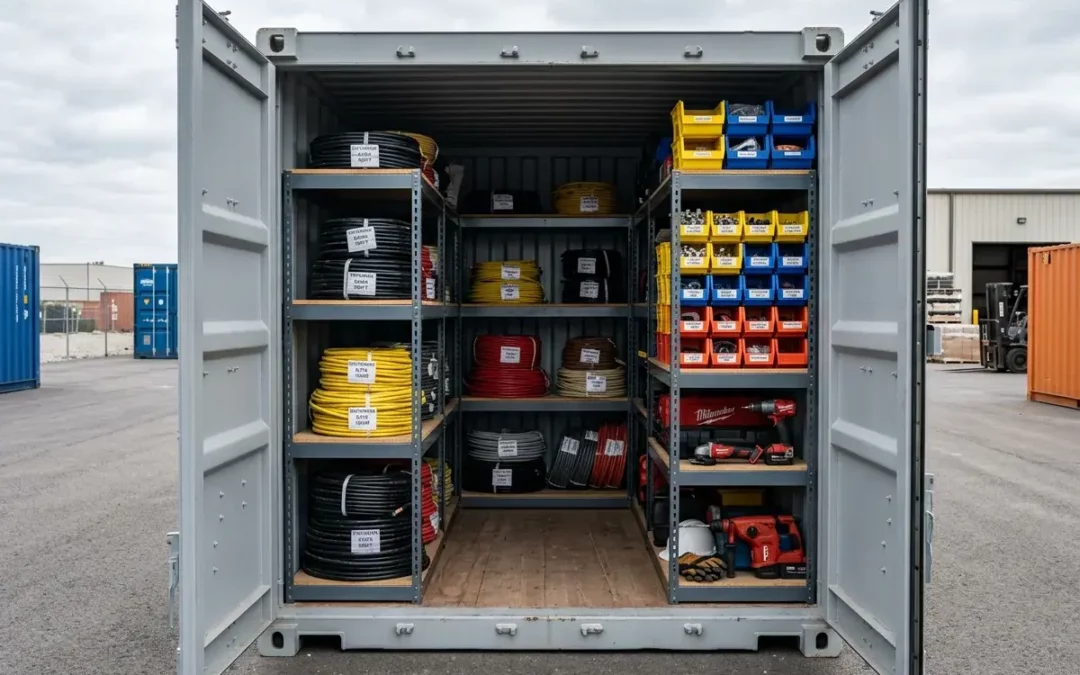
Your business is only as profitable as your ability to locate a specific circuit breaker while a client is watching the clock. For many local electrical contractors across West Berkshire, the chaos tax is a very real financial drain that steals billable hours and ruins weekend downtime. It is a frustrating reality where thousands of pounds in heavy-duty electrical supplies end up buried under tangled cable offcuts, turning a routine installation into a logistical nightmare.
Electricians working across the region face a unique storage challenge that most people never consider. A single commercial project might require 500 metres of armoured cable, dozens of junction boxes in various sizes, and specialist fittings that cost thousands of pounds. Store this poorly, and you are looking at damaged stock, wasted time hunting for components, and emergency supply runs that eat into already tight margins.
The problem compounds when you factor in the sheer variety of inventory. Unlike other trades that might work with a dozen core materials, those in the trade routinely stock hundreds of different items. Each project demands specific cable gauges, particular fitting types, and specialised tools that cannot be substituted. Running your business from a garage or garden shed stops being viable the moment you land your second or third concurrent contract.
I have watched electricians lose entire days to poor storage systems. One contractor I knew, let us call him Dave, spent four hours searching for a specific circuit breaker he knew he had purchased (it was a high-amp RCBO for a specific plant room job). He eventually found it buried under a mountain of tangled cable offcuts in the back of his van, but by then, the light was fading and the client was frustrated. That is four hours of billable time vanished because his storage system consisted of “wherever it fits.”
The financial impact extends far beyond lost time. When you cannot locate stock you have already paid for, you end up buying duplicates. This turns your working capital into a disorganised pile of redundant inventory that gathers dust while your bank balance suffers. Professionalism in this trade starts with how you treat your materials before they even reach the job site.
Why Standard Domestic Storage Does Not Work for Trade Professionals
The storage requirements for electrical contracting differ fundamentally from general trade storage. Temperature fluctuations affect cable insulation and can compromise the integrity of sensitive testing equipment. A multimeter that has been exposed to damp conditions will not give accurate readings (yet you might not discover this until you are halfway through a critical compliance test). Electronic components and LED drivers are particularly vulnerable to moisture damage, making climate control essential rather than optional.
Access patterns create another layer of complexity. You might need to collect materials for three different jobs in a single morning. This means your storage system must allow for quick identification and retrieval of varied items. Contrast this with a decorator who might store bulk paint supplies that do not require daily sorting. Electrical work demands granular organisation because grabbing the wrong cable specification or breaker rating creates safety issues and code violations.
Think of your inventory system like a well-organised consumer unit: if the labels are wrong or the wires are crossed, the whole system fails when put under pressure. A disorganised storage space is a faulty circuit in your business operations. It creates resistance where there should be flow, leading to stress and eventually a total loss of productivity. High-quality trade storage solutions provide the environment needed to prevent these failures.
The volume challenge becomes apparent once you start winning larger contracts. A domestic rewire might require 200 metres of twin and earth cable, but a small commercial fit-out could need 800 metres of various cable types. Add in containment systems, distribution boards, and hundreds of individual components. This inventory represents significant capital investment that needs protection from theft, damage, and deterioration.
The Financial and Operational Impact of Poor Tool Storage
Lost productivity represents the most insidious cost of poor storage. Every minute spent rummaging through a box of mixed glands and shroud kits is a minute you are not earning. If you lose just fifteen minutes a day to poor organisation, that is over an hour a week. Over a year, that equates to more than an entire working week spent just looking for things.
Equipment damage creates another financial drain. Copper cable left in damp conditions develops corrosion that affects conductivity and termination quality. Power tools stored without proper protection deteriorate faster, requiring premature replacement. Testing equipment loses calibration when exposed to temperature extremes or excessive vibration. These are not dramatic failures but gradual degradation that reduces tool lifespan and reliability.
A thermal imaging camera that should last ten years might need replacing after five if stored improperly. In a professional setting, your tools are your livelihood. Treating them like disposable items by storing them in a damp garage is a recipe for a shrinking profit margin. You are essentially paying a “chaos tax” every time a tool fails or a component is lost.
Cash flow suffers when you cannot accurately track inventory. You might have three thousand pounds worth of heavy-duty electrical supplies scattered across multiple locations. If you cannot find them when needed, you are forced to purchase more stock. This ties up capital in redundant inventory while simultaneously creating supply shortages for your active projects.
Volume and Variety of Inventory
The sheer number of unique parts required for modern electrical work is staggering. From different gauges of twin and earth to various IP-rated enclosures, the inventory variety is wider than almost any other trade. When you are managing these volumes, you need a space that allows for horizontal and vertical expansion.
Managing this volume requires more than just floor space. You need the ability to categorise items so that an apprentice can find a 20mm stuffing gland without needing to ask you where it is. If your storage is too small, you stop categorising and start stacking. This is the beginning of the end for your efficiency.
Protection Requirements for Sensitive Equipment
Testing gear is the heart of an electrical business. Tools like insulation resistance testers and thermal cameras are precision instruments. If these tools are knocked around or exposed to damp, they lose their calibration. This can lead to incorrect test results, which puts your professional accreditation and your customers at risk.
Protection also applies to your consumables. Many electricians do not realise that storing cable in extreme cold can make the insulation brittle. When you come to pull that cable through a tight conduit on a winter morning, it can crack. This leads to a failed installation and a costly rewire.
Access Patterns and Workflow Considerations
Your storage needs to work at the pace of your business. Most electricians operate on a morning rush schedule. You arrive at the storage unit early to load the van for the day. If you have to move ten boxes just to get to the cable you need, you are starting every day ten minutes behind schedule.
Over a month, that is over three hours of wasted time. A professional layout allows you to park your van, load your gear, and be on the road in minutes. This level of flow is only possible when you have the space to design a proper access path.
Lost Productivity from Disorganised Inventory
Disorganisation is a silent tax on your business. When you spend time looking for a tool, you are not just losing that specific time (you are breaking your mental focus). It takes time to get back into the zone once you have been frustrated by a missing component.
I have seen contractors lose thousands of pounds in annual revenue because they were too busy finding things to take on extra small jobs. If your storage is a mess, you will naturally turn down work that feels like a logistical hassle. This limits your growth and keeps your business smaller than it should be.
Damage to Expensive Equipment and Materials
When equipment is stored in a heap, it gets damaged. Drills get knocked, screens on testing gear get scratched, and cable sheaths get sliced by sharp edges of conduit. This physical damage is entirely preventable with the right storage environment.
Replacing a high-end drill because it was crushed under a reel of cable is a painful and unnecessary expense. By moving to a space that allows for proper racking, you ensure that every tool has its own safe home. You keep delicate gear away from the heavy materials that cause damage.
Cash Flow Impact of Overstocking or Emergency Purchases
If you cannot see your stock, you do not know what you have. This leads to the double-buy trap. You buy a box of sockets because you cannot find the one you bought last week. Suddenly, you have a hundred pounds tied up in extra sockets while you are struggling to pay for the cable for your next job.
Worse still are the emergency runs to the wholesaler. Buying at the counter is always more expensive than buying in bulk. If you are constantly running out of basic fixings because your storage is a mess, you are paying the highest possible price for your materials.
Bulk Cable and Wire Inventory
Managing bulk cable is an art form. You need heavy-duty racking that can support the weight of multiple reels. Storing reels on their side is a mistake, as it makes it impossible to pull off the length you need without the whole pile shifting.
Proper electrician tool storage involves vertical reel stands. This lets you pull exactly what you need while keeping the reel off the floor and away from damp. It also makes it much easier to see at a glance how much cable you have left on each drum.
Fittings, Connectors, and Junction Boxes
The small parts problem is what usually kills an electrician’s organisation. The solution is modularity. You need a wall of bins that are clearly labelled. Grouping items by project type often works best: keep all your domestic white-moulded fittings in one area and your industrial metal-clad gear in another.
When you use a professional unit, you have the wall space to set up these systems. It is often wise to organise small electrical components in a way that makes inventory checking a five-minute job instead of a half-day ordeal. This level of order allows you to maintain professional standards on every site you visit across West Berkshire.
Power Tools and Testing Equipment
Your power tools deserve more than a shelf in a damp shed. Lockable tool chests within a secure unit provide a double layer of security. This also keeps your tools organised by type: keeping all your drilling gear together and all your cutting gear in another chest.
Testing equipment should be kept in original hard cases whenever possible. These cases are designed to protect the delicate internal sensors. Storing these cases on eye-level shelving ensures they are never at risk of being crushed by heavier items on the floor.
Safety Gear and Protective Equipment
PPE must be kept clean to be effective. A high-vis vest covered in dust and grease is a safety hazard. Your arc flash suits and insulated gloves are life-saving equipment: they must be stored in a dry, clean environment to maintain their protective properties.
Storing these items in a dedicated zone ensures they are always ready for site inspections. It also shows your clients and employees that you take safety seriously, which is a key part of building a professional reputation.
Documentation and Compliance Records
The modern electrician is a master of paperwork. From Part P notifications to EICRs, you have a mountain of records to keep. Losing these to damp or pests in a garage is a regulatory nightmare.
A professional storage unit provides a dry, clean environment for your filing cabinets. This keeps your business compliant and ensures that if you are ever audited, you can find the records you need in seconds.
Climate Control for Sensitive Electronics
The team at Newbury Self Store understands that your inventory is sensitive. Our climate-controlled environments prevent the wild swings in temperature that cause condensation. You can easily secure professional trade stock here to manage your inventory over the long term.
Consistency is key for battery health as well. Lithium-ion batteries for your power tools degrade faster if they are stored in freezing conditions. By keeping your tools in a temperature-managed space, you are extending the life of your most expensive assets.
Security Requirements for High-Value Tools
Security is the primary reason local electrical contractors move their gear to our facility. We provide multi-layered protection, including 24-hour CCTV monitoring and individual unit alarms. This goes far beyond what any domestic home can offer.
Many insurance companies will even offer lower premiums if they know your gear is kept in a facility with professional tool security protocols. This saving alone can often cover a significant portion of your monthly storage costs.
Accessibility and Loading Considerations
You cannot run a busy electrical business if you cannot get your van close to your gear. Our facility is designed for trade access. You can drive right up to your unit, making the loading of heavy cable reels and conduit bundles a simple, one-person job.
This accessibility is a game-changer for your physical health too. Less time spent carrying heavy loads across a driveway means less strain on your back and more energy for the actual work on-site.
Inventory Management Space
A storage unit should be more than just a box for your gear; it should be an extension of your office. Having enough room to set up a small workbench allows you to prep distribution boards or sort through fittings before you even get to the job.
This prep zone saves you hours of time on-site. It is much easier to wire a complex panel in a well-lit, organised storage unit than it is to do it on a cramped, dark construction site.
Case Study: Local Contractor’s Storage Solution
Dave, an electrician based in West Berkshire, finally made the move to a professional unit after losing a large commercial contract. He was hesitant at first about the cost, but the results were immediate. Within three months, his search time had dropped to almost zero.
He was able to buy his most common cables in bulk, which saved him fifteen percent on his material costs. More importantly, he felt more professional. He stopped turning up to jobs stressed because he could not find his tools. His business grew by twenty percent in the first year alone, simply because he was finally organised.
Workshop Space Versus Storage Space
If you are currently renting a workshop, you are likely paying a premium for that space. Many contractors find that they are using their expensive workshop floor just to store boxes of cable. This is a waste of money.
By moving your inventory to a dedicated storage unit, you can downsize your workshop or use that space for more profitable activities. It is about using the right space for the right job.
Seasonal Demand Management
The electrical trade is seasonal. You might find yourself doing massive commercial fit-outs in the summer and smaller domestic repairs in the winter. Having a flexible storage space allows you to manage these shifts.
During the busy season, you might rent a drive up container to handle the extra bulk of containment systems and conduit. When things quieten down, you can move back to a smaller unit. This flexibility keeps your overheads low and your profits high.
Zone-Based Storage Systems
The best way to organise your unit is by frequency of use. Items you use every day, like your core tools and basic fixings, should be in the Gold Zone right at the front. Bulk cable and seasonal gear should be further back.
This zone-based approach ensures that your most common tasks are the easiest to perform. It reduces the amount of walking you do inside the unit and keeps the flow of materials fast and efficient.
Cable Management and Reel Storage
Invest in a vertical rack for your cables. It is the single best thing an electrician can do for their storage. It prevents damage to the cable sheaths and makes it incredibly easy to pull off ten metres of 2.5mm twin and earth without untangling a mess.
Clearly label each rack with the cable type. Use a permanent marker on the side of the reel to track how much is left. This avoids the frustration of getting to a job only to realise you only have five metres of cable left on a reel you thought was full.
Small Parts Organisation
Use clear bins for all your fixings. If you cannot see it, you will forget you have it. Labels are great, but the visual cue of a half-empty bin is the best way to know when it is time to reorder.
To keep everything protected, it is a great idea to use professional trade packaging for your delicate testing gear and small electronics. This ensures you never run out of the small things that can bring a big job to a halt.
Tool Security Protocols
Never leave your most expensive gear in the van overnight. Even with a high-quality alarm, a van is a target. Make it a rule to drop off your testing gear and heavy power tools at your unit every evening.
Keep an inventory log with serial numbers for everything you own. This is vital for insurance purposes and makes it much easier to recover your gear if it is ever stolen or lost.
Assessing Your Current Storage Needs
Start by taking a photo of your current setup. It is often hard to see the chaos when you are living in it every day. Looking at a photo helps you see where the bottlenecks are.
List every major item you own and how often you use it. This will help you decide what size unit you actually need and how to layout the space for maximum efficiency.
Calculating the Right Unit Size
Don’t just measure the floor space; think about the height. Professional units allow you to use vertical space with high-quality racking. A smaller footprint with tall shelves is often more efficient than a large, flat space.
Always leave a growth buffer. If you buy a unit that is exactly the size you need today, you will be cramped the moment you buy a new piece of kit. A thirty percent buffer is usually enough to keep you organised for at least two years of growth.
Planning Your Layout for Efficiency
Draw a floor plan before you move in. Mark out where the racks will go and where you will keep your workbench. Leave a clear path from the door to the back of the unit so you can move items without shifting everything else.
Place your most expensive items away from the door and out of immediate sight. Even in a secure facility, it is good practice to keep your crown jewels hidden behind bulkier, less valuable items like conduit.
Conclusion
Professional electricians cannot afford to treat storage as an afterthought. Your inventory represents significant capital investment, and how you store it directly impacts profitability, efficiency, and business growth. The difference between makeshift storage and a proper system is the difference between spending seven hours weekly managing chaos and reclaiming that time for billable work.
Climate control protects sensitive equipment, security systems safeguard valuable tools, and thoughtful organisation transforms material management into a competitive advantage. The electricians who thrive are the ones who have built systems that let them focus on their craft rather than constantly battling logistical problems.
Whether you are storing bulk cable for major commercial projects or maintaining inventory for domestic installations, the right storage solution pays for itself through reduced waste and better time management. To find the perfect layout for your business needs, get in touch with our team or call 01635 581 811 to discuss how we can help you organise your trade business for success.