
 01635 581 811
Your daughter has finished her postgraduate degree in Edinburgh. Your son’s lease ended two months before his new job starts in Manchester. Your youngest has returned from a gap year in Southeast Asia with three suitcases and no firm plans yet. Suddenly, the spare room you had converted into a home office is needed again, and the garage is packed with boxes labelled “Uni stuff, do not throw away!”
This scenario plays out in thousands of households every year. Adult children returning home, whether after university, a career change, travel, or a relationship breakdown, need somewhere to land. However, they also arrive with years of accumulated belongings. The challenge is not just about making space in your home; it is about preserving their independence and your sanity during what is meant to be a temporary arrangement.
Temporary storage Newbury solutions offer a practical middle ground. It lets your adult child keep their possessions safe and accessible without turning your home into a warehouse. More importantly, it maintains healthy boundaries during a transitional period that can stretch from a few weeks to several months.
Why Adult Children Return Home More Than Ever
The statistics tell a clear story. According to the Office for National Statistics, around 3.5 million adults aged 20 to 34 now live with their parents in the UK. That is roughly one in four young adults. The reasons are varied and often unavoidable.
Graduate debt and housing costs top the list. With average student loan debt exceeding £45,000 and short-term rental deposits requiring thousands upfront, many graduates need time to build savings before securing their own place. A 25-year-old finishing a master’s degree might have excellent career prospects but zero cash reserves.
Career transitions create another common scenario. Someone leaving a job in Bristol to start a new role in Leeds might need temporary accommodation whilst they search for the right rental. Rather than sign a hasty six-month lease, returning home for eight weeks makes financial sense. However, managing graduate relocation logistics involves moving entire apartments, not just a few bags.
Relationship breakdowns often happen suddenly. When a long-term partnership ends, one person typically needs to move out quickly. Parents’ homes become the default safe haven whilst they sort finances, legal matters, and next steps.
Returning from overseas presents its own challenges. After two years teaching English in South Korea or working in Australia, young adults often return with their possessions in storage abroad and no UK base. They need time to readjust, job hunt, and find permanent accommodation.
The key word in all these situations is temporary. Both generations usually agree this arrangement has an end date. But temporary can easily become six months, and six months can stretch to a year if you are not managing the situation thoughtfully.
The Storage Problem Nobody Mentions
Here is what actually happens when an adult child moves back home. They do not arrive with a single suitcase. They bring years of accumulated life.
There is the furniture from their last flat; a decent double bed, a desk they bought in second year, a bookshelf, a sofa they split the cost of with flatmates. There are kitchen items, from the Le Creuset casserole dish they got for Christmas to the complete set of Tupperware they have actually used. There are sports equipment, musical instruments, hobby supplies, and boxes of university notes they are not ready to throw away.
Then there is the emotional weight. That furniture represents independence. Those kitchen items symbolise the home they created. Asking them to bin everything feels like regression, like they are 18 again with nothing to their name.
However, your home is not designed for two households. The garage fills up. The loft becomes inaccessible. Your own storage space, the Christmas decorations, the camping gear, the boxes of your own memories, gets shuffled around or piled awkwardly in corners.
Think of it like this: imagine trying to fit two complete jigsaw puzzles into one box. Technically possible, but you will never find the pieces you need, and something is guaranteed to get damaged. That is what happens when you try to merge two households’ worth of belongings into one property without a clear system.
How Temporary Storage Creates Breathing Room
Personal storage transforms this situation from chaotic to manageable. It is not about pushing your child away or making them feel unwelcome. It is about creating a practical system that works for everyone during a transitional period.
Start by identifying what they actually need daily versus what they are storing for their next place. Your daughter needs her clothes, laptop, and immediate personal items. She does not need her full set of kitchenware, her bed frame, or the boxes of textbooks from her undergraduate degree.
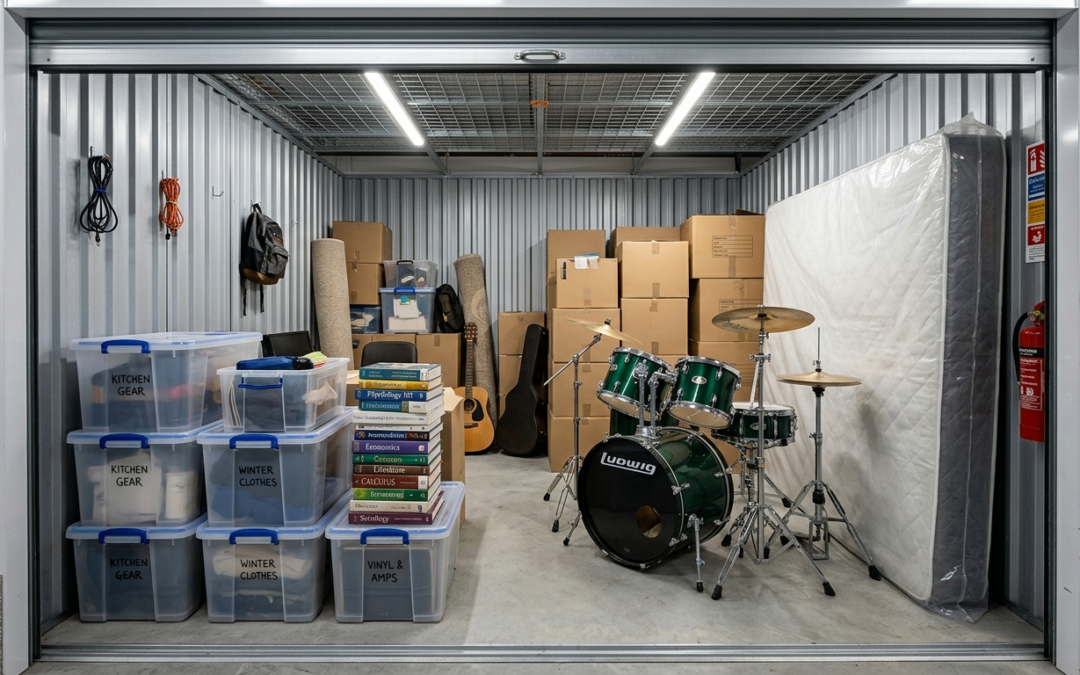
The furniture is the obvious candidate for storage. A standard 50 sq ft unit, roughly the size of a large garden shed, easily holds a double bed frame, a desk, a bookshelf, a chest of drawers, and several boxes. That is enough to furnish a one-bedroom flat when the time comes.
You can arrange secure personal storage space for seasonal items too. Winter sports gear in June, camping equipment they will not use until summer, or the bicycle they are not riding whilst job hunting. These items take up space without adding value during their stay.
Kitchen equipment and homeware can stay in storage until they have their own kitchen again. There is no point cramming your cupboards with duplicate pots, pans, and crockery when they are eating family meals anyway.
Here is a real-world example. A 24-year-old returning from a work placement in Germany might arrive with a shipping container’s worth of belongings. Rather than trying to fit everything into your home, they could keep their bed, desk, wardrobe, and ten boxes of possessions in a storage unit. They would have their clothes, laptop, and personal items at home. Everything else waits safely until they have secured their next rental, which typically takes two to three months.
The Conversation About Boundaries and Independence
This is not just about logistics. It is about maintaining healthy relationships during a potentially stressful time.
Using storage sends a clear, positive message: “You are welcome here, but we both know this is temporary, and we are planning for your next step.” It is fundamentally different from saying, “There is no room for your stuff,” which can feel like rejection.
It also preserves their sense of independence. When someone is 26 years old with a master’s degree and three years of work experience, moving back into their childhood bedroom can feel infantilising. However, knowing their adult possessions are safe in storage, ready for when they find their next place, maintains the psychological boundary between visiting and regressing.
Financial responsibility matters here too. If your adult child contributes to the storage costs, even partially, it reinforces that they are managing their own transition. A storage unit becomes a shared investment in their next chapter, not something you are doing for them.
Have this conversation early, ideally before they move back. Discuss what they will need at home versus what makes sense to store. Be specific about timelines. “Let us plan for three months initially, then review.” This creates accountability without pressure.
Choosing the Right Storage Solution
Not all storage suits this situation. You need something that balances cost, accessibility, and security.
Accessibility is crucial because circumstances change quickly. Your son might view a flat on Tuesday and need to collect his bed frame by the weekend. Rigid access hours or locations far from home create unnecessary stress. Look for facilities offering seven-day access and reasonable opening hours.
Security matters when storing items worth thousands of pounds. Furniture, electronics, and personal possessions accumulated over years of independent living represent significant value. The storage facility should have proper security measures including CCTV, individual unit alarms, and controlled access.
At Newbury Self Store, we often see families underestimate the volume of items returning home. A 25 sq ft unit holds around 20 to 25 boxes plus some small furniture pieces. It is enough for someone who only needs to store boxes and perhaps a desk. A 50 sq ft unit accommodates furniture for a one-bedroom flat. A 75 sq ft unit holds the contents of a two-bedroom flat.
Here is the practical test: list everything they need to store, then add 20% for the items you have forgotten about. That box of cables and electronics. The sports equipment. The collection of books. The winter coats. People consistently underestimate volume.
What to Store and What to Keep at Home
Make this decision room by room, thinking about what they will actually use during their temporary stay.
Bedroom items: They need clothes, shoes, and immediate personal items at home. Store out-of-season clothing, spare bedding, and decorative items. Their bed frame and mattress should definitely go into storage if they are using their old bedroom furniture.
Kitchen items: Store everything. They are eating at home with the family, so there is no need for their own pots, pans, crockery, or appliances. When they move out, they will have a complete kitchen setup ready to go.
Furniture: Store all of it except perhaps a desk if they need a workspace. Sofas, beds, dining furniture, bookcases; these items take up enormous space and will not be used.
Electronics: This requires judgment. Their laptop and phone stay with them obviously. But the 43-inch TV from their old flat? The PlayStation they are not currently using? The expensive speakers? These can go into storage, properly packed to prevent damage.
Hobby and sports equipment: Store anything they are not actively using. Gap year belongings like backpacks and travel gear often end up in this category. The guitar they play weekly stays home. The drum kit they haven’t touched in six months goes into storage. The road bike they ride regularly stays. The skiing equipment for a trip that is eight months away goes into storage.
Sentimental items: Photographs, university memories, collections, and personal treasures should go into storage properly packed. These items are irreplaceable but do not need to be accessed regularly.
Packing for Medium-Term Storage
This is not like packing for a house move where everything gets unpacked within days. Items might stay in storage for six months or more, so pack with longevity in mind.
Invest in proper packing materials. Cheap cardboard boxes from the supermarket disintegrate over time, especially if they are stacked. Sturdy, uniform boxes stack efficiently and protect contents better. We recommend you purchase durable packaging supplies designed for storage, including bubble wrap, packing paper, and furniture covers, to prevent damage during the months items sit waiting.
Disassemble furniture properly. Furniture storage preparation is critical for saving space and preventing damage. Bed frames, desks, and bookcases should be taken apart and packed flat where possible. Keep all screws, bolts, and assembly instructions together in labelled bags taped to the relevant furniture piece. There is nothing more frustrating than collecting a bed frame six months later and discovering you have lost the fixings.
Protect upholstered items. Sofas, mattresses, and upholstered chairs need covering to prevent dust, moisture, and potential pest damage. Furniture covers or even old sheets work well. Do not use plastic sheeting directly against fabric as it can trap moisture.
Pack electronics carefully. Original boxes are ideal, but if you do not have them, wrap electronics in bubble wrap and pack them in sturdy boxes with padding. Remove batteries from anything battery-powered to prevent corrosion.
Label everything clearly. Not just “kitchen stuff” but “Kitchen: pots, pans, utensils, kettle.” When your son is moving into his new flat and needs specific items, clear labels save hours of searching.
Create an access path. Pack the unit strategically. Items they might need sooner go near the front. Things that will stay untouched until moving day go at the back. Leave a narrow walkway if possible, so you can reach items without unpacking everything.
Managing the Transition Period
Storage is not a static solution. It is part of an active transition, and managing it well keeps everyone on track.
Set review points. After three months, have an honest conversation. How is the job search going? Are they closer to finding a place? Do they need to access anything from storage? This creates accountability without nagging.
Adjust as circumstances change. If your daughter gets a job offer earlier than expected, she might need to access her professional wardrobe quickly. If your son’s house hunt takes longer than planned, you might need to discuss extending the storage period without stress. For ease of access during these fluid times, you might want to utilise drive-up container storage for bulky items like furniture, making quick retrieval significantly easier.
Keep storage costs visible. Whether they are paying for it themselves or you are helping, knowing the monthly cost creates healthy awareness. It is motivation to keep moving forward without being punitive.
Celebrate progress. When they view flats, get job offers, or take concrete steps toward independence, acknowledge it. The goal is not to push them out but to support their transition back to independent living.
When Storage Becomes Long-Term
Sometimes temporary arrangements extend beyond initial plans. The job market might be tougher than expected. The right rental might take longer to find. Health issues, family circumstances, or economic factors can delay moves.
If storage is stretching past six months, it is worth reviewing the approach. Are they still actively working toward moving out? Have circumstances changed significantly? Is the storage solution still cost-effective?
Interestingly, we often see parents take this opportunity to clear out their own clutter. If you are clearing a home office to make space for your returning child, moving your secure business archives off-site can be a game-changer. It frees up the room for them now, and gives you a dedicated office space back when they eventually move out.
Consider whether some items should actually be sold or donated. If your son has not mentioned his drum kit in nine months and is not planning to play it in his next flat, perhaps it is time to let it go. Storage should not become an expensive way to avoid making decisions about possessions.
The Bigger Picture
Adult children returning home temporarily is increasingly normal. It is not failure; it is a practical response to housing costs, career transitions, and life changes. Managing it well means maintaining relationships, respecting boundaries, and planning actively for the next stage.
Temporary storage plays a surprisingly important role in this. It is not just about physical space. It is about preserving independence, creating healthy boundaries, and maintaining forward momentum. When your adult child knows their possessions are safe and ready for their next home, it reinforces that this return is temporary and purposeful.
The families who manage this transition best are those who communicate clearly, plan practically, and use tools like temporary storage Newbury facilities to create space, both physical and psychological, for everyone involved. Your home remains your space. Their belongings stay safe and accessible. And when the time comes for them to move into their next place, they have everything they need ready to go.
That is not pushing them away. That is supporting them forward.
If you are navigating this situation now, call 01635 581 811 or contact our team to discuss storage options that fit your family’s situation.