
 01635 581 811
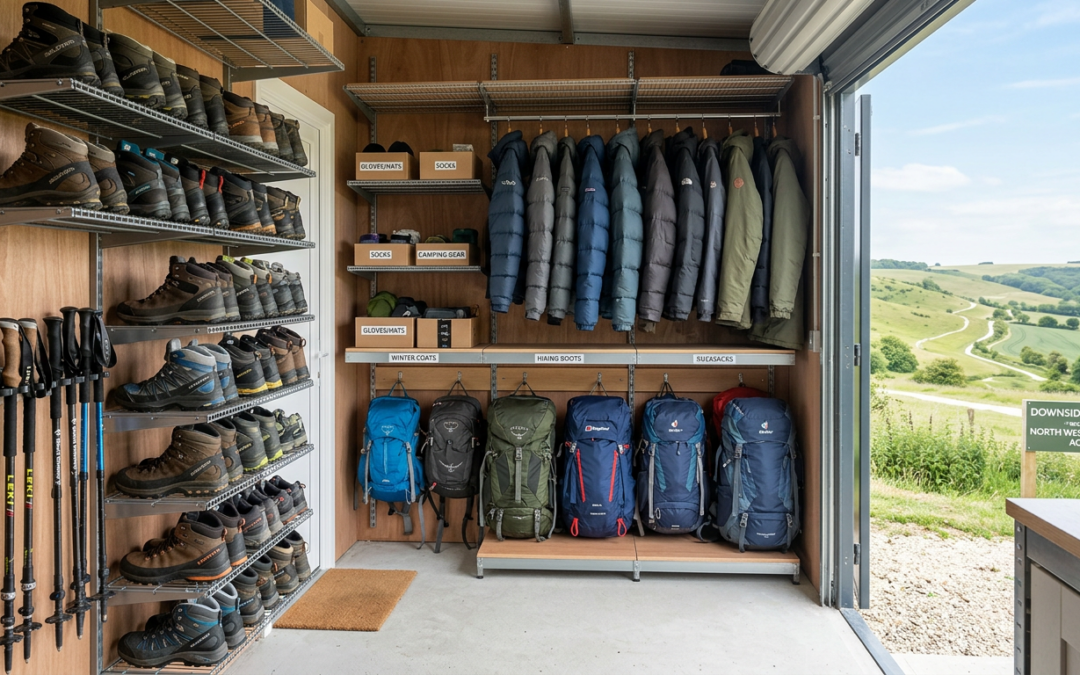
The North Wessex Downs offer some of Britain’s finest walking terrain, with ancient ridgeways, rolling chalk downlands, and panoramic views that stretch across three counties. Regular walkers in this Area of Outstanding Natural Beauty know the challenge: seasonal gear piles up quickly, and storing bulky outdoor equipment at home creates clutter that most households can’t accommodate.
Walking boots caked in mud from winter trails, lightweight summer packs, waterproof layers for autumn storms, and navigation equipment all demand proper storage between seasons. Many dedicated walkers find themselves tripping over rucksacks in hallways or cramming trekking poles behind furniture. Strategic outdoor equipment storage UK walkers invest in transforms both home space and the longevity of equipment.
Why Seasonal Gear Rotation Makes Sense For Serious Walkers
Anyone who’s tackled the Ridgeway in February knows different kit is needed than for the same route in July. Heavy-duty waterproofs, insulated layers, and winter boots serve brilliantly during cold months but become redundant when temperatures rise.
Storing off-season equipment properly extends its lifespan significantly. A quality Gore-Tex jacket costs upwards of £300, and proper storage between seasons prevents the Gore-Tex membrane degradation that happens when gear sits compressed in damp cupboards. The same applies to walking boots; leather needs to breathe, and cramming boots into overstuffed wardrobes accelerates deterioration.
The practical reality is that most North Wessex Downs walkers own enough gear to cover four distinct seasons, plus specialist equipment for specific conditions. That’s roughly six to eight rucksacks, four pairs of boots, multiple layering systems, and accessories ranging from gaiters to head torches. Keeping everything accessible at home means sacrificing considerable living space. Dedicated outdoor equipment storage UK walkers can access seasonally solves this without compromise.
What Equipment Actually Needs Off-Site Storage
Not every piece of walking gear requires removal from home. Daily essentials like current-season boots, a favourite day pack, and core clothing layers should remain easily accessible. Storage works best for bulky, seasonal-specific items that won’t be touched for months.
Winter-specific equipment that benefits from storage includes insulated jackets and heavy fleeces, winter walking boots with aggressive treads, waterproof overtrousers rated for prolonged exposure, four-season sleeping bags for wild campers, heavyweight rucksacks for winter expeditions, and ice axes and crampons for those venturing beyond the Downs.
Summer gear that clutters homes during colder months includes lightweight trekking shoes and trail runners, minimal day packs under 20 litres, sun protection clothing, summer-weight sleeping systems, and camping equipment used only in fair weather.
Specialist equipment used infrequently (navigation training materials, group walking first aid kits, landscape photography gear, spare trekking poles) also benefits from dedicated storage rather than occupying household space year-round.
The principle is the same as seasonal tyre rotation on a car. The right tools for the right conditions, with everything else stored properly until needed.
Preparing Equipment For Storage
Storing dirty, damp gear creates problems discovered months later when it’s retrieved. Mould growth, persistent odours, and material degradation happen surprisingly quickly when equipment enters storage in poor condition.
Walking boots and footwear should have all dried mud removed with a stiff brush, then cleaned with appropriate products for the material. Leather boots need conditioning with dubbin or specialist leather care products before storage. Stuff boots with newspaper or boot trees to maintain shape, and never store them in sealed plastic bags; leather and synthetic materials both need air circulation.
Waterproof jackets and trousers should be washed according to manufacturer instructions, typically with technical wash products rather than standard detergent. A reproofing treatment should be applied before storage, not after retrieval. Hang garments on proper hangers rather than folding them, as creases can compromise waterproof membranes over time. Gore-Tex membrane degradation accelerates when garments are folded with residual dirt pressing against the membrane surface.
For rucksacks and bags, empty every pocket and compartment. Vacuum out debris, wipe down with a damp cloth, and ensure everything’s completely dry. Leave zips partially open during storage to prevent the teeth from seizing.
I once helped a fellow walker who’d stored a rucksack without checking the main compartment. Six months later, they discovered a forgotten sandwich had created a mould colony that ruined the pack’s internal coating. The lesson stuck: always check every pocket before sealing anything away for the season.
Climate Considerations For Outdoor Equipment
Not all storage environments suit technical outdoor gear equally. The materials in modern walking equipment, from Gore-Tex membranes to EVA midsole compounds in boots, respond differently to temperature and humidity variations.
Temperature stability matters more than most people expect. Extreme heat degrades adhesives in boot construction and can damage waterproof coatings on jackets. Freezing temperatures aren’t ideal either, particularly for equipment with EVA midsole compounds that become brittle in sustained cold. A consistent, moderate temperature preserves gear integrity far better than fluctuating conditions.
Humidity control prevents the two main enemies of stored outdoor equipment: mould growth and material degradation. Leather boots particularly suffer in damp conditions, developing mildew that’s difficult to remove completely. Using a boot tree during storage helps maintain shape while allowing air circulation that reduces moisture retention. Synthetic materials fare better but still benefit from dry storage environments.
Standard storage facilities maintain conditions that protect outdoor equipment throughout off-seasons. The consistent environment prevents the condensation cycles that occur in garden sheds or garage spaces, where temperature swings create moisture problems.
Organising Gear For Easy Seasonal Swaps
The best storage system allows seasonal equipment swaps to happen quickly when weather patterns shift. Nothing’s more frustrating than needing winter boots for an unexpected cold snap and discovering they’re buried beneath summer camping gear.
Create seasonal containers using clear plastic boxes that allow contents to be identified without opening them. Label each box clearly with the season and general contents: “Winter 2024, Boots and Heavy Layers” provides instant clarity.
Group by activity type rather than just season. Day walks and overnight wild camping require separate equipment sets. Day walking gear for summer can live in one container while camping-specific items occupy another.
Keep an inventory list in each container and maintain a master list at home. Simple spreadsheets work perfectly, noting the item, condition when stored, and any maintenance needed before next use. Store footwear separately from clothing and fabric items. Boots and shoes, even when cleaned, can transfer odours to clothing.
Think of the storage unit like a well-organised gear shop where the walker is both customer and stockkeeper. Efficient organisation means retrieving what’s needed quickly without disrupting everything else.
Protecting High-Value Technical Equipment
Many North Wessex Downs walkers invest significantly in quality gear. A full seasonal wardrobe of technical clothing, multiple pairs of specialist boots, and navigation equipment can easily represent £2,000 to £3,000 in value. Proper outdoor equipment storage UK walkers rely on protects this investment.
GPS devices and electronics should have batteries removed before storage to prevent corrosion from battery leakage. Store devices in their original cases or padded pouches. Keep instruction manuals and charging cables with the devices.
Binoculars and camera lenses need protection from both physical damage and environmental factors. Silica gel packets in storage containers absorb moisture that could fog lenses or encourage fungal growth on optical coatings.
Paper maps and guidebooks suffer in damp conditions but also deteriorate in excessively dry environments. Flat storage in archive-quality boxes preserves maps better than rolled storage, which creates permanent creases.
The packaging materials designed for storage include options specifically suited to protecting valuable equipment. Bubble wrap, foam sheets, and sturdy boxes prevent the accidental damage that occurs when items shift.
Space Requirements For Different Collection Sizes
How much storage space does a typical walker’s seasonal gear actually require? The answer varies based on walking frequency and ambition.
Casual walkers with basic seasonal rotation needs typically manage with 2 to 3 medium boxes for clothing, 1 box for footwear, and 1 small box for accessories. This collection fits comfortably in approximately 10 to 15 square feet of personal storage space.
Regular walkers covering the North Wessex Downs frequently across all seasons usually accumulate 4 to 6 large boxes for clothing, 2 for footwear, 1 to 2 for rucksacks, and 1 for specialist equipment. This requires roughly 25 to 35 square feet.
Serious enthusiasts combining local walking with expedition-level trips might need 8 to 10 large boxes for clothing, 3 to 4 for footwear including mountaineering boots, 2 to 3 for rucksacks, and 2 to 3 for camping and safety equipment. These collections demand 50 to 75 square feet.
The flexibility of personal storage facilities means starting small and adjusting as walking ambitions grow, without being locked into oversized spaces that waste money.
Accessing Gear When Weather Patterns Shift
British weather rarely follows calendar-defined seasons precisely. Winter gear might be needed during an unseasonably cold May, or lightweight layers during a mild February. Storage arrangements should accommodate these unpredictable requirements.
Flexible access becomes crucial when weather forecasts change walking plans. Drive-up storage options at Newbury Self Store allow retrieving specific items without carrying bulky equipment through corridors and stairwells.
Strategic packing means placing items most likely to be needed early at the front of the storage space. If winter gear goes into storage in April, the heaviest waterproofs and warmest layers should be positioned where they can be grabbed quickly if spring turns unexpectedly cold.
Partial retrieval works better than all-or-nothing seasonal swaps. Keep a mental note of which box contains transitional layers, the items that work across multiple seasons. These might stay accessible while the truly seasonal-specific gear rotates.
Combining Equipment Storage With Other Seasonal Items
Most households don’t just accumulate walking gear. Camping equipment, cycling kit, and other outdoor pursuits create similar storage challenges. Combining these items in one storage solution makes practical and financial sense.
Camping equipment used for overnight walks or car camping trips complements walking gear storage perfectly. Tents, sleeping mats, and cooking equipment occupy space for much of the year, particularly for those who only camp during warmer months.
Cycling gear follows similar seasonal patterns. Winter cycling clothing, spare bikes, and maintenance equipment all benefit from the same storage conditions that protect walking kit.
Garden furniture and seasonal home items can share space with outdoor equipment. Adding patio furniture during winter months maximises the value of the storage investment. The key is maintaining organisation; walking equipment should stay grouped together.
Long-Term Gear Management Strategies
Serious walkers don’t just buy equipment and use it until it fails; they maintain, rotate, and upgrade strategically. Proper storage supports this long-term approach.
Annual equipment audits become easier when gear is organised in storage. During seasonal swaps, inspect each piece for wear, damage, or maintenance needs. Note boots that need resoling, jackets requiring reproofing treatment, or rucksacks with failing buckles.
Equipment retirement prevents the accumulation of unusable gear. If boots have reached the end of their viable life during a spring audit, dispose of them rather than storing them for another six months. Storage space shouldn’t become a graveyard for equipment that will never be used again.
Upgrade timing often coincides with seasonal transitions. Spring sales offer excellent opportunities to replace winter gear before storing it, while autumn discounts help upgrade summer equipment. Buying off-season and storing new gear until needed saves money while ensuring reliable equipment is available when required.
When Storage Becomes Essential Rather Than Optional
Some life circumstances transform outdoor equipment storage UK households manage from a convenience into a necessity. Downsizing or moving house creates immediate storage needs; removing bulky outdoor equipment improves how rooms present to potential buyers.
Home renovations that disrupt storage areas force temporary solutions. Dedicated storage keeps equipment accessible while protecting it from building dust and potential damage.
Life transitions like adult children returning home temporarily or caring for elderly relatives reduce available household storage. Growing collections eventually outpace even generous home space; there’s no shame in acknowledging that a hobby has outgrown the available room.
Making Storage Work For Walking Groups
Many North Wessex Downs walkers participate in organised rambling groups or informal walking clubs. These groups often accumulate shared equipment that needs storage between outings.
Group first aid kits, emergency equipment, and navigation backup devices require secure storage accessible to multiple members. Event materials for organised walks (signage, registration equipment, promotional materials) occupy space year-round despite infrequent use.
Business storage solutions work perfectly for walking groups operating as informal organisations. The flexible access and security features protect shared equipment while allowing authorised members to retrieve items as needed. For groups with substantial shared equipment, container storage offers the space to keep everything in one accessible location.
Why Seasonal Storage Protects Your Walking Investment
The North Wessex Downs will continue offering exceptional walking opportunities throughout every season, and serious walkers will keep accumulating the specialised gear needed to enjoy these landscapes comfortably. Managing this equipment collection needn’t mean sacrificing home living space or watching expensive technical gear deteriorate in unsuitable conditions.
Seasonal equipment rotation protects the investment in quality walking gear while keeping homes organised and clutter-free. The relatively modest cost of proper outdoor equipment storage UK walkers choose delivers returns through extended equipment lifespan, better home presentation, and the convenience of accessing exactly what’s needed when weather conditions demand it.
Walking boots deserve better than mouldering in a damp garage, and families deserve living space that isn’t dominated by rucksacks and waterproofs.
To discuss storage solutions matched to specific walking equipment requirements, call 01635 581 811 orget in touch for practical advice on seasonal gear management.