
 01635 581 811
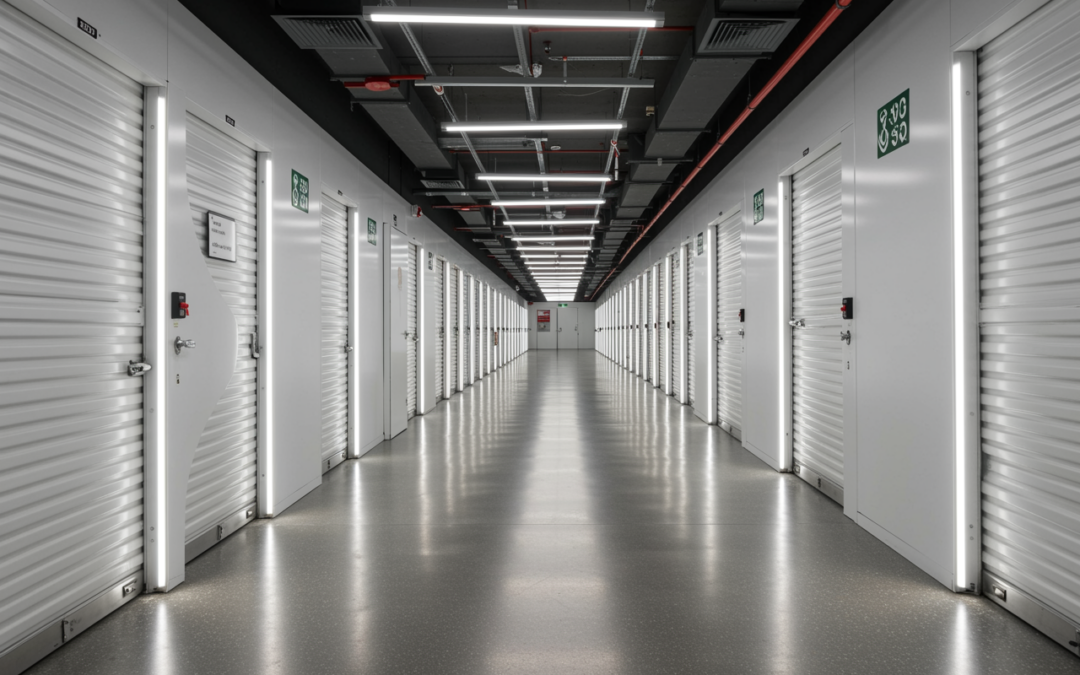
The self-storage industry is not exactly known for its green credentials. Rows of metal units, concrete floors, and round-the-clock lighting do not immediately conjure images of environmental responsibility. However, the sector is changing, and the gap between sustainable self storage UK facilities and traditional ones is widening fast.
For customers, this matters more than you might think. The environmental footprint of storing your belongings extends beyond the obvious; it is not just about the building itself, but how it is powered, maintained, and operated day-to-day. Understanding these differences helps you make choices that align with your values whilst still protecting what matters most.
What Makes a Storage Facility Sustainable
Sustainable storage is not about slapping solar panels on a roof and calling it a day. It is a comprehensive approach that touches every aspect of facility design, operation, and maintenance.
Energy efficiency sits at the core. Modern sustainable facilities use energy efficient lighting systems throughout, such as LEDs combined with motion sensors that eliminate unnecessary power consumption. They also employ high-performance insulation that reduces heating and cooling demands. Some have taken this further, installing solar arrays that generate more electricity than the facility consumes, feeding surplus power back into the grid.
Water management might seem less obvious, but it matters. Rainwater harvesting systems, permeable surfaces that allow natural drainage, and drought-resistant landscaping all reduce environmental impact. Traditional facilities often feature expansive concrete lots that channel every drop of rain into storm drains, overwhelming local water systems during heavy weather.
Material choices during construction separate the truly sustainable from the superficially green. Recycled steel, low-VOC paints, sustainably sourced timber, and concrete with recycled aggregate content all contribute. The building materials in a traditional facility might last decades, but they will sit in landfills for centuries after demolition.
Climate control technology has evolved dramatically. Modern systems use variable-speed compressors and smart thermostats that adjust based on actual conditions rather than running constantly. They maintain the stable environment your belongings need whilst consuming a fraction of the energy older systems require.
The Traditional Facility Blueprint
Walk into a storage facility built twenty years ago, and you will encounter a different world. Strip lighting hums overhead in corridors whether anyone is there or not. Climate control systems run at full capacity regardless of occupancy or outdoor temperature. Insulation meets minimum building codes from decades past, forcing heating and cooling systems to work harder.
These facilities were not built with malice toward the environment; they simply reflected the priorities and knowledge of their time. Energy was cheaper, climate concerns less pressing, and the technology for efficient alternatives had not matured.
Lighting alone reveals the gap. A traditional facility might use fluorescent tubes throughout, consuming significant power and requiring frequent replacement. Each failed tube adds to landfill waste, and the mercury content poses disposal challenges. Multiply this across hundreds of units and common areas, and the environmental cost accumulates quickly.
Ventilation systems in older facilities often rely on basic air circulation that does not adapt to conditions. They move air whether it is needed or not, consuming energy without optimising for actual requirements. Modern facilities use sensors to detect humidity and temperature, adjusting airflow precisely where and when it is needed.
Energy Consumption: The Numbers Tell the Story
Here is where sustainable and traditional facilities diverge most dramatically. A conventional storage facility might consume 15 to 20 kWh per square metre annually. A purpose-built sustainable facility can reduce this to 8 to 10 kWh per square metre, sometimes less.
That difference compounds. For a medium-sized facility of 5,000 square metres, we are talking about 35,000 to 60,000 kWh saved annually. That is equivalent to the annual electricity consumption of roughly six average UK homes.
Solar generation changes the equation entirely. A facility with adequate roof space can install arrays generating 100 to 200 MWh annually, potentially achieving net-zero or even net-positive status. Traditional facilities, lacking this infrastructure, remain entirely dependent on grid power.
LED retrofits alone can cut lighting energy by 60% to 75%. Motion sensors add another 20% to 30% reduction by ensuring lights only operate when needed. These are not marginal gains; they are transformative changes that affect operational costs and environmental impact simultaneously.
Material Lifecycle and Waste Management
Think of storage facilities like enormous products with decades-long lifecycles. The materials chosen at construction determine environmental impact for the facility’s entire lifespan and beyond.
Recycled steel in modern sustainable facilities carries roughly 75% less embodied carbon than virgin steel. When you are constructing hundreds of storage units, this difference becomes substantial. Traditional facilities, built when recycled steel was less available or more expensive, carry this carbon debt throughout their existence.
Concrete presents similar choices. Modern mixes incorporating recycled aggregate, fly ash, or slag reduce embodied carbon by 30% to 40% without compromising structural integrity. Traditional facilities used standard mixes that, whilst perfectly functional, represent missed opportunities for environmental improvement.
Waste management during operation matters too. Sustainable facilities typically implement comprehensive facility waste management protocols, providing recycling stations for packaging materials and partnering with local recycling programmes. Traditional facilities often default to single-stream waste disposal, sending everything to landfill regardless of recyclability.
The packaging customers use connects to this story. Sustainable facilities often stock recycled or recyclable packing materials. We encourage customers to purchase sustainable packaging supplies rather than single-use plastics, and to reuse boxes whenever possible.
Location, Transport, and Carbon Footprint
A storage facility’s environmental impact extends beyond its four walls. Location determines how customers reach it, which affects transport emissions significantly.
Sustainable facilities often prioritise accessible locations near public transport links or cycling routes. They provide secure bike storage and electric vehicle charging points. These might seem like minor details, but they shape customer behaviour and cumulative transport emissions.
Traditional facilities frequently occupy industrial estates on city outskirts, accessible primarily by car. Every visit requires driving, adding transport emissions to the facility’s environmental footprint. Over thousands of customer visits annually, this becomes substantial.
Consider a family moving house who need to secure personal storage space during the transition. If that unit is a 20-mile round trip by car, each visit generates roughly 6 to 8 kg of CO2. Multiply this across all customers, and location-driven transport emissions can exceed the facility’s direct operational emissions.
The Business Case for Sustainability
Storage facility operators have discovered that sustainability and profitability are not opposing forces. They are increasingly aligned.
Energy-efficient facilities cost less to operate. Solar installations pay for themselves within 7 to 12 years, then generate free electricity for decades. LED lighting reduces both power bills and maintenance costs. Smart climate control cuts energy consumption whilst maintaining the protective environment customers expect.
Customer preferences are shifting too. Particularly among younger demographics, environmental responsibility influences purchasing decisions. A facility demonstrating genuine commitment to sustainability attracts customers willing to pay modest premiums for alignment with their values.
For commercial clients, this is vital. I recall a logistics manager from a local SME who came to us specifically because they needed to report on their supply chain emissions. Being able to optimise their business storage in a facility that aligned with their own carbon reduction goals was a decisive factor for them. It wasn’t just about space; it was about compliance and corporate values.
What This Means for Your Storage Decision
When you are choosing storage, environmental credentials might not top your priority list. Security, accessibility, price, and convenience probably rank higher. That is entirely reasonable.
However, sustainable facilities often excel at those priorities too. Energy efficiency reduces operating costs, creating room for competitive pricing. Modern design typically improves security and accessibility. Smart climate control technology protects your belongings more reliably than older systems.
Asking questions helps you distinguish genuine sustainability from greenwashing. Does the facility use renewable energy? Can they quantify their energy consumption? What waste management systems do they operate? How do they handle end-of-life for building materials and equipment?
Genuine sustainable facilities answer these questions readily with specific details. Vague claims about “caring for the environment” without supporting evidence should raise scepticism.
The Innovation Gap
The most exciting differences between sustainable and traditional facilities are not what exists today; they are what is possible tomorrow.
Sustainable facilities are designed for adaptation. Their electrical infrastructure can accommodate future technologies. Their building management systems can integrate new sensors and controls. Their construction allows for upgrades and improvements without major reconstruction.
Traditional facilities often face constraints. Electrical systems sized for minimal loads cannot handle significant additions. Structural limitations prevent solar installation. Building materials and methods make energy retrofits expensive and disruptive.
Battery storage is emerging as a game-changer. Facilities can store solar energy generated during the day for use during evening peak demand, reducing grid dependence further. They can participate in demand-response programmes, helping stabilise the electricity network whilst generating additional revenue.
Beyond the Building: Operational Practices
Sustainable storage extends beyond bricks, mortar, and solar panels. It is embedded in daily operations and customer interactions.
Digital processes reduce paper waste. Online account management, electronic contracts, and digital payment systems eliminate thousands of printed documents annually. Traditional facilities still relying on paper-based systems generate substantial waste that sustainable competitors have designed out entirely.
Maintenance practices matter too. Sustainable facilities use environmentally responsible cleaning products, implement preventive maintenance that extends equipment life, and dispose of waste materials responsibly. These practices might seem minor individually, but they accumulate across years of operation.
Container storage demonstrates this operational difference clearly. Sustainable facilities position units to maximise natural light and facilitate efficient access patterns. When you utilise container storage units that are laid out intelligently, you reduce the time vehicles spend idling on-site, further lowering the local carbon impact.
Making the Comparison: What to Look For
You are standing in front of two storage facilities. One claims sustainability credentials; the other does not mention environmental issues. How do you assess the real difference?
Visible indicators tell part of the story. Solar panels on the roof, energy efficient lighting systems throughout, bike racks and EV charging points, and well-insulated buildings with quality doors and seals all signal genuine investment in sustainability.
Certifications provide independent verification. BREEAM ratings, Energy Performance Certificates, and industry-specific environmental accreditations indicate third-party assessment rather than self-declared claims.
Ask about energy sources. What percentage comes from renewables? Does the facility generate its own power? How does energy consumption compare to industry averages? Legitimate sustainable operators know these numbers and share them readily.
The Cost Question
Sustainable storage sometimes costs slightly more than traditional alternatives. Sometimes it does not. The relationship between environmental responsibility and pricing is more nuanced than simple premium or parity.
Operating cost savings from energy efficiency can offset higher construction costs, allowing sustainable facilities to price competitively. Some operators choose to pass these savings to customers; others maintain market-rate pricing and enjoy higher margins that fund further improvements.
For customers, the calculation extends beyond monthly rental fees. A facility that is easier to access reduces transport costs. One with better climate control protects belongings more reliably, potentially avoiding damage-related expenses. Choosing recycled packing materials might cost the same as virgin plastic options but protects items better and reduces replacement costs.
To use an analogy, compare a sustainable facility to a modern A-rated refrigerator versus an old, inefficient model. Both keep your food cold. But the modern one runs quietly, uses a fraction of the electricity, keeps the temperature more stable, and ultimately costs you less to run while doing less damage to the planet. The function is the same; the impact is vastly different.
The Path Forward
The storage industry will not transform overnight. Traditional facilities will continue operating for decades; they are built to last, after all. But the trajectory is clear: sustainability is shifting from differentiator to expectation.
New construction increasingly incorporates environmental considerations from the design phase. Existing facilities are retrofitting where economically viable. Customer awareness is rising, creating market pressure for improvement.
At Newbury Self Store, we recognise that storage decisions involve multiple factors. Environmental impact sits alongside security, accessibility, and cost in your decision-making process. Understanding how facilities differ in their environmental approaches helps you make choices that align with your priorities.
Whether you need storage for a house move, business inventory, or life transition, the facility you choose reflects your values. The environmental difference between sustainable and traditional options is significant, and it is a difference worth considering as you make your decision.
If you are looking to make a choice that aligns with your environmental values, call 01635 581 811 or contact our team to discuss how our facilities operate.