
 01635 581 811
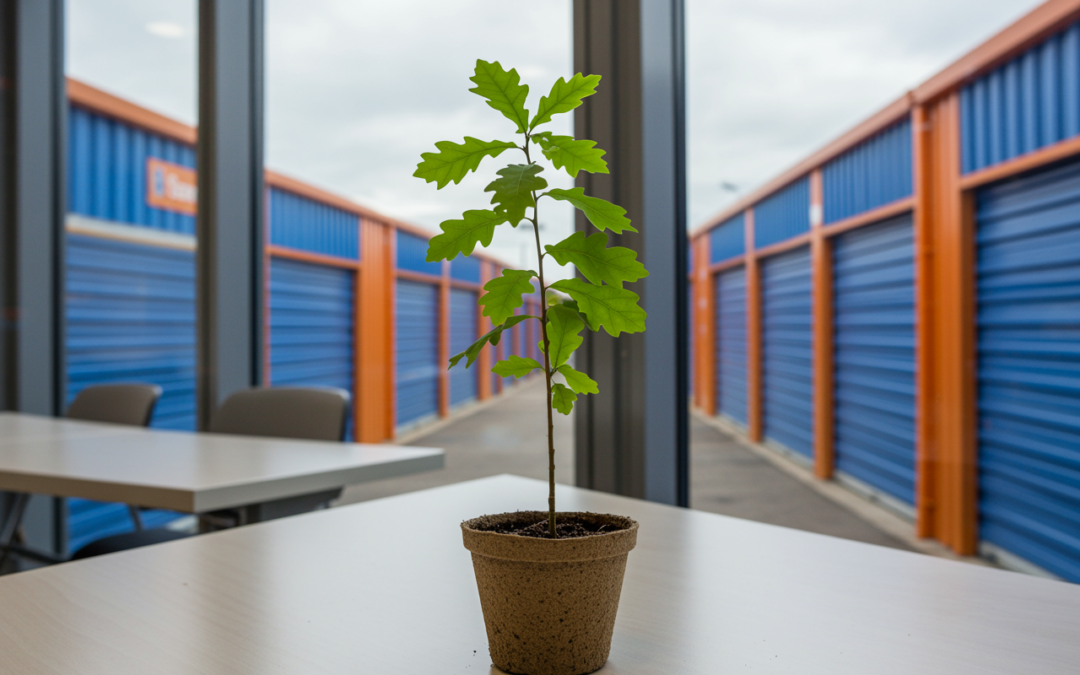
Every storage unit rented at a progressive facility can directly fund the planting of 50 trees each month through a partnership with Ecologi, transforming an everyday business decision into meaningful environmental action. This represents a quantifiable commitment that has already resulted in thousands of trees planted across reforestation projects worldwide, with customers able to track the exact impact of their storage choices.
The self-storage industry traditionally has not been associated with environmental leadership. Facilities consume energy for lighting, security systems, and climate control, while the moving and storage process itself involves vehicles, packaging materials, and resource use. However, forward-thinking providers have recognised that businesses operating in the property and logistics sectors have both a responsibility and an opportunity to offset their environmental footprint while helping customers do the same.
The model works through a straightforward mechanism where the company commits funds to Ecologi’s verified tree-planting and carbon offset programme for every active storage unit. This means someone storing furniture during a house move, a student keeping belongings safe over summer, or a small business managing excess stock all contribute to global reforestation efforts without any additional cost or effort on their part.
Why Tree Planting Matters More Than You Would Think
Reforestation represents one of the most effective tools available for carbon sequestration. A single mature tree absorbs approximately 22kg of CO2 annually, while also providing habitat for wildlife, preventing soil erosion, and supporting local communities in planting regions.
The 50 trees planted monthly per storage unit might sound modest, but the mathematics become compelling quickly. A customer storing items for six months contributes to 300 trees. Someone using business storage for a year generates 600 trees. Multiply this across dozens of active units, and the collective impact reaches into the thousands annually.
These are not abstract numbers. Each tree gets planted in specific locations, from Madagascar to Nicaragua, where reforestation projects work with local communities to restore degraded landscapes. The projects prioritise native species that support biodiversity rather than monoculture plantations, ensuring genuine ecological benefit rather than just carbon accounting.
The Hidden Environmental Cost of Storage
Before exploring solutions, it is worth understanding the problem. Traditional self-storage facilities consume significant energy maintaining security lighting 24/7, powering electronic access systems, and running climate control in temperature-sensitive units. The construction of storage facilities uses concrete, steel, and other resource-intensive materials.
Then there is the customer side of the equation. Moving items into storage typically involves vehicle trips, often in larger vans or lorries. Packing materials such as cardboard boxes, bubble wrap, and plastic sheeting add to the environmental ledger. Even the manufacturing and transport of storage units themselves carries an environmental cost.
None of this means storage is inherently unsustainable. People need secure space for belongings during life transitions, and businesses require flexible inventory solutions. However, acknowledging these impacts creates the foundation for addressing them meaningfully.
How the Ecologi Partnership Actually Works
Ecologi operates as a certified B Corporation, meaning it meets rigorous standards of social and environmental performance, accountability, and transparency. The organisation pools funding from business subscribers and directs it toward verified climate projects, primarily tree planting and renewable energy initiatives.
Funds flow directly to these projects each month based on the number of active storage units. Customers do not pay extra for this; it is built into the business model as a core operational commitment rather than an optional add-on.
The transparency matters. Ecologi provides detailed reporting showing exactly where trees get planted, which projects receive funding, and the cumulative impact over time. This is not a vague promise to support environmental causes; it is a trackable commitment with measurable outcomes.
Think of it like this: choosing where to store your belongings is similar to choosing which bank to use. Both provide essentially the same service, but one might invest your deposits in fossil fuel projects whilst another funds renewable energy. The functional service you receive remains identical, but the wider impact of your choice differs dramatically.
Beyond Trees: The Broader Carbon Offset Programme
While tree planting forms the headline commitment, the partnership with Ecologi also supports carbon offset projects that deliver immediate emissions reductions. These include renewable energy installations in developing regions, methane capture programmes, and community-based sustainability initiatives.
Carbon offsetting attracts criticism when used as a substitute for reducing emissions at source. The valid concern is that companies might buy offsets whilst continuing high-emission practices unchanged. But when combined with genuine operational improvements such as LED lighting, efficient building design, and encouraging customers to consolidate trips, offsetting becomes part of a comprehensive approach rather than a fig leaf.
The key distinction lies in additionality, meaning these projects would not happen without the funding. A wind farm in India or a clean cookstove programme in Kenya requires capital that carbon offset purchases provide, creating genuine environmental benefit beyond what would occur naturally.
What This Means for Personal Storage Customers
Someone storing belongings during a house move, university term, or home renovation probably is not choosing a facility primarily based on environmental credentials. Location, security, accessibility, and price typically dominate the decision. But knowing your personal storage choice contributes to reforestation adds a meaningful dimension without compromising on practical requirements.
Consider a common scenario: a family downsizing from a four-bedroom house to a smaller property whilst children are at university. They need somewhere secure for furniture, family heirlooms, and belongings their kids will eventually want. Using personal storage for two or three years results in over 1,000 trees planted through their storage choice alone.
Or take a student storing belongings over summer rather than transporting everything home and back again. The storage solution already reduces vehicle emissions compared to multiple long-distance trips. The tree-planting commitment adds further environmental benefit, making the practical choice also the sustainable one.
The Business Storage Environmental Advantage
Small businesses and e-commerce retailers using storage for inventory, equipment, or archives often maintain units long-term. A business keeping a unit for five years contributes to 3,000 trees planted, which is a small forest’s worth of environmental impact from a routine operational decision.
This matters particularly for businesses trying to improve their own green business credentials. Supply chain emissions and logistics represent significant portions of most companies’ carbon footprints. Choosing business storage that actively offsets environmental impact helps businesses reduce their overall footprint whilst meeting practical storage needs.
There is also a customer-facing dimension. Businesses increasingly face questions from clients about sustainability practices. Being able to point to concrete actions, including storage choices that fund reforestation, strengthens environmental credentials with evidence rather than vague commitments.
The Packaging Paradox and How to Navigate It
One tension in sustainable storage involves packing materials. Properly protecting belongings requires boxes, bubble wrap, and cushioning materials. But these items, particularly plastic-based products, carry environmental costs.
We address this through a range of sustainable packaging materials, which includes recycled and recyclable options. Cardboard boxes can be reused multiple times or recycled after use. Biodegradable packing peanuts replace polystyrene alternatives. Even bubble wrap now comes in recyclable varieties.
The approach here mirrors the overall philosophy: do not avoid necessary materials, but choose the most sustainable options available. Someone storing a collection of china plates should not skip bubble wrap and risk breakage; that is wasteful in a different way. But they can choose recyclable packaging and reusable boxes, reducing environmental impact whilst still protecting belongings properly.
Here is a practical approach: when preparing items for storage, prioritise reusable containers over single-use packaging where possible. Plastic storage boxes with lids can be used repeatedly. Old blankets and towels make excellent cushioning for furniture. Newspaper works well for wrapping dishes. Then supplement with purchased materials only where necessary.
Climate Control and Energy Efficiency
Some items genuinely require a climate-controlled environment, such as documents, electronics, musical instruments, and certain furniture types that suffer damage from temperature and humidity fluctuations. But climate control consumes energy, creating an environmental trade-off.
Modern facilities minimise this impact through efficient HVAC systems, proper insulation, and zoned climate control that targets specific units rather than entire buildings. LED lighting throughout the facility dramatically reduces electricity consumption compared to older fluorescent or halogen systems.
The tree-planting commitment helps offset the unavoidable energy use that comes with operating a secure, accessible storage facility. It is not about pretending storage has zero environmental impact; it is about acknowledging the impact and taking measurable steps to counterbalance it.
Accessibility Without Excess: The Container Storage Approach
For customers needing to store substantial volumes, perhaps the entire contents of a house during an extended renovation or relocation, container storage offers an efficient solution. Drive-up access means fewer trips moving items from vehicle to storage unit, reducing fuel consumption and time spent.
The efficiency extends to space utilisation. A well-packed container maximises storage density, meaning fewer total units needed for the same volume of belongings. This translates to reduced facility footprint per item stored and lower overall environmental impact.
Think of it like shipping logistics: consolidating cargo into fewer, fuller containers proves more efficient than numerous partially-filled ones. The same principle applies to personal storage. Using appropriately-sized units and packing them efficiently reduces the total facility space required, which in turn reduces the building’s environmental footprint per customer.
The Compound Effect of Collective Action
Individual environmental actions often feel insignificant, as one person’s choices barely register against global emissions. But storage facilities serve hundreds of customers simultaneously, creating collective impact that transcends individual contributions.
When dozens of active storage units each fund 50 trees monthly, the facility’s total contribution reaches thousands of trees annually. Customers participate in reforestation at a scale impossible for most individuals acting alone, without any additional effort or cost beyond their standard storage fees.
This represents a model worth examining more broadly. Businesses that build environmental action into their operational structure enable customers to participate in sustainability efforts seamlessly. You do not need to research tree-planting charities, set up monthly donations, or track your contribution; it happens automatically through a service you are using anyway.
Measuring Impact Beyond Marketing Claims
Environmental claims in business marketing often prove difficult to verify. Companies claim to be “eco-friendly” or “committed to sustainability” without providing measurable evidence. The difference with the Ecologi partnership lies in transparency and specificity.
The commitment is not “we support environmental causes,” but rather “we plant 50 trees monthly per storage unit through Ecologi.” The organisation is not vague; it is a certified B Corporation with public reporting. The impact is not theoretical; it is tracked with specific project locations and cumulative totals. This specificity matters because it enables verification. Customers can research Ecologi’s certification, examine project details, and confirm the claims match reality. That transparency builds trust in a way vague environmental statements never can.
Making Storage Choices That Align With Values
Most people do not wake up thinking about the environmental impact of their storage decisions. They are focused on immediate concerns: keeping belongings safe during a house move, finding space for business inventory, or storing furniture whilst renovating. But increasingly, people want their everyday choices to align with their values. The challenge lies in finding options that do not require sacrificing convenience, security, or affordability for the sake of environmental considerations.
Newbury Self Store solves this tension. You get the same secure, accessible storage you would find elsewhere, but your choice automatically contributes to reforestation efforts without extra cost or complexity. The practical requirements get met whilst also supporting environmental action.
It is similar to choosing renewable energy for your home. The electricity powers your lights and appliances identically whether it comes from coal or solar, but one choice supports cleaner energy infrastructure. Storage works the same way: the unit protects your belongings identically, but one choice also plants trees.
The Future of Sustainable Storage
The self-storage industry continues evolving toward greater sustainability. Solar panels on facility roofs, electric vehicle charging stations, rainwater harvesting, and advanced insulation all reduce environmental impact at the operational level.
But the tree-planting partnership represents something different: a recognition that even optimised operations carry some environmental cost, and that businesses can take responsibility for offsetting those impacts whilst delivering value to customers.
This model could expand further. Imagine storage facilities that generate surplus solar energy and feed it back to the grid, partnerships with local environmental organisations for habitat restoration projects, or customer incentives for using electric vehicles when moving items into storage.
The foundation lies in treating environmental responsibility as integral to business operations rather than a marketing afterthought. When sustainability becomes embedded in the business model, funded through normal operations rather than depending on customer opt-ins or premium pricing, it achieves scale and consistency that voluntary programmes rarely match.
Making Your Storage Choice Count
When you need eco friendly storage Newbury residents find that the decision ultimately rests on practical factors: location relative to your home or business, unit sizes available, security features, access hours, and pricing. Environmental considerations probably will not override these fundamentals, nor should they.
But when comparing facilities that meet your practical requirements similarly, knowing one choice contributes to reforestation whilst another does not provides a meaningful tiebreaker. You are getting secure storage either way, but one option also plants 50 trees monthly throughout your rental period.
That is the power of businesses building environmental action into their operational structure. You do not compromise on practical needs or pay premium prices for the privilege of environmental contribution. You simply choose a facility that has made sustainability part of how it operates, and the impact follows automatically.
If you are looking for secure, accessible storage that also contributes to global reforestation efforts, call 01635 581 811 or contact our team to discuss unit sizes and availability. Your storage needs get met whilst your choice plants trees monthly, offering practical solutions that create environmental impact beyond the immediate transaction.