
 01635 581 811
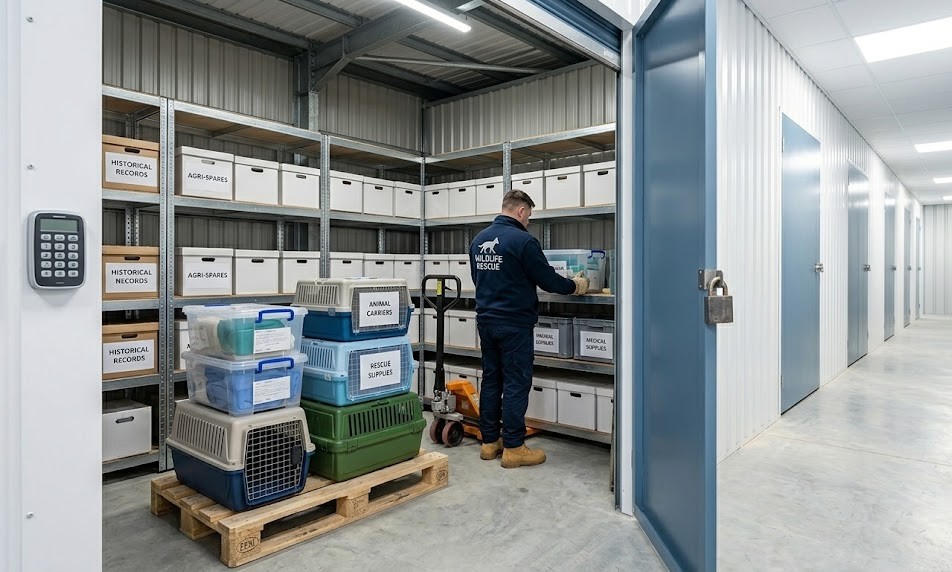
When a hedgehog arrives at a wildlife rescue centre with a severe laceration, or an owl’s brought in suffering from suspected poisoning, the difference between life and death often comes down to having the right medical supplies immediately to hand. Unlike veterinary practices with predictable patient loads and ordered supply chains, wildlife rescue organisations face unpredictable surges in admissions, seasonal variations in species needs, and the constant challenge of storing everything from avian anaesthetics to specialised feeding tubes in limited space.
The reality for most wildlife rescue operations is that they’re working from converted outbuildings, spare rooms, or purpose-built facilities that quickly become overwhelmed by the sheer volume of equipment required. Medical supplies alone can range from syringes and antibiotics to incubators and oxygen concentrators. Add rehabilitation equipment, feeding supplies, cleaning products, and the administrative paperwork that accompanies every rescue, and space becomes a critical operational concern through proper wildlife rescue equipment storage.
The Unique Storage Challenges Facing Wildlife Rescue Operations
Wildlife rescue organisations operate under constraints that would challenge even the most organised facilities – like trying to run a hospital emergency department from a garden shed with constantly changing patient needs. Medical supplies must remain sterile and within specific temperature ranges. Equipment needs to be accessible during emergency admissions at any hour. Seasonal variations mean that what’s essential in spring (when baby birds flood in) differs dramatically from autumn requirements (when hedgehogs prepare for hibernation).
Consider the case of a small rescue organisation near Newbury that operates from a residential property. During spring, they might admit 40-50 orphaned birds weekly, each requiring specific feeding equipment, heat sources, and housing. By late summer, their focus shifts to hedgehogs and small mammals, requiring entirely different medical supplies and rehabilitation equipment. Without proper storage solutions, they found themselves constantly reorganising their limited space, wasting precious time searching for supplies during emergencies.
The problem compounds when organisations receive bulk donations or purchase supplies at discounted rates. A pallet of paper towels or a year’s supply of syringes represents significant savings, but only if there’s somewhere appropriate to store them. Many rescue operations have reluctantly turned down generous donations simply because they lack the physical space to accommodate them safely.
Medical Supply Management and Temperature Control
Pharmaceutical products and certain medical supplies demand specific storage conditions that many rescue facilities struggle to maintain. Antibiotics, anti-inflammatory medications, and vaccines typically require refrigeration between 2-8°C. Other supplies, such as IV fluids or certain wound care products, need consistent cool storage but not refrigeration. Storing these items in domestic fridges alongside food creates contamination risks and often violates health and safety guidelines.
Temperature fluctuations pose particular problems. A converted garage might seem adequate until summer temperatures exceed safe storage limits for medications, or winter cold compromises the integrity of certain supplies. Organisations have lost hundreds of pounds worth of medications because storage areas lacked proper temperature regulation.
Requirements include consistent temperature maintenance year-round, separation of pharmaceutical products from general supplies, protection from direct sunlight and moisture, security to prevent unauthorised access to controlled substances, and clear organisation systems for stock rotation.
Think of medical supply storage like a pharmacy rather than a cupboard. Every item needs a designated location, expiry dates must be visible and monitored, and access should be controlled yet efficient during emergencies. When a volunteer arrives with an injured bird of prey at midnight, they shouldn’t need to hunt through multiple storage areas to find the right medication.
Rehabilitation Equipment and Seasonal Storage Demands
Beyond medical supplies, wildlife rescue organisations accumulate substantial rehabilitation equipment that varies dramatically by season. Spring and early summer demand incubators, brooders, heat lamps, and specialised feeding equipment for dozens of baby birds. Autumn brings hedgehog housing, heat pads, and hibernation boxes. Year-round, organisations maintain cages, carriers, scales, and cleaning equipment for various species.
The seasonal nature of this equipment creates a storage puzzle. Items essential in March become redundant by September, yet they’ll be desperately needed again the following spring. Storing bulky incubators and brooders on-site year-round consumes valuable space that could be used for active rehabilitation areas.
One organisation calculated that nearly 40% of their facility space was occupied by seasonal equipment during off-peak periods. By relocating out-of-season equipment to personal storage, they freed up enough space to add two additional rehabilitation enclosures, directly increasing their capacity to help wildlife.
Creating Efficient Inventory Systems
Wildlife rescue operations function most effectively when every team member knows exactly where to find any item, regardless of whether they’re a seasoned volunteer or someone helping during an emergency. This requires inventory systems that go beyond simply knowing what supplies exist – they must indicate precise locations, quantities, and expiry dates.
Professional rescue organisations implement systems similar to those used in medical facilities. Each category of supplies receives a designated storage zone, with high-turnover items (such as gloves, syringes, and gauze) kept in easily accessible areas. Less frequently used equipment, such as specialised surgical instruments or seasonal rehabilitation supplies, can be stored further away or off-site.
Key elements include categorising supplies by use frequency and type, implementing first-in-first-out rotation for dated items, creating detailed location maps for all volunteers, regular audits to prevent overstocking or shortages, and digital tracking systems for high-value or controlled items.
The analogy here’s similar to organising a kitchen. You wouldn’t store your everyday plates in the loft whilst keeping your fondue set on the counter. High-frequency items need prime real estate, whilst specialised equipment that’s used occasionally can occupy less accessible storage.
Security Considerations for Controlled Substances
Wildlife rescue organisations that hold veterinary medications face strict legal requirements around controlled substance storage. Certain pain medications, sedatives, and anaesthetics must be stored in locked cabinets with restricted access and detailed usage logs. These regulations exist for good reason, but they create additional storage challenges for organisations already struggling with space constraints.
The requirement for locked, secure storage extends beyond controlled substances. Expensive equipment such as microscopes, surgical instruments, and diagnostic tools represents significant investment that needs protection from theft or damage. Insurance policies often stipulate specific security measures for high-value items, which may exceed what’s practical in a typical rescue facility.
Off-site storage can address security concerns whilst maintaining accessibility. By storing backup supplies, seasonal equipment, and archived records in secure storage units, organisations reduce the risk of losing everything to a single incident whilst keeping their working facility focused on active rescue operations.
Administrative Records and Legal Documentation
Every animal admitted to a wildlife rescue generates paperwork. Admission records, treatment logs, outcome documentation, and release records must be maintained for legal and funding purposes. Many organisations are required to keep these records for seven years or longer, and the volume accumulates rapidly.
A rescue admitting 500 animals annually creates thousands of pages of documentation. Add financial records, volunteer agreements, insurance documents, and correspondence with regulatory bodies, and the paper trail becomes substantial. Digital records help, but many organisations maintain physical backups or deal with historical records that predate digital systems.
Storage of administrative records requires protection from moisture, pests, and deterioration whilst remaining accessible for audits or reference. Storing archived records off-site makes practical sense, freeing up workspace whilst ensuring documents remain secure and retrievable when needed.
Practical Solutions for Equipment and Supply Storage
Wildlife rescue organisations benefit from strategic approaches to storage that separate active working supplies from backup stock and seasonal equipment. The working facility should contain only what’s needed for current operations, with everything else stored efficiently elsewhere.
Consider this three-tier storage approach:
Tier One – Active Working Stock: Items used daily or weekly remain in the rescue facility in clearly labelled, easily accessible locations. This includes current medications, frequently used equipment, and supplies for species currently in care.
Tier Two – Backup and Bulk Supplies: Excess stock purchased in bulk, backup equipment, and supplies for anticipated seasonal needs can be stored off-site in business storage units. These items are accessed monthly or as needed to replenish working stock.
Tier Three – Seasonal and Archived Items: Equipment used only during specific seasons, along with archived records and historical documentation, occupies long-term storage. These items might be accessed once or twice annually.
This tiered approach ensures that working space remains uncluttered and efficient whilst maintaining access to everything the organisation needs. It’s similar to how you might store your wardrobe – current season clothes stay in your bedroom, off-season items go in the spare room, and rarely worn formal wear might be stored in the loft.
Preparing Supplies for Storage
Medical supplies and equipment require proper preparation before storage to ensure they remain usable and uncontaminated. Clean, dry equipment prevents mould growth and contamination. Proper packaging protects delicate instruments and maintains sterility for sealed items.
Equipment should be cleaned according to manufacturer specifications before storage. Metal instruments benefit from light oiling to prevent rust. Electronic equipment needs protection from moisture and temperature extremes. Fabric items such as heat pads or bedding should be laundered and completely dried before storage.
Medications and pharmaceutical supplies require particular attention. Check expiry dates before storing, and rotate stock to ensure older items are used first. Keep medications in their original packaging with information leaflets intact. Store temperature-sensitive items appropriately, and never store medications where they might be exposed to extreme temperatures.
Maximising Storage Efficiency
Space efficiency becomes crucial when storing diverse equipment ranging from tiny syringes to large animal carriers. Shelving systems designed for medical or commercial use provide adjustable storage that accommodates various item sizes. Clear plastic containers protect supplies from dust and moisture whilst allowing visual inventory checks.
Vertical space often goes underutilised. Tall shelving units maximise storage capacity within a given footprint. Heavy items belong on lower shelves for safety and accessibility, whilst lighter items can occupy higher positions. Label everything clearly, including the sides and fronts of containers, so items remain identifiable regardless of shelf position.
Group similar items together logically. All wound care supplies in one area, feeding equipment in another, and cleaning supplies separately. This organisation system speeds up both storage and retrieval, reducing the time volunteers spend searching for specific items.
Planning for Growth and Changing Needs
Successful wildlife rescue organisations often find their operations expanding as word spreads and more people bring injured animals to them. This growth’s positive but creates escalating storage demands. Planning storage solutions with future expansion in mind prevents the need for frequent reorganisation or emergency space-finding missions.
Flexible storage arrangements that can scale up or down match the unpredictable nature of rescue work. A particularly challenging season might require additional space temporarily, whilst quieter periods allow for consolidation. Container storage offers flexibility for organisations with substantial equipment or those managing seasonal fluctuations in space requirements.
Regular reviews of storage needs help organisations stay ahead of space challenges. Quarterly assessments of inventory levels, equipment condition, and space utilisation identify problems before they become critical. These reviews also highlight opportunities to dispose of obsolete equipment or supplies that are no longer useful.
The Real-World Impact of Organised Storage
When wildlife rescue organisations implement effective storage systems, the benefits extend far beyond tidier facilities. Volunteers spend less time searching for supplies and more time caring for animals. Emergency responses become faster and more efficient. The organisation can accept more animals because space’s used optimally rather than consumed by disorganised storage.
Financial benefits emerge as well. Proper storage prevents waste from expired medications, damaged equipment, or lost supplies. Bulk purchasing becomes feasible, reducing per-unit costs. Grant applications and funding requests strengthen when organisations demonstrate professional operations management, including appropriate storage and inventory systems.
Perhaps most importantly, organised storage reduces stress for everyone involved in rescue work. Wildlife rehabilitation’s emotionally demanding work, often performed by volunteers juggling rescue duties with full-time jobs and family commitments. Efficient systems that make their work easier improve retention, reduce burnout, and ultimately help more animals.
Newbury Self Store understands that wildlife rescue organisations need storage supporting life-saving operations, not generic warehouse space. You need facilities where medical supplies stay at proper temperatures, where wildlife rescue equipment storage remains organized for emergency response, and where seasonal equipment can rotate efficiently without overwhelming your working facility. We know that your rescue equipment isn’t just supplies – it’s the foundation of saving injured wildlife and returning healthy animals to their natural habitats.
Conclusion
Wildlife rescue organisations face unique storage challenges that directly impact their ability to save and rehabilitate animals. Medical supplies requiring specific conditions, bulky rehabilitation equipment with seasonal demand patterns, and extensive documentation requirements all compete for limited space in facilities already stretched to capacity.
Strategic storage solutions that separate active working supplies from backup stock and seasonal equipment transform rescue operations. By maintaining lean, organised working facilities whilst storing excess supplies, backup equipment, and archived records appropriately off-site, organisations maximise their effectiveness and capacity to help wildlife.
The investment in proper storage pays dividends through improved efficiency, reduced waste, enhanced volunteer experience, and ultimately, more animals successfully returned to the wild. For organisations ready to optimise their operations, evaluating current storage practices and implementing structured solutions represents one of the most impactful improvements they can make.
If your wildlife rescue organisation’s struggling with storage challenges, contact us to discuss how flexible storage solutions can support your vital work. Proper packaging protects valuable equipment during transport and storage, ensuring supplies remain ready when the next emergency call arrives.