
 01635 581 811
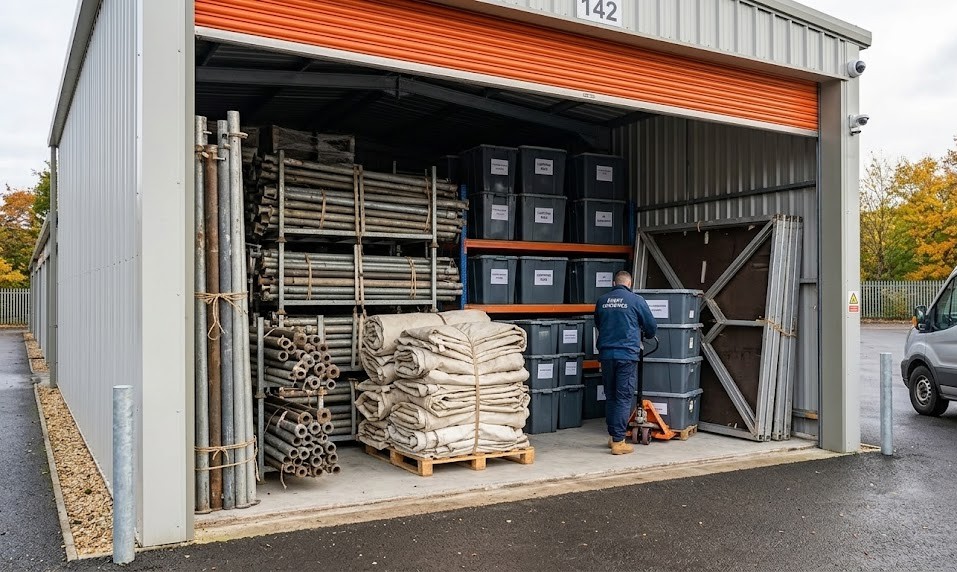
Running a rural event business means dealing with equipment that doesn’t fit in a spare room. Marquees, staging, lighting rigs, and catering gear demand serious space – and protecting these investments between events isn’t optional when your livelihood depends on them arriving at the next wedding or festival in perfect condition.
For event organisers across Berkshire, West Berkshire, and surrounding rural areas, the challenge isn’t just finding somewhere to store a 12-metre marquee. It’s about accessibility when you need to load out at 5am for a weekend booking, security that protects £20,000 worth of sound equipment, and dry conditions that prevent mildew destroying canvas that cost more than most people’s cars through proper rural event equipment storage.
Most event businesses start storing gear wherever they can – a barn, a garage, even a corner of a client’s farm. That works until it doesn’t. Equipment gets damaged by damp. Access becomes a nightmare when you’re coordinating with a farmer’s schedule. Insurance companies start asking awkward questions about security. At that point, proper storage stops being an expense and becomes a business necessity.
Why Standard Storage Fails Event Equipment
Event gear isn’t like household furniture. A three-piece suite doesn’t care if it gets a bit dusty. Your £8,000 marquee absolutely does.
Canvas and fabric structures need dry, ventilated conditions. Store a marquee in a damp barn for three months over winter, and you’ll open it to find mildew spreading across panels that should be pristine white for a summer wedding. That’s not a cleaning job – it’s replacement panels at £300-500 each.
Lighting and sound equipment presents different problems. Moisture causes corrosion on electrical connections. Temperature fluctuations damage sensitive electronics. One winter in the wrong storage environment can turn reliable kit into equipment that fails mid-event, which is how you lose clients and damage your reputation simultaneously.
Then there’s the access issue – like needing to access your entire wardrobe but only having the key to one drawer. Rural events don’t follow office hours. You might need to collect staging at dawn for an afternoon setup, or return equipment late on Sunday night after a weekend festival. Storage that requires booking access slots or waiting for someone to unlock a gate doesn’t work when your schedule’s dictated by client events, not your convenience.
What Event Equipment Actually Needs
Climate control matters more than most organisers initially realise. Not necessarily heated storage – although that’s ideal for electronics – but consistent, dry conditions with adequate ventilation. Canvas needs to breathe. Metal framework needs protection from condensation. Wooden staging and dance floors must avoid the moisture that causes warping.
Think of it like storing wine. You wouldn’t keep expensive bottles somewhere with wild temperature swings and high humidity. Your event equipment deserves the same consideration, especially when a single marquee represents more investment than most wine collections.
Security becomes critical once you’ve accumulated substantial kit. A basic marquee setup might be worth £15,000-20,000. Add lighting, sound equipment, staging, furniture, and catering gear, and you’re easily looking at £50,000-100,000 of business assets. That requires proper security – not just a padlock on a barn door.
Professional storage facilities offer CCTV coverage, secure perimeter fencing, individual unit alarms, and regular security patrols. When you’re making insurance claims, this documentation matters. More importantly, it prevents claims in the first place.
Flexible access separates functional storage from storage that actively supports your business operations. Events happen when clients want them – weekends, bank holidays, early mornings. Your storage needs to accommodate that reality, not restrict it.
Drive-up access makes a massive difference when you’re loading a van with 50 chairs, folding tables, and staging sections. Imagine carrying that lot from a storage unit 100 metres away through multiple doors. You’d spend an extra hour on every load-out, which matters when you’re trying to reach a venue for a midday setup.
Organizing Equipment for Quick Access
Here’s where many event businesses waste time they can’t afford to lose. Poor organisation inside your storage space turns every collection into a scavenger hunt. You need the white chair covers for tomorrow’s wedding, but they’re buried behind the staging you used last month and haven’t put away properly.
Zone your storage by equipment type and usage frequency. Keep frequently-used items near the front – standard marquee sections, popular chair styles, basic lighting rigs. Seasonal or specialist equipment can go further back. The vintage furniture you only use for three or four events per year doesn’t need prime position.
Create clear pathways through your unit. This sounds obvious until you’re trying to navigate around stacked tables at 6am before coffee. Leave enough space to move equipment safely without climbing over other gear or risking damage.
Label everything systematically. Not just “Marquee Parts” – that tells you nothing useful. Use “Marquee: 9m x 12m Frame Sections, Set A” or “Lighting: LED Uplighters, White Housings, Set 1-12”. When you’re working with staff or contractors who might need to collect equipment, specific labels prevent expensive mistakes.
Consider how you stack and store different equipment types:
- Marquee canvas: Roll tightly, store horizontally on racks or pallets, never directly on concrete floors where moisture can wick up
- Framework and poles: Bundle by section, use vertical storage racks where possible to save floor space
- Chairs and tables: Stack properly with protective padding between items, don’t exceed safe stacking heights
- Electronics: Original cases wherever possible, elevated storage to protect from potential water ingress
- Cables and accessories: Clear storage boxes with detailed labelling – nothing wastes time like untangling mystery cables
One event organiser in Reading compared good storage organisation to a professional kitchen. Chefs don’t hunt for the right pan mid-service. You shouldn’t hunt for equipment mid-season. She’d been managing events for eight years from a disorganised barn where marquee sections, chairs, and lighting equipment were jumbled together based on when they’d been returned from jobs. Finding specific items for an event required 90-120 minutes of searching and moving equipment. After implementing proper business storage with systematic organization – equipment zoned by type, shelving for smaller items, clear pathways, and detailed labelling – her collection time dropped to 20-25 minutes. That’s 70-95 minutes saved per event. Across a 40-event season, she saved approximately 47-63 hours annually – more than a full working week that she could now spend on business development, client meetings, or actually enjoying downtime between events.
Protecting High-Value Technical Equipment
Sound systems, lighting rigs, and AV equipment represent concentrated value – and concentrated vulnerability. A single touring-grade speaker might cost £2,000-3,000. A basic lighting rig for a medium event easily reaches £10,000-15,000. This gear demands specific protection.
Original cases and flight cases aren’t optional. Yes, they take up more space than stacking bare equipment. They’re still worth it. Cases protect against impacts during transport, prevent dust accumulation during storage, and make handling safer for your team. They also satisfy insurance requirements, which matters when you’re claiming for damaged equipment.
Moisture’s the silent killer of electronics. Even in apparently dry conditions, temperature fluctuations cause condensation. Store technical equipment off the floor – use racking or pallets to maintain airflow underneath. If you’re using climate-controlled storage, this becomes less critical but still represents good practice.
Maintain an accurate inventory of high-value items. Not just for insurance purposes – though that’s important – but for business planning. You need to know exactly what equipment you have, its condition, and its location. When a client requests specific gear, you should be able to confirm availability immediately, not promise to “check the storage unit tomorrow”.
Photograph equipment before and after storage, especially technical kit. If something develops a fault or shows damage, you’ll have evidence of its previous condition. This matters for insurance claims, warranty issues, and identifying when problems occurred.
Seasonal Storage Strategies
Event businesses experience dramatic seasonal fluctuations. Summer might see you running three weddings every weekend. January could be almost empty. Your storage strategy should reflect this reality rather than paying for maximum space year-round.
Consider flexible storage options that let you scale up during peak season and reduce during quieter months. Some organisers use container storage for their core equipment year-round, then add temporary units during summer when they’re holding more hired-in equipment or managing multiple events simultaneously.
Winter presents specific challenges. Equipment that’s been working hard all summer needs proper cleaning and maintenance before storage. Canvas marquees must be completely dry before packing away – storing damp fabric guarantees mildew problems. Metal framework needs checking for damage and treating any rust spots. This preparation work prevents expensive surprises when you unpack for the next season.
Use quiet periods for equipment audits. Check everything systematically. Test electrical equipment. Inspect fabric for tears or wear. Assess furniture for stability. Replace or repair items before the season starts, not when a client’s wedding’s two days away.
Insurance and Documentation Requirements
Insurance companies care deeply about how and where you store business equipment. The difference between “stored in a secure, alarmed facility with CCTV” and “kept in a barn” can mean thousands of pounds in premium differences – or the difference between a claim being paid and being rejected.
Keep detailed records of what you’re storing and where. When making insurance arrangements, provide your insurer with accurate information about storage conditions, security measures, and equipment values. Underestimating equipment value to save on premiums is false economy – you’ll be underinsured when you need to claim.
Document your storage facility’s security features. CCTV coverage, alarm systems, secure access controls, and regular security patrols all contribute to lower insurance costs. Professional storage facilities provide documentation of security measures that satisfies insurance requirements.
Photograph your equipment regularly. Maintain a digital inventory with images, purchase dates, and current values. If you need to make a claim, detailed documentation speeds up the process and improves outcomes.
Maintenance Access and Equipment Checks
Equipment doesn’t improve whilst sitting in storage. It deteriorates. Successful event businesses schedule regular maintenance visits to check stored equipment, not just when they need to collect something for an event.
Monthly checks during off-season prevent nasty surprises. Look for signs of moisture damage, pest activity, or unexpected wear. Test a sample of electrical equipment. Inspect fabric items for any developing issues. This proactive approach catches problems whilst they’re small and fixable.
Create maintenance checklists specific to your equipment types. For marquees: check canvas for mildew, inspect guy ropes and tensioning systems, verify pole sections are complete and undamaged. For technical equipment: test power supplies, check cable integrity, verify cases remain secure and protective.
Some organisers schedule “equipment days” during quiet periods – dedicated time to visit storage, conduct thorough checks, complete minor repairs, and reorganise for the upcoming season. This beats discovering problems when you’re loading out for an event.
Space Planning for Growing Businesses
Event businesses rarely stay the same size. You either grow or contract. Storage needs to accommodate that reality without locking you into expensive long-term commitments that don’t match your business trajectory.
Start with accurate space calculations. A standard marquee package (frame, canvas, weights, groundsheets) for a 12m x 18m structure requires approximately 30-40 cubic metres when properly packed. Add staging, furniture, lighting, and catering equipment, and space requirements escalate quickly.
Don’t underestimate space needs. A unit that’s packed to capacity becomes unusable. You need working room to access equipment, repack after events, and conduct maintenance. A unit that’s 80% full is actually fully utilised – the remaining 20% is functional workspace, not wasted space.
Consider future growth when selecting storage. If you’re planning to expand your equipment inventory or add new service lines, choose a facility that offers easy upgrades to larger units. Moving storage facilities is expensive and time-consuming – better to scale up within the same location.
Location and Accessibility Considerations
Where you store equipment affects operational efficiency more than most organisers realise. Storage that’s 45 minutes from your base adds 90 minutes to every collection and return journey. Over a season of 50-60 events, that’s 75-90 hours of unproductive driving time.
Balance cost against convenience. Cheaper storage that’s further away might cost more in fuel, time, and reduced flexibility than slightly more expensive storage that’s 15 minutes from your base or on the route to your most common event locations.
Rural event organisers working across Berkshire, Hampshire, Oxfordshire, and Wiltshire need storage that’s accessible from major routes without adding significant journey time. Facilities near the A34 or M4 corridor offer strategic positioning for reaching venues across the region.
Loading and unloading facilities matter enormously. Can you reverse a van or small truck directly to your storage unit? Is there adequate turning space? Are there loading bays or level access? These practical details determine whether loading takes 30 minutes or 90 minutes.
Working with Staff and Contractors
As your event business grows, you stop collecting every piece of equipment personally. Staff or contractors need access to storage, which introduces new considerations around security, organisation, and communication.
Clear systems prevent expensive mistakes. Written collection procedures, detailed equipment lists, and photographic guides help staff collect exactly what’s needed. Nothing’s worse than discovering they’ve brought the wrong marquee sections to a venue 40 miles away.
Consider access control options. Modern storage facilities offer individual access codes or key fobs that can be issued to trusted staff. This provides flexibility whilst maintaining security – you know who accessed storage and when, without needing to be present personally.
Create loading checklists for different event types. “Standard Wedding Package”, “Corporate Event Setup”, “Festival Bar Configuration” – whatever matches your business model. Staff can work through checklists systematically, reducing errors and ensuring nothing gets forgotten.
Making Storage Work for Your Business
Effective storage isn’t about finding the cheapest available space. It’s about finding conditions that protect your investment, accessibility that supports your operations, and flexibility that accommodates your business reality.
For rural event organisers, equipment represents your business capability. Damaged marquees mean cancelled bookings. Corroded sound equipment means rental costs eating into profit margins. Poor organisation means wasted time on every event. Storage that prevents these problems isn’t an expense – it’s business infrastructure that enables profitable operations.
The event businesses that thrive long-term treat storage as strategically as they treat equipment purchasing decisions. They choose facilities that offer proper protection, convenient access, and room to grow. They organise systematically, maintain equipment proactively, and document everything properly.
Newbury Self Store understands that event organisers need storage supporting complex operations, not generic warehouse space. You need facilities where marquee storage protects expensive canvas, where lighting/sound equipment remains secure, and where rural event equipment storage accommodates the dramatic seasonal fluctuations inherent to the events industry. We know that your event equipment isn’t just stock – it’s the foundation of creating memorable celebrations that clients will treasure for years.
If you’re currently storing event equipment in conditions that don’t quite work – access is awkward, security concerns keep you awake, or you’re worried about moisture damage – it’s worth evaluating proper storage solutions. The cost of professional storage’s typically less than a single damaged marquee or the time wasted on poor organisation over a season.
Personal storage solutions designed for high-value items offer the security, access, and conditions that event equipment demands. For businesses with substantial inventory, business storage provides the space and flexibility that growing operations require. When you’re ready to organise your storage properly, contact us to discuss requirements specific to your equipment and operational needs. Proper packaging materials protect equipment during storage and transport, preventing damage that costs far more than the initial investment in protection.
Your event equipment deserves storage that protects it between events and makes your business more efficient. That’s not luxury – it’s basic business sense for anyone serious about building a successful rural events operation.