
 01635 581 811
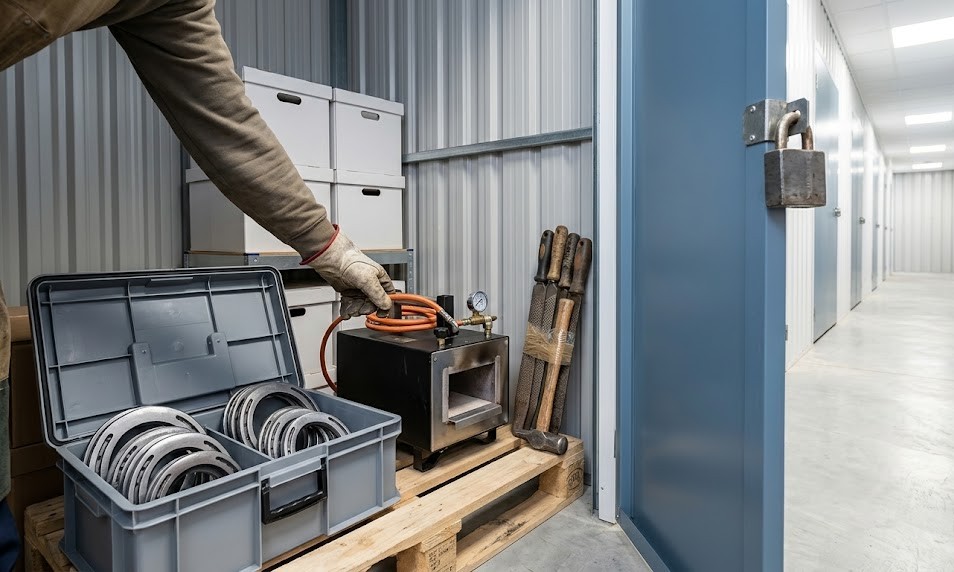
Running a farriery business means juggling more than horseshoes and hot metal. Between your portable forge, anvil, stock of shoes in multiple sizes, specialist tools, and the consumables that keep your mobile operation running, space becomes a constant challenge. Most farriers work from home, and that garage or workshop quickly fills with equipment that’s too valuable to leave unsecured but too bulky to keep tripping over.
The reality of mobile farriery work creates unique storage demands. You’re carrying substantial weight in your vehicle every day, and keeping your forge equipment properly maintained between jobs requires dry, accessible space. Add seasonal fluctuations in workload, the need to buy shoe stock in bulk to get trade prices, and the accumulation of specialist tools over years of practice, and suddenly that spare room or garden shed isn’t cutting it anymore through proper farrier mobile forge storage.
Why Farriers Need Dedicated Storage Space
Most farriers start their business storing everything at home. It seems practical at first – load the van in the morning, unload at night, keep your tools where you can see them. But this approach creates problems that compound over time.
Vehicle wear becomes a real cost. Loading and unloading a portable forge, anvil, and full complement of tools daily adds unnecessary mileage to your suspension and increases fuel consumption. Your van takes a hammering even before you’ve driven to your first client.
Home insurance complications arise. Many standard home policies don’t adequately cover commercial equipment, especially items like gas bottles and forge equipment. You’re potentially underinsured without realising it, and keeping large quantities of steel stock and flammable materials at a residential property can affect your premium or even your coverage terms.
Security concerns multiply. A van full of farrier equipment parked on your drive’s a target. Quality forge equipment, specialist rasps, and a stock of aluminium shoes represent thousands of pounds. One break-in can put you out of business for weeks whilst you replace essential tools and rebuild your stock.
Think of your storage situation like your shoeing kit – you wouldn’t try to carry every shoe size and every tool to every job. You select what you need based on the day’s work. The same principle applies to your overall storage strategy. Keep what you need for the working week mobile and accessible, and store the bulk safely elsewhere.
What Farriers Typically Need to Store
The storage requirements for a working farrier extend well beyond the basics. Here’s what actually takes up space:
Forge equipment and fuel: Your portable forge unit, gas bottles (both full and empty awaiting exchange), spare burners, and the fireproof mat you use for client driveways. Even a compact gas forge takes up significant floor space, and storing gas bottles safely requires proper ventilation and positioning away from heat sources.
Anvil and stand: A quality anvil represents a major investment and significant weight. Whether you use a traditional pattern or a modern farrier-specific design, you need secure storage where it won’t damage floors or create a trip hazard. The stand adds bulk, and many farriers keep a spare anvil for different types of work.
Shoe stock in multiple sizes: Buying shoes in boxes of 25 or 50 pairs makes economic sense, but storing that quantity properly matters. Steel shoes need to stay dry to prevent rust, and aluminium stock should be kept organised by size and type. A busy farrier might stock 10-15 different shoe patterns across various sizes – that’s potentially hundreds of pairs requiring organised, accessible storage.
Hand tools and power equipment: Your rasp collection alone represents substantial investment, and these precision tools need protection from moisture and damage. Add hammers, pritchels, nippers, clinchers, hoof knives, and the specialist tools you’ve accumulated over years of practice, and you’re looking at significant volume. Power tools like angle grinders, drills, and hoof sanders need their own space, along with spare batteries, chargers, and consumables.
Farrier truck and vehicle spares: Many farriers maintain a spare wheel, jack equipment, and vehicle recovery gear. If you’re running a purpose-built farrier truck rather than a van, you might store seasonal equipment like winter tyres or spare toolboxes.
Protective equipment and clothing: Multiple sets of chaps, aprons, and protective gloves take up more space than you’d expect. You need backups for wet weather, and leather gear requires proper storage to prevent mould and deterioration.
Administrative materials and client records: Paperwork, invoicing systems, client record cards, and the growing quantity of documentation required for business compliance all need secure, dry storage. Even if you’ve moved to digital record-keeping, you’ll have historical files and business documents requiring protection.
Seasonal and occasional equipment: Items you don’t use daily but need regularly – remedial shoeing equipment, specialist tools for particular disciplines, equipment for demonstrations or training work, and the gear you use for competition shoeing if you’re active in that area.
One farrier in Berkshire described his storage situation before finding a proper solution: “I had shoes stacked in the spare bedroom, my forge took up half the garage so my wife couldn’t park, and I was constantly reorganising the van to fit everything in. I was spending an hour every evening just sorting kit, and I still couldn’t find what I needed half the time.”
How Self-Storage Solves the Mobile Farrier’s Dilemma
Personal storage transforms how mobile farriers operate. Rather than treating your home as a warehouse and your vehicle as a mobile storage unit, you create a logical system that separates working stock from bulk storage – like having a proper wardrobe with seasonal rotation rather than trying to fit your entire clothing collection into one drawer.
Load your van strategically, not desperately. With proper storage, you pack your vehicle based on the week’s work, not based on what fits. Keep your daily essentials mobile – forge, anvil, core tool kit, and the shoe sizes you use most frequently. Store bulk stock, seasonal equipment, and backup tools in a dedicated unit where you can access them when needed.
Reduce vehicle weight and improve efficiency. A lighter van uses less fuel and suffers less wear. By storing bulk items separately, you’re only carrying what you actually need. This extends your vehicle’s service life and reduces running costs – benefits that accumulate significantly over a year of trading.
Protect your investment properly. Quality storage units provide the dry, secure environment that expensive tools and equipment require. Steel shoes won’t rust, leather goods won’t develop mould, and your forge equipment stays in working condition. The cost of replacing rusted stock or corroded tools far exceeds the price of proper storage.
Create a proper inventory system. When everything has a designated place in your storage unit, you know exactly what stock you’re carrying. You can see when shoe sizes are running low, identify which tools need replacement, and avoid buying duplicates of items you already own but can’t locate.
Separate business from home life. Your family gets their garage back. You’re not storing gas bottles near living spaces or keeping thousands of pounds worth of steel in the spare room. This separation reduces stress, improves home insurance situations, and creates clearer boundaries between work and personal life.
Organizing Your Storage Unit for Maximum Efficiency
The difference between storage that works and storage that becomes another problem lies entirely in how you organise the space. Farriers need systems that allow quick access whilst protecting valuable equipment.
Zone your unit by frequency of access. Place items you need weekly near the front – your bulk shoe stock, commonly used sizes, and backup tools. Position seasonal or occasional equipment toward the back. This prevents you having to move everything just to reach a box of size 1 shoes.
Use heavy-duty shelving for shoe stock. Steel and aluminium shoes are heavy, and boxes stack inefficiently. Industrial shelving units let you organise stock by size and type whilst keeping everything visible and accessible. Label each shelf clearly – when you’re in a hurry between appointments, you need to grab the right box immediately.
Protect your forge equipment properly. Keep your forge on a stable platform, not directly on the floor. Store gas bottles upright and secured, following all safety guidelines. Keep spare burners and forge components in clearly marked containers where they won’t get damaged or lost among other equipment.
Create a tool maintenance station. Dedicate one area to tool care – a workbench or sturdy table where you can assess, clean, and maintain your equipment. Store your rasp maintenance gear, sharpening equipment, and tool cleaning supplies here. Regular maintenance extends tool life dramatically, and having a dedicated space makes this routine task more likely to actually happen.
Keep consumables organised and visible. Nails, studs, pads, and the various consumables you use need clear organisation. Use transparent storage boxes or open bins where you can see stock levels at a glance. Running out of a particular nail size mid-job wastes time and looks unprofessional.
Maintain clear access paths. Don’t pack your unit so tightly that you can’t reach anything. Leave walking space and ensure you can access all shelving units without moving multiple items. The point of storage’s accessibility, not just containment.
Implement a simple inventory system. Keep a clipboard or tablet in your unit with a basic stock list. Note when you remove items and when stock needs replenishing. This takes minutes but prevents the frustration of discovering you’re out of essential items when you need them.
Choosing the Right Storage Unit Size
Farriers typically need more space than they initially estimate. Equipment’s bulky, and effective organisation requires room to work, not just room to stack things.
A 50 square foot unit works for farriers just starting out or those running very light operations. You’ll fit basic forge equipment, a modest shoe stock, and essential tools, but organisation will be tight and growth limited.
Most working farriers find a 75-100 square foot unit provides the sweet spot. This gives you space for comprehensive shoe stock across multiple sizes, your forge equipment with room for safe gas bottle storage, shelving for tools and consumables, and enough floor space to actually move around and access everything efficiently. You can set up a small workbench area and still have room for seasonal equipment.
If you’re running a larger operation, employing other farriers, or maintaining substantial stock for wholesale or competition work, consider a 150+ square foot unit. This accommodates multiple forges, extensive shoe inventory, and separate zones for different types of equipment.
Container storage offers particular advantages for farriers with substantial equipment or those who prefer drive-up access. Loading heavy items like anvils or bulk shoe deliveries becomes significantly easier when you can reverse your vehicle right up to the unit.
Security Considerations for Valuable Farrier Equipment
Farrier tools represent years of investment and, in many cases, can’t be quickly replaced. Specialist rasps, custom-made tools, and quality forge equipment aren’t items you can pick up from any supplier, making security a practical business necessity rather than just a concern.
Look for facilities offering 24-hour CCTV coverage that actually monitors all access points. Individual unit alarms provide an additional security layer – if someone does gain access to the facility, you want to know immediately if they’re attempting to breach your specific unit.
Proper lighting matters. Well-lit facilities deter opportunistic theft and make legitimate access safer when you’re loading or unloading in winter months or early mornings before your first appointment.
Controlled access systems that require individual codes or key fobs create an audit trail of who enters the facility and when. This accountability significantly reduces security risks compared to facilities using shared access methods.
The physical construction of the unit itself provides your first line of defence. Solid walls, quality locks, and robust doors prevent forced entry far more effectively than lightweight partitions or simple padlocks.
Consider your insurance requirements when selecting storage. Some policies require specific security standards, and demonstrating that your storage facility meets these standards can reduce premiums whilst ensuring you’re properly covered.
Making Storage Work Within Your Business Model
The cost of storage becomes negligible when compared to the business benefits it provides. Think of it as infrastructure – like your van or your anvil, it’s an essential component of running a professional operation efficiently.
Calculate your actual costs. Add up what you’re currently spending on vehicle wear from overloading, fuel consumption from carrying unnecessary weight, time wasted reorganising equipment, and the stress of inadequate home storage. Storage costs often prove lower than these hidden expenses.
Factor in the value of your time. If you’re spending an hour daily loading and unloading your van, that’s five hours weekly you could spend on billable work or business development. Even at modest hourly rates, the time saving alone justifies storage costs.
Consider the professional impression. Arriving at clients’ properties with a properly organised van, loading only what you need for that specific job, presents a more professional image than struggling with an overloaded vehicle packed with everything you own.
Account for business growth. Adequate storage removes a major constraint on expanding your practice. You can take on more clients, stock a wider range of shoes, and invest in additional equipment without worrying about where you’ll keep it all.
Many farriers find that business storage solutions offer flexibility that matches the seasonal nature of the work. Your storage needs might vary between busy spring and summer months versus quieter winter periods, and flexible arrangements accommodate these fluctuations without locking you into unsuitable long-term commitments.
Preparing Items for Storage
Proper preparation prevents deterioration and ensures your equipment remains in working condition regardless of how long it’s stored.
Clean everything before storage. Remove dirt, mud, and organic material from tools and equipment. This prevents corrosion and makes items ready to use when you retrieve them. Pay particular attention to rasps and cutting tools – clean them thoroughly and apply a light oil coating to prevent rust.
Protect metal components. Steel shoes should be stored in dry conditions, ideally in their original boxes or in clearly labelled containers. A light coating of oil on tools prevents surface rust, particularly important for items you won’t be using regularly.
Secure loose items properly. Small components, spare parts, and consumables should be containerised and labelled. Use sturdy plastic boxes that won’t deteriorate, and ensure lids seal properly to keep out dust and moisture.
Store gas bottles correctly. Follow all safety guidelines for gas storage, keeping bottles upright and secured. Store them separately from other equipment and ensure proper ventilation around storage areas.
Protect leather goods. Chaps, aprons, and other leather equipment should be clean and dry before storage. Consider using breathable garment bags to protect against dust whilst allowing air circulation that prevents mould.
If you need supplies for preparing and protecting your equipment, proper packaging materials make the process straightforward and ensure your valuable tools remain in optimal condition.
The Long-Term Business Benefits
Farriers who implement proper storage solutions consistently report the same benefits: reduced stress, better organisation, improved efficiency, and the ability to focus on the actual work rather than constantly managing equipment logistics.
Your business becomes more scalable. When storage isn’t a constraint, you can take on additional work, employ other farriers, or expand into related areas without the constant worry of where you’ll keep everything.
Your professional reputation improves. Clients notice when you arrive organised and prepared, when you have the right shoes in stock, and when you’re not struggling with an overloaded vehicle. These details contribute to the perception of professionalism that builds long-term client relationships.
Your work-life balance improves dramatically. Separating business equipment from your home environment reduces stress and creates clearer boundaries. Your home becomes your home again, not an extension of your workshop.
The investment in proper storage pays for itself through reduced vehicle costs, better equipment longevity, improved time management, and the peace of mind that comes from knowing your valuable tools and stock are secure and properly maintained.
Moving Forward with Better Storage
The transition from makeshift home storage to a proper dedicated unit requires some initial effort, but the process’s straightforward and the benefits immediate. Start by honestly assessing what you’re currently storing, how much space you realistically need, and what organisational systems would work best for your specific practice.
Newbury Self Store understands that farriers need storage supporting mobile operations, not generic warehouse space. You need facilities where forge equipment stays protected, where shoe stock remains organized, and where farrier mobile forge storage protects your investments between jobs. We know that your farriery equipment isn’t just tools – it’s the foundation of professional services that horses and their owners depend on.
If you’re ready to explore how proper storage could transform your farrier business operations, contact us to discuss unit options that match your specific requirements. The right storage solution removes a major constraint from your business, letting you focus on the skilled work that actually generates income rather than constantly managing equipment logistics.
Your tools, your stock, and your professional practice deserve better than a cramped garage or an overloaded van. Proper storage isn’t an expense – it’s infrastructure that makes everything else about running a mobile farriery business work more efficiently.