
 01635 581 811
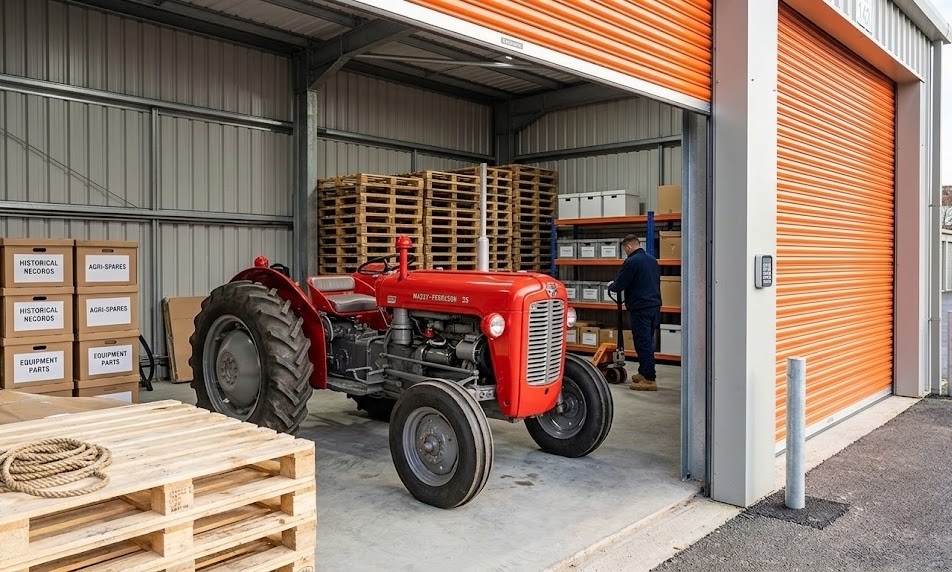
Vintage agricultural machinery represents more than just metal and mechanics – these pieces embody farming heritage, engineering milestones, and often significant financial investment. For dealers specialising in classic tractors, combines, and implements, proper storage isn’t merely about keeping equipment out of the rain. It’s about preserving value, protecting against deterioration, and maintaining the integrity of machines that may be decades or even a century old.
The difference between outdoor and indoor storage for vintage agricultural equipment can mean thousands of pounds in restoration costs or the loss of irreplaceable components. Dealers who understand this distinction protect their inventory, their reputation, and their bottom line through proper agricultural machinery storage.
Why Indoor Storage Matters for Vintage Agricultural Equipment
Vintage machinery faces unique challenges that modern equipment doesn’t encounter. Original paint finishes, period-correct decals, and authentic patina all hold value for collectors and enthusiasts. A 1950s Ferguson tractor with its original manufacturer’s badge intact commands a premium – but only if that badge hasn’t corroded beyond recognition after three winters exposed to the elements.
Indoor storage provides the controlled environment these machines need. Temperature fluctuations cause condensation, which leads to rust on exposed metal surfaces, deterioration of rubber seals, and damage to electrical components. Even covered outdoor storage can’t prevent moisture from settling on cold metal surfaces during temperature changes.
Think of it like storing fine wine. You wouldn’t leave expensive bottles in a garden shed and expect them to maintain their quality. Vintage machinery requires similar consideration – not because it’s fragile, but because its value depends on preservation.
Common Damage Patterns in Outdoor Storage
Dealers who’ve stored equipment outdoors know the pattern well. The first winter brings surface rust to unpainted metal components. By the second season, that rust’s spread beneath paint edges, causing bubbling and flaking. Rubber tyres develop cracks from UV exposure and temperature cycling. Hydraulic seals harden and fail. Wiring insulation becomes brittle and breaks away.
We’ve seen dealers lose 20-30% of an item’s value simply through two years of outdoor storage. A rare implement that might’ve fetched £3,500 in excellent condition becomes a £2,000 project piece requiring extensive restoration work.
Moisture intrusion causes the most insidious damage. Water finds its way into fuel tanks, engine blocks, and gearboxes. It sits there, quietly corroding internal components that potential buyers can’t see during initial inspection. When that buyer discovers seized pistons or corroded gears after purchase, your reputation takes the hit alongside your wallet.
Selecting the Right Storage Space
Not all indoor storage facilities suit agricultural machinery. Standard self-storage units with 8-foot ceilings won’t accommodate a vintage combine harvester. You need proper clearance – both height and width – plus adequate access for moving large, awkward equipment.
Container storage offers particular advantages for agricultural dealers. Drive-up access means you can manoeuvre tractors and implements directly into the storage space without navigating narrow corridors or tight turns. For equipment that no longer runs under its own power, this accessibility proves essential.
Consider these practical requirements when evaluating storage options:
Ceiling height: Vintage combines and high-clearance tractors need 12-15 feet minimum. Don’t assume – measure your tallest piece and add two feet for safe clearance.
Door width: Standard double doors (8 feet) work for most tractors, but implements like disc harrows or vintage ploughs may require 10-12 feet of clearance. Measure the widest point of your equipment, including any protruding components.
Floor surface: Concrete floors prevent moisture wicking up from the ground. They also support the weight of heavy machinery without creating ruts or settling issues that complicate future moves.
Climate control considerations: Full climate control isn’t typically necessary for most vintage machinery, but consistent protection from temperature extremes and humidity prevents the worst damage. Even basic indoor storage dramatically outperforms outdoor alternatives.
Preparing Equipment for Storage
Proper preparation determines whether your vintage machinery emerges from storage in the same condition it entered. Dealers who skip these steps inevitably face problems – and expenses – down the line.
Start with a thorough cleaning. Mud and organic matter trap moisture against metal surfaces, creating perfect conditions for corrosion. Use a pressure washer for the heavy work, but follow up with compressed air to remove water from crevices, joints, and hidden spaces. Pay special attention to areas where moisture can pool.
Fuel system protection prevents countless headaches. Vintage carburettors weren’t designed for modern ethanol-blended fuels, which deteriorate rapidly and leave varnish deposits. Either drain the fuel system completely or fill tanks completely with stabilised fuel – partially filled tanks allow condensation to form, introducing water into the fuel system.
Change the oil before storage, not after. Used oil contains combustion byproducts and contaminants that promote corrosion during storage. Fresh oil provides a protective coating for internal engine components. Run the engine for a few minutes after the oil change to circulate the new oil throughout the system.
Protect rubber components from deterioration. Apply a rubber preservative to tyres, hoses, and seals. Cover tyres with cardboard or tarpaulin to prevent UV exposure even in indoor storage – fluorescent lighting produces UV radiation that degrades rubber over time.
Remove batteries and store them separately in a climate-controlled environment. Vintage batteries, particularly those in rarely-used equipment, discharge over time and may freeze in cold conditions, destroying the cells. A trickle charger maintains charge without overcharging.
Organizing Multiple Pieces
Dealers typically store multiple pieces of equipment, which requires strategic organisation. Random placement leads to blocked access, damaged equipment from tight manoeuvres, and wasted time searching for specific items when buyers express interest.
Position your most valuable or frequently accessed pieces near the entrance. That rare Ferguson TEA-20 in pristine condition deserves prime position – both for security and for quick access when serious buyers want to view it. Less significant pieces or long-term projects can sit further back.
Create clear pathways between equipment. You need room to walk around pieces for inspection, photography, and showing to potential buyers. Cramming equipment together saves space initially but costs time and risks damage every time you need to access something.
Consider this approach: imagine you’re packing a removal lorry. You wouldn’t stack the heaviest items on top of fragile ones, and you’d ensure you could reach things you might need during the journey. Apply the same logic to your storage space. Heavy implements go where they won’t need frequent moving. Tractors that might sell quickly stay accessible.
Documentation and Inventory Management
Professional dealers maintain detailed records of stored equipment. This isn’t bureaucracy – it’s business sense. When a buyer rings asking about a specific model, you need to know immediately what you have, where it’s stored, and its condition.
Photograph each piece from multiple angles before storage. Include close-ups of any damage, unique features, or original components. These photos serve multiple purposes: insurance documentation, online listings, and condition verification when pieces eventually leave storage.
Create a simple storage map showing where each piece sits within your unit. Number your spaces or use a grid system. When you’ve got fifteen tractors in storage and a buyer wants to see the Fordson Major, you don’t want to spend thirty minutes working out which one it is and how to access it.
Record serial numbers, model details, and any known history. Vintage machinery’s value often depends on provenance and originality. That information needs to stay with the machine, not get lost in a pile of paperwork back at your office.
Security Considerations for High-Value Inventory
Vintage agricultural machinery attracts specialist thieves who know the market. A rare Ferguson System tractor or a complete set of period ploughs represents significant value in a form that’s relatively easy to transport with the right equipment.
Choose storage facilities with proper security measures. Look for sites with perimeter fencing, CCTV coverage, and controlled access. Individual unit alarms add another layer of protection. For particularly valuable pieces, consider additional security measures like wheel locks or ground anchors.
Insurance requirements often specify minimum security standards. Check your policy before selecting storage. Failing to meet these requirements could void your coverage, leaving you personally liable for losses. Most insurers require indoor storage for high-value vintage equipment – outdoor storage either isn’t covered or carries prohibitively expensive premiums.
Don’t advertise your storage location publicly. Social media posts showing your inventory are fine, but avoid revealing where you keep equipment. Professional buyers understand this discretion; casual browsers don’t need to know.
Maintenance During Storage
Storage doesn’t mean abandonment. Vintage machinery requires periodic attention even when not in use. Plan to inspect your stored equipment at least monthly, more frequently for particularly valuable or temperamental pieces.
Check for moisture intrusion. Look for condensation on metal surfaces, water pooling on floors, or changes in humidity. Address problems immediately – a small leak or humidity issue becomes major corrosion damage if left unchecked.
Rotate tyres quarterly to prevent flat spots. Move each piece slightly if possible, or at least shift the weight off tyres by placing blocks under axles. Vintage tyres are expensive and often difficult to source – prevention beats replacement.
Exercise moving parts periodically. Open and close doors, move steering wheels through their range, and operate any hydraulic controls. This redistributes lubricants and prevents seals from drying out and cracking. You’re not running the equipment, just maintaining component mobility.
Cost-Benefit Analysis for Dealers
Indoor storage costs money. It’s tempting to view outdoor storage or leaving equipment at your yard as the economical choice. But what does that “saving” actually cost you?
A vintage tractor worth £5,000 loses perhaps £1,500 in value after two years of outdoor storage due to rust, weathering, and deterioration. If indoor storage costs £150 monthly, you’ll spend £3,600 over those two years. The maths seems to favour outdoor storage – until you factor in the time and materials needed to restore that outdoor-stored tractor to saleable condition.
Rust removal, repainting, seal replacement, and mechanical refurbishment easily consume 40-60 hours of labour plus materials. At even modest hourly rates, you’ve exceeded the cost of proper storage before considering the reduced sale price for equipment showing weather damage.
Professional dealers understand this calculation. Indoor storage isn’t an expense – it’s inventory protection that preserves profit margins and maintains reputation. Buyers remember dealers who consistently offer well-maintained equipment. They forget dealers who offer bargains requiring extensive restoration.
Practical Steps for Transitioning to Indoor Storage
If you’ve been storing equipment outdoors or in inadequate facilities, transitioning to proper business storage requires planning but delivers immediate benefits.
Start by assessing your current inventory. Which pieces hold the most value? Which are most vulnerable to weather damage? Prioritise these for indoor storage first. You might not move everything immediately, but protecting your most valuable stock delivers the best return on investment.
Calculate your actual space requirements. Measure your equipment – length, width, and height – and add clearance space for access. Don’t forget to account for implements, spare parts, and related inventory. Underestimating space needs leads to cramped conditions that negate many benefits of indoor storage.
Visit potential storage facilities in person. Photos and specifications don’t tell the full story. Can you actually manoeuvre a tractor through the access routes? Is the door height adequate for your tallest piece? Does the facility feel secure and well-maintained? Trust your professional judgement – if something feels wrong, keep looking.
Plan your move during dry weather if possible. Moving vintage machinery in rain or snow introduces the very moisture you’re trying to avoid. It also makes manoeuvring more difficult and dangerous, particularly with equipment on steel wheels or worn tyres.
Working with Storage Facilities
Building a good relationship with your storage facility manager pays dividends. They can accommodate special requirements, provide advance notice of any facility changes, and often offer flexibility that makes your operation run more smoothly.
Communicate your needs clearly. Explain that you’re storing vintage agricultural equipment for commercial purposes. Discuss access requirements – you might need to move equipment at weekends or evenings when buyers are available. Clarify any restrictions on running engines or performing minor maintenance work.
Most facilities appreciate professional dealers who maintain their spaces properly, pay reliably, and don’t cause problems. You’re a preferred customer compared to someone storing household clutter. Don’t be afraid to negotiate on price, particularly if you’re taking multiple units or committing to long-term storage.
Ask about packaging and protective materials available on-site. Even in indoor storage, covering equipment with breathable covers protects against dust and accidental damage. Having supplies readily available simplifies your operation.
Maximizing Storage Efficiency
Space costs money, so efficient use of your storage area directly impacts profitability. Strategic organisation lets you store more equipment in less space whilst maintaining accessibility.
Vertical space often goes underutilised. Smaller implements, parts, and accessories can be stored on shelving above or beside larger equipment. Just ensure nothing’s positioned where it could fall onto valuable machinery below.
Disassemble what you reasonably can. Many vintage implements break down into components that store more compactly. Document the disassembly with photos and label components clearly – your future self will thank you when reassembly time comes.
Group related items together. All Ferguson parts and accessories in one area, Fordson equipment in another. This organisation speeds up both your work and buyer viewings. It also prevents the frustration of knowing you have a particular part somewhere but not being able to locate it.
Newbury Self Store understands that agricultural machinery dealers need storage protecting vintage equipment, not generic warehouse space. You need facilities where vintage agricultural equipment stays protected from moisture and temperature extremes, where agricultural machinery storage maintains proper conditions year-round, and where dealer inventory receives the security valuable heritage equipment deserves. We know that your vintage machinery isn’t just stock – it’s agricultural heritage connecting today’s farming to its mechanical roots.
Conclusion
Indoor storage for vintage agricultural machinery isn’t a luxury – it’s a business necessity for serious dealers. The investment in proper storage facilities protects your inventory value, preserves your professional reputation, and ultimately determines your profitability in this specialised market.
The difference between a well-preserved vintage tractor and one that’s suffered weather damage can easily reach thousands of pounds. That gap represents the true cost of inadequate storage, measured not just in immediate depreciation but in lost sales, reduced prices, and restoration expenses that consume time and resources better spent growing your business.
Dealers who treat their inventory as the valuable assets they are – protecting them from moisture, temperature fluctuations, and environmental damage – consistently outperform those who view storage as an afterthought. Your vintage machinery deserves the same care and consideration you’d give any significant business investment, because that’s exactly what it is.
The agricultural machinery market rewards dealers known for quality stock in excellent condition. Building that reputation starts with how you store your equipment when it’s not on display. Choose indoor storage, prepare equipment properly, maintain organised records, and perform regular inspections. These practices separate professional dealers from hobbyists and ensure your vintage inventory maintains its value whilst waiting for the right buyer.
For dealers ready to protect their investment properly, contact us to discuss storage solutions tailored to agricultural machinery requirements. Proper storage isn’t just about keeping equipment dry – it’s about preserving the heritage and value these remarkable machines represent.