
 01635 581 811
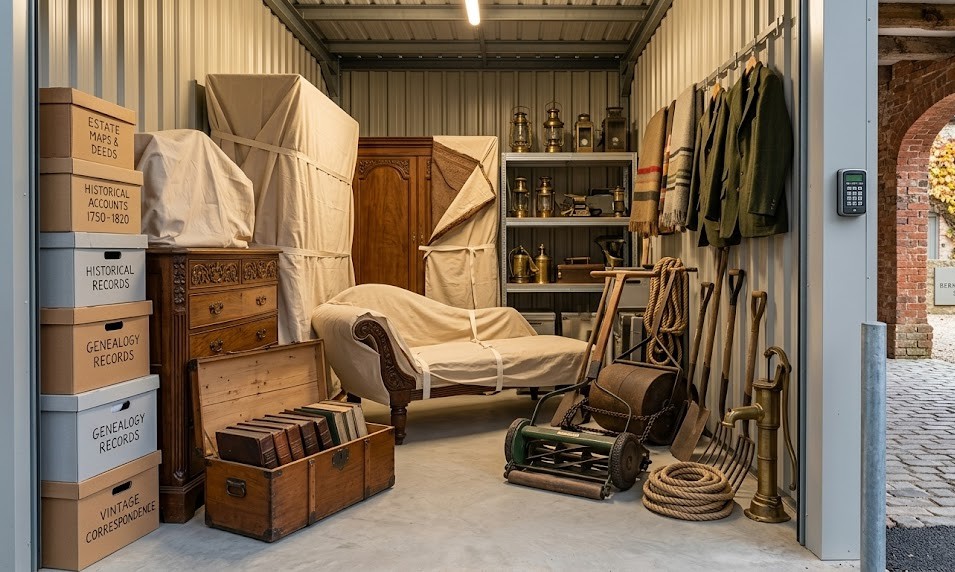
Managing a country estate brings a unique set of challenges that most property owners never face. Between preserving valuable heritage items passed down through generations and organising the extensive collection of tools needed to maintain sprawling grounds, finding adequate, secure space becomes essential rather than optional.
The reality is that many estate managers and owners find themselves juggling irreplaceable family heirlooms, seasonal equipment, and specialist tools across various outbuildings and converted spaces that weren’t designed for long-term storage. This approach creates unnecessary risk for valuable items and makes efficient estate management considerably harder than it needs to be.
Understanding the Storage Demands of Estate Management
Country estates generate storage needs that differ dramatically from typical residential properties. You’re not just dealing with household items – you’re managing agricultural equipment, groundskeeping machinery, heritage furniture, archived documents, and seasonal decorations for large-scale events.
Consider the typical autumn scenario. The garden furniture needs protection from winter weather, but the workshop already houses the ride-on mowers, hedge trimmers, and specialist tools. Meanwhile, delicate antique pieces require climate-controlled conditions that a converted barn simply can’t provide consistently.
The challenge intensifies when you factor in the historical significance of many items. That Victorian writing desk isn’t just furniture – it’s part of the estate’s documented history. The collection of agricultural tools from the 1800s represents tangible heritage that deserves proper preservation, not just somewhere to sit gathering dust and rust.
Why Traditional Estate Storage Falls Short
Most country estates rely on a patchwork of storage solutions that have evolved over decades – like trying to organise an entire library using just a few random bookcases scattered across different rooms. Stables become workshops, old barns house equipment, and attic spaces fill with archived materials. This approach worked when estates had larger permanent staff and fewer valuable items requiring specialist care.
Modern reality tells a different story. Insurance companies now scrutinise storage conditions for heritage items. Moisture in unconverted outbuildings damages both machinery and antiques. Security concerns grow as valuable tools and equipment become targets for theft, particularly in rural areas where response times can be longer.
Temperature fluctuations pose another serious problem. A barn might feel adequate in summer, but winter condensation wreaks havoc on metal tools, wooden furniture, and fabric items. Spring dampness encourages mould growth that can destroy irreplaceable documents and textiles within a single season.
Protecting Heritage Items Requires Specialist Conditions
Heritage items demand more than just space – they need environments that actively preserve rather than gradually damage. Antique furniture, historical documents, vintage textiles, and family heirlooms all deteriorate when exposed to fluctuating temperatures and humidity levels.
Think of it like storing fine wine. You wouldn’t keep valuable bottles in a shed that freezes in winter and bakes in summer. The same principle applies to your great-grandfather’s mahogany library furniture or your grandmother’s wedding dress. These items need consistent conditions that prevent the expansion and contraction cycles causing wood to crack, fabric to weaken, and paper to become brittle.
Climate-controlled storage addresses these concerns by maintaining steady temperature and humidity levels year-round. This consistency prevents the environmental stress that accelerates deterioration in valuable items. For estate managers juggling multiple responsibilities, it eliminates the constant worry about whether precious family pieces are slowly degrading in inadequate conditions.
Documentation and inventory management becomes simpler too. When heritage items occupy dedicated storage rather than being scattered across multiple outbuildings, you can maintain proper records, conduct regular inspections, and ensure insurance coverage remains accurate and adequate.
Seasonal Equipment Storage Solves Space Conflicts
Estate grounds require different equipment throughout the year, creating predictable storage bottlenecks. Spring brings out the lawn aerators and seeders. Summer demands various mowing equipment and hedge trimmers. Autumn needs leaf blowers and scarifiers. Winter requires completely different tools for maintenance and repairs.
Keeping everything on-site means your workshop or equipment barn remains perpetually cluttered with items you won’t use for months. This creates inefficiency – you’re constantly moving equipment aside to access what you actually need. It also increases damage risk as items get knocked, stacked improperly, or stored in ways that cause unnecessary wear.
A smarter approach involves rotating seasonal equipment through dedicated storage. When summer equipment goes into storage in September, you reclaim workshop space for the tools and machinery you’ll actually use during autumn and winter. This rotation keeps your working areas organised and ensures each piece of equipment gets stored properly rather than shoved wherever space exists.
Security improves significantly when valuable equipment isn’t spread across multiple locations on the estate. Ride-on mowers, professional-grade tools, and specialist machinery represent substantial investments. Consolidated storage with proper security measures provides better protection than hoping various outbuildings remain secure.
Tool Organisation for Large-Scale Property Maintenance
Country estates accumulate tools at an impressive rate. General groundskeeping requires one set of equipment. Woodland management needs another. Water feature maintenance demands specialist tools. Historic building preservation requires yet more specialist equipment. Before long, you’ve amassed a collection that rivals a small hire centre.
Without proper organisation, this creates genuine operational problems. Staff waste time searching for specific tools. Equipment gets borrowed between different areas of the estate and never returns to its proper location. Maintenance schedules slip because nobody can find the right tool when needed.
Dedicated storage allows you to implement proper tool management systems. Group equipment by function – all woodland management tools together, all groundskeeping equipment in one area, specialist tools separately organised. This approach mirrors professional operations where efficiency depends on quick access to the right equipment.
Consider implementing a simple checkout system for expensive or specialist tools. When staff know exactly where items should be and have accountability for returning them, equipment losses decrease dramatically. This matters particularly for estates that employ seasonal workers or contractors who might otherwise inadvertently take tools off-site.
Protecting Against Theft and Weather Damage
Rural crime statistics make uncomfortable reading for estate owners. Tools and equipment theft costs UK agricultural and rural businesses millions annually, with country estates representing attractive targets due to the value and quantity of equipment typically stored on-site.
Traditional estate storage – scattered outbuildings with varying security levels – makes theft prevention challenging. Securing every barn, stable, and workshop to modern standards requires substantial investment. Even then, remote locations mean thieves often have time to work undisturbed once they’ve gained access.
Weather damage presents an equally expensive problem. Professional groundskeeping equipment isn’t designed to withstand constant exposure to moisture. Rust degrades metal components, damp affects electrical systems, and temperature extremes damage hydraulic equipment. A ride-on mower that could last fifteen years with proper storage might need replacing in eight when kept in inadequate conditions.
Personal storage facilities designed for valuable items provide security measures that would be prohibitively expensive to implement across multiple estate buildings. Modern surveillance, access controls, and secure construction protect your investment in equipment and tools more effectively than hoping your various outbuildings remain secure.
Managing Estate Archives and Historical Documents
Many country estates maintain extensive archives – property deeds, historical correspondence, family records, and documents relating to the estate’s history. These papers often hold both sentimental and actual value, particularly when properties have historical significance or listed status.
Storing documents on-site creates preservation challenges. Paper deteriorates rapidly in fluctuating conditions. Damp encourages mould growth that can destroy documents within months. Pests, particularly in older buildings, cause irreparable damage. Even light exposure fades ink and weakens paper over time.
Professional archivists emphasise that document preservation requires stable, cool, dry conditions with minimal light exposure. Few estate properties can provide these conditions consistently across the year. Attic spaces get too hot in summer. Basement areas risk flooding or rising damp. Ground-floor rooms might seem suitable until winter condensation appears.
Climate-controlled storage offers the consistent environment that preserves documents properly. For estates with significant historical archives, this isn’t just about preservation – it’s about maintaining the documented history that adds value and interest to the property itself.
Preparing Heritage Items for Storage
Proper preparation makes the difference between items that survive storage unscathed and those that emerge damaged. Heritage pieces require more care than everyday belongings, but the process isn’t complicated once you understand the principles.
Furniture needs thorough cleaning before storage. Dust and dirt contain acids and particles that damage finishes over time. Use appropriate cleaners for different materials – wood polish for wooden pieces, appropriate cleaners for upholstery, and gentle methods for delicate surfaces. Allow everything to dry completely before wrapping or covering.
Wrap wooden furniture in breathable materials rather than plastic. Plastic traps moisture, encouraging mould growth and causing wood to sweat. Cotton dust sheets or furniture blankets protect against scratches whilst allowing air circulation. For particularly valuable pieces, consider acid-free tissue paper as a first layer before adding protective wrapping.
Textiles require careful preparation too. Clean everything according to the fabric type – some items need professional cleaning, others can be gently hand-washed. Ensure complete drying before storage. Fold textiles with acid-free tissue paper to prevent creases becoming permanent. Never store textiles in plastic bags, which trap moisture and cause yellowing.
Documents and photographs need acid-free boxes or folders. Handle old paper as little as possible – oils from skin can cause damage. For particularly valuable documents, consider professional archival preparation. Group similar items together with clear labelling so you can locate specific documents without sorting through everything.
Equipment Maintenance Before Storage
Storing tools and equipment without proper preparation guarantees problems when you retrieve them. Moisture trapped in fuel systems causes corrosion. Dirt and debris damage moving parts. Batteries left connected drain completely, shortening their lifespan significantly.
Start with thorough cleaning. Remove all dirt, grass clippings, and debris from equipment. This prevents organic matter from retaining moisture against metal surfaces, which accelerates rust formation. Pay particular attention to undersides and hard-to-reach areas where debris accumulates.
Petrol-powered equipment requires fuel system attention. Either drain fuel completely or add fuel stabiliser and run the engine to circulate treated fuel through the system. Old fuel degrades and causes starting problems. It can also damage carburettors and fuel lines, leading to expensive repairs when you need the equipment again.
Oil changes before storage protect engines during inactive periods. Old oil contains contaminants that can cause corrosion when equipment sits unused. Fresh oil provides better protection. For equipment with hydraulic systems, check fluid levels and top up as needed.
Battery maintenance prevents the frustration of dead batteries when you need equipment again. Either remove batteries and store them separately with periodic charging, or connect them to maintenance chargers if available. Clean battery terminals before storage to prevent corrosion buildup.
Apply protective coatings to metal surfaces. Light oil on unpainted metal parts prevents rust formation. For larger equipment, consider breathable covers that protect against dust whilst allowing air circulation. Avoid plastic covers that trap condensation against metal surfaces.
Creating an Inventory System That Actually Works
Estate managers often know roughly what they have stored, but “roughly” isn’t adequate when you need specific items, when insurance requires detailed records, or when planning what stays on-site versus what moves to dedicated storage.
An effective inventory system doesn’t need to be complicated. Start by photographing everything. Modern smartphones make this simple – take clear images of each item from multiple angles. These photographs serve multiple purposes: insurance documentation, identification when searching for specific items, and condition records showing pre-storage state.
Create a simple spreadsheet or database listing each item with key details: description, approximate value, condition notes, storage location, and photograph reference numbers. For heritage items, add historical information – provenance, age, any documentation that exists. This information becomes invaluable for insurance purposes and when passing estate knowledge to future generations.
Group items logically in your inventory system. All garden equipment together, heritage furniture as a separate category, tools organised by type. This organisation mirrors how you’ll actually search for items – you’re looking for “the Victorian writing desk” or “the professional hedge trimmer,” not item number 247 from a random list.
Review and update your inventory annually. Items move, conditions change, and values fluctuate. Regular reviews keep records accurate and highlight any issues developing with stored items. It’s also an opportunity to reassess what you’re storing – perhaps some items no longer need retention, freeing up space for things that matter more.
Combining On-Site and Off-Site Storage Strategically
Not everything needs to leave the estate. The goal isn’t moving everything off-site – it’s creating a strategic approach where items are stored in locations that best suit their needs and usage frequency.
Keep frequently used tools and equipment on-site in your workshop or equipment barn. These are the items staff need quick access to for daily operations. Moving them off-site creates inefficiency and frustration. Focus on maintaining good organisation in these working storage areas.
Seasonal equipment that you’ll use for a few months then not touch for the rest of the year makes sense for off-site storage. The professional-grade leaf blowers you use intensively each autumn but then store for nine months don’t need to occupy premium workshop space. Rotate them through storage, bringing them back only when needed.
Heritage items and valuable antiques benefit from climate-controlled storage regardless of whether you regularly need access. These pieces require preservation conditions that most estate buildings can’t provide consistently. The investment in proper storage prevents deterioration that would cost far more to repair or replace.
Archived documents and historical records also suit off-site storage, particularly if you access them infrequently. Knowing they’re preserved in appropriate conditions provides peace of mind whilst freeing up estate space for more active uses.
Understanding Storage Costs Versus On-Site Risks
Estate owners often hesitate at storage costs without calculating what inadequate on-site storage actually costs them. A ride-on mower deteriorating from poor storage conditions might need replacement several years earlier than necessary. Heritage furniture damaged by fluctuating temperatures loses both monetary and sentimental value. Tools stolen from inadequately secured outbuildings require replacement at current prices.
Calculate these hidden costs honestly. If proper storage extends equipment life by even two years, the cost savings often exceed storage fees. If climate control prevents damage to heritage items that would cost thousands to restore, the investment pays for itself immediately.
Insurance implications matter too. Many insurers require specific storage conditions for valuable items. Failing to meet these requirements can void coverage or increase premiums substantially. Professional storage that meets insurance requirements might actually reduce your overall costs when you factor in premium differences.
Consider the operational efficiency gains as well. Staff working in organised, properly equipped spaces complete tasks faster. They’re not wasting time searching for tools or working around cluttered areas. These efficiency improvements have real value, even if they’re harder to quantify than direct cost savings.
Making the Transition to Better Storage
Moving from your current storage approach to something more organised and effective doesn’t need to happen overnight. Start with the items that present the greatest risk or cause the most operational problems.
Heritage items vulnerable to environmental damage should be your first priority. These pieces often have irreplaceable value, and every season they spend in inadequate conditions increases deterioration risk. Moving them to climate-controlled storage protects your family’s history and the estate’s heritage.
Next, address seasonal equipment that’s cluttering working areas. Clearing this equipment from your workshop or equipment barn immediately improves daily operations. Staff can work more efficiently when they’re not constantly moving items aside to access what they actually need.
Gradually expand to include other categories as you refine your storage strategy. The goal’s creating a sustainable system where everything has an appropriate storage location based on its value, usage frequency, and preservation requirements.
When you’re ready to explore how business storage solutions can support estate management, focus on facilities that understand the specific requirements of heritage items and valuable equipment. Look for climate-controlled options, robust security measures, and flexible access arrangements that work with your operational schedule.
Accessing Stored Items When You Need Them
One concern estate managers raise about off-site storage is access – what happens when you need something stored off-site? This worry often stems from assumptions about storage facilities based on old models where access was limited and inconvenient.
Modern storage facilities recognise that customers need reasonable access to their belongings. Many offer extended access hours or even 24/7 availability for customers who need it. This flexibility means you can retrieve items when your schedule permits rather than working around restrictive facility hours.
Plan retrieval needs in advance when possible. If you know you’ll need specific seasonal equipment in three weeks, schedule retrieval accordingly. For items you might need unexpectedly, maintain clear inventory records so you know exactly where things are stored and can retrieve them efficiently.
Consider keeping a small quantity of essential supplies on-site even when you’ve moved most items to storage. This provides immediate access for urgent needs whilst still maintaining the organisational and preservation benefits of proper storage for the bulk of your equipment and heritage items.
Long-Term Preservation Strategies
Estate management isn’t just about the present – it’s about ensuring the property, its heritage, and its operational capability continue for future generations. This long-term perspective should inform storage decisions too.
Regular inspections catch developing problems before they become serious. Schedule periodic checks of stored heritage items, looking for any signs of pest activity, moisture damage, or deterioration. Early detection allows intervention before damage becomes irreparable.
Maintain detailed records that future estate managers can use. Your inventory system, storage decisions, and preservation choices should be documented so successors understand what exists, where it’s stored, and why. This knowledge transfer prevents valuable items being forgotten or preservation efforts being undone through ignorance.
Review your storage strategy annually. Estate needs change, new preservation techniques emerge, and storage options evolve. What made sense five years ago might not be the best approach today. Regular reviews ensure your storage strategy remains effective and appropriate.
Consider the broader estate management context. Storage decisions connect to insurance requirements, heritage preservation obligations, operational efficiency, and long-term property planning. Effective storage isn’t isolated from these other concerns – it’s an integral part of comprehensive estate management.
Newbury Self Store understands that country estates need storage supporting heritage preservation, not generic warehouse space. You need facilities where heritage items stay protected from deterioration, where country estate heritage storage maintains proper climate control year-round, and where estate management equipment remains organized for efficient operations. We know that your heritage items aren’t just possessions – they’re irreplaceable connections to family history and architectural significance.
Creating a Sustainable Storage Approach
The goal isn’t perfect storage – it’s sustainable storage that works with your estate’s specific needs, budget, and operational reality. A system that’s too complicated or expensive won’t be maintained. One that’s too basic won’t adequately protect valuable items or support efficient operations.
Start with your highest priorities and most vulnerable items. Build your storage strategy gradually, learning what works for your specific situation. Adjust as needed based on actual experience rather than theoretical ideals.
Involve estate staff in storage planning. They understand daily operational needs and can identify inefficiencies in current arrangements. Their input ensures storage solutions support rather than hinder their work.
Document your approach so it remains consistent even as staff change. Written procedures for equipment preparation, inventory management, and storage decisions maintain standards over time. This documentation becomes part of the estate’s operational knowledge, preserved alongside its physical heritage.
When you’re ready to explore how proper storage can transform your estate management, contact us to discuss solutions tailored to heritage preservation and operational efficiency. Proper packaging protects valuable items during transport and storage, preventing damage that would cost far more than the initial investment in protection.