
 01635 581 811
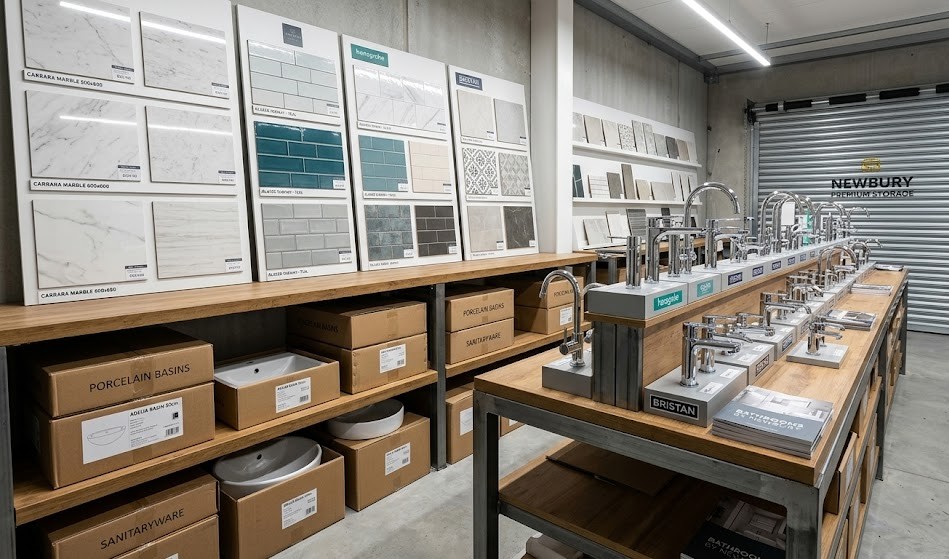
Bathroom showrooms demand precision. Every tile sample, basin, tap fitting, and lighting fixture must be accessible, pristine, and ready to inspire clients. Yet behind the polished display suites lies a logistical challenge most bathroom specialists know too well: managing hundreds of product samples, discontinued lines, seasonal stock, and bulky display units without letting your workspace descend into chaos.
For bathroom installers and showroom managers across Newbury and Berkshire, the struggle isn’t just about finding space. It’s about maintaining the professional image that closes sales whilst juggling the reality of limited square footage, evolving product ranges, and the need to rotate displays regularly. A cluttered showroom doesn’t just look unprofessional – it actively costs you business.
The answer isn’t cramming more shelving into your existing premises or renting expensive commercial property you don’t fully need. Strategic bathroom installer display storage creates breathing room for your business to operate efficiently whilst keeping your showroom looking its absolute best.
Why Bathroom Showrooms Struggle with Space
Walk into any established bathroom showroom and you’ll find the same pattern. The front-of-house displays look immaculate, but step into the back office or warehouse area and you’ll see boxes stacked precariously, sample tiles leaning against walls, and discontinued tap ranges gathering dust because there’s nowhere else to put them.
This isn’t poor management. It’s the natural consequence of how bathroom retail operates – like the difference between a restaurant’s pristine dining room and the controlled chaos of its kitchen where the real work happens.
Product ranges change seasonally. Manufacturers introduce new collections every six months, meaning last season’s samples need storing even if you’re not actively displaying them. Clients often return months after their initial consultation asking to see “that grey tile we looked at in March,” and if you’ve thrown it away, you’ve lost credibility.
Display suites are bulky. A full bathroom display – complete with basin, toilet, shower enclosure, and tiling – occupies significant floor space. When you need to rotate displays or trial new layouts, you can’t simply dismantle everything and bin it. These installations represent thousands of pounds in product and labour.
Sample libraries grow exponentially. Every tile manufacturer, sanitaryware supplier, and brassware brand provides samples. Within two years of trading, most bathroom specialists accumulate hundreds of sample boards, tap sets, and material swatches. You need them for client consultations, but storing them on-site creates visual clutter that undermines your premium positioning.
The Hidden Cost of Showroom Clutter
Here’s something most bathroom specialists don’t calculate: the revenue lost when clients walk into a cluttered space.
Research in retail psychology consistently shows that customers make snap judgements about quality based on physical environment. When a client visits your showroom to discuss a £15,000 bathroom renovation, they’re not just evaluating your product knowledge – they’re assessing whether you’re the kind of business that delivers attention to detail.
Boxes visible in the background, sample tiles scattered across surfaces, or cramped walkways between displays all send the wrong message. They suggest disorganisation, and clients extrapolate that perception to your installation work.
Beyond first impressions, clutter creates operational inefficiency. When your team spends 20 minutes searching for a specific tile sample before a client meeting, that’s lost productivity. When you can’t locate the discontinued tap fitting a client ordered six weeks ago, that’s a service failure that damages your reputation.
Strategic Storage for Display Suite Management
Smart bathroom specialists treat storage as infrastructure, not an afterthought. The goal isn’t just creating space – it’s building a system that supports efficient showroom operation without requiring you to lease larger commercial premises.
Seasonal display rotation becomes manageable when you have dedicated space for complete display units. Rather than dismantling a popular suite entirely, you can store it intact and swap it back into the showroom when client interest resurfaces or when you’re pitching specific design styles.
Think of it like a theatre managing stage sets. You don’t rebuild the scenery from scratch for every performance – you store complete sets and rotate them as needed. The same principle applies to bathroom displays. A full Victorian-style suite might not suit current trends, but when a client specifically requests traditional styling, having that complete display available gives you a significant competitive advantage.
Sample library organisation transforms from chaos to system when you have proper space. Categorise samples by type – wall tiles, floor tiles, sanitaryware, brassware, accessories – and store them in clearly labelled, accessible units. When you’re not fighting for every square foot in your showroom, you can implement proper organisation that actually saves time during client consultations.
One bathroom specialist in Thatcham developed a simple but effective system for managing 300+ tile samples and 50+ sanitaryware options across manufacturers. They’d been keeping everything in the showroom, which overwhelmed clients and made the space feel cluttered. They photographed every sample with a reference code, moved 70% of the samples to business storage, and kept only current-season materials in the showroom. When clients requested something specific, they could retrieve it within 24 hours rather than keeping everything on-site “just in case.” This reduced showroom clutter by two-thirds, made the space feel larger and more professional, and actually improved client satisfaction because the curated selection helped them make decisions faster. The storage cost £125 monthly, but they calculated it had contributed to closing three additional high-value contracts (£28,000 total) in the first six months because the showroom presented so much better to prospective clients.
Discontinued product retention protects you from supply chain headaches. When a client’s renovation project spans several months and they need an additional box of tiles to complete the job, having discontinued stock accessible means you can deliver rather than disappointing them or scrambling to find alternatives.
This isn’t hoarding – it’s risk management. Store discontinued lines for 12-18 months after they leave your active display, clearly labelled with project references and client details. You’ll resolve more customer service issues in one year than the storage space costs.
Practical Storage Solutions for Bathroom Specialists
The logistics of storing bathroom products differ significantly from general business storage. These items aren’t just valuable – they’re fragile, heavy, and often require specific handling.
Climate control matters more than most bathroom specialists initially realise. Tile adhesive samples, grout, and sealants degrade in temperature extremes. Wooden vanity units warp in humidity. Chrome fittings can corrode if stored in damp conditions. When you’re storing thousands of pounds worth of product samples and display materials, storage with proper climate control isn’t a luxury – it’s basic asset protection.
Accessibility determines usefulness. Storage only works if you can retrieve items quickly when needed. Organise your space with frequently-accessed samples near the front and seasonal or archived materials towards the back. Label everything clearly with product codes, supplier details, and date stored. Your future self will thank you when a client calls asking about “that slate-effect tile we discussed last autumn.”
Weight distribution requires planning. Boxes of tiles are extraordinarily heavy – a single carton can weigh 20-25 kilograms. Stack them incorrectly and you risk damage to the tiles themselves or creating an unsafe working environment. Use sturdy industrial shelving rated for heavy loads, and store the heaviest items on lower shelves to prevent top-heavy arrangements that could collapse.
Protection from damage should be non-negotiable. Wrap individual display items – particularly sanitaryware like basins and toilets – in protective materials before storage. A cracked basin’s worthless, regardless of how carefully you’ve catalogued it. The packaging investment pays for itself the first time you retrieve a display unit in perfect condition rather than discovering damage that renders it unusable.
Creating a Display Suite Rotation System
The most successful bathroom showrooms don’t display everything simultaneously. They curate their space strategically, rotating displays based on seasonal trends, client demographics, and sales data.
This approach requires storage space, but it transforms your showroom from static to dynamic. Here’s how to implement it effectively.
Map your display calendar six months in advance. Plan which suites you’ll feature each quarter based on seasonal buying patterns. Luxury freestanding baths and spa-style displays perform well in January and February when clients are planning renovations for the year ahead. Compact, practical solutions suit late summer when students and first-time buyers dominate your client base.
Document each display thoroughly before dismantling it. Photograph the complete installation from multiple angles. Note the specific products used – tile references, tap models, lighting fixtures. Record the installation details that made it work. When you reinstall that display six months later, you’ll save hours of head-scratching trying to remember how it originally looked.
Store displays in logical groupings. Keep all components of a single bathroom suite together – tiles, sanitaryware, brassware, accessories. Label the storage area clearly with the display name or style reference. This might seem obvious, but when you’re juggling multiple displays, clear organisation prevents the frustrating situation where you have most of a display suite but can’t locate the specific tap set that completed the look.
Track performance data for each display. Which suites generate the most client interest? Which convert to actual sales? When you know a particular display consistently drives revenue, prioritise its rotation back into your showroom during peak buying periods. Storage space allows you to make these strategic decisions based on data rather than simply keeping whatever fits.
Managing Sample Libraries Without Overwhelming Your Showroom
Every bathroom specialist faces the same dilemma: manufacturers send samples generously, but displaying every option overwhelms clients rather than helping them decide.
The solution isn’t refusing samples – it’s creating a tiered system that keeps your showroom focused whilst maintaining comprehensive options for clients who want them.
Curate your showroom display to feature 8-12 carefully selected options in each category. These should represent your best-selling products, current trends, and a range of price points. This edited selection helps clients make decisions without analysis paralysis.
Store your extended range separately but accessibly. When clients want to see additional options beyond your showroom display, you can offer to show them your full sample library. This positions you as having extensive choice without cluttering your main display space. For many bathroom specialists, personal storage provides the perfect solution – close enough to access quickly, separate enough to keep your showroom uncluttered.
Implement a sample refresh cycle. Every six months, review your sample library. Which materials are you actually showing clients? Which have been superseded by newer products? Which manufacturers are you no longer working with? Archive or dispose of genuinely obsolete samples, but retain anything that’s simply out of current fashion – trends cycle back, and having samples of classic materials available gives you flexibility.
The Business Case for Dedicated Storage Space
Bathroom specialists often hesitate to invest in storage space, viewing it as an overhead rather than infrastructure. But calculate the actual costs of inadequate storage and the business case becomes compelling.
Calculate your showroom rent per square metre. Now consider how much of that expensive commercial space you’re using to store boxes, archived samples, and discontinued stock rather than displaying products that generate sales. Moving non-display materials to dedicated storage immediately makes your existing showroom more productive.
Factor in the opportunity cost of cluttered space. How many times have you decided not to trial a new display because you simply don’t have room? How often have you kept an underperforming display in place because dismantling it means finding somewhere to store the components? Storage space gives you flexibility to experiment, optimise, and respond to market trends rather than being locked into static displays.
Consider the time savings when your team can locate samples quickly. If your installation manager spends even 30 minutes per week searching for products or samples, that’s 26 hours annually – nearly a full working week lost to disorganisation. Proper storage with clear systems eliminates this waste.
Protect your investment in display materials. A single bathroom display suite represents £3,000-£8,000 in product and installation labour. Storing these assets properly rather than dismantling them completely means you can redeploy them efficiently, maximising return on that initial investment.
Implementing Your Storage Strategy
Moving from cluttered showroom to organised, efficient operation doesn’t require closing your business or undertaking a massive upheaval. Start with a systematic approach.
Audit your current inventory. Spend a day cataloguing everything you’re storing on-site. Categorise items into active display, current samples, archived samples, discontinued stock, and packaging materials. You’ll likely discover you’re storing items you’d forgotten about and others you can safely dispose of.
Prioritise what moves off-site. Start with bulky, infrequently-accessed items – discontinued display suites, archived samples from manufacturers you no longer work with, seasonal stock. Keep daily-use samples and current displays in your showroom, but move everything else to dedicated storage.
Establish retrieval systems before you move anything. Create a digital catalogue with photographs, product codes, and storage locations. When you need a specific tile sample, you should be able to identify its exact location within 30 seconds. This requires upfront organisation, but it transforms storage from “out of sight, out of mind” to a functional extension of your showroom.
Plan for growth. Don’t just solve today’s space problem – anticipate next year’s needs. As your business grows and you add new product ranges, you’ll need additional storage capacity. Starting with slightly more space than you currently need prevents having to reorganise everything in 12 months.
Making Storage Work for Your Business
The bathroom specialists who thrive aren’t necessarily those with the largest showrooms or the most extensive product ranges. They’re the ones who’ve mastered the logistics of presenting their expertise professionally whilst managing the behind-the-scenes complexity efficiently.
Storage isn’t about hiding clutter – it’s about creating operational capacity. When you’re not fighting for every square foot in your showroom, you can focus on what actually drives your business: helping clients envision beautiful bathrooms and delivering exceptional installations.
The showroom your clients see should inspire confidence and showcase possibilities. The storage space they don’t see should support the efficiency and professionalism that turns consultations into contracts and one-time clients into sources of referrals.
Newbury Self Store understands that bathroom specialists need storage supporting showroom operations, not generic warehouse space. You need facilities where display suites stay protected, where sample organization remains systematic for quick access, and where seasonal stock rotates efficiently without overwhelming your showroom. We know that your bathroom installer display storage isn’t just about hiding boxes – it’s the infrastructure that lets you present your expertise professionally whilst managing the complexity that clients never see.
For bathroom specialists ready to transform their showroom operation, contact us to discuss storage solutions that actually work for your business. We’ve helped dozens of trade specialists across Newbury and Berkshire create the space they need to operate efficiently without the overhead of larger commercial premises. Your showroom should sell bathrooms, not function as a warehouse – let’s make that happen.