
 01635 581 811
Every plumber knows the frustration. You’re halfway through a job when you realise the specific compression fitting you need is back at the depot, not in your van. Or you’ve just taken on three new contracts, and suddenly your vehicle resembles a chaotic jumble of pipes, fittings, and tools rather than an organised workspace.
The reality of running a plumbing business means balancing accessibility with practicality. You need certain items within arm’s reach every day, but maintaining a full inventory of specialist tools, seasonal stock, and backup supplies in your van simply isn’t feasible. This is where strategic plumber van stock storage becomes essential for growing your business efficiently.
Why Van Stock Overflow Happens
Most plumbing vans operate at capacity within months of starting out. You begin with the essentials – your core toolkit, a few common pipe sizes, basic fittings, and emergency supplies. Then reality kicks in.
A commercial client needs specific backflow prevention devices. A period property requires obsolete part replacements. You win a contract for underfloor heating installation, bringing an entirely new category of plumbing equipment into play. Before long, you’re playing Tetris with copper pipes in the back of your van, and your passenger seat’s become permanent storage for overflow van stock.
The problem compounds when you factor in seasonal variations. Winter brings frozen pipe emergencies and requires different materials than summer installations. You can’t afford to be without burst pipe repair supplies during cold snaps, but storing them year-round takes valuable space.
Specialist tools present another challenge. Power flushers, drain cameras, pipe freezing kits, and leak detection equipment are expensive investments that you need occasionally but not daily. Keeping them in your van means they’re vulnerable to theft, taking up space, and potentially getting damaged by general wear and tear.
The True Cost of Poor Storage Management
Working from your van alone creates hidden costs that erode profitability. Think about how often you’ve made emergency trips to suppliers because you didn’t have the right part, or turned down jobs because you couldn’t access specialist tools quickly enough.
Time wastage adds up fast. If you’re making three unplanned supplier trips weekly, that’s roughly six hours of billable time lost – potentially £300-£500 in revenue depending on your rates. Over a year, that’s £15,000-£26,000 in lost earnings, not counting fuel costs and vehicle wear.
Security concerns create another financial drain. Tool theft from vans costs the UK trades sector millions annually. Replacing a full toolkit runs into thousands, but the real damage comes from job delays and reputation impact when you can’t fulfil commitments.
Then there’s the physical toll on your vehicle. Overloading shortens suspension life, increases fuel consumption, and accelerates general wear. Your van becomes a liability rather than an asset – like trying to run a marathon whilst carrying a full backpack when you only need a water bottle.
What Belongs in Your Van vs Secure Storage
Smart plumbers separate their inventory into three categories: daily essentials, regular rotation stock, and occasional-use equipment. This approach maximises van efficiency whilst ensuring nothing critical sits inaccessible.
Daily Essentials (Keep in Van):
- Core hand tools and power tools for standard jobs
- Common pipe sizes and fittings (15mm and 22mm copper, plastic waste)
- Emergency repair supplies (pipe repair clamps, PTFE tape, jointing compound)
- Safety equipment (PPE, first aid kit, spillage materials)
- Customer-facing items (covers, cleaning supplies, invoice books)
Regular Rotation Stock (Store Securely):
- Bulk purchases of commonly used materials
- Seasonal equipment (outdoor tap supplies, heating components)
- Spare parts inventory for maintenance contracts
- Backup stock of fast-moving items
- Promotional materials and business supplies
Occasional-Use Equipment (Store Securely):
- Power flushing machines
- Drain survey cameras and locators
- Pipe freezing kits
- Pressure testing equipment
- Specialised cutting and threading tools
- Equipment for niche services you offer occasionally
This separation means your van carries approximately 80% of what you need for typical jobs, whilst business storage holds the remaining 20% that would otherwise create clutter and security risks.
Setting Up an Effective Storage System
Successful storage isn’t about renting space and piling boxes randomly. It requires the same systematic thinking you apply to complex installations. Picture your storage unit as an extension of your workshop – everything needs a designated place and logical organisation – like a professional kitchen’s mise en place where every ingredient has its specific location and the chef can access anything without searching.
Start by auditing your complete inventory. List every tool, piece of equipment, and material category you own or regularly stock. Separate items by usage frequency and value. This exercise often reveals surprising insights about what you’re actually keeping in your van versus what sits unused for months.
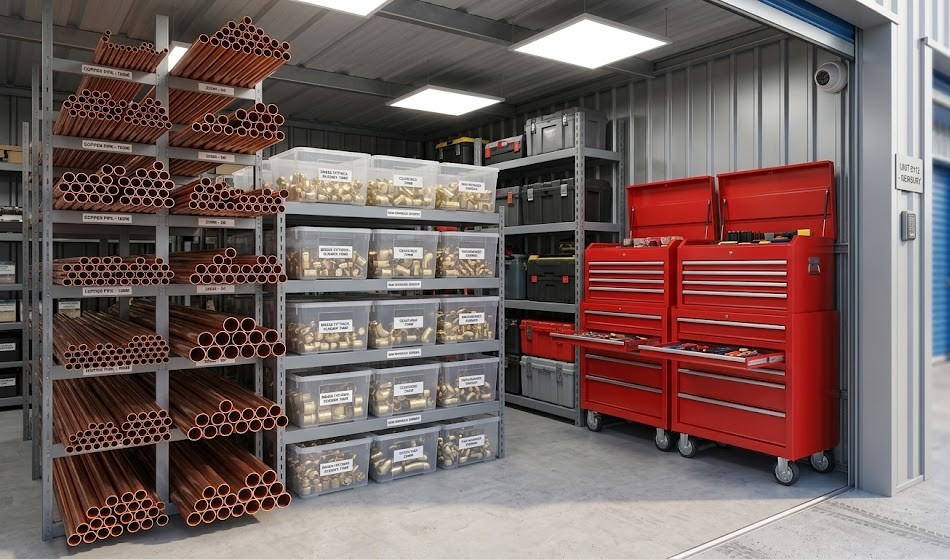
Shelving transforms storage efficiency. Industrial racking systems let you categorise materials clearly – one bay for copper fittings organised by size, another for plastic pipework, a section for bathroom fixtures. Clear plastic storage boxes work brilliantly for smaller components like washers, clips, and fixings. Label everything comprehensively.
Climate matters more than many tradespeople realise. Temperature fluctuations and humidity can damage certain materials and equipment. Rubber seals perish, adhesives degrade, and metal components corrode. If you’re storing sensitive equipment or materials, consider whether climate control would protect your investment.
Security features are non-negotiable. Your storage facility should offer robust perimeter security, individual unit alarms, comprehensive CCTV coverage, and controlled access. You’re potentially storing thousands of pounds worth of equipment – treat security as seriously as you would for your van overnight parking.
Organising Your Unit for Quick Access
The difference between effective storage and a glorified dumping ground comes down to accessibility. You need to retrieve items quickly without dismantling your entire system.
Create zones within your unit. Place frequently accessed items near the entrance – bulk copper pipe, common fittings, regular materials. Position seasonal equipment in the middle section where you can reach it easily when needed but it’s not blocking daily-access items. Store rarely used specialist tools at the back.
Vertical space is your friend. Heavy items like pipe bundles go on lower shelves for safety and ease of handling. Lighter materials and boxed components can sit higher. Keep an inventory list visible near the entrance showing exactly where each category lives.
Think about your typical workflow. If you usually collect materials before starting a job, arrange your unit so you can quickly gather what you need without searching. One plumber in Thatcham keeps a staging area near the door where he prepares job-specific materials the evening before. He’d been spending 45 minutes each morning loading his van, often forgetting items and making return trips. After implementing the staging system, his morning prep dropped to 10 minutes. He loads pre-organized boxes from the staging area, checks his list, and goes. Over a year of five-day weeks, that saved him roughly 145 hours – nearly four working weeks – which he calculated was worth £5,800 at his hourly rate. The staging area cost nothing to create, just required discipline to use it consistently the night before each job.
Mobile shelving units on wheels give you flexibility to reconfigure your space as your plumbing business evolves. What works for your current mix of domestic and commercial work might need adjustment as you take on different project types.
Managing Stock Rotation and Inventory
Storage only works if you maintain accurate records of what you’re holding. Running out of critical materials because you forgot to check storage defeats the entire purpose.
Implement a simple inventory system. This doesn’t require expensive software – a spreadsheet updated weekly works perfectly for most sole traders and small teams. Record what you’re storing, quantities, and reorder points. Note when you remove items so you know what needs replenishing.
Set regular collection times. Many plumbers visit their storage unit weekly to restock plumbing vans and rotate materials. Sunday evening or Monday morning works well, letting you prepare for the week ahead. This routine ensures your van always carries optimal stock without overloading.
Consider the financial benefits of bulk purchasing when you have secure storage. Buying copper pipe in longer lengths or fittings in larger quantities typically offers significant discounts. With proper storage, you can take advantage of supplier deals without cramming your van full.
Seasonal planning becomes easier with dedicated storage space. As winter approaches, you can prepare frozen pipe repair kits and heating system supplies without displacing your regular stock. When spring arrives, outdoor tap installation materials and garden plumbing supplies move to the front.
Protecting Specialist Equipment
High-value specialist tools deserve particular attention. A drain camera system might cost £3,000-£8,000, whilst power flushing machines run £1,500-£4,000. These aren’t items you want stolen from your van or damaged by poor storage conditions.
Document everything thoroughly. Photograph your equipment, record serial numbers, and keep purchase receipts in a separate location. This documentation proves ownership for insurance purposes and helps police recover stolen items. Some plumbers mark equipment with UV pens or permanent identifiers as additional security.
Service and calibrate specialist tools according to manufacturer schedules. Storage provides an ideal opportunity to maintain equipment properly rather than rushing between jobs. A well-maintained drain camera provides accurate diagnostics for years, whilst neglected equipment fails at critical moments.
Think about access sharing if you’re part of a plumbing network. Some tradespeople split the cost of expensive specialist tools, storing them centrally where multiple businesses can access them. This approach works particularly well for items used infrequently – perhaps one plumber needs the pipe freezing kit monthly whilst another uses it quarterly.
Scaling Your Business Through Smart Storage
Strategic storage creates growth opportunities that working solely from your van cannot match. When you can confidently take on larger contracts knowing you have materials and equipment readily available, you expand your service offering significantly.
Multiple van operations become viable. If you’re employing additional plumbers or expanding to a second vehicle, storage provides the central depot where everyone can collect materials as needed. This eliminates the chaos of trying to coordinate stock between multiple plumbing vans or making one van the unofficial supply depot.
Specialisation becomes practical when storage handles the equipment burden. Perhaps you want to focus more on bathroom installations – you can stock a comprehensive range of fixtures, fittings, and materials without your van resembling a showroom. Or maybe commercial heating work appeals, requiring bulky equipment that occasional domestic jobs don’t justify carrying constantly.
Emergency response services gain credibility when you have comprehensive backup supplies. Offering 24/7 burst pipe repair becomes realistic when you know your storage unit holds everything needed for any scenario, not just what fits in your van.
One established plumber serving Reading and Newbury added underfloor heating installation to his services after 15 years of standard plumbing work. The specialist equipment – manifolds, control systems, pipe coils, and testing gear – would’ve filled half his van permanently for work he was only doing monthly. Instead, he dedicated one bay of his storage unit to underfloor heating equipment, organized by project size. When those jobs came in, he’d collect the relevant kit, complete the installation, and return everything to storage. This approach let him offer a profitable specialist service without compromising his van’s capacity for daily plumbing work. In the first year, underfloor heating added £12,000 revenue from eight projects. His storage cost was £165 monthly (£1,980 annually), meaning the specialist service delivered £10,020 net after storage costs – revenue he couldn’t have captured working solely from his van.
Practical Considerations for Newbury-Based Plumbers
Location matters significantly for storage effectiveness. You need a facility close enough to visit conveniently but not so expensive that it erodes the financial benefits. Newbury’s position makes it ideal for plumbers serving Berkshire and surrounding areas – central enough to reach quickly from jobs across the region.
Access hours determine usability. Some storage facilities restrict access to business hours, which doesn’t work for tradespeople starting early or collecting materials for emergency callouts. Look for 24/7 access so you control when you visit, not the facility’s schedule.
Vehicle access is crucial. Can you reverse your van up to your unit for easy loading? Is there adequate turning space for larger vehicles? These practical details make the difference between efficient operations and frustrating logistics.
Consider whether you need personal storage alongside business space. Many plumbers use separate units – one for business inventory and equipment, another for personal items that would otherwise clutter home garages. This separation keeps business operations organised whilst freeing up domestic space.
Getting Your Storage System Right
Setting up effective plumber van stock storage requires some initial investment of time and thought, but the operational benefits justify the effort. Start by honestly assessing your current situation – what’s working, what’s causing frustration, and where you’re losing time or money through poor organisation.
Visit potential storage facilities in person. Photos and websites don’t convey the reality of space, security, and accessibility. Talk to staff about your specific needs as a tradesperson. Can you bring in shelving? Are there any restrictions on storing plumbing materials? What security measures protect your investment?
Budget realistically for proper organisation. Quality shelving, storage boxes, and labelling materials cost money upfront but save countless hours of searching and reorganising later. Think of it as equipping a workshop rather than just renting empty space.
Plan your layout before moving anything in. Measure your unit, sketch where different categories will live, and think through your typical collection patterns. This planning prevents the common mistake of filling your unit randomly, then spending a frustrating day reorganising when you realise nothing’s accessible.
Newbury Self Store offers secure, accessible units that work for tradespeople who need reliable storage without complicated contracts. Whether you need somewhere for overflow van stock or a proper base for your specialist tools, having the right packaging materials and organisation system from the start saves time later. If you want to discuss what would work best for your plumbing business, contact us and we’ll help you figure out the most practical solution.
Making Storage Work Long-Term
The most effective storage systems evolve with your business. What works perfectly when you’re a sole trader might need adjustment when you employ your first team member. Regular reviews ensure your storage continues serving your needs rather than becoming another source of clutter.
Schedule quarterly assessments. Walk through your unit and honestly evaluate what’s working. Are items in the right locations? Have you accumulated materials you’ll never use? Is your inventory system keeping pace with actual stock levels? These reviews take an hour but prevent gradual deterioration into chaos.
Stay disciplined about what enters storage. It’s tempting to keep every leftover material “just in case,” but this mindset leads to hoarding. If you haven’t used something in 18 months and can’t identify a specific upcoming need, consider whether it’s worth the space it occupies.
Track the financial impact of your storage investment. Calculate time saved on supplier trips, additional jobs you’ve taken because you had materials ready, and equipment you’ve protected from theft or damage. Most plumbers find that proper storage pays for itself within months through efficiency gains and risk reduction.