
 01635 581 811
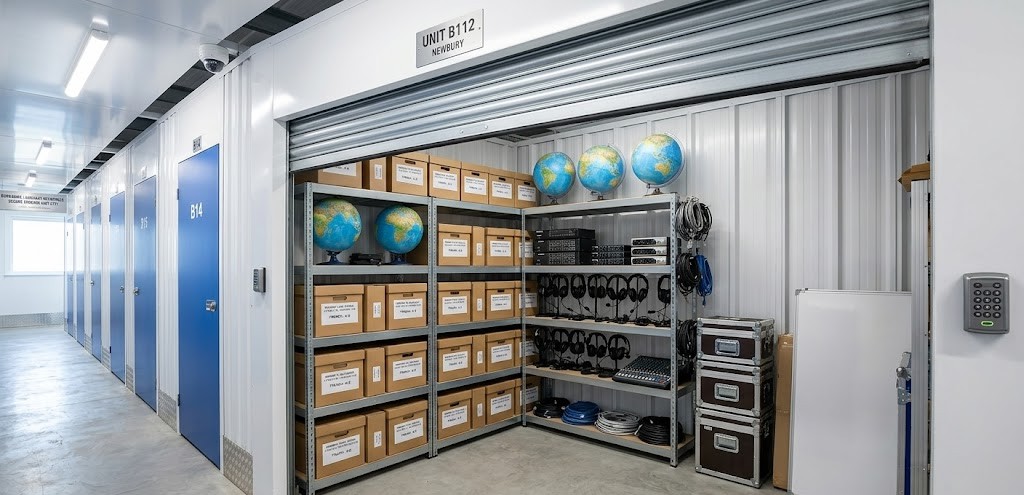
Language schools face a unique challenge that most educational institutions don’t: their teaching materials need to rotate as frequently as their programmes change. One term you’re running intensive Spanish courses with matching textbooks, flashcards, and cultural props. Next term, Mandarin takes priority and you need an entirely different set of resources. Add seasonal variations, exam preparation materials, and the physical equipment needed for modern language teaching, and you’ve got a storage puzzle that can quickly overwhelm your available storage space.
The problem compounds when you consider that language teaching materials aren’t cheap to replace. A full set of interactive whiteboards, audio equipment, and graded readers for multiple proficiency levels represents significant investment. Simply discarding materials between programmes isn’t financially viable, yet storing everything on-site often means cluttering valuable teaching spaces or converting rooms that could generate income into makeshift storage areas.
Why Language Schools Need Rotating Storage Solutions
Unlike traditional schools with relatively static curricula, language schools operate on dynamic programme schedules. You might run beginner French classes Monday through Wednesday, advanced German on Thursdays, and weekend intensive Italian courses. Each programme requires distinct teaching materials, from textbooks and workbooks to cultural artefacts and multimedia resources.
The financial reality makes proper language school resource storage essential. A single set of coursebooks for a 20-student class can cost £400-600. Multiply that across multiple languages and proficiency levels, and you’re looking at thousands of pounds in materials that sit unused for months at a time. Proper storage protects this investment whilst freeing up premium teaching space.
Many language schools initially try managing everything in cupboards and back rooms. The result? Teachers waste time hunting for materials, resources get damaged from poor storage conditions, and duplicate purchases happen because nobody’s certain what’s already available.
One school director in Reading ran French, Spanish, German, and Italian courses across four proficiency levels each, serving 180 students annually. She’d been storing inactive teaching materials in three storage cupboards and a back office for three years. The disorganisation was costing her business money she hadn’t realized. When she conducted a full audit, she found three unopened sets of the same German B1 textbooks – each set worth £450 – because different teachers couldn’t locate the originals buried in cluttered storage. She also discovered two sets of Spanish A2 workbooks that had developed mould from being stored against a damp exterior wall, requiring £380 in replacements. After moving to proper storage with organized shelving and a digital inventory system, duplicate purchases stopped entirely. She calculated the system paid for itself within eight months through eliminated waste and saved her approximately 5 hours weekly in staff time previously spent searching for materials.
Calculating Your Storage Requirements
Start by auditing your current teaching materials by language and level. Don’t just count textbooks. Include workbooks, teacher guides, flashcard sets, cultural posters, DVDs or digital media on physical drives, audio equipment specific to certain programmes, and any props or realia used in lessons.
A typical language school running four to six languages across three proficiency levels usually needs between 50-100 square feet of dedicated storage space. That’s roughly equivalent to a small bedroom, but the actual requirement varies significantly based on your programme rotation speed and teaching methodology.
Language schools using communicative teaching methods tend to accumulate more physical resources. Games, role-play props, and authentic materials like foreign newspapers or product packaging all take up space. Conversely, schools relying heavily on digital materials might need less physical storage but more storage space for equipment like tablets, charging stations, and backup hardware.
Think of it like a restaurant with seasonal menus. You wouldn’t throw away your winter ingredients come summer – you’d store them properly until needed again. The same principle applies to language teaching materials, except your ‘seasons’ might change every eight to twelve weeks.
What Actually Needs Storing Between Programmes
Core teaching materials form the bulk of most storage needs. Coursebooks, workbooks, and teacher editions for inactive programmes should be boxed by language and level. Label boxes clearly with both the language and CEFR level (A1, B2, etc.) so staff can locate materials quickly when programmes rotate back.
Supplementary resources often get overlooked in storage planning, yet they’re expensive to replace. Graded readers, authentic materials, flashcard sets, and laminated teaching aids all need proper storage to maintain their condition. One school had spent over £1,200 replacing laminated materials that had warped in a damp storage cupboard – teaching resources that would’ve lasted years with proper storage.
Audio-visual equipment requires careful consideration. Portable CD players, digital recorders, headphone sets, and interactive whiteboard accessories tied to specific software all need secure, dry storage. These items are particularly vulnerable to theft and environmental damage, making professional storage with proper security and climate control worthwhile.
Examination materials demand secure storage with strict access control. Past papers, marking schemes, and official examination resources can’t simply be left in any storage space. Language schools registered as examination centres have additional compliance requirements around how these materials are secured.
Cultural teaching aids add authenticity to language teaching but take up considerable space. Maps, flags, cultural artefacts, traditional clothing items, and foreign currency samples all enhance teaching but aren’t needed simultaneously across all programmes.
Organising Materials for Quick Rotation
The key to efficient programme rotation is organisation that makes retrieval as simple as storage. Box materials by language first, then by level within each language. This prevents the common mistake of organising by resource type, which forces teachers to search through multiple boxes to gather everything needed for a single class.
Use transparent plastic storage boxes where possible. Being able to see contents without opening boxes saves time and reduces the risk of damage from repeated handling. For materials that must go in cardboard boxes, photograph the contents and attach the image to the outside – it’s far more useful than written lists.
Create a simple inventory system that tracks box locations and contents. This doesn’t require expensive software. A shared spreadsheet with columns for language, level, resource type, box number, and storage location works perfectly. Update it whenever materials move between your school and storage facility.
Consider the programme rotation schedule when packing. Teaching materials needed quarterly should be easily accessible near the front of your storage space. Resources used only annually can go towards the back. One school director compared it to organising a wardrobe: “You wouldn’t bury your winter coat at the back in October, and you shouldn’t bury your exam materials three months before exam season.”
Protecting Materials During Storage
Language teaching materials face specific storage challenges. Paper materials deteriorate in damp conditions, audio equipment suffers in temperature extremes, and everything from textbooks to tablets is vulnerable to theft – like the difference between storing valuable documents in a filing cabinet versus leaving them in a cardboard box in a damp garage.
Moisture’s the primary enemy of stored teaching materials. Books develop mould, laminated materials separate, and cardboard boxes collapse in damp conditions. Climate-controlled storage maintains consistent temperature and humidity levels, protecting materials from seasonal variations that cause damage over time.
Pack books spine-down in boxes to prevent warping. Don’t overfill boxes – aim for 15-20kg maximum so they’re manageable to move and don’t crush contents. Place silica gel packets in boxes containing particularly valuable or moisture-sensitive materials.
Electronic equipment needs additional protection. Wrap items individually in bubble wrap, remove batteries before storage to prevent corrosion, and keep original packaging where possible – it’s designed specifically to protect during transport and storage. Store equipment in climate-controlled conditions to prevent condensation damage.
Security matters more than many language schools initially recognise. Teaching materials represent thousands of pounds in replacement costs, whilst audio-visual equipment’s attractive to thieves. Professional storage facilities offer security measures that school premises often can’t match: 24-hour CCTV, individual unit alarms, and controlled access systems that log every entry.
Managing Seasonal Programme Peaks
Most language schools experience seasonal fluctuations. Summer intensive courses, September enrolments, and January new-year resolution learners all create peaks requiring additional materials and space.
Plan your storage strategy around these peaks rather than your quietest periods. You need enough space to accommodate maximum material requirements, not average needs. A school that’s perfectly organised in February might find itself overwhelmed by June if storage planning only considered low-season requirements.
Some language schools use a swap system: as summer intensive materials come out of storage, the regular term materials that won’t be needed for three months go in. This maintains a relatively constant storage footprint whilst ensuring materials are always protected and accessible.
Consider storing furniture during peak seasons. If you convert staff areas or common spaces into temporary classrooms during busy periods, personal storage can accommodate the displaced furniture until normal operations resume.
Exam Season Storage Strategies
Language schools offering examination preparation face intense periods where specific materials see heavy use followed by months of inactivity. IELTS, Cambridge English, or DELE materials might be essential for eight weeks then unnecessary for six months.
Store exam materials separately from general teaching resources. They need stricter security and more careful tracking, particularly if you’re an authorised examination centre with compliance requirements around material handling.
Create exam-specific boxes that contain everything needed for a particular examination level. An IELTS box might include practice tests, listening materials, sample answer booklets, examiner guidance, and promotional materials. When exam season approaches, you collect one box per examination rather than gathering resources from multiple locations.
Secure storage becomes non-negotiable for official examination materials. Past papers, answer keys, and examiner resources often have strict handling requirements specified by examination boards. Professional storage with individual unit access and security monitoring helps meet these compliance standards.
Business Storage for Growing Schools
As language schools expand, storage needs shift from simple material management to broader business storage requirements. Marketing materials for recruitment, archived student records, administrative documents, and seasonal furniture all compete for space.
Language schools operating multiple locations face particular challenges. Centralising materials in a single storage facility allows resources to be shared between sites as programmes rotate. This prevents duplicate purchases and ensures efficient resource utilisation across your organisation.
Consider storage location carefully. Facilities close to your school minimise retrieval time when programme rotation requires material swaps. Drive-up access units make loading and unloading significantly easier when you’re moving multiple boxes of teaching materials.
Making Storage Work with Your Teaching Schedule
The best storage strategy aligns with your academic calendar. Map out your programme schedule for the year, noting when each language and level runs. This reveals natural rotation points where material swaps make sense.
Most language schools find quarterly rotations work well. At the end of each term, materials for completed programmes go into storage whilst resources for upcoming programmes come out. This maintains a manageable amount of materials on-site without cluttering teaching spaces.
Build retrieval time into your planning. Don’t wait until the day before a new programme starts to collect materials from storage. Allow at least a week for teachers to review resources, identify any gaps, and prepare lessons. One school director’s advice: “If your new programme starts Monday, have materials back on-site by the previous Wednesday. It eliminates last-minute panic.”
Create a simple booking system for storage access if multiple staff members need to retrieve materials. This prevents wasted journeys when two teachers independently decide to collect resources on the same day.
Packaging and Protecting Your Investment
The materials you place in storage represent significant financial investment. Proper packaging isn’t an optional extra – it’s essential protection for assets that cost thousands to replace.
Invest in quality packaging materials rather than reusing damaged boxes or inadequate wrapping. Strong double-walled boxes, bubble wrap for equipment, and packing tape that won’t fail in storage conditions all pay for themselves by preventing damage.
Label everything clearly on multiple sides. Use permanent markers and include both contents and destination information. A label reading “Spanish A2 – Coursebooks & Workbooks – Store until June” tells you everything needed at a glance.
Group materials logically within boxes. Don’t mix languages or levels unless they’re always used together. The goal’s to open one box and find everything needed for a specific purpose, not to search through multiple boxes gathering scattered resources.
Long-Term Planning for Programme Development
Storage strategy should evolve with your school. As you add new languages or expand into additional proficiency levels, storage requirements grow accordingly. Plan for this growth rather than scrambling for space when new programmes launch.
Some language schools maintain a growth buffer – unused storage capacity that accommodates new programme materials without requiring immediate storage upgrades. This might mean initially renting a slightly larger unit than currently needed, but the flexibility proves valuable when opportunity arises.
Review your storage arrangements annually. Are materials still organised logically? Has your programme mix changed in ways that make your current system inefficient? Do you have resources stored that you’ll genuinely never use again? Regular reviews prevent storage from becoming a dumping ground for materials that should be disposed of or donated.
Consider digital alternatives where appropriate, but recognise that language teaching still relies heavily on physical materials. Textbooks, workbooks, and hands-on teaching resources remain central to effective language instruction. Storage solutions need to accommodate this reality rather than assuming everything will eventually become digital.
Professional Resource Management
Language schools operate in a constant state of programme rotation, with teaching materials moving in and out of active use throughout the year. Effective language school resource storage protects these valuable teaching resources whilst freeing up premium teaching space that generates income. The key lies in organisation that makes rotation simple: materials grouped by language and level, clearly labelled, properly protected, and stored in secure conditions that prevent damage.
Professional storage transforms what many language schools experience as a chaotic scramble into a manageable system. When programme rotation happens, you simply swap materials rather than searching through cluttered cupboards or replacing resources that were damaged in inadequate storage. The investment in proper storage pays for itself through protected assets, efficient space utilisation, and reduced staff time wasted managing materials.
Newbury Self Store understands that language schools need storage supporting dynamic programme rotation, not static warehouse space. You need facilities where teaching materials stay mould-free and organized, where teaching resources remain accessible for quarterly programme changes, and where examination materials meet compliance security standards. We know that your language teaching materials aren’t just books – they’re the foundation of quality instruction that helps learners achieve their goals.
If your language school’s struggling with rotating programme materials, contact us to discuss business storage solutions that work with your academic calendar. We understand the unique challenges language schools face and can recommend options that make programme rotation straightforward rather than stressful.