
 01635 581 811
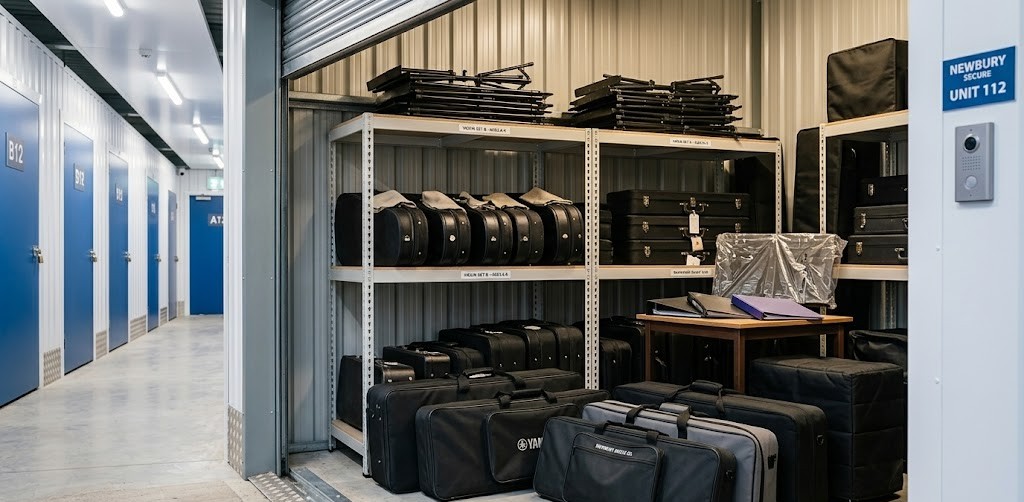
Peripatetic music teachers face a unique logistical challenge: how do you safely store, transport, and maintain multiple musical instruments when you’re constantly on the move between schools, studios, and homes? Unlike teachers with a fixed classroom, peripatetic educators often juggle several instruments, sheet music collections, amplifiers, and teaching materials across different locations each week. The wear and tear on teaching equipment is significant, and finding secure space that doesn’t compromise your home or car becomes a real headache.
The solution many experienced music teachers have discovered is dedicated music teacher instrument storage that acts as a professional base between teaching appointments. Rather than cramming cellos into spare bedrooms or leaving drum kits permanently loaded in vehicles, a properly organised storage unit gives you the flexibility to rotate equipment, protect valuable instruments from temperature damage, and maintain a clear separation between work and home life.
Why Peripatetic Teaching Demands Different Storage Solutions
Teaching music across multiple venues creates storage problems that fixed-location teachers never encounter. You’re not just storing instruments – you’re managing a mobile teaching practice.
Consider the typical week for a peripatetic brass teacher: Monday mornings at a primary school in Newbury, Tuesday afternoons at a secondary school fifteen miles away, Wednesday evenings running private lessons from home, and weekends teaching at a music centre. Each location requires different equipment. The primary school needs smaller instruments and beginner materials. The secondary school sessions involve larger instruments and advanced repertoire. Private lessons demand your best instruments and a wider selection for students to try.
Storing everything at home sounds logical until you realise you’re living in what feels like a musical instrument warehouse. Your hallway becomes an obstacle course of trumpet cases, your spare room disappears under stacks of music stands, and your partner starts questioning why there’s a glockenspiel in the bathroom. Not ideal.
The alternative – keeping instruments permanently in your vehicle – exposes them to temperature extremes that damage wood, warp brass, and destroy electronics. A violin left in a hot car during summer can suffer irreversible soundboard damage within hours. Cold winter nights cause condensation inside wind instruments, leading to pad deterioration and stuck valves.
The Real Cost of Poor Instrument Storage
Let’s talk numbers, because inadequate storage hits your wallet hard. Professional instruments represent substantial investments: a decent intermediate clarinet costs £800-£1,500, a quality acoustic guitar runs £600-£2,000, and don’t even start on string instruments where bows alone can exceed £500.
Temperature and humidity fluctuations cause the most expensive damage. Wooden instruments crack when humidity drops below 40% or rises above 60%. Brass instruments develop red rot (a corrosive process that destroys the metal from inside) when stored in damp conditions. Electronic equipment like amplifiers and digital pianos suffer circuit board damage from condensation.
One peripatetic teacher learned this lesson the expensive way. She’d stored her teaching collection – including three acoustic guitars, a keyboard, and various percussion instruments – in her garage. After one particularly damp winter, she discovered the guitars had warped necks, the keyboard’s circuit board had corroded, and several tambourines had split skins. The repair bill exceeded £2,000, not counting the instruments she couldn’t salvage. She’d thought a garage was “good enough” until she realized proper storage would’ve cost a fraction of what she spent on repairs.
Beyond direct damage, poor storage creates hidden costs. Time wasted searching for specific sheet music or accessories adds up. Forgetting essential teaching equipment because it’s buried somewhere at home means purchasing duplicates. The mental load of disorganised storage affects your teaching quality and professional confidence.
Choosing the Right Storage Unit Size for Your Teaching Collection
Music teachers consistently underestimate how much space their instrument collection actually requires. A good rule: if you think you need a 25 sq ft unit, you probably need 50 sq ft.
Here’s why that calculation matters. Instruments need proper spacing – you can’t stack violin cases on top of each other or lean guitars against walls without protective cases. Sheet music and teaching materials require shelving units that take up floor space. You’ll want room to actually move around and access items without dismantling your entire storage system every time you need something.
For small-scale peripatetic teachers (one or two instrument types, teaching 10-15 students weekly), a 25-35 sq ft unit typically suffices. This accommodates 3-4 instrument cases, a small shelving unit for music and accessories, and teaching materials like music stands and a portable speaker system.
For mid-range teaching practices (multiple instrument families, 20-30 students across several schools), look at 50-75 sq ft. This gives you space for 8-10 instruments, proper shelving systems, larger equipment like drum kits or keyboard stands, and room to organise materials by school or teaching level.
For established peripatetic teachers with extensive collections (multiple instruments per family, teaching 40+ students, running ensemble groups), 75-100 sq ft provides the professional storage base you need. You can create zones for different instrument families, dedicate space to ensemble equipment, and maintain a proper inventory system.
Think of choosing a unit size like packing for a trip. If you fill every inch of your suitcase, you’ve got no flexibility for additions and everything gets crushed. Leave some breathing room, and suddenly packing becomes manageable.
Setting Up Your Storage Unit as a Professional Teaching Base
The difference between a storage unit and a functional teaching base lies entirely in how you organise it. Random stacking creates chaos; strategic organisation creates efficiency.
Start with proper shelving units – the kind you can adjust as your collection changes. Industrial metal shelving works brilliantly because it’s sturdy, affordable, and configurable. Position shelving along the back and side walls, leaving the centre space for larger instruments and equipment you access frequently.
Create instrument zones based on how often you use each item. Weekly teaching instruments go in the most accessible positions – front and centre, at waist height. Occasional-use instruments (like that bass guitar you bring out for specific students) can occupy higher shelves or back corners. Seasonal equipment (like that entire percussion set for summer school programmes) goes in the least accessible spots.
Use clear plastic storage boxes for accessories, sheet music, and teaching materials. Label everything clearly with waterproof markers. One box for brass accessories (valve oil, mouthpieces, cleaning supplies), another for string accessories (rosin, spare strings, tuners), another for teaching materials (reward stickers, assessment sheets, spare manuscript paper). You’ll thank yourself when you’re rushing between schools and need to grab specific items quickly.
One experienced peripatetic teacher uses a colour-coding system: blue boxes for beginner materials, green for intermediate, red for advanced. She can grab the right box for each teaching session without second-guessing. It’s a simple system, but it’s transformed how efficiently she operates between venues.
Instrument cases should always be stored flat or upright according to manufacturer recommendations. Never lean cases at angles or stack heavy items on top of delicate instruments. Guitars and string instruments particularly suffer from improper storage positions.
Consider a small workbench area if space allows. A folding table gives you room to restring guitars, oil valves, or organise sheet music without doing it on your kitchen table at home. This transforms your storage unit from passive storage into an active workspace – like having a backstage preparation area where everything’s ready before you step into the teaching spotlight.
Climate Control: Non-Negotiable for Serious Instrument Collections
Here’s where many music teachers make a costly mistake: choosing standard storage when their instruments desperately need climate control. If your teaching collection includes wooden or vintage instruments, climate control isn’t a luxury – it’s essential insurance against expensive damage.
Wooden instruments (violins, cellos, acoustic guitars, clarinets, oboes, bassoons) respond dramatically to humidity changes. Too dry, and wood contracts, causing cracks and joint separations. Too humid, and wood swells, affecting playability and causing glue joints to fail. Professional luthiers maintain workshops at 45-50% relative humidity for good reason.
Brass instruments handle temperature variations better than wood, but they’re not invincible. Condensation from temperature swings causes internal corrosion. Lacquer finishes can crack or peel when subjected to repeated temperature extremes. Valve mechanisms seize up when moisture combines with old valve oil.
Electronic equipment – amplifiers, keyboards, digital interfaces, recording equipment – suffers immediate damage from condensation. Circuit boards corrode, solder joints fail, and screens develop moisture damage that’s rarely repairable.
Climate-controlled units maintain consistent temperature (typically 15-20°C) and humidity levels (40-60%) year-round. This stability protects your instruments exactly as they’d be protected in a professional music shop or concert hall. The monthly cost difference between standard and climate-controlled storage (usually £10-20 more) is insignificant compared to a single instrument repair bill.
Security Considerations for Valuable Teaching Equipment
Musical instruments attract thieves because they’re valuable, portable, and easily resold. Your storage facility’s security directly impacts your financial risk.
Look for facilities with 24-hour CCTV coverage that actually monitors all access points, not just the entrance. Cameras should cover corridors, unit doors, and loading areas. Check whether footage’s actively monitored or just recorded for later review – active monitoring provides better deterrence.
Individual unit alarms add another security layer. These systems alert facility management if your specific unit door opens unexpectedly. Combined with facility-wide security, this creates multiple barriers against theft.
Controlled access systems should require unique codes or key cards for entry. The best facilities log every entry and exit, creating an audit trail of who accessed the building and when. This accountability discourages opportunistic theft and helps investigations if incidents occur.
Consider your own insurance coverage carefully. Check whether your existing musical instrument insurance covers items in storage, or whether you need additional coverage. Many specialist music insurance policies include storage coverage, but standard home contents insurance often doesn’t. Document your entire collection with photographs, serial numbers, and valuations. Store this documentation separately from your instruments – digitally in cloud storage or in a home safe.
Don’t advertise what you’re storing. Avoid obvious labelling on your unit door like “Musical Instruments Inside.” Use discreet organisation systems that don’t broadcast valuable contents to anyone walking past.
Maximising Accessibility for Your Teaching Schedule
Storage only works if accessing your equipment fits seamlessly into your peripatetic teaching routine. Poorly located or inconveniently accessible storage creates more problems than it solves.
Location matters enormously. Calculate drive times between your storage facility and your regular teaching venues. If you teach primarily in Newbury and surrounding areas, storage in central Newbury makes more sense than a cheaper facility 30 minutes away. Those extra miles add up quickly when you’re making multiple trips weekly.
Access hours determine whether storage enhances or restricts your flexibility. Some facilities offer 24-hour access, others restrict hours to 7am-7pm. Consider your actual teaching schedule: do you need early morning access before 7am school sessions? Do you teach evening lessons that might require 8pm or 9pm access? Match access hours to your real-world needs, not idealised schedules.
Drive-up access versus corridor storage affects how quickly you can load and unload equipment. Container storage with drive-up access lets you park directly outside your unit, perfect for loading heavy equipment like drum kits or multiple instrument cases. Corridor units work fine for lighter loads but become tedious when you’re moving substantial equipment.
Loading trolleys and equipment provided by the facility save your back and speed up the process. Check whether trolleys are available and in good condition – you don’t want to discover the only trolley has a broken wheel when you’re loading a double bass.
Organising Teaching Materials Alongside Instruments
Instruments are only part of your peripatetic teaching toolkit. Sheet music, teaching resources, assessment materials, and administrative paperwork all need organised storage that supports efficient teaching.
Sheet music accumulates relentlessly. Use vertical filing systems or magazine holders to keep music organised by level, instrument, or exam board. Clear plastic sleeves protect frequently used pieces from wear. Consider digitising your most-used music (where copyright permits) to reduce physical storage needs, but maintain physical copies as backups.
Teaching resources – flashcards, rhythm cards, theory workbooks, manuscript paper – work best in labelled boxes organised by topic or teaching level. Quality packing materials help protect resources and keep everything organised for easy access.
Spare parts and accessories need systematic organisation or they become a jumbled mess. Small parts containers (the kind hardware shops sell for screws and nails) work brilliantly for valve caps, bridge mutes, spare reeds, guitar picks, and tuner batteries. Mount these containers on shelving at eye level for quick access.
Assessment and administrative materials – student records, examination paperwork, attendance registers – require secure storage that protects student privacy. Use lockable filing boxes or a small filing cabinet. Keep these materials separate from teaching resources to maintain clear boundaries between administrative and teaching functions.
Rotation Systems for Multi-School Teaching
If you teach across multiple schools with different instrument requirements at each location, a rotation system prevents you from hauling your entire collection everywhere.
The concept’s straightforward: organise instruments and materials into school-specific kits that contain everything needed for that particular venue. Monday’s primary school kit contains smaller instruments, beginner books, and simple accompaniment tracks. Tuesday’s secondary school kit includes advanced instruments, exam pieces, and ensemble music.
Store these kits in clearly labelled containers or bags that you can grab quickly. Some teachers use different coloured bags for each school – visual coding that eliminates confusion when you’re rushing between venues.
Restock and reset your kits at the end of each teaching day or week. Return used materials to your storage unit, restock consumables like spare reeds or strings, and prepare the next day’s kit. This routine prevents the common scenario where you discover mid-lesson that you’ve left essential teaching materials at the previous school.
For instruments used across multiple venues, consider whether duplicate instruments make financial sense. Yes, buying two intermediate clarinets costs more upfront than transporting one between schools, but the time savings and reduced wear on instruments often justify the investment. Calculate the value of your time spent loading, unloading, and transporting instruments against the cost of strategic duplicates.
Seasonal Storage Strategies
The peripatetic teaching calendar has distinct rhythms, and your storage strategy should flex accordingly. Summer holidays, examination periods, and term breaks create opportunities to reorganise and maintain your collection.
End-of-term deep cleans keep instruments in teaching condition. Use the summer break to service all instruments properly: full cleaning, restringing, valve oiling, pad replacement, and adjustment of any mechanical issues. A well-maintained instrument teaches better and lasts longer.
Seasonal equipment rotation frees up space during quieter periods. If you run summer schools or holiday workshops, bring out specialised equipment that stays packed away during term time. Conversely, pack away term-time materials during holidays to create space for maintenance work.
Exam season requires special organisation. Create dedicated exam materials boxes containing everything needed for examination periods: exam pieces for each grade and instrument, scales and arches books, sight-reading examples, and accompaniment tracks. Having these materials pre-organised eliminates last-minute scrambling during the stressful exam period.
Insurance reviews should happen annually, typically at the end of the academic year. Update your instrument valuations, photograph any new additions to your collection, and review whether your coverage still matches your collection’s current value. Instrument values change, and your insurance should reflect reality.
When Storage Becomes a Business Asset
For established peripatetic teachers, proper storage transforms from an expense into a business asset that enables growth. Here’s how that shift happens.
Professional credibility increases when you can reliably provide high-quality, well-maintained instruments. Students notice the difference between a teacher who produces a pristine instrument from organised storage versus one who pulls a dusty, poorly maintained instrument from a car boot. Parents notice too.
Teaching flexibility expands when you’re not constrained by what fits in your home or car. You can take on students requiring instruments you don’t currently teach, knowing you have space to add new equipment. You can develop ensemble teaching or group lessons because you’ve got the storage capacity for multiple instruments and ensemble materials.
Business efficiency improves dramatically. Time not spent searching for materials or dealing with damaged equipment is time you can spend teaching, marketing your services, or simply enjoying life outside work. The mental clarity of knowing exactly where everything’s stored reduces stress and improves decision-making.
Expansion possibilities open up. Many successful peripatetic teachers eventually transition into running their own music centres or schools. Having already established organised, professional storage systems makes that transition smoother. Your storage unit becomes the foundation of your teaching business’s physical infrastructure.
The music teachers who invest in proper storage early – before their homes become overwhelmed and their instruments suffer damage – consistently report that it’s one of the best business decisions they’ve made. It’s not glamorous, but neither is spending £2,000 on instrument repairs that proper storage would’ve prevented.
Making the Transition to Professional Storage
Moving your teaching collection into dedicated storage feels like a significant step, but the process is more straightforward than most teachers anticipate. Start by auditing what you actually own and use. That guitar you haven’t touched in three years? Either sell it or acknowledge it’s taking up space. The sheet music for instruments you no longer teach? File it separately or digitise it.
Calculate your actual space needs based on your current collection plus reasonable growth room. Don’t forget to factor in shelving units, storage boxes, and workspace – empty floor space isn’t useful space.
Visit potential facilities in person, ideally during busy periods when you can observe how well the facility operates under normal conditions. Check personal storage options if you’re combining teaching equipment with household items, or business storage if you’re treating your peripatetic teaching as a formal business operation.
Invest in proper packaging and organisation materials from the start. Quality storage boxes, shelving units, and protective materials cost more upfront but prevent damage and create systems that actually function long-term. Cheap containers crack, inadequate shelving collapses, and poor organisation defeats the entire purpose of having dedicated storage.
Set up your space methodically over a weekend rather than rushing it between teaching commitments. Proper initial organisation creates systems that maintain themselves. Rushed setup creates chaos that requires constant reorganisation.
Protecting Your Investment and Your Livelihood
Your instrument collection isn’t just equipment – it’s the physical foundation of your livelihood. Treating it with the care and organisation it deserves isn’t perfectionism; it’s professional necessity.
Climate-controlled, secure storage that’s conveniently located and properly organised transforms how you operate as a peripatetic teacher. You stop worrying about instrument damage, stop wasting time searching for materials, and stop feeling like your home’s been invaded by your work. The mental space that creates is as valuable as the physical space.
The music teachers who thrive in peripatetic teaching are those who treat their teaching practice as a genuine business, and proper storage is fundamental business infrastructure. It sits alongside quality instruments, ongoing professional development, and effective teaching methods as non-negotiable elements of sustainable teaching careers.
Newbury Self Store understands that musical instruments need more than just empty space. You need climate control that protects wooden instruments from humidity damage, security that safeguards your investment, and access hours that match your teaching schedule. We know that your instruments aren’t just equipment – they’re your livelihood and the tools that shape young musicians.
If you’re currently teaching from a jumbled collection spread across your home, car, and various cupboards, take an honest look at what that chaos costs you in time, stress, and equipment damage. The monthly cost of proper storage almost certainly costs less than you’re currently losing to inefficiency and preventable damage. For specific advice on unit sizes and options that match your teaching collection, contact us to discuss your requirements. Your instruments – and your sanity – will thank you.