
 01635 581 811
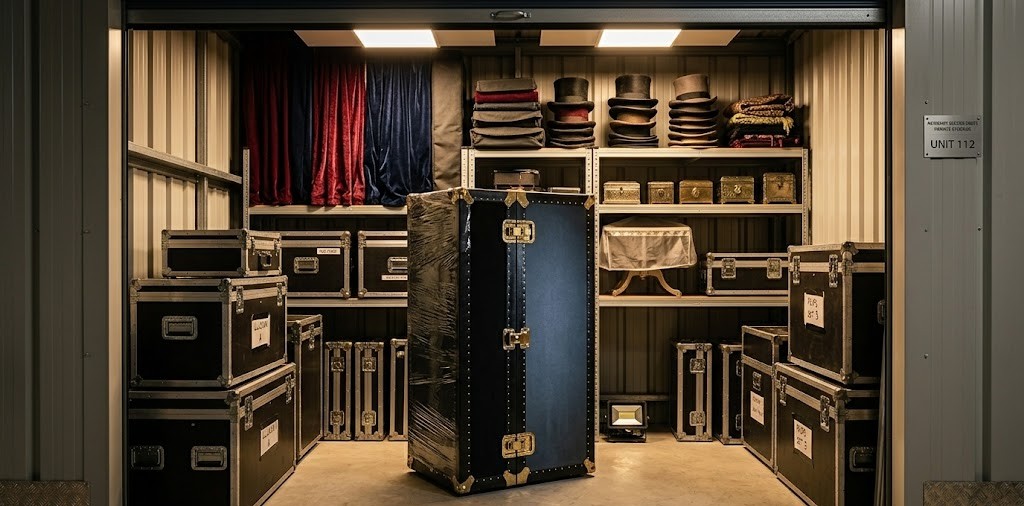
Professional performers know that a single damaged prop can derail an entire show. That levitating table you spent months perfecting, the custom-built vanishing cabinet that cost thousands, or the delicate silk scarves used in your signature routine – these aren’t just equipment. They’re your livelihood.
After helping dozens of entertainers through the years, I’ve seen what happens when magic props aren’t stored correctly. A comedian’s vintage ventriloquist dummy develops mould in a damp garage. A magician’s mirror-box illusion warps in summer heat. An entire collection of hand-painted backdrops gets crushed under boxes of Christmas decorations. These aren’t just storage mistakes – they’re career setbacks that could’ve been avoided with proper magician prop storage planning.
The challenge for professional performers isn’t just finding space. It’s about protecting highly specialised performance equipment that ranges from fragile glass props to heavy mechanical illusions, often with strict environmental requirements and security concerns. Let’s talk about how to do this properly.
Why Standard Storage Solutions Don’t Work for Performance Equipment
Most people think any dry space will do for storage. That’s fine for garden furniture or old textbooks, but performance equipment demands more thought.
Professional props often contain multiple materials – wood, metal, glass, fabric, electronics – all responding differently to temperature and humidity changes. That intricate automaton combining clockwork mechanisms with delicate paintwork? Standard garage storage will destroy it within months. The moisture affects the metal parts whilst temperature swings crack the paint and warp the wooden housing.
Then there’s the security angle. A custom-built stage illusion might represent years of development and thousands of pounds in materials and craftsmanship. Some props are genuinely irreplaceable – vintage magic apparatus, one-of-a-kind commissioned pieces, or equipment with sentimental value from a performer’s early career. You can’t just stack these in a shed and hope for the best.
Size presents another problem. Performance equipment rarely comes in convenient boxes. You’ve got collapsible stages, oversized props, wheeled platforms, and stage illusions that need to remain assembled to maintain their calibration. Standard shelving units won’t cut it.
Understanding What Your Props Actually Need
Before you start packing anything, assess what you’re really storing. Not all props require the same conditions.
Electronics and mechanical illusions need stable temperatures and low humidity. That radio-controlled dove pan or motorised levitation rig contains circuits and motors that corrode in damp conditions. These items also need protection from dust, which works its way into mechanisms and causes failures mid-performance.
Fabric-based props – silks, banners, costumes, and cloth backdrops – face different threats. They’re vulnerable to moisture (leading to mildew), moths, and crushing. That gorgeous silk production you use for your stage finale will emerge as a wrinkled, musty mess if it’s compressed under heavy boxes for six months.
Wooden apparatus responds to humidity changes by expanding and contracting. Your precisely calibrated Zig-Zag Lady illusion relies on exact measurements. If the wood warps even slightly, the whole mechanism stops working. Don’t skip this step – understanding these requirements now prevents expensive repairs later.
Glass and mirror props are obviously fragile but also surprisingly heavy. Improper storage leads to breakage, and specialist glass for illusions isn’t something you can replace at the local hardware shop.
Preparing Props for Storage: The Professional Approach
Proper preparation makes all the difference between equipment that’s ready to perform and equipment that needs weeks of restoration.
Start with a complete inventory. Photograph every major piece from multiple angles, noting any existing damage or wear. This documentation protects you if anything goes wrong and helps you remember how complex props assemble. I once helped a mentalist who’d stored an elaborate prediction box for eighteen months – he’d forgotten the exact configuration and wasted hours working it out. Photos would’ve saved him that headache.
Clean everything thoroughly. Residue from smoke machines, fingerprints on glass, or dust on fabric all become permanent problems during long-term storage. Use appropriate cleaning methods for each material – wood polish for wooden cabinets, proper glass cleaner for mirrors, gentle fabric cleaner for silks. This isn’t busywork; it’s preventing deterioration.
Disassemble what you safely can, but – and this is crucial – only if you’re certain you can reassemble it correctly. Some illusions rely on precise calibration that’s difficult to replicate. For these, storage space for the assembled unit’s worth the extra cost. Label every component if you do disassemble. Your future self will thank you.
Protect individual elements properly. Wrap glass and mirrors in bubble wrap, securing it with tape that won’t leave residue. Cover fabric props with breathable cotton sheets rather than plastic, which traps moisture. For mechanical parts, consider applying a light coat of protective oil to prevent corrosion, but test this on an inconspicuous area first.
Think of preparation like packing for a long journey where your props travel alone. You wouldn’t throw an expensive camera loose in a suitcase – you’d protect it carefully. Apply that same logic here.
Choosing the Right Storage Environment
Here’s where many performers make their biggest mistake: assuming any lockup will do.
Temperature stability matters more than specific temperature. Your props can handle being slightly warm or cool, but they can’t handle swinging between extremes. A metal lockup that hits 35°C in summer and drops to freezing in winter will systematically destroy anything stored inside. Wood warps, glue fails, electronics corrode, and fabrics deteriorate.
Humidity control prevents the majority of storage damage. Excess moisture causes mould on fabrics, rust on metal components, and warping in wood. Too little moisture (rare in the UK, but possible in heated spaces) makes wood crack and leather dry out. Proper personal storage facilities maintain consistent conditions year-round.
Security requirements vary by performer. If you’re storing commercially valuable illusions or one-of-a-kind props, you need proper security measures. Look for facilities with individual unit alarms, CCTV coverage, and controlled access. Some performers prefer ground-floor units with drive-up access for convenience, whilst others prioritise upper-floor units for additional security.
Accessibility affects your working life. How often do you need to access your props? If you’re pulling equipment weekly for different shows, you need convenient access and enough space to move around inside the unit. If you’re storing off-season equipment for months, accessibility matters less than security and environmental control.
Organising Your Storage Unit for Maximum Efficiency
Random stacking leads to damaged props and wasted time. Proper organisation means you can find what you need quickly without disturbing other items.
Create zones within your unit. Group similar items together – all fabric props in one area, mechanical illusions in another, small hand props in a third section. This isn’t just about organisation; it’s about protecting items with similar environmental needs and making retrieval straightforward.
Use vertical space intelligently. Heavy items live on the floor or bottom shelves. Medium-weight items go at waist height where they’re easy to access. Light but bulky items (like fabric backdrops or collapsible props) can go higher. Never stack heavy items on top of delicate ones, regardless of size.
Maintain clear pathways. You should be able to walk into your unit and reach any section without moving multiple items. This seems obvious until you’re trying to retrieve a specific prop for a last-minute booking and you’ve got to shift half your storage to reach it.
Label everything clearly. Use large, legible labels on all boxes and covered items. Include contents and any handling instructions (“Fragile – Glass”, “This Side Up”, “Heavy – Use Two People”). Your labels should be visible from the pathway, so you’re not unwrapping items to check contents.
Keep frequently used items near the front. If certain props get used regularly, store them where you can grab them quickly. Seasonal items or rarely used pieces can go towards the back.
A brief story: I worked with a children’s entertainer who stored everything randomly, figuring she’d remember where things were. Six months later, she needed her puppet theatre for a booking – and spent three hours searching through her unit. She now uses a simple zone system and hasn’t had that problem since. Organisation isn’t about being fussy; it’s about respecting your own time.
Special Considerations for Valuable and Irreplaceable Items
Some props deserve extra attention because of their value, rarity, or the difficulty of replacement.
Custom-built illusions often represent significant investment – both financial and creative. Document these thoroughly with photos and measurements. Consider keeping digital copies of any plans or specifications separately. If the prop requires specific assembly or calibration, write down those instructions whilst the knowledge is fresh.
Vintage or antique apparatus may have historical value beyond their performance use. These items often need museum-quality storage conditions. If you own genuinely valuable vintage props, research proper archival storage techniques or consult with preservation specialists.
Electronic props with batteries need special handling. Remove all batteries before storage – even “dead” batteries can leak and cause corrosion. Store batteries separately in a cool, dry location. This simple step prevents expensive damage to circuit boards and contacts.
Insurance documentation becomes crucial for valuable items. Photograph everything, keep receipts, and maintain an up-to-date inventory with estimated replacement values. Check whether your storage facility’s insurance covers your specific needs, or whether you need additional performer’s insurance that includes stored equipment.
Maintaining Props During Long-Term Storage
Storage isn’t a “set it and forget it” situation, especially for performance equipment.
Schedule regular inspections – at least every three months for most props, monthly for particularly valuable or sensitive items. Check for any signs of moisture, pest activity, or environmental damage. Catching problems early prevents minor issues becoming major restoration projects.
Rotate and air out fabric items. If you’re storing costumes or fabric props long-term, occasionally unfold and refold them along different lines to prevent permanent creases. Allow them to air out to prevent musty odours developing.
Test mechanical and electronic props periodically. Run through the mechanisms to ensure everything still works smoothly. This prevents seizing and identifies any developing issues whilst they’re still minor. It’s far better to discover a problem during a storage check than during setup for a performance.
Adjust for seasonal changes. Even in climate-controlled storage, you might need to make small adjustments. Check that covers remain secure, that nothing’s shifted, and that environmental conditions remain stable.
Preparing for the Next Performance
When it’s time to retrieve your props, proper procedure ensures they’re performance-ready.
Allow time for acclimatisation. If your props have been stored in different conditions than your performance venue, let them adjust gradually. Rapid temperature or humidity changes can cause condensation on electronics or temporary warping in wood.
Inspect thoroughly before use. Check every prop for any storage-related damage. Test mechanical functions. Ensure nothing’s come loose during storage. Better to discover issues at home than on stage.
Clean and refresh as needed. Dust off surfaces, polish mirrors, press fabric items if necessary. Your props should look their best for every performance.
Restock supplies. Storage time’s a good opportunity to check your supplies of packing materials for future storage needs or transport to venues.
When to Consider Professional Storage Solutions
Some situations demand more than a DIY approach.
If you’re storing equipment worth thousands of pounds, or if your props require specific environmental conditions you can’t provide at home, professional business storage becomes essential rather than optional. The cost of proper storage’s negligible compared to replacing damaged professional equipment.
Performers working internationally often need storage between tours. Keeping props in secure, accessible storage beats trying to transport everything constantly or relying on friends’ garages. You need to know your equipment’s safe and available when you need it.
Those transitioning between performance spaces – moving from one venue to another, or between residential properties – benefit enormously from flexible storage. It provides a secure base for your equipment whilst you sort out other logistics.
Making Storage Work for Your Performance Career
Proper prop storage isn’t just about protecting equipment – it’s about protecting your ability to perform. Every damaged illusion means either expensive repairs or a gap in your act. Every prop you can’t find when you need it means a stressed, scrambling performer instead of a confident professional.
Think of storage as part of your professional infrastructure, like having reliable transport or quality sound equipment. It’s not glamorous, but it’s essential. The performers who treat their storage seriously are the ones who can accept last-minute bookings because they know exactly where everything is and that it’s in performance-ready condition.
Your props represent years of investment, practice, and creative development. They deserve storage that matches their importance to your career. Whether you’re storing a few specialised pieces or an entire show’s worth of equipment, the principles remain the same: understand what your props need, prepare them properly, choose appropriate storage conditions, and maintain them carefully.
Getting this right means your props are always ready when opportunity knocks. And in the performance world, being ready when opportunity knocks is what separates successful professional performers from struggling amateurs.
Newbury Self Store understands that magic props and stage illusions need more than just empty space. You need facilities where delicate mechanisms stay protected, fabric props remain mould-free, and your irreplaceable custom illusions get the security they deserve. We know that your props aren’t just equipment – they’re the tools of your trade and the foundation of your act.
If you’re ready to protect your performance equipment properly, contact us to discuss storage solutions that match your specific requirements. Your props deserve protection that matches their value to your career.