
 01635 581 811
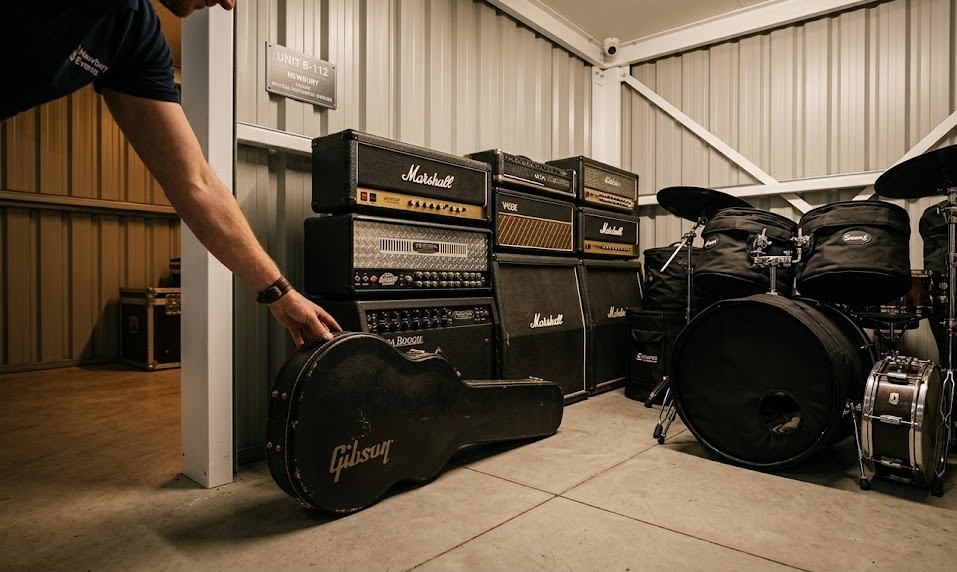
Bands face a unique challenge that most people don’t consider: what happens to thousands of pounds worth of instruments, amplifiers, and sound equipment between performances? Storing gear in a garage, spare room, or van might seem practical until you factor in temperature swings, moisture, theft risk, and the sheer inconvenience of cramming expensive equipment into unsuitable spaces.
Professional musicians and weekend warriors alike know that proper storage isn’t just about finding somewhere to stash a drum kit. It’s about protecting investments that can run into tens of thousands of pounds, maintaining instrument condition, and ensuring everything’s ready to go when the next gig comes around. Whether you’re a tribute band gigging every weekend or an original act rehearsing monthly, how you store your equipment between performances directly affects its longevity and your sound quality.
Why Garages and Spare Rooms Fall Short
Most bands start by storing musical equipment wherever there’s space. A guitarist keeps their amp in the bedroom. The drummer’s kit sits in a damp garage. PA speakers get shoved under stairs. This scattered approach creates problems that compound over time.
Temperature fluctuations wreak havoc on instruments. A garage that hits 5°C in winter and 30°C in summer puts wooden instruments through constant expansion and contraction. Guitar necks warp. Drum skins stretch and sag. Electronics develop condensation that corrodes circuits and connections.
One band stored their entire PA system in an unheated garage for two winters. When they powered it up for a spring gig, three channels were completely dead from moisture damage. The repair bill exceeded what proper climate-controlled storage would have cost for those entire two years.
Then there’s security. Musical equipment’s a prime target for theft because it’s valuable, portable, and easy to sell. A van parked on the street with gear inside is an obvious mark. Home insurance often caps musical equipment coverage at £1,500-£2,000 unless you pay for specialist additions, leaving bands massively underinsured.
The logistical headache matters too. When your bass rig lives at one member’s house, drums at another’s, and the PA at a third location, every rehearsal becomes a collection mission. You’re burning petrol, wasting time, and increasing the risk of forgetting crucial items.
What Proper Band Equipment Storage Delivers
Purpose-built storage changes everything. A dedicated space for all your gear means everything stays in consistent conditions, in one secure location, ready to load out when needed.
Climate control protects instruments from the temperature and humidity swings that cause damage. Wooden instruments need stable conditions – ideally around 18-21°C with 40-50% humidity. Electronics last longer when they’re not subjected to condensation cycles. Even cases and flight cases benefit from consistent conditions, as extreme temperatures can make foam inserts brittle and compromise protective qualities.
Security gives you peace of mind. Modern storage facilities offer CCTV, individual unit alarms, secure access systems, and on-site presence. Your £3,000 Les Paul and £2,500 valve amp aren’t sitting in someone’s garage with a flimsy padlock. They’re in a facility designed specifically to keep valuables secure.
Centralisation streamlines your operation. Everything lives in one place. Load out for a gig becomes a single trip. Band members don’t need to coordinate collection runs. You can access your gear whenever you need it without imposing on whoever’s storing what.
Consider it like choosing the right suitcase for a trip. You wouldn’t pack a week’s holiday clothes into three separate bags stored at different houses. You’d want everything organised, protected, and ready to grab when it’s time to leave. Band equipment storage works the same way.
Choosing the Right Unit Size
Bands underestimate how much space they need. A full backline with PA system, instruments, cases, cables, stands, and accessories fills more space than you’d think.
A 50 square foot unit suits a minimal setup – perhaps a small PA system, two guitar rigs, and a basic drum kit with cases. Think of a bedroom-sized space. It’s enough for an acoustic duo or small electric setup without extensive equipment.
A 75 square foot unit accommodates most four-piece bands comfortably. You’ll fit a full drum kit with hardware cases, two guitar rigs with cabs, a bass rig, a modest PA system with speakers and mixer, plus all the cables, microphones, stands, and accessories that accumulate. This is roughly the size of a large bedroom or small garage.
A 100+ square foot unit becomes necessary when you’re running a substantial PA, have multiple instruments per member, or store backline for different musical projects. Tribute acts with costume racks, bands with extensive lighting rigs, or groups sharing storage between multiple lineups often need this much space.
Don’t forget vertical space. Most storage units have 8-10 foot ceilings. Sturdy metal shelving units let you stack lighter items like cables, microphones, and accessories high, keeping floor space clear for heavy amplifiers and drum cases. One band transformed their storage efficiency by installing three shelf units along one wall – suddenly they had room for everything without playing Tetris every time they needed something.
Packing and Organising Equipment Properly
How you arrange a storage unit determines whether loading out’s smooth or chaotic. Think through access patterns before you start filling space.
Put frequently-used items at the front. If you gig weekly, your main PA speakers, mixer, and essential instruments need to be right by the door. Less-used items – backup amps, spare drum hardware, seasonal gear – can sit further back.
Create clear pathways. Don’t pack a unit solid from front to back. Leave a walkway down the middle or along one side. Being able to walk in and reach items without moving everything else saves enormous time and prevents damage from constantly shifting heavy equipment.
Use quality cases religiously. Hard cases protect better than soft gig bags, especially when items are stacked. Flight cases with foam interiors are worth the investment for expensive instruments and fragile electronics. But here’s what matters more than case quality: never stack heavy items on delicate ones. Amplifiers go on the floor. Guitar cases stand upright or lie flat on top of sturdy items. Cymbals stay in proper cases, never loose where they can get bent.
Label everything clearly. When you’re loading out at 6pm for a 9pm soundcheck, you don’t want to open five identical black cases to find which one holds the spare cables. Bright labels or coloured tape on cases speeds identification dramatically.
Protect cables and small items. Cables tangled in a pile become a nightmare. Use cable ties or velcro wraps to keep each cable coiled neatly. Store them in plastic storage boxes or hanging organisers. Same for microphones, DI boxes, tuners, and all the small essentials that disappear when thrown loose in a corner. You can find everything you need from packing materials to keep smaller items organised and protected.
Keep an inventory list. Stick a laminated checklist inside the unit door listing every major item stored. When you load out, check items off as you pack them. When you return gear, verify everything’s back. This simple habit prevents the “didn’t we have two mic stands?” confusion three months later.
Temperature and Humidity Considerations
Musical instruments are sensitive to environmental conditions in ways that surprise people. A guitar isn’t just wood and strings – it’s a precisely engineered structure under constant tension, and environmental changes affect everything.
Wooden instruments suffer most from humidity swings. Too dry, and wood shrinks. Fretboards develop sharp fret ends. Soundboards on acoustic guitars can crack. Too humid, and wood swells. Actions rise. Glue joints weaken. Mould can develop on cases and instruments. Maintaining 40-50% relative humidity prevents these problems.
Electronics need stable, moderate temperatures. Amplifier valves don’t like rapid temperature changes. Circuit boards can develop micro-cracks from repeated expansion and contraction. Condensation from moving cold equipment into warm spaces can cause short circuits and corrosion.
Drum skins and hardware react to humidity too. Skins go slack in high humidity, tight in low humidity, affecting tuning stability. Chrome hardware can develop rust spots in persistently damp conditions.
Climate-controlled storage solves these issues by maintaining consistent temperature and humidity year-round. It’s not about luxury – it’s about preventing damage that costs far more than the modest premium for climate control. Think of it as insurance that actually prevents claims rather than just paying for damage after it happens.
If you’re storing particularly valuable or sensitive instruments – vintage guitars, hand-built acoustics, high-end keyboards – climate control isn’t optional. These instruments demand stable conditions to maintain their value and playability.
Security Features That Matter
Not all storage security’s equal. Understanding what actually protects your equipment helps you choose storage facilities wisely.
Individual unit alarms mean your specific unit triggers an alert if opened outside your access times. This beats relying solely on perimeter security, because it protects against internal theft as well as break-ins.
CCTV coverage should cover access points, corridors, and ideally individual unit doors. Recorded footage that’s kept for at least 30 days provides evidence if something goes missing.
Controlled access systems using key codes or fobs create audit trails showing exactly who entered the facility and when. This accountability matters if there’s ever a security incident.
On-site presence – whether staff during business hours or security patrols – adds a human element that purely electronic systems lack. Facilities with regular staff presence tend to have fewer security issues because potential thieves know they might encounter someone.
Solid construction matters as much as electronic systems. Units with concrete walls and floors, steel doors, and quality locks are inherently more secure than units with thin partition walls and flimsy doors.
Insurance is your final layer of protection. Check what coverage your facility includes, and whether you need additional musical equipment insurance. Many insurers offer specialist policies for musicians that cover instruments and equipment both in storage and in transit to gigs. For bands with £10,000+ worth of gear, this protection’s essential.
Loading and Transport Logistics
Storage only works if you can efficiently move equipment between the unit, rehearsal spaces, and venues. Location and access features determine how practical a storage solution really is.
Drive-up access eliminates the nightmare of wheeling heavy flight cases through corridors and lifts. Being able to back a van right up to your unit door means loading out takes 20 minutes instead of an hour. For bands with substantial PA systems or multiple band members’ equipment, this convenience’s worth prioritising.
Access hours need to match your schedule. If you regularly gig on weekends and need to collect equipment Saturday afternoon, 24/7 access matters. Some facilities restrict access to business hours, which doesn’t work for working musicians whose free time’s evenings and weekends.
Location affects every journey. A facility 15 minutes from most band members’ homes and on the route to regular venues saves time and fuel compared to somewhere 40 minutes away in the wrong direction. Calculate the real cost over a year – those extra miles add up.
Van parking should be easy and safe. You need space to park whilst loading without blocking access or leaving a vehicle vulnerable. Well-lit, spacious loading areas make the process safer and faster.
One band optimised their system by storing equipment in a container storage unit with drive-up access directly off the car park. They could back their van right up, load everything in one go, and be on the road to a gig within 30 minutes of arriving. Compare that to their previous setup involving two flights of stairs and a service lift that broke down regularly.
Maintaining Equipment in Storage
Stored equipment still needs attention. Leaving instruments untouched for months invites problems that regular maintenance prevents.
Check on gear monthly if you’re not gigging regularly. Open cases. Look for any signs of moisture, mould, or pest activity. Inspect cables for damage. Verify nothing’s shifted or fallen. These quick inspections catch small problems before they become expensive ones.
String tension on guitars matters during instrument storage. Some players detune slightly to reduce neck tension during long storage periods. Others maintain full tension to keep necks stable. The consensus leans towards leaving instruments at pitch or a half-step down rather than completely slack, as constant tension changes can actually cause more problems than stable tension.
Drum heads should be loosened slightly if you’re storing a kit for months. This prevents rim warping and head stretching. Just remember to retune properly before the next gig.
Amplifier valves last longer if you power up equipment occasionally. Valves sitting unused for six months can develop issues. If your gear includes valve amps, consider powering them up monthly for 10-15 minutes to keep everything healthy. Obviously this requires electrical access in your storage unit, which isn’t always available, but it’s worth considering if you’re storing valuable vintage equipment.
Batteries should be removed from wireless systems, active instruments, and effects pedals before storage. Leaking batteries cause corrosion that can destroy expensive electronics. This five-minute task before storing gear prevents hundreds of pounds in damage.
When Storage Makes Financial Sense
Storage costs money. So does replacing damaged equipment, paying higher insurance premiums, or dealing with theft. The calculation isn’t complicated.
A 75 square foot climate-controlled storage unit typically costs £100-150 monthly depending on location. That’s £1,200-1,800 yearly. Compare this to:
- Replacing a guitar with a warped neck from garage storage: £800-3,000
- Repairing a PA system damaged by moisture: £500-2,000
- Insurance excess if equipment’s stolen from a van: £250-500
- Time and fuel costs from scattered storage locations: £300+ annually
For bands with equipment worth £5,000+, proper storage pays for itself by preventing a single major damage or theft incident. The peace of mind and convenience are bonuses on top of the financial protection.
Bands gigging regularly find storage even more valuable because the time savings compound. When loading out for a gig’s one quick trip instead of a multi-stop collection mission, you save 1-2 hours per gig. At 20 gigs yearly, that’s 20-40 hours saved – time you can spend rehearsing, promoting, or simply not being stressed.
Sharing storage costs between band members makes the investment more palatable. Split four ways, that £125 monthly unit costs each member roughly £30 – less than most people spend monthly on coffee. For that modest individual cost, you get security, climate control, and centralised storage for everyone’s equipment.
Making the Most of Your Storage Space
Efficient space use means fitting more equipment in less area, which directly affects costs. Small organisational improvements create surprising amounts of extra room.
Vertical storage’s the biggest opportunity most bands miss. Floor space is limited, but you’ve got 8-10 feet of height to work with. Metal shelving units (the heavy-duty warehouse type, not flimsy domestic units) let you stack lightweight items high whilst keeping the floor clear for heavy amplifiers and drum cases.
Nest items where possible. Cymbal cases stack. Guitar cases can stand upright in rows. Cable boxes fit on shelves. Microphone cases line up neatly. Think about how items can fit together rather than just placing them randomly.
Use wall space if your facility allows it. Hooks for hanging cables, guitar cases, or lightweight bags make use of space that would otherwise be wasted. Check facility rules first – some don’t allow modifications to walls.
Disassemble what you can. Drum hardware packs down into cases. Microphone stands collapse. PA speaker stands fold. Some bands leave items permanently set up, but this wastes enormous amounts of space. The 15 minutes spent breaking down equipment after each gig creates room for significantly more gear in storage.
Keep a load-out zone clear near the door. This is your staging area where you can place items as you pack them into the van. It’s tempting to fill every square foot, but that two-foot-square empty space near the entrance makes loading out infinitely easier.
Alternative Storage Scenarios
Not every band needs dedicated storage. Understanding when alternatives work helps you make smarter decisions.
Rehearsal room storage works if your practice space offers it and you rehearse frequently enough to justify the cost. The convenience of leaving gear set up’s substantial. But verify security, insurance coverage, and what happens if you leave the rehearsal space or it closes. Bands have lost entire setups when rehearsal facilities went bust without warning.
Shared spaces with other bands can work if everyone’s trustworthy and schedules don’t conflict. Two bands sharing a unit and splitting costs makes financial sense. The risk’s coordination headaches and disputes over space allocation or access times. Clear agreements about who stores what, who pays what, and how access works prevent most problems.
Home storage remains viable if you have suitable space. A spare room with stable temperature, good security, and enough space to keep everything organised costs nothing extra. Many bands operate perfectly well this way. The question’s whether your home situation actually provides those conditions or whether you’re compromising instrument condition and convenience to save money.
For most working bands, personal storage designed for household items works perfectly well for musical equipment. The same features that protect furniture and belongings during house moves – climate control, security, flexible access – protect instruments and electronics just as effectively.
Planning for Growth and Changes
Bands evolve. You add equipment. Lineups change. Musical direction shifts. Storage needs to accommodate these changes without requiring constant moves to larger units.
Start with slightly more space than you need right now. That extra 10-15 square feet costs perhaps £15-20 monthly more but gives you room to add equipment without immediately outgrowing the unit. It’s cheaper than moving to a larger unit six months later.
Consider shared storage from the start if you’re a new band likely to acquire more equipment. Beginning with a unit sized for future needs rather than current minimal gear makes sense if you’re serious about regular gigging.
Flexible rental terms matter more than many bands realise. Life changes. Bands break up. Musical projects go on hiatus. Storage facilities offering monthly rolling contracts rather than long fixed terms give you options if circumstances change.
Plan for worst-case scenarios. What happens if the band splits? Who gets what equipment? Who’s responsible for clearing the storage unit? Having these conversations early, when everyone’s getting along, prevents ugly disputes later. Some bands create simple written agreements about equipment ownership and storage responsibilities. It feels overly formal, but it’s saved friendships when musical partnerships ended.
Making the Move to Proper Storage
Transitioning from scattered home storage to a dedicated unit takes planning, but the process’s straightforward.
Audit your equipment first. List everything the band owns. Measure large items – drum cases, amp cabinets, PA speakers. This information helps you choose the right unit size and plan the layout before you move anything.
Visit facilities in person before committing. Photos and descriptions don’t tell you about access convenience, cleanliness, or how well-maintained the facility actually is. Spend 20 minutes looking around. Check the security features. Look at the access arrangements. Talk to staff about insurance and access procedures.
Gather proper packing materials. You’ll need boxes for small items, cable ties for cables, possibly additional cases for items currently stored loose. Quality packaging materials help you organise everything properly from the start.
Move everything in one go if possible. Coordinate a day when band members can help. Moving everything at once means you can organise the unit logically rather than adding items piecemeal and creating chaos. It’s like moving house – one focused effort beats multiple partial moves spread over weeks.
Set up your storage system on day one. Install shelving. Create your inventory list. Label everything. Establish the organisation system whilst the space is empty and you can think clearly. Once it’s full of equipment, reorganising becomes much harder.
Protecting Your Musical Investment
Your band equipment represents more than just financial value. It’s the tools of your creative expression, the means to your musical goals, and often years of careful acquisition and upgrades. Protecting these instruments and electronics from damage, theft, and deterioration isn’t just practical – it’s essential to your ability to perform and create.
Business storage solutions designed for commercial operations work particularly well for working bands treating music as a serious pursuit. You get the security features, climate control, and flexible access that professional musicians need, without the premium costs of specialist music storage facilities.
Whether you’re a weekend covers band or a professional touring act, the principles remain the same: keep your gear in stable conditions, protect it from theft and damage, organise it for easy access, and maintain it properly. Get these fundamentals right, and your equipment will serve you reliably for years.
The difference between adequate and proper band equipment storage often comes down to attention to detail. A climate-controlled unit protects instruments from warping. Regular maintenance catches problems early. Good organisation saves time. Proper security prevents devastating losses.
Newbury Self Store understands that musicians need storage that works around gig schedules, not office hours. We know that quick load-out access matters when you’re heading to a soundcheck. We understand that your vintage guitar or custom-built amp isn’t just equipment – it’s an investment that deserves proper protection.
If you’re tired of scattered storage creating logistical headaches, or worried about gear deteriorating in unsuitable conditions, contact us to discuss storage solutions that actually work for working musicians. Your music deserves equipment that’s always ready to perform at its best.