
 01635 581 811
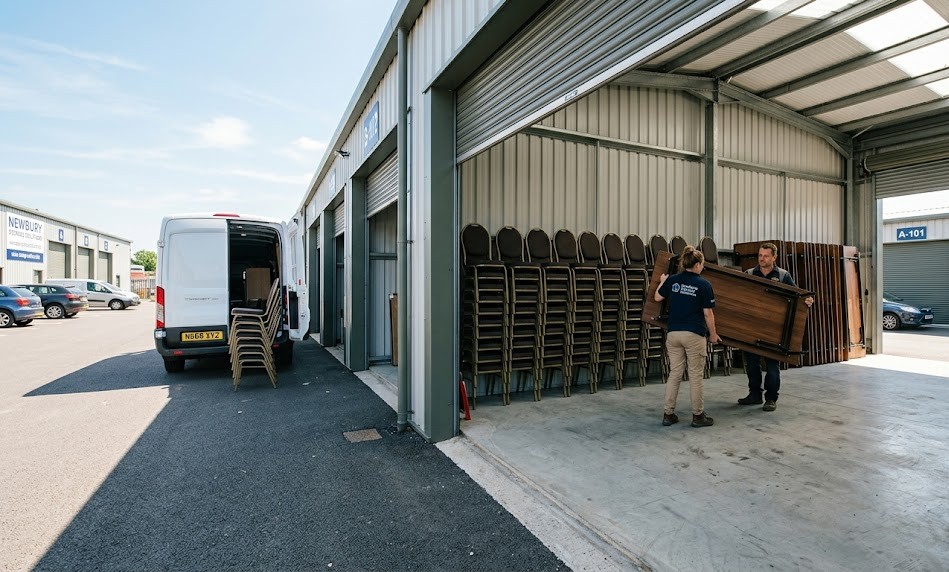
Running a successful function room business means juggling dozens of events, hundreds of chairs, countless tables, and enough equipment to outfit a small venue – all whilst keeping everything accessible, protected, and ready for the next booking. The challenge isn’t just having the inventory; it’s managing it efficiently without tying up valuable space at your primary location.
Function room operators face a unique storage puzzle. You need enough tables and chairs to accommodate your largest events, but storing 200 chairs and 30 tables takes up serious square footage that could otherwise generate revenue. Add in staging, lighting equipment, sound systems, linens, and seasonal decorations, and you’ve got a space management problem that directly impacts your bottom line. Professional function room storage solves this challenge whilst maintaining the accessibility and organisation your business demands.
Why function room equipment needs dedicated storage
Most function venues operate on tight margins where every square metre counts. When you’re storing stacks of folding chairs in hallways or tables leaning against walls in back rooms, you’re not just creating an inefficient workspace – you’re potentially damaging expensive equipment and creating safety hazards.
Professional equipment storage solves several critical problems simultaneously. It protects your investment from damage, keeps items organised and accessible, and frees up your venue space for what actually generates income: hosting events. Think of it like having a second warehouse without the overheads of a permanent commercial lease.
Here’s what proper storage protects:
- Banqueting chairs from scratches, fabric damage, and frame deterioration
- Folding tables from warping, surface damage, and hinge failure
- Audio-visual equipment from dust, moisture, and accidental damage
- Linens and decorative items from staining and pest damage
- Staging components from bending and connection point wear
Calculating your storage space requirements
Getting the unit size right matters enormously. Too small, and you’ll struggle to access items efficiently or risk damage from overcrowding. Too large, and you’re paying for empty space that doesn’t serve your business.
A standard banqueting chair, when stacked, occupies roughly 0.5 square metres of floor space per stack of ten. Folding tables (6ft or 8ft) typically stack at about eight tables per square metre when stored vertically. But you can’t simply multiply these numbers – you need circulation space to actually retrieve items without dismantling your entire storage system.
For a typical function room operation, consider these benchmarks:
- 100 chairs and 15 tables: 25-35 square metres
- 200 chairs and 30 tables: 50-70 square metres
- 300+ chairs and 50+ tables: 100+ square metres
Add approximately 20-30% additional space for equipment, supplies, and access pathways. A venue that regularly hosts weddings for 150 guests typically needs around 70-80 square metres of banquet equipment storage to keep everything organised and accessible.
Organising equipment for maximum efficiency
Random storage kills efficiency. When you’re preparing for an event with a tight setup window, you can’t afford to spend 45 minutes hunting for the right table cloths or discovering that your folding chairs are buried behind staging equipment.
Create zones within your storage space based on usage frequency and item type. High-turnover items – your standard chairs and tables – should occupy the most accessible positions near the entrance. Seasonal decorations, specialist equipment, and backup inventory can sit further back.
Stack chairs on purpose-built chair trolleys rather than directly on the floor. This single change transforms your operation. You’ll move equipment faster, reduce damage, and keep everything cleaner. For tables, vertical storage racks maximise space whilst protecting surfaces and hinges.
Label everything obsessively. Use a simple numbering system that corresponds to an inventory spreadsheet. When you know exactly where “Table Stack 3” sits and what condition those tables are in, you’ll never send damaged equipment to a client venue.
Protecting your investment from damage
Function equipment takes a beating. Every event means loading, transport, setup, use, breakdown, and return – that’s six opportunities for damage in a single booking cycle. Proper storage between events gives your equipment time to “rest” whilst protecting it from the accumulation of minor damage that eventually requires expensive replacement.
Climate matters more than most operators realise. Wooden tables warp in damp conditions. Fabric on chairs can develop mildew. Metal frames corrode. A storage unit with good ventilation – or ideally climate control – extends equipment life significantly. We’ve seen venues replace their chair inventory 40% less frequently after moving from damp basement storage to a proper banquet equipment storage facility.
Create a system where equipment gets inspected and cleaned before storage, not just before the next event. This approach catches damage early when repairs are simple and cheap, rather than discovering a broken chair frame whilst loading for a wedding that starts in four hours.
Managing seasonal inventory fluctuations
Function room businesses are rarely consistent year-round. Wedding season, Christmas parties, summer corporate events – your inventory needs fluctuate dramatically. You might need 300 chairs for three months, then only 150 for the rest of the year.
Flexible function room storage arrangements let you scale space up and down to match actual requirements. During peak season, take additional space for temporary inventory increases. In quieter months, reduce to your core equipment footprint. This approach means you’re not paying for 100 square metres of storage in February when you only need 60.
Some operators share storage costs with complementary businesses. A marquee hire company and a function room operator can coordinate around each other’s seasonal peaks, effectively splitting costs during their respective quiet periods. It requires trust and good systems, but the savings are substantial.
Equipment you didn’t know you could store
Beyond the obvious chairs and tables, function room operators accumulate surprising amounts of peripheral equipment that benefits from dedicated storage:
Audio-visual equipment – Projectors, screens, sound systems, microphones, and lighting rigs represent significant investment. Proper storage with dust protection and climate control extends their operational life and reduces maintenance costs.
Decorative inventory – Centrepieces, vases, candle holders, artificial plants, and themed decorations multiply rapidly. These items are expensive to replace but relatively cheap to store, making dedicated space highly cost-effective.
Linens and soft furnishings – Table cloths, chair covers, napkins, and cushions need protection from dust, pests, and moisture. Vacuum-sealed storage bags reduce volume whilst maintaining fabric quality.
Bar equipment – Portable bars, glassware, ice buckets, and serving equipment occupy considerable space but are essential for many events.
Staging and dance floors – Modular staging systems and portable dance floors are bulky but valuable. Proper storage prevents warping and connection point damage that makes assembly difficult.
Creating an inventory management system
Professional function room operators know exactly what they own, where it’s stored, and what condition it’s in. This level of organisation isn’t optional – it’s fundamental to running a profitable operation.
Start with a comprehensive inventory spreadsheet listing every item, its purchase date, condition rating, and storage location. Update this document every time equipment moves. Photograph items regularly to document condition and support insurance claims if necessary.
Use a simple check-in/check-out system. When equipment leaves for an event, log it. When it returns, inspect it and log any damage before it goes back into storage. This creates accountability and ensures damaged items get repaired rather than returned to general inventory where they’ll cause problems at the next event.
Consider RFID tags or QR codes for high-value items. Scanning equipment in and out takes seconds and creates a digital audit trail that prevents loss and simplifies insurance documentation.
Security considerations for high-value equipment
Function equipment represents substantial capital investment. A full inventory of chairs, tables, and AV equipment can easily exceed £50,000-100,000 for a medium-sized operation. Protecting this investment requires proper security measures.
Look for storage facilities with comprehensive security systems: perimeter fencing, CCTV coverage, individual unit alarms, and controlled access. Insurance companies increasingly require these features for commercial equipment policies, and the premium differences between secure and basic storage often exceed the cost difference between facility options.
Keep detailed records with serial numbers for all electronic equipment. Photograph your inventory from multiple angles. Maintain purchase receipts. This documentation proves ownership and supports insurance claims if theft occurs.
Coordinating storage with event logistics
The best storage solution integrates seamlessly with your event workflow. Location matters enormously – storage that’s 30 minutes from your primary venue or client locations adds an hour to every equipment movement. That time costs money in labour and vehicle expenses.
Container storage offers particular advantages for function room operators. Drive-up access means loading directly from your vehicle without navigating corridors or lifts. For businesses moving 200 chairs and 30 tables regularly, this accessibility saves significant time and physical strain.
Create standardised loading lists for common event types. A “Wedding Package – 100 guests” list details exactly which items to pull from storage, eliminating guesswork and reducing setup time. Laminate these lists and keep copies at your storage unit for quick reference.
Insurance and liability considerations
Most business insurance policies don’t automatically cover equipment stored off-site, or they apply significant limitations and excess charges. Before moving equipment to storage, contact your insurer to understand coverage gaps and additional premium requirements.
Storage facilities typically offer insurance options, but read the terms carefully. Coverage limits, excess amounts, and exclusions vary dramatically. Some policies exclude damage from pests, moisture, or temperature fluctuations – precisely the risks you’re trying to mitigate with proper storage.
Document everything. Photograph your entire inventory before it enters storage. Create detailed condition reports. Keep purchase receipts and maintenance records. This documentation supports insurance claims and helps resolve disputes about pre-existing damage versus new issues.
Cost-benefit analysis: storage vs. on-site space
The mathematics of storage often surprise function room operators. Renting commercial space costs significantly more per square metre than dedicated storage facilities. If you’re occupying 70 square metres of your venue with equipment storage, you’re potentially sacrificing £2,000-4,000 monthly in event revenue (depending on your location and venue hire rates).
Compare this to storage costs of £400-800 monthly for equivalent space at a business storage facility. Even accounting for additional transport time and vehicle costs, the financial case for off-site banquet equipment storage becomes compelling quickly.
Calculate your true cost per square metre at your primary location. Include rent, utilities, insurance, and opportunity cost from lost event bookings. Then compare this to all-in storage costs including transport. For most operations, the break-even point arrives surprisingly fast.
Preparing equipment for long-term storage
Equipment entering storage needs preparation to ensure it emerges in the same condition months later. This isn’t complicated, but skipping these steps creates expensive problems.
Clean everything thoroughly before storage. Food residue attracts pests. Moisture on metal frames promotes corrosion. Dust and dirt work into fabric, making removal progressively harder. Fifteen minutes of cleaning before storage prevents hours of remediation later.
Disassemble items where practical. Folding tables should be folded. Stacking chairs should be stacked. Modular staging should be broken down. This reduces volume, protects connection points, and makes better use of available space.
Use protective covers for upholstered items. Breathable fabric covers prevent dust accumulation whilst allowing air circulation that prevents mildew. Avoid plastic sheeting, which traps moisture and promotes mould growth.
Scaling your function room business through smart storage
Growth creates a chicken-and-egg problem for function room operators. You need more equipment to take larger bookings, but you can’t justify the investment until you’ve secured those bookings. Strategic function room storage provides a solution.
Partner with complementary businesses to share equipment and storage costs. A venue specialising in corporate events might partner with a wedding specialist – their peak seasons rarely overlap completely, allowing equipment sharing that benefits both parties whilst splitting storage costs.
Consider purchasing equipment in stages, storing additional inventory as you acquire it rather than trying to accommodate everything on-site. This approach lets you scale gradually, matching equipment investment to actual demand growth rather than making large speculative purchases.
Rental equipment during peak periods can be stored alongside your owned inventory, creating a hybrid model that maximises utilisation whilst controlling costs. Many successful function room operators own their core inventory but rent supplementary items for their largest events, storing everything together for simplified logistics.
Transitioning to off-site storage: a practical timeline
Moving from on-site to off-site storage requires planning, but the process is straightforward when broken into stages.
Week 1-2: Audit your complete inventory. Identify items for storage versus those needed on-site daily. Calculate actual space requirements including circulation areas.
Week 3: Research storage options. Compare locations, security features, access hours, and costs. Visit facilities in person – photographs don’t reveal access challenges or security weaknesses.
Week 4: Select a facility and arrange for packaging materials if needed. Purchase or build any shelving, racks, or trolleys required for organised storage.
Week 5: Begin the physical move during your quietest period. Transfer equipment systematically, creating your organisation system as you go. Label everything before it enters storage.
Week 6: Test your new system with a real event. Identify any workflow issues or access problems whilst you can still adjust your approach.
Making storage work for your business
Function room storage isn’t about warehousing unused items – it’s about creating operational efficiency that directly impacts your profitability. When you can access the right equipment quickly, protect your investment from damage, and free up revenue-generating space at your primary location, storage transitions from an expense to a strategic business tool.
The venues that thrive aren’t necessarily those with the largest inventory or the most expensive equipment. They’re the operations that manage their resources efficiently, maintain their equipment properly, and can scale flexibly to meet varying demand. Strategic banquet equipment storage makes all of this possible whilst reducing costs and improving service delivery.
Whether you’re running a small community hall or managing multiple function spaces, the principles remain consistent: protect your investment, organise for efficiency, and use space strategically. Get your storage approach right, and you’ll find that managing 300 chairs becomes simpler than the chaos of storing 100 chairs poorly.
For function room operators ready to optimise their equipment management and free up valuable venue space, contact us to discuss storage solutions tailored to your inventory size and operational requirements.