
 01635 581 811
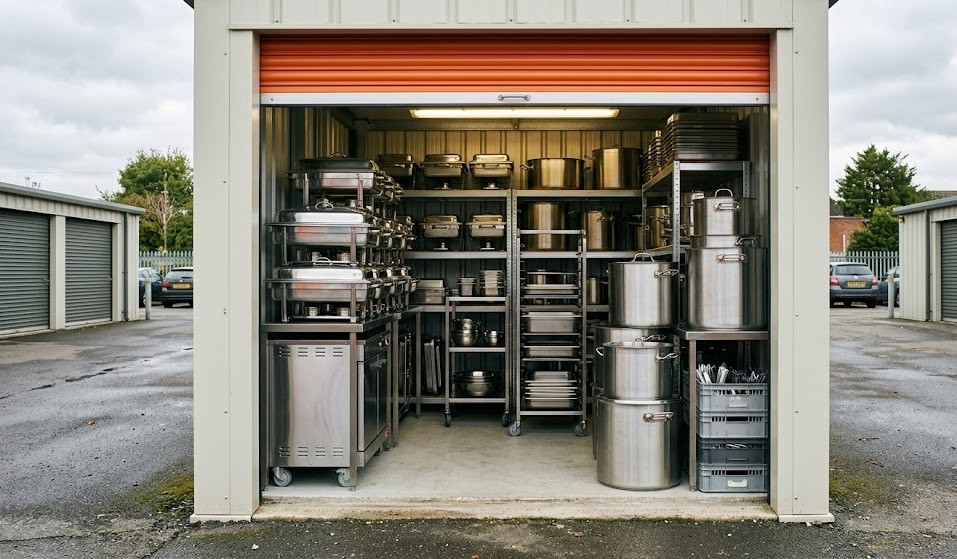
Running a catering business means juggling equipment, ingredients, and logistics across multiple venues. One day you’re serving 200 guests at a wedding, the next you’re handling a corporate breakfast. Between these events, your commercial kitchen equipment needs somewhere to go, and proper catering equipment storage can mean the difference between a smooth operation and costly repairs or replacements.
Most catering companies face a common challenge: commercial kitchen equipment storage takes up valuable space when not in use, yet the equipment is too expensive and essential to store carelessly. Professional-grade mixers, warming cabinets, portable ovens, and refrigeration units represent significant investments. Storing them correctly protects that investment whilst freeing up operational space for your day-to-day business.
Why catering equipment needs proper storage
Commercial kitchen equipment isn’t designed to sit idle in damp garages or cramped cupboards. These items cost thousands of pounds and require specific conditions to maintain their performance. A commercial-grade food processor that works flawlessly can seize up if moisture gets into its motor during storage.
Think of your catering equipment like a professional athlete between competitions. You wouldn’t expect peak performance without proper care during downtime. The same principle applies to your mixers, warmers, and cooling units.
Temperature fluctuations damage electronic components in modern catering equipment. Humidity causes rust on stainless steel surfaces, despite their reputation for durability. Dust and debris can clog ventilation systems in warming cabinets and portable ovens. Professional catering equipment storage addresses these issues by providing clean, dry, secure conditions that preserve your equipment’s condition and extend its working life.
Common equipment storage challenges
Space constraints top the list for most catering businesses. A three-tier warming cabinet takes up floor space whether you’re using it or not. Multiply that by portable ovens, refrigeration units, serving equipment, and backup appliances, and suddenly your workspace feels cramped.
Security concerns run a close second. Commercial kitchen equipment is valuable and portable, making it attractive to thieves. Leaving a £3,000 commercial mixer in an unsecured garage or outbuilding invites trouble.
Seasonal fluctuations create another headache. Summer wedding season means you’re running at full capacity, using every piece of equipment you own. Come January, half that equipment sits idle whilst you’re still paying rent on the space it occupies.
One catering company we know was storing backup refrigeration units in the owner’s garage. When a particularly cold winter caused condensation issues, the moisture damaged the control panels on two units. The repair bill exceeded £1,200, money that could have paid for professional catering equipment storage for an entire year.
What equipment requires off-site storage
Not every item in your catering arsenal needs dedicated kitchen equipment storage space, but certain pieces benefit significantly from it. Portable refrigeration and freezer units are prime candidates. These units are expensive, bulky, and sensitive to environmental conditions. When not in use, they need clean, dry storage to prevent compressor damage and maintain hygiene standards.
Commercial warmers and heated cabinets also benefit from proper storage. These units contain heating elements and thermostats that don’t respond well to moisture or temperature extremes. Storing them in controlled conditions prevents rust and electrical issues.
Large-scale cooking equipment like portable ovens, induction hobs, and commercial-grade hot plates deserve careful storage. These items represent substantial investments and contain sensitive electronics that moisture and dust can damage.
Backup and seasonal equipment makes up the bulk of what most caterers store. You might use certain items only during peak season or keep backup units for your most essential equipment. These pieces can sit idle for months, making them perfect candidates for off-site storage.
Preparing equipment for storage
Proper preparation prevents most storage-related damage. Start by cleaning everything thoroughly. Food residue attracts pests and creates hygiene issues. Commercial kitchen cleaners and sanitisers should be your first tools, not your last.
Pay special attention to moisture removal. After cleaning, dry every surface completely. Water trapped in crevices leads to rust and mould. Run warming cabinets empty for 30 minutes to evaporate any residual moisture from their interiors. Wipe down stainless steel surfaces with a dry cloth and leave unit doors slightly ajar to allow air circulation.
Remove or secure loose parts. Detachable shelves, racks, and accessories should either be removed and packed separately or secured to prevent shifting during transport and storage. A shelf that comes loose and falls can damage both itself and the unit it falls against.
Document everything. Photograph each piece of equipment before storage, noting its condition and any existing wear. This creates a record if you need to make insurance claims later. It also helps you remember what you’ve stored and where.
The packaging supplies you use matter more than you might think. Heavy-duty furniture blankets protect stainless steel surfaces from scratches. Bubble wrap cushions delicate components. Plastic sheeting creates an additional moisture barrier, though you must ensure equipment is completely dry before wrapping to avoid trapping condensation.
Choosing the right storage unit size
Small units (25-50 square feet) work for businesses needing basic kitchen equipment storage for backup equipment or seasonal items. You can fit several portable warmers, a commercial mixer, and various small appliances in this space. It’s enough for a catering business that operates primarily from a fixed commercial kitchen but needs overflow storage.
Medium units (75-100 square feet) suit caterers with more extensive equipment collections. This size accommodates portable refrigeration units, multiple warming cabinets, cooking equipment, and serving pieces. You’ll have room to organise items by type and create aisles for easy access.
Large units (150+ square feet) serve businesses that handle major events or operate entirely mobile catering operations. You can store complete kitchen setups, including multiple refrigeration units, extensive cooking equipment, and all your serving pieces. Some caterers use these spaces as staging areas, packing for events directly from their storage unit.
Here’s a practical example: A mid-sized catering company handling 8-12 events monthly typically stores two backup refrigeration units, three warming cabinets, a commercial mixer, two portable induction hob sets, and various serving equipment. This collection fits comfortably in a 75-square-foot unit with room for shelving and organisation.
Organisation strategies that actually work
Proper kitchen equipment storage begins with zoning your storage space by equipment type and usage frequency. Items you access regularly belong near the front. Seasonal equipment can sit towards the back. Group similar items together: all refrigeration units in one area, warming equipment in another, cooking appliances in a third zone.
Vertical storage maximises your available space. Industrial shelving units rated for heavy loads let you stack smaller items safely. Just remember that your heaviest equipment stays on the floor – you’re not lifting a commercial mixer onto a shelf.
Label everything clearly. When you’re preparing for an event, you don’t have time to open every box looking for specific serving pieces. Clear labels on all containers and equipment covers save time and frustration. Include the item name, any relevant specifications, and the last date it was used.
Create an inventory system that you actually maintain. A simple spreadsheet listing each stored item, its location within the unit, and its condition works better than complicated software you’ll never update. Take five minutes after each event to note what went back into storage and what might need maintenance before its next use.
Maintain access paths throughout your storage space. You need to reach items without moving everything else. Leave a central aisle and ensure you can access each zone without dismantling your entire storage system. Think of it like a well-organised warehouse, not a game of Tetris.
Climate control considerations
Electronic components in modern catering equipment don’t tolerate extreme temperatures. A warming cabinet’s thermostat can fail if exposed to freezing conditions. Refrigeration units contain lubricants and refrigerants that perform best within specific temperature ranges.
Humidity poses an even greater threat than temperature. Stainless steel resists rust better than regular steel, but “stainless” doesn’t mean “rust-proof.” Prolonged exposure to high humidity causes corrosion on joints, hinges, and electrical connections. Control panels and digital displays are particularly vulnerable to moisture damage.
Climate-controlled catering equipment storage maintains consistent temperature and humidity levels year-round. For catering equipment worth thousands of pounds, this protection makes financial sense. The monthly cost of climate control is minimal compared to repairing or replacing damaged equipment.
Not every item requires climate control. Sturdy serving pieces, basic cookware, and durable transport equipment can handle standard storage conditions. But anything with electronics, moving parts, or precision components benefits from environmental control.
Security features that matter
Individual unit alarms alert you if someone accesses your storage space. Some facilities offer units with their own alarm systems that notify you via mobile app when the door opens. This immediate notification lets you verify whether it’s you or your staff accessing the unit, or whether someone’s attempting unauthorised entry.
24-hour CCTV coverage provides visual records of who enters the facility and when. Quality systems cover not just entry points but also corridors and unit doors. This footage becomes invaluable if theft or damage occurs.
Secure access systems using individual codes or key fobs create audit trails. The facility knows exactly who entered and when, adding another layer of accountability and security.
On-site presence matters too. Facilities with staff on-site during business hours deter opportunistic theft. Even unmanned facilities benefit from regular security patrols and visible security measures.
Your equipment represents your business’s ability to operate. Choosing business storage with robust security features protects that investment.
Insurance and documentation
Most business insurance policies cover equipment stored off-site, but you need to verify this coverage before moving anything. Some policies require notification when you store items away from your primary business address. Others limit coverage for items in storage or exclude certain types of storage facilities.
Document your equipment’s value with receipts, invoices, and current market valuations. If you’re storing a five-year-old commercial mixer, know what it would cost to replace it today, not what you paid originally. This information proves essential for insurance claims.
Photograph everything before storage. These images establish condition and help identify items if theft occurs. Date-stamped photos provide proof of when equipment entered storage and its state at that time.
Update your insurance provider about your storage arrangements. Provide them with the facility’s address, security features, and the value of equipment you’re storing. This transparency prevents claim disputes later.
Keep detailed inventory records separate from your storage unit. If something happens to your stored equipment, you need records elsewhere to prove what you lost. Cloud-based inventory systems or copies kept at your business location ensure you can access this information when needed.
Access and retrieval planning
Events don’t always give you weeks of notice. Sometimes you book a job with just days to prepare. Your storage solution needs to accommodate this reality. Extended access hours or 24-hour access lets you retrieve equipment when you need it, not just during standard business hours.
Drive-up access eliminates the hassle of trolleying heavy equipment through corridors and lifts. When you’re loading portable refrigeration units and warming cabinets, being able to park directly outside your storage unit saves time and reduces injury risk. Container storage options often provide this ground-level access, making equipment retrieval straightforward.
Loading equipment should factor into your storage location choice. Trolleys, ramps, and loading areas make the process smoother. Some facilities provide these amenities; others expect you to bring your own equipment.
Plan retrieval logistics before you need them. Know how long it takes to reach your storage unit, load your equipment, and return to your kitchen or venue. Build this time into your event preparation schedule. Rushing to collect equipment at the last minute leads to mistakes and forgotten items.
Cost-benefit analysis
Storage costs money, but so does equipment damage, theft, and cramped working conditions. A medium-sized storage unit typically costs between £150-300 monthly, depending on location and features. Climate control adds £30-60 monthly. Compare these costs to what you’re protecting.
Equipment replacement costs run into thousands. A commercial refrigeration unit costs £2,000-5,000. Warming cabinets range from £800-2,000. A professional mixer runs £1,500-4,000. Losing or damaging even one major piece of equipment costs more than years of proper storage.
Opportunity costs matter too. If your commercial kitchen feels cramped because it’s doubling as kitchen equipment storage, you’re limiting your operational efficiency. Staff work slower in cluttered spaces. You can’t take on additional prep work because you lack room. The space you free up by storing equipment off-site might allow you to increase your business capacity.
Peace of mind has value. Knowing your equipment is secure, protected from environmental damage, and accessible when needed reduces stress. You can focus on running your business rather than worrying about your stored equipment.
Seasonal storage strategies
Wedding season, Christmas parties, summer festivals, corporate events – catering businesses experience predictable peaks and troughs. Smart storage strategies adapt to these patterns. Scale your storage space with your seasonal needs. Some facilities offer flexible terms that let you upgrade to larger units during peak season and downsize during quieter periods.
Rotate equipment based on seasonal demand. Summer might mean more outdoor catering equipment and portable cooling units. Winter brings increased demand for warming equipment and indoor serving pieces. Store what you’re not using and keep current equipment accessible.
Pre-season preparation prevents last-minute scrambles. Before peak season arrives, retrieve your equipment, inspect it, perform any necessary maintenance, and ensure everything works properly. Don’t discover a faulty warming cabinet the day before a major event.
Post-season maintenance before storage extends equipment life. After busy periods, give everything a thorough cleaning and inspection. Address minor repairs before storing items for months. This preparation means equipment emerges from storage ready to use, not requiring attention before you can deploy it.
Long-term equipment maintenance
Equipment doesn’t maintain itself during storage, even in ideal conditions. Regular inspections every few months catch developing problems before they become serious. Check for signs of moisture, pest activity, or mechanical issues. Run warming cabinets and refrigeration units briefly to ensure they still function properly.
Preventive maintenance schedules should account for stored equipment. Just because a unit isn’t seeing daily use doesn’t mean it should miss its annual service. Professional maintenance catches issues that casual inspections miss.
Battery maintenance matters for equipment with battery backup systems or electronic controls. Some units require periodic charging even during storage. Check manufacturer recommendations for your specific equipment.
Documentation updates keep your inventory current. Note any maintenance performed, issues discovered, or changes in equipment condition. This ongoing record helps you track each item’s history and anticipate when replacement might become necessary.
Making storage work for your business
Effective catering equipment storage isn’t just about finding space for equipment you’re not using. It’s about creating a system that supports your business operations, protects your investments, and gives you flexibility to scale up or down as demand changes.
The catering companies that succeed long-term treat their equipment as the valuable assets they are. They invest in proper storage, maintain detailed records, and plan their logistics carefully. They don’t view storage costs as an expense but as insurance against equipment damage, theft, and operational limitations.
Your commercial kitchen equipment enables your business to function. Whether you’re storing backup units, seasonal items, or overflow equipment, the right storage solution protects these essential tools. Clean, secure, climate-controlled space with convenient access means your equipment stays in working order, ready to deploy whenever opportunity knocks.
If you’re currently cramming equipment into inadequate spaces or worrying about security and environmental damage, it’s time to explore professional storage options. Contact us to discuss your specific catering equipment storage needs and find a solution that works for your business. Your equipment deserves better than a damp garage or cluttered corner – and so does your peace of mind.