
 01635 581 811
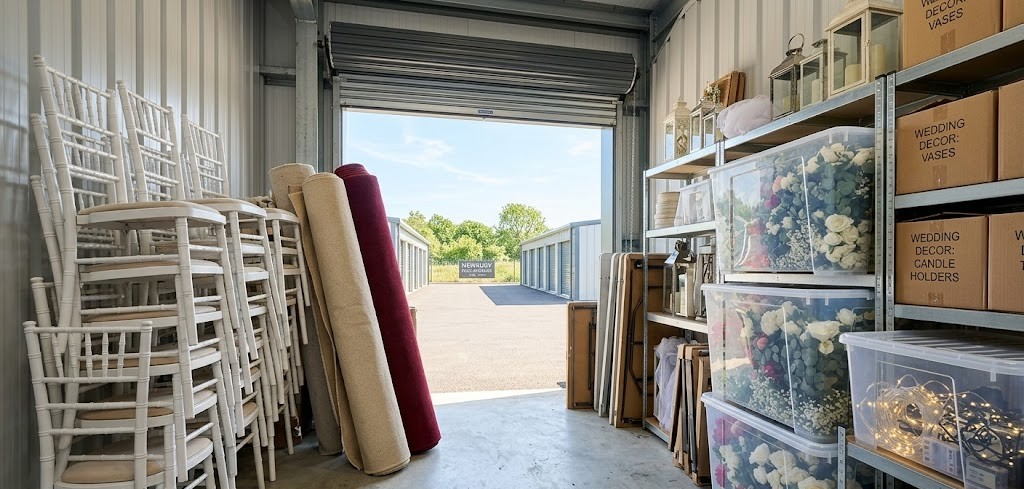
Running a wedding venue means juggling hundreds of moving parts-quite literally. Between chandeliers, table centrepieces, ceremony arches, lighting rigs, and seasonal décor, the sheer volume of equipment can quickly overwhelm your on-site storage capacity. And that’s before you factor in the off-season items that sit unused for months, taking up valuable space that could be generating revenue.
Smart wedding venue storage isn’t just about finding somewhere to stash extra chairs. It’s about creating a system that protects your investment, streamlines event turnover, and gives you the flexibility to refresh your offerings without sacrificing precious square footage. The right approach transforms storage from a logistical headache into a strategic advantage that keeps your venue competitive and your operations running smoothly year-round.
Why wedding venues need dedicated storage solutions
Most wedding venues start small, with a modest collection of basics stored in a back room or garage. But as your reputation grows and couples request more elaborate setups, that collection expands rapidly. One season you’re storing fifty chiavari chairs; the next, you’ve added vintage sofas, market lights, rustic signage, and three different styles of ceremony backdrop.
The problem compounds when you factor in seasonal demand. Summer might see your garden furniture in constant rotation, but come November, those pieces need somewhere to live for five months. Winter décor, Christmas lighting, and heated marquee equipment follow the same pattern-essential for part of the year, but space-hogging dead weight the rest of the time.
On-site storage quickly becomes a compromise. You’re either cramming equipment into every available corner (making retrieval a nightmare), or you’re turning down bookings because you can’t physically accommodate the couple’s vision alongside your existing inventory. Neither option serves your business well.
The true cost of inadequate storage space
Picture a venue manager rushing to set up for a Saturday ceremony, only to discover the requested ivory chair covers are buried behind December’s artificial Christmas trees, which are wedged next to last season’s floral installations. She’s now twenty minutes behind schedule, the couple’s arriving in an hour, and the photographer’s already on-site. This isn’t a rare disaster-it’s a Tuesday.
Disorganised storage costs you in ways that don’t always show up on a balance sheet. Staff waste hours searching for items, equipment gets damaged when it’s stacked haphazardly, and you’re forced to rent pieces you already own simply because you can’t locate them quickly enough. That’s money evaporating through poor logistics.
Then there’s the opportunity cost. Every square metre devoted to storing off-season décor is space you can’t use for revenue-generating activities. That back room could be a bridal preparation suite. That corner of the barn could accommodate more guest seating. When storage sprawls across your venue, it directly limits your earning potential.
What wedding venue equipment actually requires
Before you can solve your storage challenge, you need to understand what you’re working with. Wedding venue inventory typically falls into several distinct categories, each with different storage needs.
Furniture and seating forms the backbone of most collections. Chairs, tables, benches, and lounge furniture need protection from moisture, dust, and physical damage. Stacking them incorrectly leads to scratches, bent legs, and wobbly joints that scream “budget venue” to discerning couples.
Lighting equipment and electronics demand particularly careful handling. Fairy lights, uplighters, sound systems, and projectors represent significant investment, and they’re remarkably vulnerable to damp conditions. A single winter in an unheated shed can corrode connections and ruin bulbs, turning thousands of pounds of equipment into expensive rubbish.
Textile items-table linens, chair covers, runners, and drapes-need clean, dry conditions to prevent mildew and musty odours. You can’t drape a couple’s top table with cloths that smell like they’ve been stored in someone’s garage, no matter how beautifully they’re pressed.
Seasonal and themed décor presents the biggest volume challenge. Rustic wooden signs, vintage props, Christmas decorations, garden features, and ceremony arches take up enormous space but might only see use for a few months each year. These items need protection but don’t necessarily require climate control.
How professional storage transforms venue operations
Think of professional wedding venue storage as an extension of your venue footprint-a place where off-season and overflow items live safely until you need them, without cluttering your working space. The difference between cramming things into an on-site cupboard and using proper personal storage is like the difference between stuffing clothes in a suitcase versus packing them methodically in a wardrobe.
Dedicated storage units give you room to organise inventory properly. You can group items by season, by event type, or by frequency of use. Winter décor lives together in clearly labelled boxes. Summer garden furniture stacks neatly without blocking access to other items. When a couple requests vintage lounge furniture for their cocktail hour, you know exactly where to find it.
Climate control becomes essential for certain items. Electronics, fine fabrics, and wooden furniture all deteriorate in fluctuating temperatures and humidity. A climate-controlled unit maintains stable conditions year-round, protecting your investment and ensuring everything emerges from storage in pristine condition. You’re not just storing items-you’re preserving their value and usability.
Security matters more than many venue managers initially realise. Your décor and equipment represent tens of thousands of pounds of investment, and some pieces are irreplaceable. Professional storage facilities offer 24-hour security monitoring, controlled access, and insurance options that far exceed what you can achieve with a padlock on a shed.
Creating a year-round storage strategy
The most successful venue managers don’t just rent a unit and fill it randomly. They develop a systematic approach that makes event décor storage work as an operational asset.
Start by conducting a thorough inventory audit. Photograph every significant item, note its condition, and categorise it by usage frequency. Items you use weekly stay on-site. Pieces that appear monthly or seasonally move to storage. Anything you haven’t used in two years gets sold or donated-holding onto “just in case” items costs more than replacing them if that rare occasion actually arises.
Seasonal rotation becomes your operational rhythm. As spring approaches, retrieve garden ceremony items, outdoor furniture, and light fabrics. Store away heavy winter drapes, indoor heating equipment, and festive décor. This rotation keeps your on-site space focused on current needs whilst protecting off-season items properly.
Implement a clear labelling and documentation system. Each box or item going into storage gets a detailed label and a corresponding entry in your inventory spreadsheet. Include the contents, the date stored, and any special handling notes. When a couple requests “those vintage brass candlesticks,” you can locate them in minutes rather than hours.
Consider how you pack items for long-term storage. Delicate pieces need proper protection-think bubble wrap for glassware, furniture covers for upholstered pieces, and acid-free tissue for fine linens. Cutting corners on packing materials leads to damaged inventory that costs far more to replace than the few pounds you saved on supplies. The packaging you choose directly impacts how items survive storage.
Maximising storage space efficiency
Even generous storage units have limits, so efficient use of space becomes crucial. The goal isn’t just to fit everything in-it’s to create a system where you can access what you need without dismantling the entire unit.
Vertical stacking multiplies your usable space, but it requires careful planning. Heavy, sturdy items form the base. Lighter, more fragile pieces go higher. Never stack anything so high that retrieval becomes dangerous or requires special equipment. Think of it like building with blocks-each layer needs to be stable before you add the next.
Create clear pathways through your storage unit. Leave a central aisle that allows you to reach items at the back without moving everything at the front. Group frequently accessed items near the entrance. Seasonal items can live further back since you’ll only retrieve them during scheduled rotations.
Use shelving units to create defined zones. One section holds all table décor. Another contains ceremony items. A third houses lighting equipment. This zoning approach mirrors how retail stores organise inventory-everything has a home, and that home makes logical sense.
Furniture storage requires particular attention to prevent damage. Place protective pads between stacked chairs. Stand tables on their sides rather than stacking them flat, which can warp surfaces. Cover upholstered pieces completely to protect against dust. These small habits preserve your furniture’s condition and extend its usable life by years.
When to expand your storage capacity
Growth brings wonderful problems, but they’re still problems. Recognising when you’ve outgrown your current storage solution saves you from the chaos of overflow inventory.
If you’re regularly struggling to fit new acquisitions into your existing space, that’s a clear signal. So is finding yourself unable to access stored items without a major reorganisation effort. When staff complain that retrieving specific pieces takes too long, or when you’re stacking items so tightly that damage becomes inevitable, you’ve exceeded your capacity.
The solution might be adding a second unit rather than upgrading to a single larger space. This approach lets you create distinct zones-one unit for furniture and large items, another for event décor storage. It’s similar to how a wardrobe and a chest of drawers work better than trying to cram everything into one piece of furniture.
Business storage solutions scale with your venue’s needs. Start with what you require now, but choose a facility that offers flexibility to expand. As your inventory grows with your reputation, you want the option to add space without the hassle of moving everything to a new location.
Protecting your investment through proper storage
Wedding venue equipment isn’t cheap, and replacing damaged items eats directly into your profit margins. Proper storage is investment protection, plain and simple.
Insurance becomes a critical consideration. Verify what your venue’s business insurance actually covers when items are stored off-site. Many policies have limitations or exclusions for goods not on your primary premises. Professional storage facilities often offer additional insurance options specifically designed for business inventory, giving you comprehensive protection.
Regular maintenance checks prevent small issues from becoming expensive problems. Schedule quarterly visits to your storage unit to inspect items, check for any signs of moisture or pest activity, and ensure everything remains in good condition. It’s like servicing a car-preventative maintenance costs far less than emergency repairs.
Documentation serves as your insurance safety net. Keep detailed records of what you store, including purchase dates, costs, and current condition. Photograph valuable items before they go into storage. If something does go wrong, comprehensive documentation makes insurance claims straightforward rather than contentious.
Streamlining event setup and breakdown
Efficient wedding venue storage directly impacts how quickly you can turn around your venue between events. When you’re hosting back-to-back weddings on a weekend, every hour matters.
Create event-specific kits that group everything needed for common setups. A “garden ceremony kit” might include the arch, aisle markers, signing table, and coordinating décor. A “winter reception package” holds festive centrepieces, candles, and seasonal table settings. These pre-assembled kits mean you’re not hunting for individual pieces-you grab the entire collection in one go.
Develop a loading system that mirrors your setup sequence. Items needed first go in last, so they come out first when you reach the venue. It’s the same principle as packing a removal van-strategic loading makes unloading exponentially faster.
Consider how container storage might work for venues handling multiple events simultaneously. Large containers with drive-up access let you load directly from a van, speeding up both storage and retrieval. When you’re managing several weddings across a busy weekend, that efficiency becomes invaluable.
Managing décor trends and inventory refresh
Wedding styles evolve, and venues need to evolve with them. What felt fresh and modern five years ago might now look dated. Strategic event décor storage helps you manage this natural inventory lifecycle.
Monitor which items get requested frequently and which gather dust. Your storage unit shouldn’t become a museum for décor that couples no longer want. If certain pieces haven’t been used in 18 months, they’re candidates for selling, donating, or repurposing.
Seasonal storage makes it easier to trial new trends without committing valuable on-site space. Interested in offering dried flower installations? Store them during off-season and see how couples respond. If they’re popular, expand that offering. If not, you haven’t sacrificed permanent venue space to an experiment.
Create a replacement fund using revenue from selling outdated items. That vintage chalkboard signage that was everywhere in 2018? Someone still wants it, even if your couples have moved on to acrylic and neon. Sell pieces that no longer fit your brand and reinvest that money in current trends.
The financial case for professional storage
Venue managers sometimes balk at storage costs, seeing them as an unnecessary expense. But when you run the numbers properly, professional wedding venue storage typically pays for itself through operational efficiencies and protected assets.
Calculate what your on-site space actually costs. If you’re using 50 square metres for storage in a building that could generate £30 per square metre in event revenue, that’s £1,500 monthly in opportunity cost. Suddenly, a storage unit costing £200 per month looks like a bargain.
Factor in the value of protected equipment. If proper event décor storage prevents just one major item from being damaged each year-say, a £2,000 lighting rig ruined by damp-you’ve covered several years of storage costs. Add in the smaller items that stay pristine rather than deteriorating, and the financial case becomes overwhelming.
Consider the time savings for your staff. If better organisation saves your team three hours per week in searching for and retrieving items, that’s 156 hours annually. At £15 per hour, you’ve saved £2,340 in labour costs. Time is money, and efficient storage buys you both.
Making the move to professional storage
Transitioning from makeshift on-site storage to a professional solution requires planning, but the process is straightforward when approached systematically.
Begin by measuring and photographing your current inventory. You need to know how much space you actually require-most people underestimate significantly. A good rule of thumb: if everything’s currently crammed into 30 square metres, you probably need 40-50 square metres to store it properly with room for access and organisation.
Contact us to discuss your specific requirements. Explain what you’re storing, how often you’ll need access, and what concerns you have about security or climate control. The right facility will help you choose a unit size and features that match your operational needs, not just sell you the biggest space available.
Plan your move during your off-season when inventory demands are lowest. Moving everything in January is far easier than attempting it in June when you’re using most items weekly. Schedule the transition over several days rather than rushing it in one exhausting push.
Set up your new storage space before you move items in. Install any shelving, plan your layout, and prepare labels. Moving into an organised system is infinitely easier than trying to organise whilst you’re moving. It’s the difference between unpacking into a fitted wardrobe versus dumping everything in an empty room.
Conclusion
Professional wedding venue storage transforms how you operate. It protects your investment, streamlines your logistics, and gives you the flexibility to grow your offerings without compromising your venue’s working space. The venues that thrive aren’t necessarily those with the most elaborate on-site facilities-they’re the ones that have mastered the logistics of managing extensive inventory efficiently.
When you can access any item in your collection within minutes, when your equipment emerges from event décor storage in perfect condition, and when your on-site space focuses entirely on creating memorable events rather than storing excess inventory, you’ve built a sustainable competitive advantage. That’s not just good storage-that’s smart business.