01635 581 811
Running an optometry practice means juggling hundreds of frame styles, expensive testing equipment, and years of patient records. Space becomes a premium commodity fast. When your consulting rooms are crammed with excess stock and outdated equipment, it affects how patients perceive your practice and how efficiently your team can work.
Many independent opticians face the same challenge: they’ve outgrown their premises but aren’t ready to move to a larger location. The answer isn’t always expansion – sometimes it’s about using your existing space more strategically. That’s where secure optician equipment storage becomes a practical solution for managing inventory, equipment, and records without compromising on accessibility or security.
Why opticians need dedicated storage space
Your practice likely carries between 300 and 1,000 frame styles at any given time. Each frame represents an investment, and maintaining variety is essential for meeting different tastes, budgets, and prescription requirements. But seasonal collections, slow-moving stock, and discontinued lines can quickly overwhelm your display areas.
Testing equipment presents another challenge. Autorefractors, phoropters, and slit lamps are expensive pieces of kit that require careful storage when not in use. If you’re upgrading equipment or keeping backup devices, these bulky items consume valuable floor space that could be used for patient care.
Then there’s the paperwork. Even with digital records, most practices maintain physical archives for regulatory compliance. Patient records must be kept for specific timeframes, and these boxes accumulate faster than most opticians anticipate.
What optometry equipment actually requires
Think of storing optical equipment like packing for a long-haul flight – you need the right protection for items that can’t be replaced easily. A climate-controlled environment isn’t optional for sensitive testing equipment; it’s essential. Temperature fluctuations and humidity can damage electronic components, affecting calibration and accuracy.
Frame collections need different considerations. While they’re more robust than testing equipment, frames can warp or discolour if stored in damp conditions. Acetate frames, in particular, are vulnerable to humidity. Metal frames fare better but can still corrode if exposed to moisture over extended periods.
Here’s what matters most for optician equipment storage:
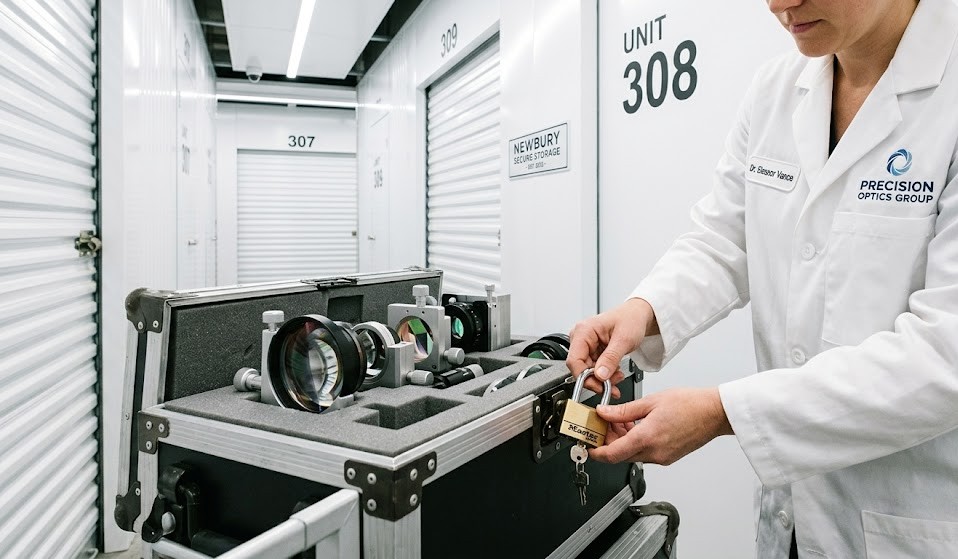
Security features – Your equipment represents tens of thousands of pounds in investment. Look for facilities with 24/7 CCTV, individual unit alarms, and secure access systems. Some practices store their backup phoropter or autorefractor off-site as insurance against theft or damage at the main premises.
Accessibility – You can’t predict when you’ll need that discontinued frame a patient specifically requested or when equipment will fail and you need the backup unit. Storage that’s accessible outside standard business hours gives you flexibility when emergencies arise.
Climate control – Electronic testing equipment contains sensitive components that deteriorate in extreme temperatures. Aim for storage that maintains a consistent temperature between 10°C and 25°C with relative humidity below 60%.
Clean environment – Dust is the enemy of optical equipment. Lenses, sensors, and calibration tools all suffer when exposed to particulate matter. Choose storage facilities that maintain clean, well-maintained units.
Organising frame collections for efficient retrieval
I once helped an optician who’d stored 400 frames in unmarked boxes. When a patient requested a specific style they’d tried months earlier, the team spent 90 minutes searching through every box. That’s not just inefficient – it’s a direct hit to customer service and staff morale.
Categorise your frames before they leave your practice. Create a system that matches how you think about your inventory:
By supplier and collection – Group frames by manufacturer and seasonal collection. This makes it simple to locate specific styles and track which collections are moving slower than expected.
By material type – Separate acetate, metal, and titanium frames. This helps with condition monitoring, as different materials have different storage requirements.
By price point – Keeping budget, mid-range, and premium frames separate helps when you’re rotating stock or planning promotional displays.
Use clear plastic storage boxes rather than cardboard. They protect against moisture better and let you see contents without opening every box. Label each box on multiple sides with waterproof markers or printed labels that include:
- Frame supplier and collection name
- Material type and colour range
- Approximate quantity
- Date stored
Create a master inventory spreadsheet that maps box numbers to contents. Update it whenever you add or remove items. This simple step transforms eyewear collection storage from a black hole into a managed inventory system.
Storing testing equipment safely
Testing equipment requires more care than frames. These devices contain delicate optics, electronic components, and calibrated mechanisms that can drift if stored improperly. But what happens when you realise you have more equipment than your practice can accommodate?
Start by cleaning equipment thoroughly before storage. Dust and debris can cause damage over time, particularly to optical surfaces and moving parts. Follow manufacturer guidelines for preparation – some devices have specific storage modes or positions that protect internal components.
Remove batteries from portable devices. Batteries can leak during storage, causing corrosive damage that’s expensive to repair. Store batteries separately in a cool, dry place.
Cover optical surfaces with lens caps or protective covers. Even in clean storage environments, dust settles. Protecting lenses and sensors saves time and money when you retrieve equipment.
Keep original packaging if possible. Manufacturers design packaging to protect equipment during transport and storage. The foam inserts and protective cases provide better protection than improvised solutions. If you’ve discarded original packaging, use bubble wrap and custom foam inserts to prevent movement during storage.
Document the condition of each piece before storage. Take photographs and note any existing wear or damage. This creates a baseline for insurance purposes and helps you spot any deterioration that occurs during storage.
Managing patient records and documentation
Patient records present unique challenges for opticians. You’re legally required to keep records for specific periods, but these documents consume significant space. A practice seeing 20 patients daily generates roughly 5,000 patient files annually. After five years, that’s 25,000 files requiring storage.
Digital records reduce this burden, but most practices maintain physical backups or have historical records predating digital systems. These documents need protection from moisture, pests, and unauthorised access while remaining accessible for regulatory inspections or patient requests.
Archive older records systematically. Create a retention schedule based on regulatory requirements – typically seven years for NHS records and longer for private patients who remain active. Box records by year and type, using archive-quality boxes that resist moisture and deterioration.
Label boxes with date ranges and record types. Include a box number that corresponds to a digital index showing which patient records are in each box. This system lets you locate specific records quickly without searching through dozens of boxes.
Store records in a secure unit with appropriate access controls. Patient confidentiality isn’t optional – it’s a legal requirement. Choose storage that offers individual unit access rather than shared spaces, and ensure the facility maintains proper security measures.
Seasonal inventory rotation strategies
Optical fashion follows seasonal trends just like clothing. Summer brings demand for lighter frames and prescription sunglasses. Winter sees increased interest in darker colours and heavier materials. Managing these seasonal shifts without overwhelming your practice requires strategic eyewear collection storage.
Rotate collections quarterly rather than trying to display everything simultaneously. This approach keeps your displays fresh and makes your practice feel current. Store off-season collections in clearly labelled boxes that indicate the intended display period.
Create a rotation calendar that aligns with your ordering cycles. Most suppliers release new collections twice yearly. Plan to rotate stock 4-6 weeks before new collections arrive, giving you time to assess what moves to storage and what remains on display.
Use storage as an opportunity to assess frame performance. When rotating stock, note which styles sold well and which languished. This data informs future ordering decisions and helps you identify styles that might be better suited to promotional pricing than premium display space.
Insurance and security considerations
Your optical equipment and frame inventory represent substantial financial investment. A typical independent practice holds £50,000-£150,000 in frames and equipment at any time. Protecting this investment requires proper insurance coverage and security measures.
Notify your insurance provider when storing equipment or inventory off-site. Most business insurance policies cover stock and equipment at your primary location but may require endorsements for off-site storage. Failing to disclose storage arrangements can void coverage if you need to make a claim.
Document everything you store with photographs and detailed inventory lists. Include serial numbers for equipment and specific details for high-value frame collections. This documentation speeds up insurance claims and helps prove ownership if items are stolen.
Choose storage facilities with robust security features. At minimum, look for:
- 24/7 CCTV coverage
- Individual unit alarms
- Secure perimeter fencing
- Controlled access systems requiring unique codes or keys
- Well-lit premises with regular security patrols
Business storage designed for commercial use typically offers these features as standard, providing better protection than general-purpose storage units.
Maximising your practice space
Storage isn’t just about removing excess items – it’s about optimising your practice for patient experience and operational efficiency. When you’re not navigating around boxes of old frames or equipment awaiting repair, your team works more effectively and patients notice the difference.
Think of storage like choosing the right lens for a prescription – it needs to match your specific requirements. A practice with 200 square feet of retail space has different needs than one with 800 square feet. Assess what truly needs to be on-site daily versus what can be retrieved when needed.
Start by identifying items that haven’t been accessed in six months. These are prime candidates for eyewear collection storage. This includes:
- Seasonal frame collections outside their peak period
- Backup testing equipment kept for emergency use
- Archived patient records beyond immediate access requirements
- Promotional materials and display fixtures between campaigns
- Excess packaging materials and supplies
Create zones in your practice based on access frequency. Keep high-turnover items and daily-use equipment in prime locations. Store slower-moving stock in less accessible areas. Move everything else to external storage.
Practical steps for setting up optical storage
Setting up storage for optical equipment and inventory isn’t complicated, but it requires planning. Here’s a straightforward approach that prevents common mistakes:
Audit your current inventory – Create a comprehensive list of everything in your practice. Note the last time each item was accessed and its current condition. This audit reveals what you actually need on-site versus what’s consuming space unnecessarily.
Estimate space requirements – A standard storage unit of 50 square feet holds approximately 150-200 boxed frames plus several pieces of testing equipment. Most independent opticians find 50-100 square feet sufficient for rotating stock and backup equipment.
Prepare items properly – Clean equipment, protect optical surfaces, and organise frames into clearly labelled boxes. Invest time in preparation now to save hours of frustration later.
Create an inventory system – Whether you use a spreadsheet or specialised inventory software, maintain detailed records of what’s stored and where. Include box numbers, contents, and retrieval dates.
Establish retrieval protocols – Define who has access to storage and how items are checked in and out. This prevents confusion and ensures your inventory records remain accurate.
Schedule regular reviews – Set quarterly reminders to assess what’s in storage. Remove items no longer needed and rotate stock based on seasonal demand.
When to consider additional storage
Storage needs evolve as practices grow. You might start with 50 square feet for seasonal stock rotation and find yourself needing double that within two years. Recognising when to expand storage prevents the gradual creep of clutter back into your practice.
Consider additional optician equipment storage when:
- Your practice is preparing for renovation or expansion
- You’re merging with another practice and consolidating inventory
- You’re transitioning between premises and need temporary space
- You’re diversifying into new product lines like sports eyewear or specialist occupational lenses
- You’re storing equipment for a second location that’s not yet fully operational
Storage offers flexibility that fixed premises don’t. You can scale up or down based on actual needs rather than committing to larger premises with higher overheads. For many independent opticians, this flexibility is the difference between profitable growth and overextension.
Making storage work for your practice
The most successful opticians treat eyewear collection storage as an extension of their practice, not a dumping ground. They maintain the same organisational standards in storage as they do in their consulting rooms. This approach transforms storage from a necessary expense into a strategic tool for business efficiency.
Regular access to stored items should be straightforward. If you find yourself avoiding storage because it’s too difficult to retrieve items, your system needs refinement. The goal is making storage so efficient that it feels like having extra space at your practice – space that doesn’t cost premium retail rates.
When you’re ready to explore storage options for your optical practice, consider facilities that understand business storage requirements. Look for providers offering climate control, robust security, and flexible access arrangements. The right storage partner helps you maintain the quality and accessibility your equipment and inventory deserve.
Your frame collections and testing equipment represent years of investment in your practice. Protecting these assets while optimising your working space isn’t just good business sense – it’s essential for delivering the professional service your patients expect. Secure, well-organised optician equipment storage gives you the space to focus on what matters most: providing excellent optical care.
For practices ready to implement professional storage solutions for optical equipment and frame collections, contact us to discuss climate-controlled units with 24/7 access that protect your valuable inventory and testing equipment.