
 01635 581 811
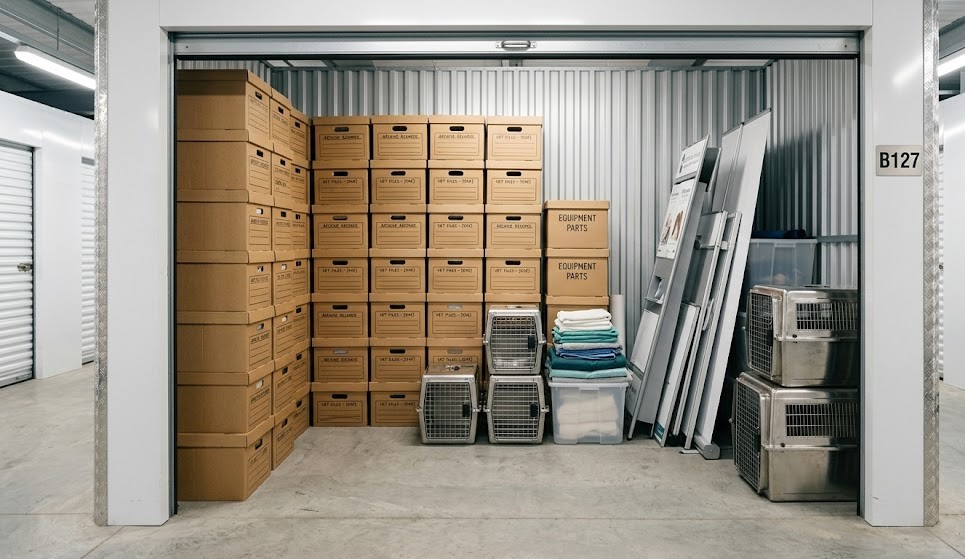
Running a veterinary practice means juggling equipment for every season, patient records dating back years, and supplies that take up more space than you’d expect. Most vets know the frustration: exam rooms crammed with bulky crates used twice a year, filing cabinets blocking corridors, and boxes of promotional materials stacked wherever they’ll fit.
The challenge isn’t just about clearing space. It’s about maintaining compliance with record-keeping regulations, protecting sensitive client data, and ensuring you can access archived files when needed. A well-organised veterinary storage strategy transforms a chaotic back office into a functional workspace, freeing up room for what matters: treating animals and serving clients.
Why veterinary practices need dedicated storage
Veterinary clinics accumulate equipment and paperwork faster than most small businesses. Consider the seasonal nature of the work: livestock practices need lambing equipment for spring, equine vets store fly masks and cooling gear for summer, and small animal practices rotate holiday boarding supplies. Between active use periods, this equipment sits idle but can’t be discarded.
Then there’s the legal requirement to retain patient records. The Royal College of Veterinary Surgeons mandates keeping clinical records for at least six years after the last treatment. For practices serving long-lived animals like horses or tortoises, that timeline extends considerably. Digital records help, but many practices maintain paper archives alongside electronic systems, particularly for older cases or complex surgical documentation with hand-drawn diagrams and physical test results.
The space crunch hits hardest in town-centre practices where every square metre costs money. A single filing cabinet occupies floor space that could accommodate a consultation desk or additional retail shelving for prescription diets. When storage creeps into clinical areas, it compromises both workflow efficiency and the professional impression you’re presenting to clients.
What veterinary practices typically store off-site
Seasonal clinical equipment forms the bulk of what vets move to external storage. Large animal practices might store calving jacks, sheep-handling equipment, or portable cattle crushes during off-season months. Equine specialists often rotate between summer and winter gear: clipping machines, cooling fans, and fly control supplies swap places with heat lamps and heavy-duty stable rugs.
Archived patient records represent the most compliance-sensitive category. These files contain treatment histories, surgical notes, laboratory results, consent forms, and billing records. They’re rarely accessed but must remain retrievable for legal queries, insurance claims, or when long-term patients return after years away. Proper veterinary storage protects them from damp, pests, and accidental damage whilst keeping them organised by year or patient surname.
Surplus pharmaceuticals and supplies often accumulate when practices buy in bulk or discontinue certain product lines. Unopened boxes of syringes, wound dressings, or discontinued supplement brands can’t simply be thrown away but don’t belong in active dispensary space. Some items, like promotional materials from pharmaceutical reps or old marketing collateral, take up room without serving current needs.
Outdated equipment and furniture fills the awkward middle ground between active use and disposal. That old X-ray machine awaiting proper disposal, the examination table replaced during a refurbishment, or the waiting room chairs swapped for more modern seating, these items can’t sit in corridors indefinitely but might have resale value or parts worth keeping.
Here’s a real-world example: a mixed practice in Hampshire stored three years of archived records, their entire stock of lambing equipment between May and December, and boxes of promotional materials from a rebranding project. By moving these items to a secure storage unit, they converted a cramped storeroom into a dedicated space for nurse consultations, increasing their appointment capacity by 15%.
Choosing the right storage unit size
Veterinary practices typically need more space than they initially estimate. A useful comparison: if you’re storing five years of archived records for a busy small animal practice, you’re looking at roughly 15-20 archive boxes per year of operation. Add seasonal equipment, and the space requirement grows quickly.
Small units (25-35 square feet) suit single-vet practices storing primarily paperwork. You’ll fit approximately 50-70 archive boxes, leaving room for a few pieces of small equipment like portable scales or a filing cabinet. This size works if you’ve digitised most records and only need to archive paper files for compliance.
Medium units (50-75 square feet) accommodate mixed practices with moderate equipment storage needs. These hold 100-150 archive boxes plus larger items like examination tables, portable crates, or seasonal supplies. You can install basic shelving to maximise vertical space and create an organised system where different categories occupy designated areas.
Large units (100+ square feet) serve practices with substantial equipment or multiple locations consolidating storage. These spaces handle bulky items like portable X-ray machines, large animal handling equipment, or the archived records from a practice merger. The extra floor space allows for proper walkways, making it easier to retrieve specific items without shifting everything.
Think about access patterns when sizing up. If you’ll need to retrieve archived records monthly for insurance queries or legal matters, choose a unit that allows you to organise boxes chronologically with clear pathways. If you’re storing equipment accessed only twice yearly, you can pack more densely.
Organising archived records for compliance and retrieval
Patient records demand a systematic approach that balances space efficiency with quick retrieval. Start by sorting files into clear categories: active patients (seen within the past year), semi-active (seen within 1-3 years), and archived (older than three years or deceased patients).
Use standardised archive boxes rather than random cardboard. Proper archive boxes stack safely, resist moisture better than regular cardboard, and feature reinforced handles for easier lifting. Label each box on multiple sides, not just the top, with the contents, date range, and a unique reference number. When boxes are stacked, you’ll still see the labels on the front face.
Create a master inventory spreadsheet listing every box number, its contents, and its location within your storage unit. This simple system saves hours of searching. When a client calls about their dog’s treatment from five years ago, you can identify “Box 47, Small Animal Records 2018-2019, Shelf 3B” in seconds rather than opening boxes randomly.
Group records logically: separate small animal from large animal files, or organise by year if your practice handles mixed cases. Some vets prefer alphabetical sorting by client surname within each year, whilst others find chronological filing simpler. Choose whichever system your team will actually maintain consistently.
Position frequently accessed boxes near the unit entrance. Semi-active records that might be needed occasionally should occupy middle shelves at comfortable reaching height. Fully archived records for patients unlikely to return can sit on higher shelves or toward the back. This layout minimises the time spent retrieving specific files.
Storing seasonal equipment properly
Clinical equipment needs more than just a dry space, it requires preparation to ensure it’s ready for use when the season returns. Clean everything thoroughly before storage. Livestock equipment carrying traces of organic matter will attract pests and develop unpleasant odours. Clippers, surgical instruments, and anything with moving parts should be oiled lightly to prevent rust and seizure.
Disassemble larger items where practical. A calving jack takes up half the space when broken down into its component parts. Portable cattle crushes often feature removable sections that stack efficiently. Photograph the assembly process or keep instruction manuals with the equipment so you’re not puzzling over reassembly months later.
Protect equipment from dust and moisture using breathable covers rather than sealed plastic. Sealed plastic traps condensation, promoting rust and mildew. Heavy-duty dust sheets or breathable equipment covers maintain air circulation whilst keeping items clean. For particularly valuable pieces like portable ultrasound machines or dental equipment, consider the original packaging if you’ve retained it. Proper veterinary equipment archiving techniques preserve expensive tools for years of reliable service.
Battery-powered equipment requires special attention. Remove batteries before storage to prevent corrosion from leaking cells. Store batteries separately in a cool, dry container. For rechargeable equipment, consult manufacturer guidelines, some lithium batteries should be stored at partial charge rather than fully charged or completely flat.
Label everything clearly, especially if multiple team members might need to retrieve items. “Lambing Equipment, Spring 2024” tells you more than “Livestock Stuff.” Include a contents list on larger containers so you know exactly what’s inside without opening them.
Security considerations for sensitive records
Veterinary records contain sensitive information: client names, addresses, payment details, and medical histories of valuable animals. Data protection regulations apply to veterinary records just as they do to human medical files, making security a legal requirement rather than a nice-to-have feature.
Choose a storage facility with robust security measures: individually alarmed units, 24-hour CCTV coverage, and controlled access systems that log entry and exit times. These features protect against unauthorised access and provide an audit trail if questions arise about record handling.
Limit access to essential staff only. Even within your practice, not everyone needs keys or access codes to off-site storage. Designate specific team members responsible for record retrieval and maintain a log of who accessed storage and when. This creates accountability and helps track down specific files if needed.
Consider additional protection for the most sensitive records. Lockable filing cabinets within your storage unit add a second layer of security. For practices storing controlled drug records or particularly high-value client information, this extra precaution demonstrates due diligence in protecting confidential data.
Regular audits ensure your veterinary storage system remains compliant. Schedule quarterly checks to verify that retention periods are being followed, that boxes remain properly labelled, and that nothing has been damaged by damp or pests. This proactive approach prevents problems before they become serious compliance issues.
Climate control: when it’s worth the investment
Most veterinary equipment and paper records don’t require climate control, but certain items justify the extra cost. Electronic equipment, particularly older devices or anything with sensitive components, performs better after storage in stable temperature conditions. Portable ultrasound machines, digital X-ray sensors, or computerised dental equipment fall into this category.
Paper records generally tolerate normal temperature fluctuations well, but humidity poses a real threat. In areas prone to damp, climate-controlled units prevent mould growth on archived files. If you’re storing records for the full six-year retention period, the cost of climate control is considerably less than the expense of recreating damaged files or facing compliance penalties.
Photographic records and old X-ray films definitely benefit from climate control. These materials degrade faster in fluctuating temperatures and high humidity. If your practice maintains historical archives including film-based imaging, stable conditions preserve them far longer.
For most practices storing primarily equipment and standard paper files, a clean, dry, well-ventilated standard unit suffices. Focus on proper preparation, cleaning equipment, using quality archive boxes, and organising items to allow air circulation, rather than automatically opting for climate control. Save that investment for genuinely sensitive items.
Creating an efficient retrieval system
The best storage system means nothing if you can’t find what you need quickly. Design your unit layout with retrieval in mind from the start. Position shelving units to create clear aisles wide enough to move comfortably whilst carrying boxes or equipment. A cramped layout saves a few square feet but costs hours in retrieval time over a year.
Use vertical space intelligently. Install sturdy shelving that reaches near the ceiling, but reserve top shelves for items accessed rarely. Frequently needed boxes should sit at waist to shoulder height, the comfortable lifting zone that reduces strain and speeds retrieval. Bottom shelves work well for heavy equipment that’s difficult to lift high.
Implement a simple location coding system. Divide your unit into zones (A, B, C) and number shelves within each zone (1, 2, 3, 4). Each box or piece of equipment then has a specific address: “Zone B, Shelf 3” or simply “B3.” Update your master inventory spreadsheet with these locations so anyone can find items without prior knowledge of your system.
Consider seasonal rotation when positioning equipment. If you store both summer and winter gear, swap their positions as seasons change. Place incoming items toward the back and move next season’s equipment forward. This prevents the frustrating situation where you need summer gear that’s buried behind winter supplies. Effective veterinary equipment archiving includes planning for easy seasonal access.
Keep a small clear area near the entrance for staging. When you need to retrieve items, this space lets you temporarily set down boxes whilst you search, rather than stacking them in aisles or taking them outside. It also provides a work area if you need to check contents of multiple boxes to find specific files.
Integrating storage with practice management
Off-site storage works best when it’s properly integrated with your practice management system. Update patient records to note when files move to external storage. A simple flag in your software, “Physical records in archive storage, Box 23”, prevents staff from searching the office for files that aren’t there.
Schedule regular storage days rather than making ad-hoc trips. Designate one afternoon per quarter for a team member to transport new archives, retrieve needed files, and check the condition of stored items. This routine approach is more efficient than reactive trips whenever someone needs something.
Coordinate storage with your record digitisation efforts. Many practices gradually scan older records whilst maintaining paper originals for compliance. As you digitise, the physical files can move to storage, freeing up office space progressively. This phased approach is more manageable than attempting to digitise everything at once.
Train all relevant staff on your veterinary equipment archiving and record storage system. Receptionists should know how to flag files that have moved to storage. Nurses and vets should understand the retrieval process so they can request archived records with appropriate notice. Practice managers need access to the master inventory to maintain the system as the practice grows.
Cost-effective storage for multi-vet practices
Practices with multiple vets or locations often need business storage solutions that scale efficiently. Sharing a larger unit between locations typically costs less per practice than each renting small individual spaces. A centrally located unit accessible to all branches streamlines logistics and reduces duplicate storage costs.
Consider consolidating purchases of storage supplies. Buying archive boxes, labels, and shelving in bulk reduces per-unit costs significantly. If you’re part of a veterinary group or have good relationships with neighbouring practices, coordinate purchases to access better pricing.
Evaluate storage costs against practice space costs. If you’re paying £15-20 per square foot for clinical space, moving archives and equipment to storage at £1-2 per square foot represents substantial savings. Calculate how much consulting or treatment space you could reclaim, then compare that revenue potential against storage costs. The numbers often favour external veterinary storage decisively.
Review your storage needs annually. As older records pass their retention period, you can dispose of them properly and potentially downsize to a smaller unit. Conversely, growing practices might find that upgrading to a larger unit costs less than adding a second small one. Regular assessment ensures you’re paying for the space you actually need.
The packaging supplies needed for proper archive storage, quality boxes, labels, protective covers, represent a small upfront investment that pays off in reduced damage and easier organisation. Cheap materials that fail after a year ultimately cost more than buying properly the first time.
Legal compliance and record retention
Understanding retention requirements prevents both premature disposal and unnecessary long-term storage. The RCVS requires keeping clinical records for at least six years from the date of last treatment. For animals that might receive treatment over many years, this effectively means retaining records for the animal’s lifetime plus six years.
Controlled drug registers require special attention. These must be kept for seven years from the date of the last entry. If your practice handles Schedule 2 or 3 controlled drugs, maintain these registers separately and flag them clearly in your storage system. They’re among the most legally sensitive documents you’ll store.
Consent forms, particularly those for surgical procedures or euthanasia, should be retained alongside clinical records. These documents become crucial if disputes arise about treatment decisions. Some practices choose to keep these permanently for high-risk procedures, though legally the six-year period applies.
Financial records follow different rules. HMRC requires keeping business records for at least six years from the end of the accounting period they relate to. This includes invoices, receipts, and payment records. Coordinate your record retention schedule to handle both clinical and financial documents efficiently.
When the retention period expires, dispose of records securely. Patient confidentiality doesn’t end when files leave active use. Shredding services specialising in confidential document destruction ensure compliance with data protection requirements. Never simply bin old records, the information they contain remains sensitive regardless of age.
Making storage work long-term
Successful veterinary equipment archiving isn’t about moving problems out of sight, it’s about creating a sustainable system that supports your practice’s growth. Start with realistic assessment: what do you genuinely need quick access to, what can be archived with occasional retrieval, and what might never be accessed but must be retained for compliance?
Build habits around your storage system. When patient records become inactive, schedule their transfer to storage rather than letting them accumulate in office filing cabinets. When seasonal equipment comes back into use, inspect it immediately and note any maintenance needed before next season. These small routines prevent storage from becoming a dumping ground.
Document your system thoroughly. Create a simple procedures manual explaining how files are archived, how the location coding works, and how to retrieve items. When staff change or new team members join, this documentation ensures continuity. It also protects your practice if the person who “knows where everything is” suddenly isn’t available.
Review and refine your approach based on actual usage. If you’re constantly retrieving certain categories of files, perhaps they should remain in the practice rather than going to storage. If other items never get accessed, they might be candidates for disposal once retention periods expire. Let practical experience guide improvements to your system.
Veterinary storage represents an investment in your practice’s efficiency and professional standards. Done properly, it transforms cluttered workspaces into functional clinical areas, ensures compliance with record-keeping requirements, and protects sensitive client information. The practices that benefit most are those that treat storage as an integral part of their operations rather than an afterthought.
Whether you’re a single-vet practice drowning in archived files or a multi-location group needing consolidated equipment storage, the right approach combines proper preparation, systematic organisation, and regular maintenance. The result: more space for treating patients, better compliance with legal requirements, and a more professional environment for both staff and clients.
If you’re ready to reclaim clinical space and implement a proper storage system, contact us to discuss unit sizes and access arrangements that suit veterinary practice needs. Proper storage isn’t an expense, it’s an investment in running a more efficient, compliant, and professional practice.