
 01635 581 811
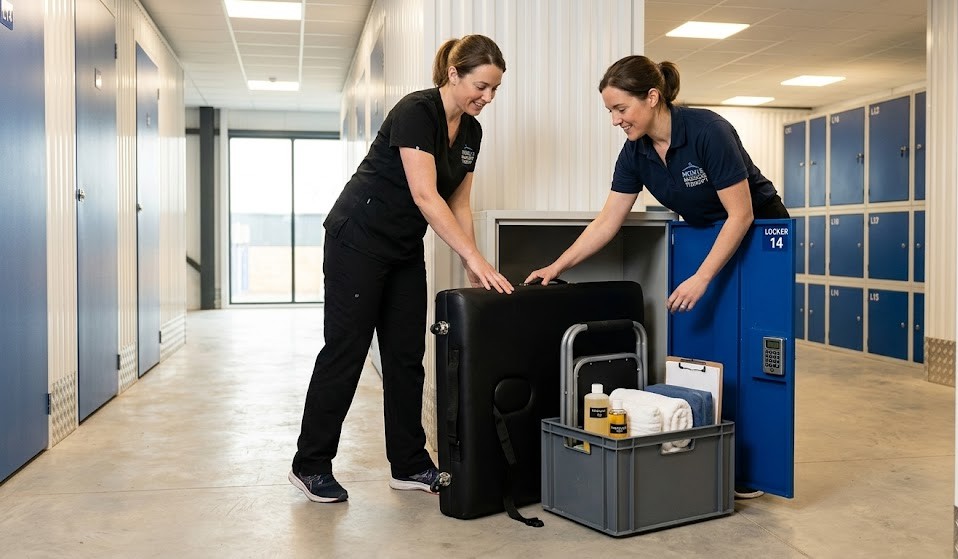
Running a mobile complementary therapy practice means freedom, flexibility, and the chance to bring healing directly to your clients. But it also means managing a surprising amount of equipment – massage tables, aromatherapy oils, acupuncture supplies, sound healing instruments, and countless other tools that don’t fit neatly into a spare bedroom cupboard.
Many therapists start their mobile practice without proper mobile practitioner storage solutions, keeping everything at home, only to find their living space gradually overtaken by treatment equipment. One reiki practitioner I knew began with a small collection of crystals and singing bowls, but within two years, she’d accumulated three massage tables (different heights for different venues), two complete sets of linens, portable treatment chairs, and enough essential oils to stock a small shop. Her spare room became a storage unit, her hallway a staging area, and her car boot a permanent equipment bay.
The challenge isn’t just about physical space. It’s about maintaining professional standards whilst managing a business from home, protecting expensive equipment from damage, and keeping everything organised enough that you can pack for a client appointment in minutes rather than hours.
Why mobile therapists need dedicated storage space
Professional therapist equipment storage protects your investment and maintains treatment standards. Your massage table cost several hundred pounds. Your collection of therapeutic-grade essential oils represents years of investment. Your sound healing instruments are irreplaceable. Yet many therapists store these items in damp garages, cramped cupboards, or spare rooms that double as home offices and guest bedrooms.
The problem compounds when you’re managing multiple treatment modalities. A therapist offering massage, reflexology, and aromatherapy consultations might need three different types of tables, multiple sets of linens (because you can’t always do laundry between appointments), various oils and creams, treatment records, and marketing materials. That’s before you factor in seasonal variations – hot stone massage equipment in winter, cooling gels for summer treatments.
Inadequate mobile practitioner storage creates practical problems beyond just space constraints. You’re constantly moving equipment around to access everyday items. Your family navigates around stacked boxes. Insurance companies question whether your home policy covers business equipment. Clients who collect items from your home address see the reality of a business run from a cluttered spare room rather than the professional image you’ve carefully cultivated.
Think of it like trying to run a restaurant from your kitchen. Technically possible, but the constraints eventually limit what you can achieve.
What equipment actually needs storage
Effective therapist equipment storage begins with understanding what you’ve actually accumulated – often more than you initially expected. Here’s what typically needs dedicated space:
Treatment tables and chairs take up the most room. A portable massage table folds down but still measures roughly 90cm by 60cm by 15cm. If you own multiple tables for different purposes (standard massage, lower tables for pregnant clients, lightweight versions for distant venues), you’re looking at significant floor space.
Linens and towels multiply quickly. Professional practice means fresh linens for every client, which requires owning enough sets to cover a full week’s appointments plus extras for emergencies. Each set includes a bottom sheet, top sheet, face cradle cover, and towels. Ten complete sets easily fill several large storage boxes.
Oils, creams, and aromatherapy supplies require specific storage conditions. Essential oils degrade in heat and light. Carrier oils can go rancid if stored improperly. Many therapists keep a working supply at home but store bulk purchases and backup stock elsewhere. Temperature-stable storage protects your investment and ensures product quality.
Specialised equipment varies by modality. Acupuncturists need needle supplies, moxa, cupping sets, and sterilisation equipment. Sound healers store singing bowls, tuning forks, gongs, and drums. Hot stone massage therapists manage stone sets, heating equipment, and cooling supplies. Reflexology practitioners accumulate charts, foot baths, and specialised creams.
Business materials often get forgotten in storage planning. Client records (if you maintain paper files), marketing materials, appointment books, portable payment systems, and administrative supplies all need secure, accessible storage.
Seasonal and backup equipment includes items you don’t use daily but can’t discard. Extra blankets for winter treatments. Cooling equipment for summer. Backup tables in case your primary one breaks. Equipment for modalities you’re training in but haven’t yet incorporated into regular practice.
Choosing the right storage unit size
Most mobile therapists need between 25 and 50 square feet of storage space. That’s roughly the size of a small garden shed, but with better security and climate conditions.
25-35 square feet works for:
- One massage table
- Basic linen sets (up to 10)
- Standard aromatherapy supplies
- Business records and marketing materials
- Small equipment for one or two modalities
35-50 square feet suits:
- Multiple treatment tables and chairs
- Extensive linen collections
- Comprehensive aromatherapy and oil supplies
- Equipment for three or more modalities
- Seasonal items and backup equipment
- Business materials and stock
The key is thinking vertically. Proper therapist equipment storage means maximising vertical space with shelving units that transform a small footprint into surprisingly generous capacity. Stack lighter items (linens, towels, paper supplies) on upper shelves. Store heavier equipment (tables, chairs, stone heating units) at ground level. Keep frequently accessed items near the door.
One massage therapist I worked with used a 35 square foot unit brilliantly. She installed industrial shelving along both walls, creating a central corridor. Linens lived on the left, organised by colour (white for massage, cream for aromatherapy, blue for reflexology). Equipment sat on the right, with her most-used table nearest the door. She could pack for any appointment type in under ten minutes.
Organising your storage space for quick access
Organisation determines whether storage simplifies your practice or complicates it. The goal is creating a system where you can walk in, grab what you need for today’s appointments, and leave within minutes.
Zone your space by function. Dedicate specific areas to different categories: treatment equipment in one zone, linens in another, oils and supplies in a third, business materials in a fourth. Your brain learns the layout quickly, and you stop searching for items.
Use clear storage containers for smaller items. You shouldn’t need to open five boxes to find your reflexology charts or spare face cradle covers. Clear plastic boxes let you see contents at a glance. Label everything anyway – lighting in storage units isn’t always perfect.
Create appointment-specific kits. Many therapists pre-pack containers for different treatment types. A “massage appointment kit” might include oils, music playlist, spare face cradle covers, and client intake forms. A “corporate chair massage kit” contains everything needed for workplace wellness sessions. You grab the relevant kit rather than assembling supplies each time.
Implement a rotation system for linens. Fresh linens go to the back of the shelf, used sets return to the front after laundering. This ensures even wear and prevents some sets becoming worn whilst others stay pristine.
Store oils and creams properly. Essential oils need cool, dark conditions. If your storage unit isn’t climate-controlled, keep oils in insulated containers or only store backup supplies, keeping your working stock at home. Carrier oils and creams should be checked regularly for rancidity.
Maintain equipment logs. Keep a simple inventory list in your unit noting when tables were last inspected, when linens were purchased, when oil bottles were opened. This prevents using degraded products on clients and helps you track replacement needs.
Protecting equipment during storage
Quality therapist equipment storage protects significant investments – professional massage tables cost £200-600, hot stone sets run £150-300, and sound healing instruments can reach thousands. Proper storage protects these investments.
Massage tables need specific care. Store them in their carry cases to prevent dust accumulation and accidental damage. Don’t stack heavy items on top – the frame can warp under sustained pressure. If you’re storing multiple tables, stand them vertically against a wall rather than stacking horizontally.
Fabric items require protection from moisture and pests. Vacuum-sealed bags work brilliantly for backup linen sets you won’t access frequently. For linens in regular rotation, breathable cotton storage bags prevent mustiness whilst protecting from dust. Add lavender sachets to deter moths naturally.
Oils and aromatherapy supplies should be stored in their original containers with lids tightly sealed. Group by type (essential oils separate from carrier oils) and check expiry dates quarterly. Discard anything that smells off or has changed colour.
Electrical equipment (hot stone heaters, wax warmers, music systems) should be wrapped in bubble wrap or stored in original packaging. Moisture is the enemy here, so silica gel packets in storage containers help absorb ambient humidity.
Paper records and business materials need protection from damp and pests. Plastic document boxes with sealed lids work better than cardboard filing boxes. If you’re storing client records, ensure your storage facility meets data protection requirements for confidential information.
Think of equipment storage like storing wine. The right conditions preserve value and quality. Poor conditions destroy your investment slowly but inevitably.
Climate control considerations
Not all storage units offer the same environmental conditions. Standard units provide security and space but don’t regulate temperature or humidity. Climate-controlled units maintain stable conditions year-round.
For most therapists, standard storage works fine with sensible precautions. Your massage table doesn’t care if it’s cold. Linens handle temperature variations. Most business materials remain unaffected by seasonal changes.
But certain items demand climate control:
Essential oils degrade rapidly in heat. Summer temperatures in a non-climate-controlled unit can reach 30-35°C, accelerating oxidation and reducing therapeutic properties. If you’re storing significant oil investments, climate control protects your stock.
Certain fabrics and materials suffer in damp conditions. Leather treatment chairs, silk eye pillows, or specialised fabrics benefit from humidity control. Mould and mildew can destroy expensive linens if moisture levels rise too high.
Electronic equipment performs better with stable temperatures. Hot stone heaters, music systems, and payment terminals contain components that deteriorate faster with extreme temperature cycling.
Musical instruments used in sound healing (particularly wooden instruments like drums or certain singing bowls) can crack or warp with humidity fluctuations.
The decision comes down to what you’re storing and its replacement cost. If losing your oil collection would cost £500 to replace, spending an extra £20 monthly for climate control makes financial sense. If you’re mainly storing tables and basic linens, standard storage suffices.
Accessing your storage: practical logistics
Mobile practitioner storage only works if you can access it when needed, matching your working patterns. Consider your typical schedule when choosing a facility.
Drive-up access matters more than you might think. Loading a massage table, treatment chair, and bags of linens into a car becomes tedious if you’re navigating lifts and corridors. Container storage with direct vehicle access means you can back up to your unit and load efficiently.
Access hours need to match your schedule. Some therapists work early mornings or evenings. If you’re restocking supplies at 7pm after a full day of appointments, 24-hour access prevents frustration. Others work standard hours and don’t need extended access.
Location affects how you use storage. A unit five minutes from home becomes an extension of your workspace. You can pop over to swap equipment between appointments or restock supplies quickly. A unit 30 minutes away needs different planning – you’ll visit less frequently and need to pack more carefully.
Security features matter when you’re storing thousands of pounds of equipment. Look for facilities with individual unit alarms, CCTV coverage, and controlled entry systems. Your insurance company will ask about security measures, and better security often means lower premiums.
Insurance and professional requirements
Your home insurance probably doesn’t cover business equipment stored elsewhere. Most policies exclude commercial activities and off-site storage. You need specific coverage.
Professional indemnity insurance should extend to equipment storage. If contaminated oils cause client harm because they were stored improperly, you need coverage. If someone breaks into your storage unit and steals client records, you need protection against data breach consequences.
Equipment insurance covers loss, theft, or damage to your professional tools. Insurers typically ask where equipment is stored and what security measures protect it. Professional storage facilities with good security often result in lower premiums than home storage.
Data protection applies if you’re storing client records. Paper files containing personal information must be stored securely with access limited to authorised individuals. Your storage facility should meet requirements for confidential document storage.
Check with your professional association about storage requirements. Some therapy governing bodies specify how certain items (particularly acupuncture needles or other medical supplies) must be stored. Ensure your storage solution meets professional standards as well as practical needs.
Cost-benefit analysis: storage vs. home space
Storage units cost £50-150 monthly depending on size and features. That seems expensive until you calculate what you’re actually paying for.
If you’re using a spare bedroom for equipment storage, that room has a value. In Newbury and surrounding areas, spare bedrooms add roughly £50-100 monthly to rental costs or represent similar value in owned homes. You’re already paying for storage space – it’s just mixed with your living space.
Dedicated mobile practitioner storage offers several advantages home storage can’t match:
Your home stays liveable. Spare rooms function as guest rooms or home offices. Hallways aren’t obstacle courses. Your family doesn’t navigate around massage tables.
Equipment stays in better condition. Purpose-built storage with proper ventilation and security beats a damp garage or cramped cupboard.
Professional image improves. Clients collecting equipment don’t see your cluttered spare room. Business and personal life maintain clearer boundaries.
Insurance becomes simpler. Separating business equipment from household items clarifies coverage and often reduces premiums.
Tax deductions apply. Storage costs for business equipment are legitimate business expenses, reducing your tax liability.
The calculation becomes: Would you rather pay £80 monthly for professional storage, or sacrifice a spare room worth similar money whilst dealing with clutter, potential equipment damage, and blurred professional boundaries?
For most established mobile therapists, dedicated storage pays for itself through improved organisation, better equipment longevity, and enhanced professional image. It’s not an expense – it’s infrastructure that enables your business to function smoothly.
Making the transition to professional storage
Transitioning to professional therapist equipment storage feels daunting, but it’s simpler than you’d think. Start by auditing what you actually own. Many therapists discover they’re storing equipment they haven’t used in years, products past their expiry dates, and duplicate items they’d forgotten about.
Declutter first. Dispose of expired oils and creams. Donate or sell equipment you no longer use. Consolidate duplicate items. You’ll need less storage space than you think once you eliminate items that no longer serve your practice.
Gather proper packing materials. Sturdy boxes, bubble wrap, and clear plastic containers protect equipment during the move and provide ongoing organisation. The packaging supplies available at professional storage facilities are designed for this purpose – stronger than household moving boxes and sized appropriately for storage units.
Plan your layout before moving in. Measure your unit, sketch a rough floor plan, and decide where different categories will live. This prevents the common mistake of piling everything in randomly and then spending hours reorganising.
Move systematically over several trips rather than attempting everything at once. Start with items you use least frequently – seasonal equipment, backup supplies, archived records. This lets you test your organisation system before moving essential items.
Create an inventory list as you move items. A simple spreadsheet noting what’s in storage prevents those “where did I put the hot stone heater?” moments. Update it whenever you add or remove items.
Growing your practice with proper storage
Proper mobile practitioner storage removes a significant constraint on practice growth, freeing you to expand service offerings. When you’re not worried about where to put new equipment, you’re free to develop your treatment menu.
Want to add hot stone massage to your offerings? You’ve got space for the stones and heating equipment. Interested in sound healing? Room exists for singing bowls and gongs. Considering corporate chair massage contracts? You can store multiple portable chairs without your home resembling a furniture warehouse.
Bulk purchasing becomes viable. Buying oils, creams, and supplies in larger quantities saves money, but only if you’ve got somewhere to store them. Professional storage lets you take advantage of supplier discounts without cluttering your home with boxes.
Equipment upgrades happen more naturally. When you’ve got proper storage, you can keep your old table as a backup whilst investing in a new one. You’re not forced into either/or decisions based on space constraints.
Seasonal variations become manageable. Winter treatments often involve warming elements – heated tables, hot stones, extra blankets. Summer treatments need cooling – cold stones, lighter linens, fans. Proper storage lets you rotate seasonal equipment without space becoming an issue.
The therapist I mentioned earlier – the one who started with a few crystals and singing bowls – eventually moved into a 50 square foot unit at Newbury Self Store. Within a year, she’d added three new treatment modalities, increased her client base by 40%, and stopped feeling like her home was a storage facility pretending to be a living space.
Conclusion
Running a successful mobile complementary therapy practice requires balancing professional standards with practical logistics. Your equipment represents both significant financial investment and the tools that enable you to help clients heal and thrive. Storing that equipment properly isn’t a luxury – it’s essential business infrastructure.
Professional storage transforms how you operate. Instead of spending twenty minutes searching for supplies before each appointment, you walk into an organised space and gather what you need in minutes. Instead of worrying about oil degradation in a hot garage or moisture damage to linens, you know everything’s protected. Instead of navigating around massage tables in your hallway, your home functions as a home whilst your business operates from appropriate space.
The cost of personal storage is offset by improved efficiency, better equipment longevity, enhanced professional image, and the mental clarity that comes from proper organisation. You’re not paying for empty space – you’re investing in the infrastructure that lets your practice grow without your living space shrinking.
Whether you’re just starting your mobile practice or you’ve been operating for years from increasingly cluttered home storage, there’s a better way. Professional storage gives you room to grow, protection for your investments, and the peace of mind that comes from knowing your professional tools are secure and well-maintained. Your practice deserves that foundation, and so do you.
If you’re ready to reclaim your living space whilst giving your equipment the storage it deserves, contact us to discuss which unit size and features would work best for your practice. Your massage table will thank you, your family will thank you, and you’ll wonder why you didn’t make the change sooner.