
 01635 581 811
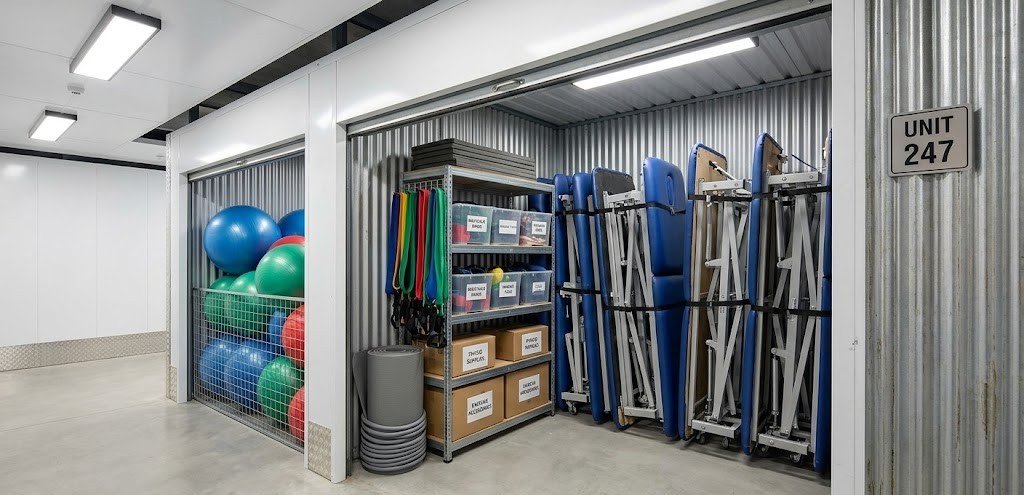
Running a physiotherapy clinic means juggling clinical excellence with practical realities. You need space for treatment tables, rehabilitation equipment, exercise apparatus, and specialist tools – but rent in high-street locations doesn’t come cheap. When your lease costs £3,000 per month, every square metre devoted to storing unused equipment feels like money slipping away.
Many physio practices face the same dilemma: they need backup treatment tables for busy periods, seasonal equipment like hydrotherapy gear, or archived patient records that must be retained for legal compliance. Yet dedicating valuable clinical space to storage reduces the number of treatment rooms available and limits revenue potential. That’s where private practice storage transforms how physiotherapy clinics operate, freeing up space whilst keeping essential equipment secure and accessible.
Why physiotherapy equipment takes up so much space
Treatment tables alone consume significant floor area – a standard physiotherapy plinth measures roughly 2 metres by 0.7 metres. Multiply that by backup tables, specialist equipment like traction devices, and rehabilitation apparatus such as parallel bars or balance platforms, and you’ve quickly filled a room that could otherwise generate £200-300 per day in treatment fees.
Consider the typical inventory of a busy physiotherapy clinic. You’ll have ultrasound machines, TENS units, exercise balls ranging from 45cm to 75cm diameter, resistance bands, weights, foam rollers, and possibly hydrotherapy equipment. Then there’s the administrative side: seven years of patient records (as required by professional guidelines), old marketing materials, and archived documentation.
One clinic manager I spoke with calculated that their storage cupboard occupied 12 square metres – space that could accommodate another treatment room generating approximately £60,000 annually. The maths becomes compelling quickly.
What happens when clinical space becomes storage space
Here’s a scenario that plays out regularly: a physiotherapy practice starts with two treatment rooms and sensible storage. As the business grows, they acquire more equipment to offer diverse treatments. Success brings new challenges – more patients, more staff, more apparatus. Before long, one treatment room doubles as a stockroom, with boxes stacked against walls and equipment tucked behind curtains.
This creates several problems. First, it looks unprofessional when patients glimpse cluttered storage areas. Second, staff waste time navigating around obstacles or searching for specific equipment. Third, valuable clinical space sits idle whilst generating no income. It’s the equivalent of packing your suitcase so full that you can’t close it properly – something’s got to give.
Equipment that benefits from off-site storage
Not everything belongs in your clinic daily. Seasonal equipment tops the list – hydrotherapy gear used primarily in summer months, or specialist apparatus for sports injury rehabilitation that sees heavy use during football season but sits idle otherwise.
Backup treatment tables represent another prime candidate. You need them when your regular tables require maintenance or during exceptionally busy periods, but they needn’t occupy premium clinic space year-round. A quality physiotherapy plinth costs £800-1,500; protecting that investment in proper storage makes financial sense.
Consider storing:
- Spare treatment tables and adjustable plinths
- Rehabilitation equipment used for specific programmes (parallel bars, gait trainers)
- Bulk supplies of consumables (couch roll, towels, disposable sheets)
- Archived patient records requiring confidential document storage
- Marketing materials and seasonal promotional items
- Specialist equipment for niche treatments offered occasionally
- Old or outdated apparatus kept for parts or potential future use
Choosing the right storage solution
Think of selecting a storage unit like choosing the right clinical space initially – size, accessibility, and security matter enormously. A 20-square-foot unit suits smaller clinics storing backup equipment and archived records. Practices with extensive rehabilitation apparatus or multiple backup tables need 50-100 square feet.
Climate control isn’t negotiable for physiotherapy equipment. Electronic devices like ultrasound machines and TENS units deteriorate in damp conditions. Leather upholstery on treatment tables can develop mould in humid environments. You wouldn’t store these items in a garden shed; don’t compromise on storage conditions either.
Drive-up access transforms logistics. When you need to retrieve a backup treatment table because your primary plinth developed a hydraulic fault, you don’t want to navigate stairs or lifts. Container storage offers precisely this convenience – drive directly to your unit, load equipment, and return to your clinic within the hour.
Organising equipment for quick access
Storing equipment effectively requires more strategy than simply stacking boxes. Create an inventory system that tracks every item’s location – a simple spreadsheet listing equipment type, storage box number, and date stored prevents frustrating searches later.
Label everything clearly. Use weatherproof labels on boxes and equipment, noting contents and any handling instructions. Treatment tables should indicate their condition and any known maintenance requirements. When your receptionist needs to retrieve specific equipment, clear labelling eliminates guesswork.
Store items you’ll access frequently near the unit entrance. Seasonal equipment can sit further back, whilst rarely-needed items occupy the deepest positions. It’s the same principle as organising your clinic cupboards – frequently-used items at eye level, occasional-use items on higher shelves.
Protect equipment properly during storage. Wrap treatment tables in furniture covers or breathable dust sheets. Don’t use plastic sheeting directly on leather or vinyl upholstery, as trapped moisture causes deterioration. Electronic equipment should remain in original packaging where possible, or wrapped in bubble wrap with silica gel packets to absorb moisture.
Managing patient records compliantly
The Health and Care Professions Council requires physiotherapists to retain patient records for specific periods – typically seven years for adults, longer for children. These files accumulate quickly, consuming filing cabinet space that could house current patient information instead.
Confidential document storage solves this whilst maintaining compliance. Archive records annually, boxing them by year with clear labels indicating retention dates. Store them in a secure, climate-controlled unit where they’re protected from damp, pests, and unauthorised access. You’ll rarely need these archived records, but when solicitors request historical treatment notes, you’ll know exactly where to find them.
Digital records don’t eliminate physical storage needs entirely. Many clinics maintain both digital and paper records during transition periods, or keep original signed consent forms and assessment documents alongside digital copies. Personal storage provides the secure environment these sensitive documents require, with proper confidential document storage protocols ensuring GDPR compliance.
Calculating the financial benefits
Let’s examine the numbers properly. Suppose your clinic pays £35 per square foot annually for high-street premises. Dedicating 100 square feet to storage costs £3,500 yearly in rent alone, plus heating, lighting, and insurance.
A climate-controlled storage unit offering 100 square feet costs approximately £150-200 monthly, or £1,800-2,400 annually. You’ve immediately saved £1,100-1,700. More significantly, reclaiming that clinical space allows you to add another treatment room or expand your reception area, directly impacting revenue generation.
One three-practitioner clinic calculated that converting their storage room into a third treatment room added £52,000 in annual revenue. Even accounting for storage costs and occasional retrieval trips, the return on investment proved substantial. For smaller operations, private practice storage delivers similar benefits by maximising limited clinical space.
Preparing equipment for storage
Don’t simply load equipment into a van and dump it in storage. Proper preparation protects your investment and ensures everything remains functional when needed.
Clean and disinfect thoroughly
Clean everything thoroughly. Treatment tables should be wiped down with appropriate disinfectant. Remove any biological material or stains. This prevents deterioration and ensures equipment returns to service quickly without extensive cleaning.
Disassemble where practical
Disassemble where practical. Many treatment tables feature removable sections or adjustable components. Disassembling these reduces space requirements and protects delicate mechanisms during storage. Keep all fixings, bolts, and small parts in labelled bags taped to the main equipment.
Document equipment condition
Document equipment condition. Photograph each item before storage, noting any existing damage or wear. This creates a baseline record and helps with insurance claims should anything occur during storage. It also reminds you of equipment condition when deciding whether to return items to service or replace them.
Protect vulnerable components
Protect vulnerable components. Hydraulic treatment tables need special attention – ensure rams are fully retracted and protected from dust. Electronic equipment should have batteries removed to prevent corrosion. Moving parts benefit from light lubrication before storage.
Accessing stored equipment when needed
Storage only works if you can retrieve equipment quickly when circumstances demand. That backup treatment table becomes useless if accessing it requires three days’ notice and complicated logistics.
Choose storage with extended access hours – ideally 24/7 access or at minimum, early morning through evening availability. Clinical emergencies don’t respect office hours. When your primary treatment table fails on a Friday afternoon, you need immediate access to your backup.
Keep a vehicle access plan ready. Know exactly which staff members can collect equipment if needed, ensure they have storage access codes, and maintain a vehicle suitable for transporting treatment tables safely. One clinic keeps a roof rack permanently fitted to their practice vehicle specifically for equipment retrieval.
Security considerations for clinical equipment
Physiotherapy apparatus represents significant financial investment – a quality treatment table costs upwards of £1,000, whilst specialist equipment like shockwave therapy devices can exceed £10,000. This equipment attracts thieves, making security paramount.
Look for storage facilities offering CCTV monitoring, individual unit alarms, and secure perimeter fencing. Your equipment should be as secure off-site as it would be in your locked clinic overnight. Business storage designed for commercial equipment typically includes these security features as standard, whilst confidential document storage areas provide additional privacy measures for sensitive patient records.
Insurance coverage requires attention too. Verify that your clinic’s equipment insurance extends to off-site storage, or arrange separate coverage. Document all stored items with photographs and serial numbers. This protects you financially and assists police should theft occur.
Seasonal storage strategies
Physiotherapy practices often see seasonal fluctuations in treatment types. Sports injury work peaks during football and rugby seasons. Holiday periods see different patient demographics. Winter brings more elderly patients concerned about falls, whilst summer increases activity-related injuries.
Adapt your storage strategy to these patterns. Store winter-specific equipment during summer months, rotating stock as seasons change. This keeps your clinic organised whilst ensuring you’re always equipped for current patient needs without cluttering treatment rooms with off-season apparatus.
One clinic uses this analogy: managing equipment storage resembles rotating your wardrobe seasonally. You don’t keep heavy winter coats in your closet during July – they’re packed away until needed. Apply the same logic to rehabilitation equipment, and your clinic remains uncluttered year-round.
Packaging and protection materials
Proper packing materials make the difference between equipment that emerges from storage ready for immediate use and apparatus requiring cleaning, repair, or replacement. Don’t cut corners here – the cost of quality packaging supplies pales beside replacing damaged equipment.
Heavy-duty cardboard boxes suit smaller items and consumables. Choose double-walled boxes for anything heavy. Bubble wrap protects electronic equipment and delicate components. Furniture covers or dust sheets protect treatment tables without trapping moisture.
Professional materials specifically designed for storage offer better protection than repurposed alternatives. Purpose-made boxes feature reinforced corners and moisture-resistant construction. Professional furniture covers breathe whilst blocking dust, preventing the condensation problems that plague plastic sheeting.
Combining storage with practice growth
Strategic storage use enables practice expansion without immediate premises costs. When you’re considering adding services – perhaps Pilates classes or specialist sports rehabilitation – you can pilot these programmes using temporarily reconfigured space, storing displaced equipment off-site during the trial period.
This approach reduces financial risk. Rather than committing to larger, more expensive premises before proving demand for new services, you can test concepts using existing space more flexibly. If the new service succeeds, you’ve built the business case for expansion. If it doesn’t, you’ve avoided costly long-term commitments.
Several physiotherapy practices have used this strategy successfully. One clinic piloted group rehabilitation classes by temporarily storing backup equipment and consumable stock off-site, converting a storage room into a small group exercise space. When the classes proved popular, they moved to larger premises – but they’d validated demand first without financial overcommitment.
Coordinating multi-site practices
Physiotherapy businesses operating multiple clinics face additional complexity. Equipment must be shared between sites, backup apparatus needs central storage for deployment wherever needed, and bulk purchasing of consumables requires warehousing space.
Centralised storage creates efficiency. Rather than each clinic maintaining its own backup equipment and excess stock, a shared storage unit serves all locations. This reduces overall equipment investment whilst ensuring backup apparatus reaches whichever clinic needs it most urgently. For single-practitioner operations, private practice storage offers the same space optimisation benefits on a smaller scale.
Coordinate this through clear inventory management. Track which equipment sits in storage versus active use at each clinic. Establish protocols for requesting stored equipment, ensuring fair allocation between sites and preventing conflicts when multiple locations need the same apparatus simultaneously.
Making the transition to off-site storage
Moving from on-site to off-site storage needn’t disrupt clinical operations. Plan the transition during a quiet period – perhaps between Christmas and New Year, or during summer holidays when patient volumes typically decrease.
Start by auditing everything currently stored on-site. Categorise items into three groups: essential daily equipment remaining in the clinic, items moving to storage, and obsolete equipment for disposal. You’ll likely discover apparatus you’d forgotten about and consumables past their use-by dates.
Schedule the actual move to minimise disruption. Contact us to arrange storage access timing that suits your clinical schedule. Many practices complete the transition over a weekend, ensuring Monday morning operations proceed normally with a newly spacious, reorganised clinic.
Conclusion
Physiotherapy clinics operate in an environment where every square metre counts – both clinically and financially. Dedicating valuable high-street premises to storing backup equipment, archived records, and seasonal apparatus makes little economic sense when secure, accessible private practice storage offers a superior solution.
The transformation isn’t merely about decluttering. It’s about optimising your business model, protecting equipment investments properly, and creating the flexibility to adapt as your practice grows. That storage room consuming 100 square feet could become your next treatment room, generating tens of thousands in additional annual revenue whilst your backup equipment sits securely off-site, ready when needed but not consuming premium clinical space.
The practices that thrive understand this distinction. They recognise that clinical space should generate clinical income, whilst storage space should cost as little as possible whilst maintaining equipment security and accessibility. Whether you need confidential document storage for patient records or space for rehabilitation apparatus, off-site storage isn’t a compromise – it’s a strategic business decision that directly impacts your bottom line whilst improving how your clinic functions daily.
Whether you’re a single-practitioner clinic feeling squeezed by accumulating equipment, or a multi-site practice seeking centralised equipment management, private practice storage solves practical problems whilst creating opportunities for growth. The question isn’t whether you can afford to use storage – it’s whether you can afford not to.