
 01635 581 811
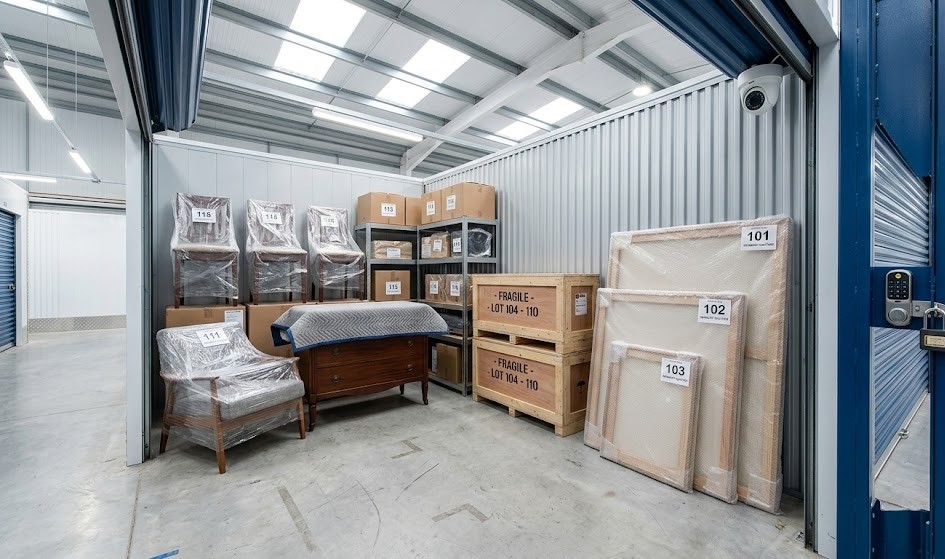
Auction houses operate on precise timing and reputation. Items must arrive in pristine condition, catalogued correctly, and ready to attract serious bidders. But the gap between acquiring stock and consignment day creates a logistical challenge that many suppliers underestimate.
That window between sourcing and delivery is where value gets protected or lost. A Georgian side table exposed to damp loses its lustre. Vintage textiles stored in a garage develop mildew. Mid-century furniture scratched during a hasty house move drops in estimated value. Auction stock storage isn’t about finding any available space – it’s about preserving condition, maintaining provenance, and ensuring every piece arrives at the auction house exactly as catalogued.
Why short-term storage matters for auction suppliers
Professional auction suppliers understand that condition dictates hammer price. A piece described as “excellent” must arrive that way. Storage becomes part of the supply chain, not an afterthought.
Consider the typical scenario: you’ve secured a collection from a probate sale, but the auction house won’t accept consignments until two weeks before their specialist sale. You can’t leave items in the property – the estate needs to complete quickly. Your own premises are full from previous acquisitions. The temptation is to stack everything in a spare room or garage. Don’t.
Climate fluctuations, dust accumulation, and accidental damage during this interim period can reduce sale estimates by 20-30%. Insurance claims become complicated when items weren’t stored in appropriate conditions. Auction houses may refuse pieces that arrive in worse condition than initially assessed.
What professional auction suppliers actually store
The range of items moving through short-term storage before consignment is broader than most people realise. It’s not just furniture.
Antique furniture and decorative arts form the bulk of storage requirements. Edwardian wardrobes, Victorian dining sets, Art Deco cabinets – these pieces need space, protection from humidity, and careful handling. A single scratch on a polished surface can knock hundreds off the final bid.
Fine art and framed prints require stable conditions. Temperature swings cause canvas to expand and contract. Moisture damages frames. Even short-term exposure to poor conditions can create conservation issues that reduce value or make pieces unsaleable.
Collectables and memorabilia might seem robust, but vintage toys, advertising signs, sporting equipment, and ephemera are often fragile. Collectors scrutinise condition obsessively. A 1960s toy in “mint boxed” condition commands five times the price of the same item with a creased box.
Books, manuscripts, and paper goods deteriorate rapidly in damp conditions. Auction houses specialising in rare books expect items to arrive exactly as described. Foxing, mould spots, or warped pages that develop during storage will be rejected or reclassified at lower estimates.
Jewellery, watches, and small valuables need secure storage even for short periods. These high-value items often sit between acquisition and specialist sales that might only occur quarterly. Security becomes as important as condition.
Vintage clothing and textiles are particularly vulnerable. Moths, mildew, and odours can develop in weeks. A Victorian wedding dress or collection of 1950s couture needs proper hanging space and air circulation, not compression in cardboard boxes.
The real costs of inadequate interim storage
Here’s where suppliers learn expensive lessons. A dealer we know secured a collection of 1970s designer furniture from a house clearance. Excellent condition, strong auction estimates. He stored everything in a friend’s barn for three weeks before the sale date. The barn leaked. Water damage reduced estimated sale values by £3,000. The auction house accepted the pieces but reclassified them as “restoration projects.” His reputation with that auction house took longer to repair than the furniture.
Condition downgrades happen fast. Auction catalogues use precise condition terminology – “excellent,” “very good,” “good,” “fair.” Each step down that scale significantly impacts buyer interest and final prices. What you store as “excellent” must arrive as “excellent.”
Insurance complications arise when items are damaged in storage. Many suppliers assume their general business insurance covers goods between acquisition and sale. It often doesn’t, particularly if storage conditions were inappropriate. Proving that damage occurred during storage rather than before acquisition becomes contentious.
Rejected consignments create immediate cash flow problems. You’ve paid for stock, invested time in assessment and photography, and now the auction house won’t accept pieces because condition has deteriorated. You’re left with unsaleable items and no return on investment.
Reputational damage with auction houses is the hidden cost. They rely on suppliers who consistently deliver quality stock in the condition described. Repeatedly presenting items that have deteriorated in storage marks you as unreliable. Auction houses will quietly move you down their list of preferred suppliers.
How proper storage protects auction stock value
Think of storage as part of your quality control process. You wouldn’t skip photographing items or researching provenance. Why risk the physical condition?
Climate stability prevents the most common damage. Wood furniture needs consistent humidity levels – too dry and joints loosen, too damp and veneer lifts. Personal storage facilities with climate control maintain the stable conditions that preserve condition grades.
Security matters particularly for high-value items. Professional storage facilities provide access control, CCTV, and individual unit security. Your stock is protected between acquisition and delivery, reducing theft risk and insurance premiums.
Space to organise properly prevents accidental damage. When you’re stacking items tightly in makeshift spaces, pieces get knocked, scratched, or crushed. Proper pre-auction storage allows you to arrange items safely, wrap fragile pieces adequately, and access specific lots without disturbing others.
Flexible access means you can retrieve items for additional photography, show potential buyers preview images, or respond quickly when auction houses bring forward sale dates. You’re not dependent on someone else’s schedule to access your stock.
Practical storage strategies for auction suppliers
Professional suppliers develop systems that protect stock and streamline workflow. Here’s what actually works.
Match storage size to your acquisition cycle. If you typically hold stock for 2-4 weeks before consignment, calculate the maximum volume you’ll accumulate. A 50 sq ft unit holds the contents of a large room – typically enough for 15-20 pieces of furniture plus smaller items. A 100 sq ft unit accommodates a full house clearance with space to organise by sale category.
Organise by sale date and category. Group items destined for the same auction together. This makes loading for delivery efficient and reduces the risk of leaving pieces behind. Label clearly – auction houses are unforgiving about missing items from catalogued lots.
Invest in proper packing materials. This isn’t where you economise. Furniture blankets, bubble wrap, acid-free tissue for textiles, and sturdy boxes protect value. The packaging supplies you need are available specifically designed for storage – use them. A £5 furniture blanket protects a £500 table.
Create an inventory system. Photograph every item as it enters storage, noting condition and any existing damage. This protects you if condition disputes arise and helps track stock through your system. A simple spreadsheet with item descriptions, acquisition dates, intended sale dates, and storage location prevents pieces being forgotten.
Plan for seasonal fluctuations. Auction houses run seasonal sales – garden furniture in spring, Christmas collectables in autumn. Your auction stock storage needs will peak before major sales. Build in capacity for these predictable surges rather than scrambling for additional space at the last minute.
Use vertical space intelligently. Shelving units maximise storage capacity for smaller items – books, ceramics, collectables. Stack furniture carefully with proper protection between pieces. Heavier items at the bottom, lighter on top. Always.
The container storage advantage for high-volume suppliers
When you’re handling full house clearances or large estate acquisitions, standard storage units can feel restrictive. This is where container storage changes the workflow.
Drive-up access eliminates double-handling. You back your van directly to the container, unload once, and you’re done. No trolleys through corridors, no lifts, no carrying items across car parks. When you’re moving Georgian mahogany furniture, this matters.
Loading flexibility means you can pack containers efficiently for delivery. Arrange items in reverse order of unloading at the auction house. Group fragile pieces together for careful handling. The container becomes a mobile staging area, not just storage.
Scalability suits suppliers with variable stock levels. Need space for a major acquisition? Take a second container short-term. Quiet period? Scale back. You’re not locked into fixed space that sits empty during slow months.
Timing storage around auction schedules
Understanding auction house schedules transforms storage from a problem into a competitive advantage. Most auction houses publish annual sale calendars. Specialist sales – ceramics, jewellery, fine art, vintage fashion – occur quarterly or even less frequently. General antiques sales might be monthly.
Work backwards from consignment deadlines. If a specialist furniture sale accepts consignments until two weeks before the auction date, and you need five days to photograph and prepare items, you have a nine-day window after acquiring stock. Build your pre-auction storage timeline around these fixed points.
Buffer for unexpected delays. Auction houses postpone sales, bring forward deadlines, or reject items that need additional research. Having storage secured gives you flexibility to respond without panic. The supplier who can hold stock comfortably for an extra fortnight often secures better sale placement than the one operating hand-to-mouth.
Coordinate acquisitions with storage capacity. Don’t acquire a major collection if you’ve nowhere to store it properly. This sounds obvious, but suppliers regularly overcommit, then compromise on storage, then watch values decline. Discipline around acquisition timing protects your investment.
When business storage makes commercial sense
As your supply operation grows, storage transitions from a tactical necessity to a strategic business asset. Business storage provides the infrastructure that professional operations require.
Consistent overhead costs replace ad-hoc solutions. You know exactly what storage costs monthly, making margin calculations accurate. No more emergency storage rentals at premium rates or favours from friends with spare garages.
Professional image matters when dealing with auction houses and estate executors. Being able to say “we have secure, climate-controlled storage facilities” signals that you’re a serious operator, not a casual dealer working from a spare bedroom.
Insurance efficiency improves when stock is stored in professional facilities. Insurers offer better rates for goods in secure, climate-controlled environments. The premium savings often offset storage costs.
Tax efficiency means storage costs are legitimate business expenses. Keep records of storage fees, insurance, and packing materials. Your accountant will thank you.
Common storage mistakes that cost auction suppliers money
Even experienced suppliers make errors that damage stock and reduce profits. Here’s what to avoid.
Storing items before proper assessment. You acquire a collection, move it straight to storage, then discover condition issues when you unpack for consignment. Always assess and photograph items before storage. Know exactly what you have and its condition.
Inadequate wrapping and protection. Assuming items will be fine for “just a few weeks” without proper packing. They won’t. Dust settles, surfaces scratch, moisture penetrates. Wrap everything properly from day one.
Poor labelling and inventory control. Storing multiple acquisitions without clear identification leads to confusion, missed consignment deadlines, and occasionally forgotten items that sit in storage for months. Label obsessively.
Ignoring insurance requirements. Assuming standard business insurance covers stored goods. It might not, particularly for high-value items. Verify coverage specifically for goods in storage between acquisition and sale.
Mixing personal and business storage. Using the same space for auction stock and personal belongings creates confusion and tax complications. Keep business stock separate and properly documented.
Making storage part of your competitive advantage
The suppliers who consistently secure the best stock and achieve the highest returns treat pre-auction storage as part of their professional infrastructure, not an unfortunate expense. When estate executors are choosing between multiple dealers for a quality collection, the one who can collect immediately and store properly wins the business.
Storage capacity allows you to say “yes” to opportunities. A house clearance that must happen this week? You can take it. A collection that won’t be auctioned until next quarter? No problem. Competitors without storage capacity pass on these opportunities. You don’t.
Quality auction houses notice suppliers who consistently deliver stock in excellent condition. You become their preferred source because they know your items will arrive exactly as described. That reputation is worth far more than storage costs.
Setting up your storage system
Start by calculating your typical stock volume over a four-week period. That’s your baseline storage requirement. Add 30% capacity for unexpected acquisitions or seasonal peaks. This gives you working room without paying for excessive empty space.
Visit storage facilities and assess them as if you were storing your own valuable possessions. Check climate control systems, security measures, access hours, and how easy loading and unloading will be. Talk to the team about your specific requirements – storing auction stock isn’t the same as storing household furniture, and experienced storage managers understand the difference.
Set up your inventory system before moving items into storage. Whether it’s a spreadsheet, specialist software, or a simple notebook, establish the habit of recording every item, its condition, acquisition date, and intended sale date. This discipline prevents costly mistakes.
Contact us to discuss storage solutions designed for auction suppliers who need reliable, secure space that protects stock value between acquisition and consignment.
Protecting your investment through proper storage
Auction supply is ultimately about protecting and enhancing value through the entire chain from acquisition to sale. Auction stock storage is where many suppliers unknowingly lose money – not through dramatic disasters, but through gradual condition deterioration that reduces estimates and damages reputations.
Professional storage isn’t a cost – it’s insurance for your inventory and your reputation. The difference between a piece achieving its full estimate and being downgraded to a lower category often comes down to how it was stored for those few weeks between acquisition and auction day.
Treat storage with the same professionalism you apply to sourcing, research, and customer relationships. Your stock values, your auction house relationships, and your bottom line will all benefit from getting this fundamental aspect of your operation right.